Published on: 2026-04-15
Updated on: 2026-04-15
Presidents can influence gas prices, sometimes quickly and sometimes materially, but they do not directly control them.
The 2026 increase in gas prices demonstrates that the global oil market remains the primary driver of pump prices.
Although gas prices have risen significantly during Trump’s second term, the increase is not the steepest early-term surge in recent presidencies and remains below the 2022 spike under Biden.
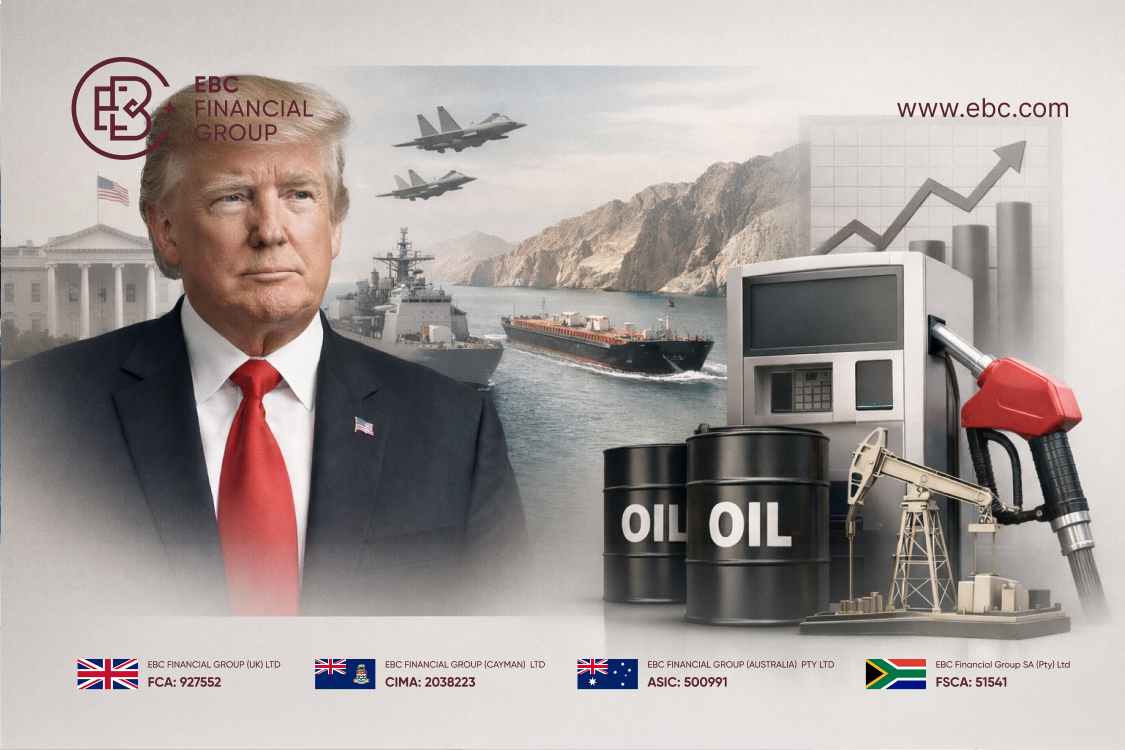
Trump's current Hormuz strategy is not the first time a president has moved oil markets through the Persian Gulf.
Trump is not replacing the Strait of Hormuz with the United States. Instead, he is using the global supply shock to promote American energy.
| Component of pump price | Share of price | Why it matters |
|---|---|---|
| Crude oil | 51% | The largest component, and globally priced |
| Refining | 20% | Moves with refinery outages, capacity, and fuel-spec changes |
| Distribution and marketing | 11% | Includes transport, storage, and retail margins |
| Taxes | 18% | Includes federal, state, and local taxes |
To understand presidential influence, it is important to understand what goes into the cost of a gallon of gas. Examining the components clarifies what Americans are paying for.
According to the EIA's January 2026 breakdown, about 51% of the retail price of a gallon of regular gasoline was made up of crude oil, 20% of refining, 11% of distribution and marketing, and 18% of taxes.
In summary, while the White House has some influence, the oil market is the dominant factor. If oil prices rise due to war risk, sanctions, or supply disruptions, the president cannot directly offset these increases at the pump.
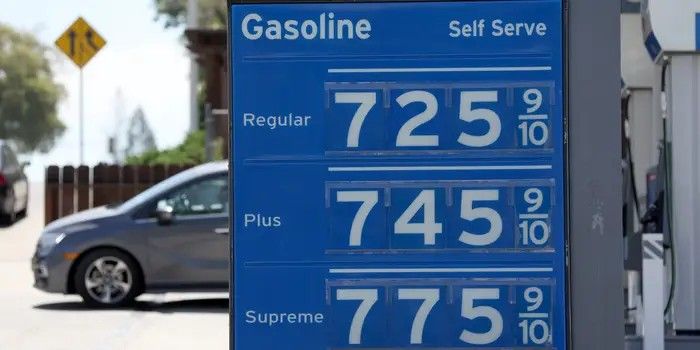
Gas prices are not determined by a single national policy or official. According to the EIA, while crude oil is the largest component, taxes, refining costs, and distribution and marketing also contribute, and these factors do not always move together.
The federal gasoline tax is 18.4 cents per gallon, and as of January 2026, state taxes and fees averaged 33.55 cents per gallon. However, taxes account for only part of the variation. Even if a president adjusts one factor, he is still operating within a much larger market structure.
Seasonal and geographic factors also play a role. The EIA notes that gasoline prices vary by region due to state and local taxes, distance from supply, disruptions, retail competition, and operating costs.
It also notes that gasoline supply and pricing are affected by crude supply, refining, imports, and inventories, and that from 2004 through 2023 the average U.S. retail price in August was about 40 cents per gallon higher than in January because summer fuel is more expensive to produce.
When drivers attribute gas prices to the president, they often overlook the complex interplay of local taxes, seasonal fuel blends, refinery margins, and global crude prices.
| Presidential lever | How it works | Likely short-term effect | Main limitation |
|---|---|---|---|
| Strategic Petroleum Reserve releases | Adds emergency supply to market | Can reduce or cap price spikes | Temporary, not a permanent fix |
| Emergency fuel waivers | Broadens fuel supply flexibility | Can ease shortages and regional price pressure | Useful mainly during disruption |
| Foreign policy and military decisions | Changes supply risk and shipping security | Can move crude prices quickly | Often raises uncertainty first |
| Sanctions | Restricts oil supply from targeted producers | Usually raises supply risk | Can tighten global markets |
| Domestic leasing and permitting policy | Shapes future production incentives | Limited immediate effect | Slow timeline and regulatory process |
Presidents mainly influence gas prices through indirect measures. Treasury’s estimate of the 2022 SPR release with IEA partners shows that emergency supply can reduce price pressure, while the EPA’s March 2026 fuel waiver demonstrates how regulatory flexibility can ease disruptions.
At the same time, recent EIA analysis highlights that foreign-policy shocks move prices quickly by widening spreads, raising shipping costs, and increasing the oil market's risk premium.
In contrast, leasing and permitting policies have a slower impact. They can influence future production, but do not add significant supply in the short term. Presidents affect gasoline prices more by influencing the oil market’s risk premium and supply flexibility than through direct control at the pump.
Trump’s current term illustrates how presidents indirectly influence gas prices. EIA reports that U.S. crude production reached a record 13.6 million barrels per day in 2025. However, gasoline prices surged in early 2026 due to a Hormuz shock that affected the global oil market.
EIA also notes that the U.S. imported an average of 490,000 barrels per day of crude from the Middle East Gulf in 2025, much of it medium sour crude required by specific refineries. Even with record domestic production, the U.S. remains vulnerable to disruptions in the Persian Gulf. High output can mitigate the impact but cannot override global oil prices.
The historical record makes the same point. Gasoline spikes often fade, but usually because the oil cycle turns, not because the Oval Office changes hands.
Under George W. Bush, EIA's weekly national series reports that regular gasoline prices peaked at $4.114 in July 2008, then declined to $1.838 by late January 2009, just days into Obama's presidency.
Under Obama, regular gasoline reached $3.965 in May 2011 but was down to $2.326 by January 23, 2017, when Trump took office.
During Trump's first term, the series peaked at $2.962 in May 2018 and fell to $2.392 in the week of January 25, 2021, just after Biden's inauguration.
Under Biden, it climbed to $5.006 in June 2022, then fell to $3.109 in the week of January 20, 2025, when Trump returned.
During Trump's current term, prices fell again to $2.779 in January 2026, before the Hormuz crisis sent them back to $4.123 in April.
These transitions do not indicate that presidents set prices directly. Instead, they reflect oil shocks and market adjustments that span multiple administrations.
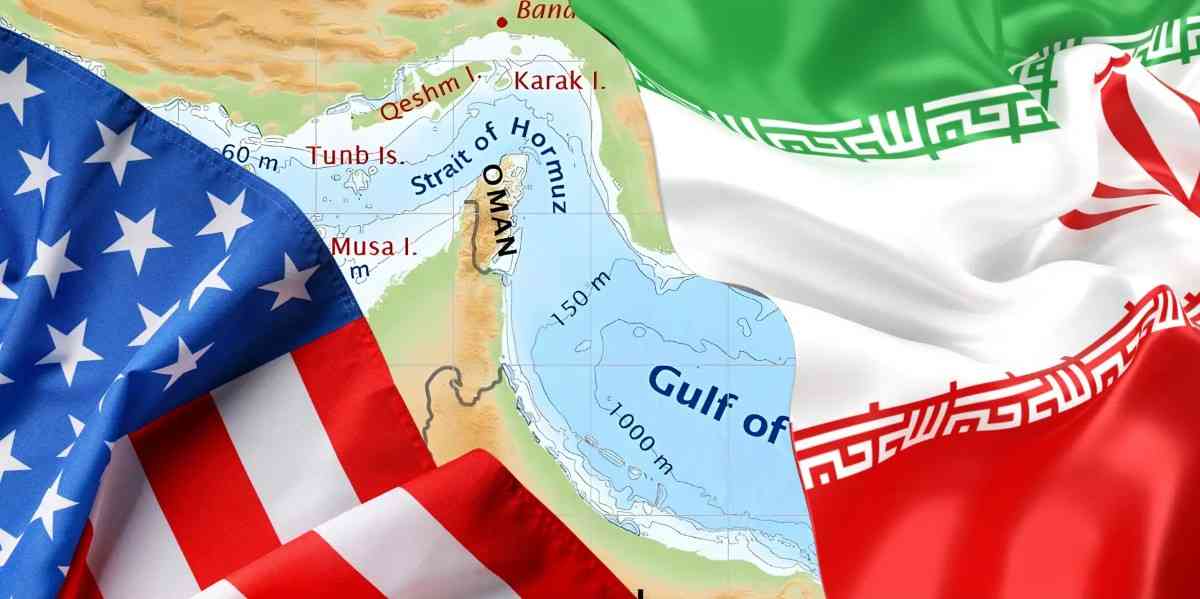
Trump’s current Hormuz strategy is not the first time a president has influenced oil markets through the Persian Gulf. What is unusual is his approach: previous presidents primarily sought to protect or offset disrupted oil flows, while Trump is combining naval action, sanctions, and domestic energy expansion during an active chokepoint crisis.
Carter declared the flow of Persian Gulf oil a vital U.S. interest, stating that any external attempt to control the Gulf would be met "by any means necessary, including military force."
Additionally, Reagan's Operation Earnest Will then used U.S. naval power to protect tanker traffic and keep oil moving. The Navy describes it as the largest naval convoy operation since World War II.
However, the objective was to defend or restore market flow, not to directly control retail gasoline prices.
Our analysis finds that Trump is not replacing the Strait of Hormuz with the United States. Instead, he is using the global supply shock to promote American energy.
Axios reported that he paired the blockade with an explicit pitch that countries squeezed by Hormuz, especially China, should buy more oil from the U.S., including remarks that "China can send their ships to us" and that empty tankers were heading to America to load up.
The broader White House line also fits that logic: its 2026 economic report and "energy dominance" messaging say the administration wants abundant U.S. energy to improve competitiveness and "lead global" markets.
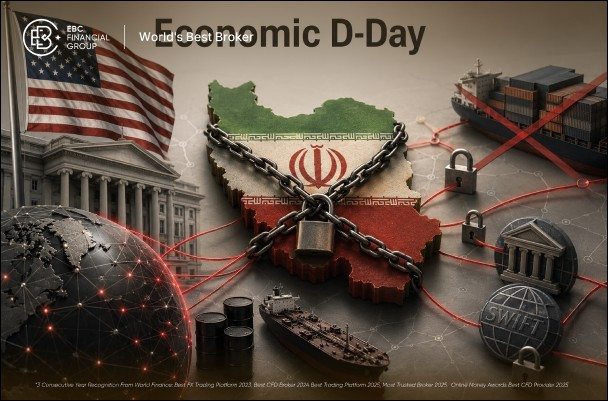
However, AP reports that the administration framed Trump's blockade of Iranian ports as a way to pressure Tehran to reopen the Strait of Hormuz and resume negotiations, not as a formal gasoline-price policy.
Therefore, Trump’s current approach fits the second category. It may increase leverage over Iran and strengthen the case for U.S. "energy dominance." However, in the short term, it creates a policy environment that raises oil-market risk rather than reducing it.
Presidents have the greatest impact when they influence the oil market indirectly through reserves, waivers, sanctions, diplomacy, and war risk. However, gas prices are still primarily determined by crude, refining, distribution, and taxes, as well as regional and seasonal factors.
Trump can influence gas prices and may even cause significant changes. However, he cannot fully control them as political slogans often imply.
Disclaimer: This material is for general information purposes only and is not intended as (and should not be considered to be) financial, investment or other advice on which reliance should be placed. No opinion given in the material constitutes a recommendation by EBC or the author that any particular investment, security, transaction or investment strategy is suitable for any specific person.



World's Best Broker