Published on: 2026-04-16
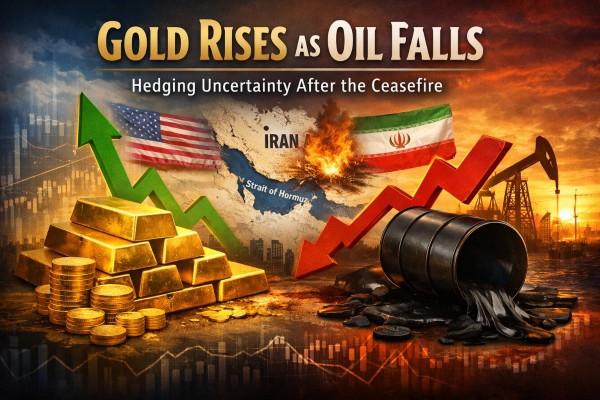
In early April 2026, oil came under the spotlight. Brent crude jumped 64% in March, setting a new record. The 2026 Brent forecast rose to $82.85 from $63.85 in February. OPEC cut output by 7.3 million barrels per day to 21.57 million. Around 20% of global oil and liquified natural gas (LNG) flows through the Strait of Hormuz, making this a significant market shock.
The tougher question is what kind of energy exposure this shock points to. A trader might be bullish on oil but end up in very different positions depending on whether they choose direct crude, a futures-based ETF, a broad energy ETF, or a major oil stock. On EBC Financial Group’s platform, that range runs from Brent crude (XBRUSD) and West Texas Intermediate crude (XTIUSD), to energy ETFs such as the Energy Select Sector SPDR Fund (XLE.P), Vanguard Energy ETF (VDE.P), United States Oil Fund (USO.P), and United States Natural Gas Fund (UNG.P), as well as oil majors Exxon Mobil (XOM.N) and Chevron (CVX.N). Broader indices such as the S&P 500 (SPXUSD), Dow Jones Industrial Average (U30USD), and FTSE 100 (100GBP) sit further out as spillover markets.
The headline might start with crude, but the real choice goes deeper. Are you trading the commodity itself, a fund built on it, the sector’s earnings, or the broader impact of higher energy prices?
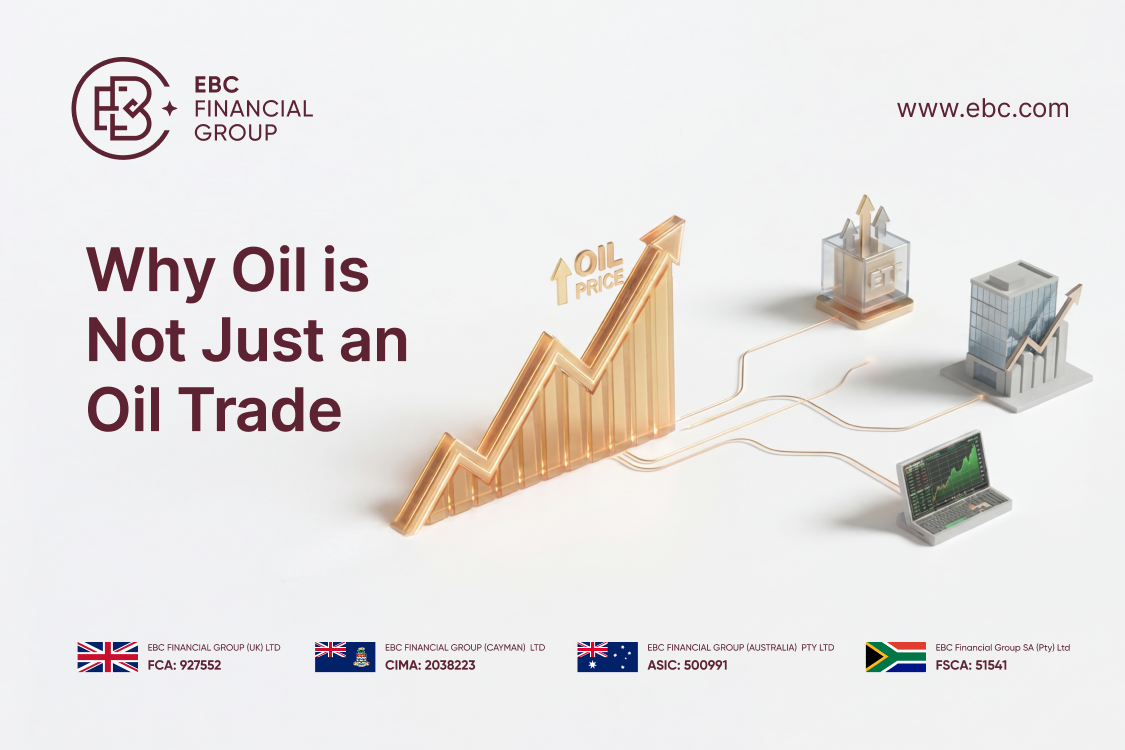
If you think a geopolitical shock has tightened supply, direct crude exposure is usually the starting point. On EBC’s platform, that means XBRUSD for Brent and XTIUSD for West Texas Intermediate. These are closest to the main event. When traders worry about shipping problems, lost barrels, or risk around Hormuz, crude prices are where those concerns first show up.
Even here, details matter. People often talk about “oil” as if it were a single price, but the market trades multiple benchmarks and contract months simultaneously. Brent is usually the main benchmark for seaborne global crude, while WTI is more closely tied to the US market. The same geopolitical shock can lift both, but not always by the same amount or for the same reason. That’s why the headline can stay bullish even if the actual price action changes underneath.
So, the first choice is direct crude. It’s the closest way to trade the shock itself.
The next step away from crude isn’t an energy stock but a fund structure. The United States Oil Fund (USO.P) lets traders gain oil exposure through near-month WTI futures rather than direct crude trading. This is a practical way to gain tactical oil exposure, but returns can drift from spot oil over time due to how the fund rolls contracts. The fund must keep replacing expiring futures with new ones, and if those new contracts are more expensive, that can chip away at returns even when the broader oil view still looks right.
In the short term, direct crude and a WTI-linked ETF can look similar. Over longer periods, they’re not the same. The fund’s structure becomes more important, especially when the futures curve is part of the story.
So being “bullish on oil” isn’t a complete decision. You still must decide how you want to express that view.
Take another step out, and the trade changes again. The Energy Select Sector SPDR Fund (XLE.P) and Vanguard Energy ETF (VDE.P) aren’t oil funds like USO. They’re energy-equity funds. Our energy ETF guide says XLE provides exposure to the S&P 500 energy sector, while VDE offers broader US energy exposure.
This is different from just asking where Brent will trade tomorrow. Sector ETFs still react to oil, but they do it through companies. They reflect more than just the price of oil—they also show balance sheets, capital discipline, dividends, buybacks, and the overall mood in the stock market. That’s why energy ETFs can sometimes look steadier than crude. They’re still sensitive to oil, but through a company lens.
Single stocks like Exxon Mobil (XOM.N) and Chevron (CVX.N) take this a step further. They’re about both the sector and the companies themselves. EBC’s energy-stock coveragetreats Exxon and Chevron as integrated majors, not just stand-ins for oil prices.
That’s why oil majors don’t always move like crude prices. Higher oil prices can help earnings, but the stock also depends on capital allocation, refining, project execution, and the overall mood in the stock market. If investors get nervous about inflation or growth, oil majors can face pressure even if crude stays high.
This is where many readers mix up different ideas. Oil exposure, energy-sector exposure, and oil-major exposure might move in the same direction, but they aren’t the same thing.
Natural gas should be part of the conversation, but it’s not just a substitute for crude. EBC’s platform offers both natural gas (XNGUSD) and the United States Natural Gas Fund(UNG.P), so gas has its own spot in the energy basket. It’s a smaller and more specialised part than oil.
Gas follows its own rules. This UNG explainer says the fund tracks front-month Henry Hub prices, shaped by contango, monthly roll mechanics, and a tendency to drift from spot prices. Gas can react to big supply shocks, especially if LNG routes are disrupted, but it’s also influenced by storage, weather, and seasonality in ways that don’t match crude.
That makes oil the cleaner geopolitical headline trade. Gas often ends up trading a more regional and seasonal story once the first shock begins to fade.
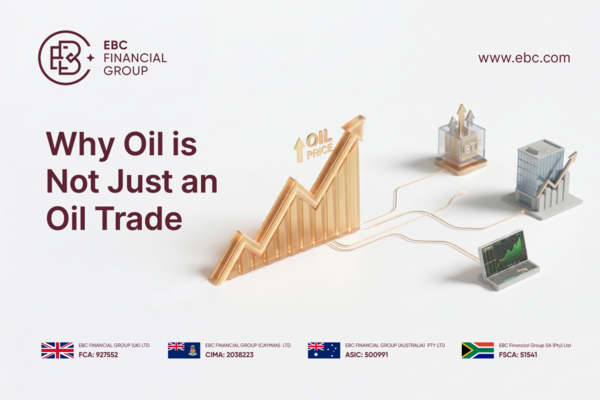
The simplest way to look at the basket is to ask: how close is this instrument to the original oil shock?
Closest to the shock are Brent crude (XBRUSD) and West Texas Intermediate (XTIUSD), which are direct commodity trades. One step out is the United States Oil Fund (USO.P), still focused on oil but through a futures-based fund. Another step out is the Energy Select Sector SPDR Fund (XLE.P) and Vanguard Energy ETF (VDE.P), where the trade is about energy-sector earnings and balance sheets. Then come Exxon Mobil (XOM.N) and Chevron (CVX.N), which focus on specific companies with their own strengths and risks. Gas, through natural gas (XNGUSD) and the United States Natural Gas Fund (UNG.P), sits alongside this map as a related branch.
This is where broader indices come in, but only as spillover markets. The S&P 500 (SPXUSD), Dow Jones Industrial Average (U30USD), and FTSE 100 (100GBP) aren’t direct energy trades. They matter because oil shocks don’t stay contained in the commodity market. Once fuel costs start affecting inflation, margins, and policy, the wider market reacts. Higher oil can support energy-heavy parts of an index, but it can also hurt transport, consumer, and other cost-sensitive sectors through higher input prices.
We can already see this happening. Euro area inflation hit 2.5% in March, with energy costs up 4.9%. In the US, average gas prices went above $4 a gallon for the first time since 2022. That’s why indices belong at the edge of this article, not the centre. By the time you look at a broad index, the question isn’t what oil does next but how higher energy prices affect the whole economy.
The next phase probably won’t be decided by a single headline. Watch if Brent and WTI keep their geopolitical premium or start to lose it. See whether sector ETFs keep tracking crude or begin to lag, which could signal equity investors are becoming more selective. Also, check whether gas confirms the broader stress or returns to its usual weather and storage patterns. Beyond these, keep an eye on whether higher energy costs keep pushing up inflation and policy expectations, since that’s how a commodity shock can turn into a market-wide issue.
Oil might be where the story begins, but it’s rarely where the decision ends.
A trader in this market still must choose what kind of exposure they want: the direct commodity, a fund structure, the sector, a specific stock, or the broader spillover. Not every energy instrument tells the same story, even if they react to the same headline.
Disclaimer & Citation
This material is for information only and does not constitute a recommendation or advice from EBC Financial Group and all its entities (“EBC”). Trading Forex and Contracts for Difference (CFDs) on margin carries a high level of risk and may not be suitable for all investors. Losses can exceed your deposits. Before trading, you should carefully consider your trading objectives, level of experience, and risk appetite, and consult an independent financial advisor if necessary. Statistics or past investment performance are not a guarantee of future performance. EBC is not liable for any damages arising from reliance on this information.