Published on: 2026-05-22
Updated on: 2026-05-22
CPI is the late signal, not the early warning: food inflation appears after water stress has already moved through irrigation, sowing, crop choices, and supply chains.
Groundwater is the missing variable in India’s food inflation debate: the risk is not only how much rain falls, but how much water remains usable after the rain stops.
The inflation threat is more likely to start outside the grain buffer system: vegetables, pulses, dairy, fodder, and regional markets are harder to stabilise than rice and wheat.
The real risk is dispersion, not immediate national scarcity: India can show contained headline inflation while specific crops and regions absorb water stress first.
The test is recharge: if uneven rainfall, heat, and reservoir weakness increase pumping demand, food-price pressure may build before CPI confirms it.

India food inflation risk is moving underground: CPI shows when food prices have already reached households, but groundwater shows how much stress is being absorbed before prices move. The test is whether recharge, reservoir storage, and pumping demand begin to weaken the crops that public grain stocks cannot easily protect.
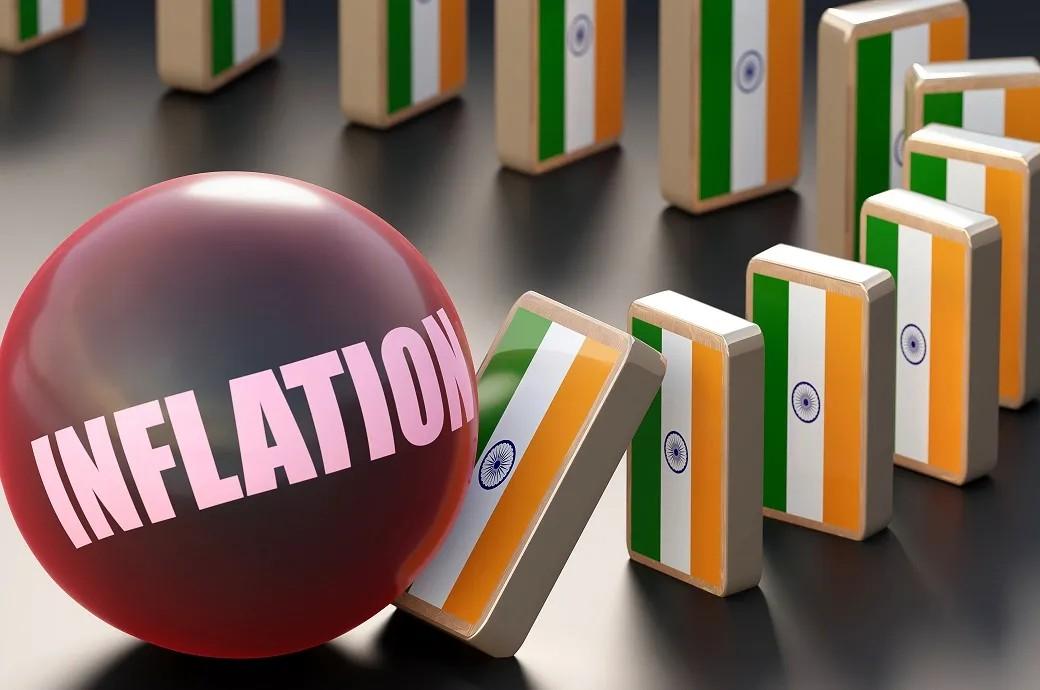
April’s 4.20% food inflation is not the shock. It is the reminder that CPI usually confirms food stress after the physical pressure has already moved through farms, crops, and supply chains.
Headline CPI rose to 3.48% in April 2026 from 3.40% in March, while the Consumer Food Price Index climbed to 4.20% from 3.87%. Rural food inflation stood at 4.26%, slightly above the urban rate of 4.10%.
The sharper signal is not the national food number. It is dispersion. Onion and potato prices were still weak, but tomato inflation reached 35.28%, cauliflower inflation hit 25.58%, and coconut copra rose 44.55%. That is not broad scarcity. It is a pattern of pressure moving through perishable, regional, and water-sensitive categories before the national food basket shows signs of stress.
The mistake is treating CPI as the start of the food inflation story. The pressure forms earlier, when heat raises crop water demand, rainfall fails to recharge soil and reservoirs evenly, and farmers pump more groundwater to protect output.
The strongest number in this story is 87%.
Agriculture accounts for 87% of India’s annual groundwater extraction, which makes aquifers part of the country’s food supply system, not a separate environmental issue. India’s 2024 groundwater assessment put total annual extraction at 245.64 billion cubic metres, with agriculture drawing 213.29 BCM. Domestic use represented 11%, while industry accounted for 2%.
Groundwater also contributes nearly 62% of India’s irrigation. That is why falling aquifers matter for food inflation: the pressure does not begin at the retail shelf. It begins when farms need more water to maintain stable output.
| Indicator | Latest Signal | Inflation Link |
|---|---|---|
| Annual groundwater extraction | 245.64 BCM | Scale of dependence |
| Agriculture’s share | 87% | Direct food-production link |
| Agricultural extraction | 213.29 BCM | Water draw behind crops |
| National extraction stage | 60.47% | Average masks local stress |
| Over-exploited units | 751 | Recharge already under pressure |
This is not a collapse story. Recharge has improved versus 2017, extraction has declined by about 3 BCM, and more assessment units are now classified as safe. The risk is that national improvement can still mask regional stress in areas where food production depends most on pumping.
India’s food inflation risk is no longer only a monsoon trade. It is an aquifer-recharge trade.
Groundwater can hold food prices down before it pushes inflation risk up. Farmers pump more water to protect crops during heat or uneven rainfall, but that same response increases the risk of depletion if recharge fails.
| Stage | Pressure | Price Signal |
|---|---|---|
| Heat rises | Crops need more water | Irrigation frequency increases |
| Rainfall is uneven | Soil moisture weakens | Groundwater becomes the fallback |
| Pumping intensifies | Wells run longer and deeper | Costs and depletion risk rise |
| Water tables fall | Access becomes less reliable | Acreage and yields face pressure |
| Supply becomes uneven | Perishables, pulses, fodder, and dairy weaken | Food-price volatility rises |
India’s underground food inflation risk is a dispersion shock, not a single national shortage. Grain buffers can hold down rice and wheat, but vegetables, pulses, dairy, fodder, and local markets remain exposed to water stress.
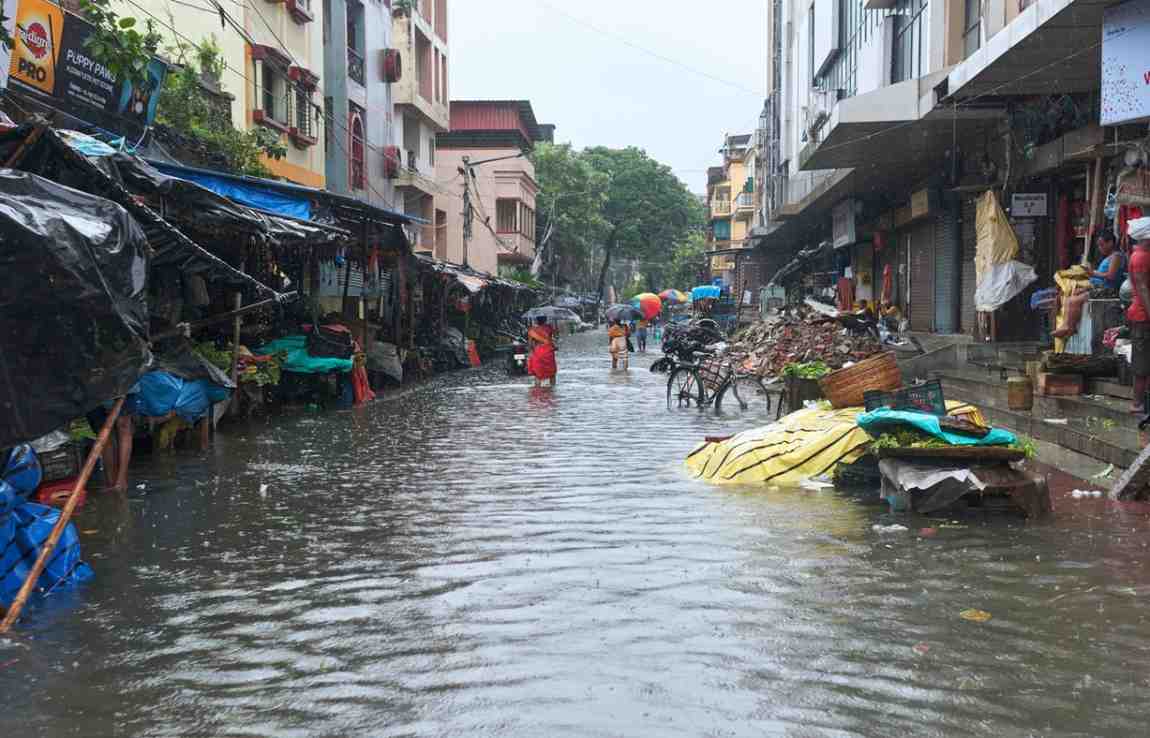
The monsoon risk is not just whether India gets enough rain. It is whether that rain reaches the right regions, refills reservoirs, and recharges the aquifers that support food production after the season ends.
The 2026 southwest monsoon is forecast at 92% of the long-term average, with a ±5% model error. The season is most likely to fall in the below-normal range of 90% to 95% of LPA.
A timely onset does not settle the risk if rainfall is poorly distributed. National rainfall can look manageable while specific states, basins, or aquifers remain stressed.
The monsoon determines how much water enters the system. Aquifers determine how long the water can support food production after the rains end.
The monsoon gets the headlines. Winter crop risk builds after the rain has passed.
Kharif crops are visibly tied to monsoon rainfall. Rabi crops depend more on stored water, canals, reservoirs, and groundwater. That is when aquifer stress can matter more than headline rainfall. Thin post-monsoon water buffers expose wheat, pulses, oilseeds, vegetables, and fodder.
A Science Advances study estimated that if farmers in overexploited regions lost access to groundwater with no replacement source, winter-cropped acreage could fall by up to 20% nationwide and by 68% in the most severely affected regions. Even if canal irrigation replaced groundwater in depleted regions, winter-cropped acreage could still decline by 7% nationwide and 24% in the worst-affected locations.
Those figures are not a forecast for this season. They show where the system is most exposed: aquifer depletion can become a delayed food-supply risk months after the monsoon headline fades.
Heat does not need to destroy crops immediately to become inflationary. It first raises the water required to maintain output.
IMD’s late-May heat bulletin warned of heat-wave to severe heat-wave conditions across parts of northern, central, and southern India. Bramhapuri and Chandrapur in Vidarbha recorded 46.4°C at 1430 IST on 21 May.
The mechanism is direct. Higher temperatures raise evapotranspiration and crop water stress. Farmers respond by irrigating more often, which increases pumping before crop losses or retail price spikes become visible.
Research on warming and groundwater depletion in India found that higher temperatures have already encouraged more intensive groundwater withdrawals. The study projects that net groundwater loss rates from 2041 to 2080 could be three times current depletion rates, including warming-driven withdrawals.
India’s grain buffer is large enough to matter. Central pool foodgrain stocks stood at 604.02 lakh tonnes on 1 April 2026, including 386.10 lakh tonnes of rice and 217.92 lakh tonnes of wheat. The April stocking norm was 210.40 lakh tonnes, including operational stock and strategic reserve.
That reduces the risk of an immediate cereal-led shock by giving authorities room to manage rice and wheat supply.
But grain stocks cannot refill aquifers. They cannot fully stabilise tomato, onion, pulse, oilseed, dairy fodder, or local vegetable supply chains. They also cannot replace groundwater during a dry winter cropping window.
India can release grain from public stocks. It cannot release groundwater from a warehouse.
India’s food inflation risk will not show up evenly. CPI reports one national number, while groundwater stress is concentrated by state, crop, and season.
Groundwater use exceeds annual recharge in Punjab, Rajasthan, Haryana, Delhi, and Dadra and Nagar Haveli and Daman and Diu. Tamil Nadu, Uttar Pradesh, Puducherry, and Chandigarh sit in the 70% to 90% extraction-stage band. The same CPI number can hide very different water conditions.
| Region | Water Stress | Food Link |
|---|---|---|
| Punjab and Haryana | Extraction-heavy irrigation | Wheat, rice, dairy |
| Rajasthan | Heat and groundwater depletion | Pulses, livestock, fodder |
| Uttar Pradesh | Irrigation-sensitive food belt | Wheat, vegetables, dairy |
| Tamil Nadu | Reservoir-groundwater pressure | Rice, vegetables, dairy |
| Telangana and Andhra Pradesh | Heat and pumping demand | Rice, vegetables |
The risk is not one national food shock. It is a chain of regional price spikes, with water-stressed crops and states move first, while the national basket looks calmer than the underlying pressure.
The thesis does not need a national food shock to be confirmed. It needs evidence that water stress is moving from farms into crop supply, regional prices, and non-cereal food categories.
Watch for six signals:
Poorly distributed rainfall: national monsoon totals can look manageable while local crop belts remain short of usable water.
Weak reservoir storage into sowing: surface water would offer less relief, increasing dependence on groundwater pumping.
Persistent heat during planting windows: irrigation demand would become the first stress point, before visible harvest damage.
High grain stocks with volatile perishables: cereal buffers would be working, but vegetables, pulses, dairy, and fodder would still carry pressure.
Weak rabi acreage after poor recharge: aquifer stress would affect winter crop decisions after the monsoon headlines fade.
Rising farm power demand: higher pumping intensity would show water stress before retail food prices fully adjust.
The implication is not an immediate food crisis. The implication is a less stable inflation path if pressure shifts from buffered cereals into vegetables, pulses, dairy, fodder, and regional markets.
India’s next food inflation shock is unlikely to announce itself through an empty warehouse or a failed harvest. It is more likely to build through deeper pumping, weaker recharge, and rising water demand long before national CPI looks stressed. The unresolved question is whether India will read the warning in water levels before it reads it in retail prices.