Published on: 2026-05-11
The Trump tariffs represent the largest U.S. tax increase as a percentage of GDP since 1993, adding an average of $1,500 per household in 2026. The average U.S. tariff rate on the world’s economies rose from 3% to over 18%, with 50% levies on steel and aluminum and 25% on automobiles affecting allied nations directly.
Canada’s Prime Minister Mark Carney declared on April 3, 2026 that “the 80-year period when the United States embraced the mantle of global economic leadership” is over. Canada created a $25 billion sovereign wealth fund, signed a trade agreement with China, and is leading discussions on a joint EU-CPTPP trade alliance.
The EU faces tariffs of 10-50% depending on the product, ongoing threats of higher rates, and increasing strain in the transatlantic security relationship. Europe has begun borrowing €90 billion independently for defense and is pursuing trade deals with ASEAN, India, and Indonesia.
Japan negotiated a 15% tariff deal but committed $550 billion in U.S. investment to secure it. Tokyo is deepening ASEAN trade relationships, which hit record highs in 2025, while managing the tension between Washington’s demands and its own economic diversification.
On May 8, 2026, a U.S. trade court struck down the administration’s global 10% tariffs for the second time, ruling the president had exceeded his legal authority. The same day, the White House responded by announcing “much higher” levies on the European Union. Relations between Washington and European capitals have deteriorated throughout the Hormuz conflict, with the administration publicly criticizing allied governments for not joining U.S. military operations, questioning the value of NATO, and raising the possibility of withdrawing American troops from Germany, Italy, and Spain.
The economic alliance that has underpinned Western prosperity since 1945 is under strain from a direction: from within.
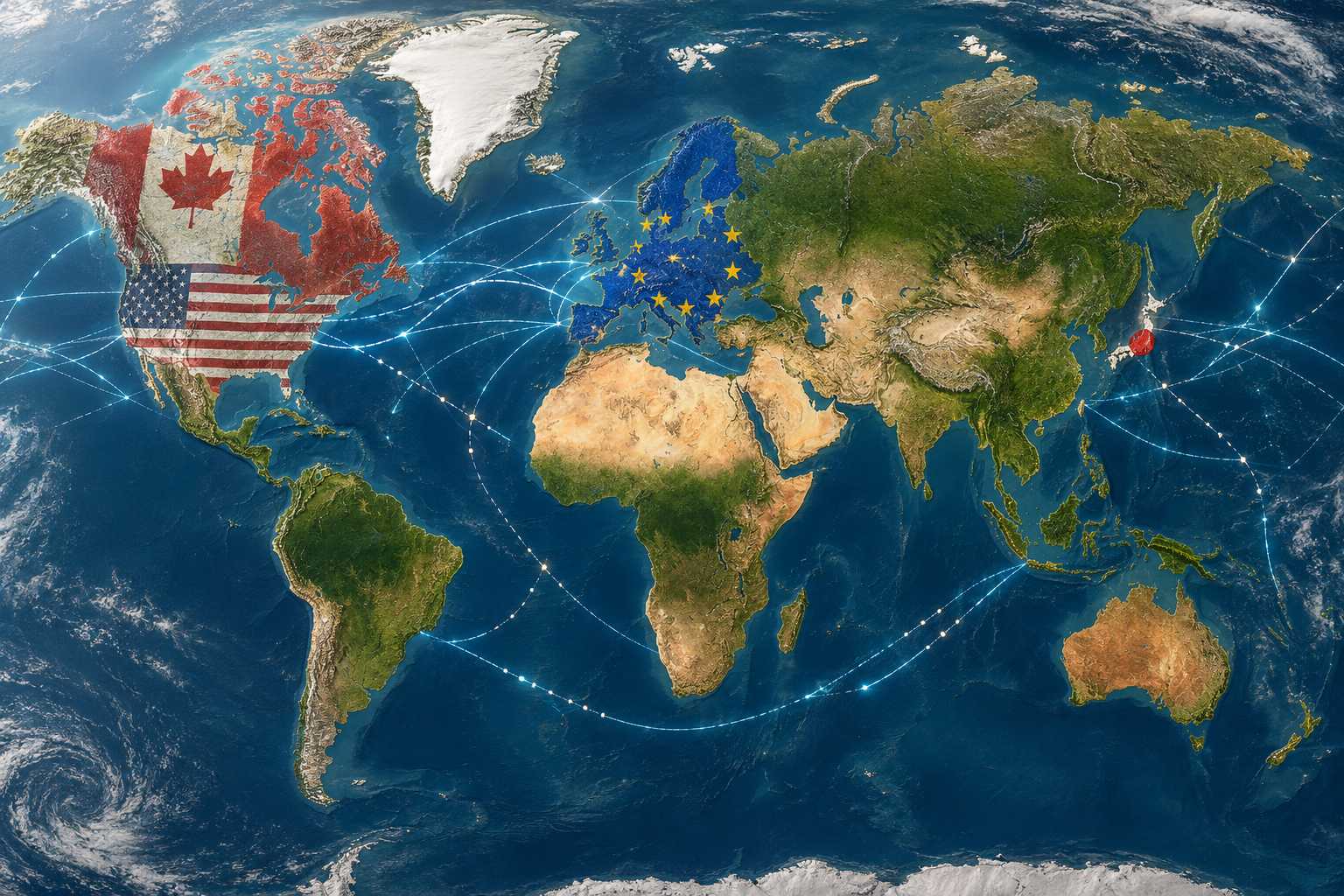
The Tax Foundation’s tariff tracker, updated May 7, 2026, calculates that the current tariff regime represents the largest U.S. tax increase as a percentage of GDP since 1993, amounting to an average increase of $1,500 per U.S. household. The Peterson Institute for International Economics estimates the average U.S. tariff on the rest of the world rose from 3% to over 18%.
The tariffs apply to allies and rivals alike:
Steel, aluminum, and copper: 50% tariffs on all imports under Section 232, raised from 25% in June 2025 and restructured in April 2026 to apply to the full customs value of goods. Canada, the EU, and Japan are major exporters of all three metals to the U.S.
Automobiles and parts: 25% tariffs under Section 232. Volkswagen’s CEO Oliver Blume told Handelsblatt that the planned U.S. Audi factory “cannot be built” under current tariff conditions.
European Union and Japan: Combined tariff rates capped at 10-15% under bilateral frameworks, on top of the 50% on metals. The EU faces a baseline 10% under Section 122 (replacing the IEEPA tariffs struck down by the Supreme Court in February 2026), plus sector-specific levies.
Canada: 25% tariffs imposed on most goods in February 2025, prompting retaliatory Canadian tariffs that escalated to $155 billion worth of U.S. products.
On March 11, 2026, the USTR launched new Section 301 investigations into “structural excess capacity and production in manufacturing sectors” across 16 economies, including the EU, Japan, Canada, South Korea, and several ASEAN nations. These investigations could provide the legal foundation for a new tariff regime, extending the trade pressure regardless of court rulings.
The legal authority shifts. The tariff pressure remains constant. For allied capitals, the pattern is consistent: Washington is willing to use trade measures as leverage over its closest economic partners, and the instrument used to deliver that pressure changes more frequently than the pressure itself.
Canada’s response has been the most direct.
On April 3, 2026, the day 25% U.S. auto tariffs took effect, Prime Minister Mark Carney delivered a speech in Ottawa that formally redefined the bilateral relationship. “The global economy is fundamentally different today than it was yesterday,” he said. “Our old relationship of steadily deepening integration with the United States is over. The 80-year period when the United States embraced the mantle of global economic leadership, when it forged alliances rooted in trust and mutual respect, and championed the free and open exchange of goods and services, is over.”
Canada responded with matching 25% tariffs on American automobiles and parts. It created the Canada Strong Fund, a $25 billion sovereign wealth fund explicitly designed to diversify its economic relationships. It signed a trade agreement with China, exchanging reduced tariffs on Chinese electric vehicles for lower Chinese duties on Canadian canola. And it is leading discussions between the European Union and the 12-member Comprehensive and Progressive Agreement for Trans-Pacific Partnership (CPTPP) to explore a broader trade alliance.
Canada sends 75% of its exports to the United States. The bilateral trade relationship totaled $923 billion in goods and services in 2023, making it one of the world’s largest. Carney called the United States “no longer a reliable partner” at a rally in Quebec. When the largest trading partner of the world’s largest economy uses that language publicly, the commercial relationship has shifted in a way that trade data alone cannot capture.
Europe’s position involves simultaneous economic and security pressures that reinforce each other.
In January 2026, the U.S. administration escalated its effort to purchase Greenland from Denmark, threatening European states with tariffs starting at 10% and increasing to 25% if a deal was not reached. France lobbied the EU for reciprocal tariffs within 24 hours. Denmark deployed additional troops to Greenland. The European Parliament issued a formal statement raising “serious concerns” about U.S. threats to Greenland’s sovereignty and what it called a “transactional approach” to foreign policy.
The Hormuz war deepened the transatlantic divide. Public U.S. criticism of European defense spending, questions about NATO’s future, and the prospect of American troop withdrawals from three of Europe’s largest economies have pushed European governments to accelerate plans for security independence that had been under discussion for years but lacked political urgency.
The economic response is measurable. The EU agreed in December 2025 to borrow €90 billion independently to finance Ukraine’s defense, building institutional capacity to spend without American coordination. The EU is pursuing trade agreements with India, Indonesia, the Philippines, Thailand, and Malaysia, with targets to finalize ASEAN deals by 2027. These negotiations had been dormant for years. The tariff pressure and security uncertainty revived them.
McKinsey’s March 2026 trade analysis found that the EU faces a “double squeeze”: rising imports from competitive Asian manufacturers on one side and higher U.S. tariffs on the other. U.S. tariffs have driven double-digit declines in European vehicle and parts exports to America. The response across Brussels has been to accelerate trade diversification toward growing markets willing to negotiate, particularly across Asia and the Middle East.
Japan’s approach has been the most carefully calibrated.
Tokyo negotiated a framework deal that reduced tariffs on most Japanese goods from the initially proposed 25% to 15%, and lowered auto tariffs from 25% to 15% for imports up to a certain volume. That deal came with a reported $550 billion Japanese investment commitment in the United States, a figure that illustrates the scale of concessions Washington now expects from its closest economic partners.
Japan’s long-term strategy extends beyond the bilateral tariff rate. ASEAN trade hit record levels in 2025, and Japanese manufacturers are expanding production across Southeast Asia both to serve growing regional demand and to maintain market access in economies where direct export from Japan is no longer cost-competitive. Suzuki is scaling electric vehicle production in India to supply European markets, a supply chain decision shaped directly by tariff conditions.
Japan also sits at the center of the CPTPP, which now includes 12 nations following the United Kingdom’s accession in December 2024. The EU is exploring deeper cooperation with the CPTPP framework. Canada is leading discussions on a potential joint arrangement. Each of these conversations gains momentum every time new tariff actions or investigations are announced.
A Congressional Research Service report from April 2026 warned that Japan’s extensive trade agreements with the EU, CPTPP, and RCEP nations could undermine U.S. market competitiveness if Washington does not offer comparable terms. Japan is not publicly confronting the United States. It is building trade relationships that steadily reduce its economic dependence on a single partner.
Global trade continues to grow and set records despite U.S. tariff policy. Former European Trade Commissioner Cecilia Malmström captured the dynamic at a Peterson Institute webcast in April 2026: “Trade is a little bit like water. It finds new ways all the time.”
U.S.-China trade fell roughly 30% in 2025, according to McKinsey. The United States replaced about two-thirds of the gap with imports from other sellers, while Chinese manufacturers adjusted pricing and expanded sales across Southeast Asia, Africa, and Latin America. China’s overall trade surplus surpassed $1.2 trillion for the first time in 2025, and exports in early 2026 are running nearly 15% ahead of the prior year.
The ASEAN bloc has become a larger trading partner with China than either the United States or the European Union. China has deepened institutional ties with Southeast Asia through the ASEAN-China Free Trade Area 3.0 and Belt and Road investments estimated at $124 billion in the first half of 2025. China’s manufacturing ecosystem, increasingly automated and cost-competitive, provides goods at price points and volumes that create significant advantages for its trading partners.
Countries diversifying away from U.S. trade dependence are not entering a vacuum. They are entering markets where competitive alternatives already exist and are scaling rapidly.
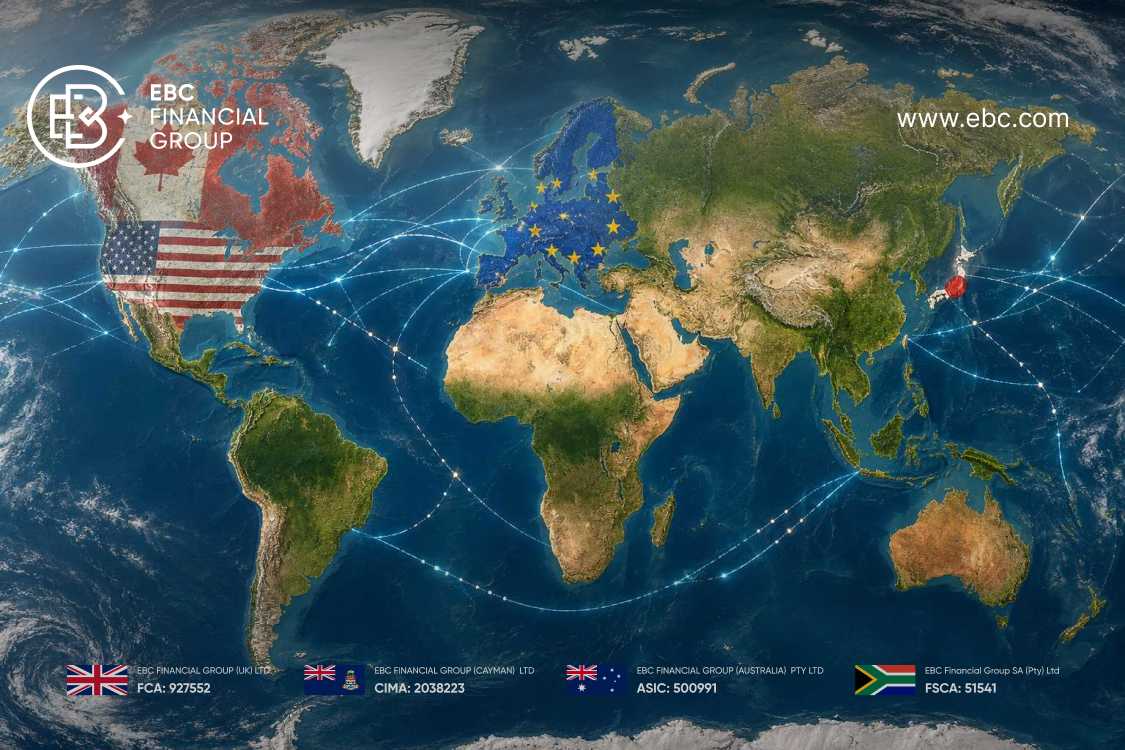
The stated objective of U.S. tariff policy is to reshore manufacturing, reduce trade deficits, and strengthen the domestic industrial base. The economic data suggests an unintended consequence is running in parallel: the acceleration of exactly the multipolar trade order that Washington has sought to prevent.
Every tariff imposed on an allied nation creates an economic incentive for that nation to diversify its trading relationships. Canada signed a trade agreement with China. The EU is pursuing ASEAN deals it had shelved for years. Japan is expanding manufacturing capacity in India and Southeast Asia. These are structural shifts in supply chains, investment flows, and institutional partnerships that will outlast any single policy cycle.
The WTO forecasts just 0.5% global trade growth in 2026, the slowest since the pandemic. But within that aggregate, trade routes are being redrawn. The partners are changing. And the United States is losing commercial ground in relationships that took decades to build.
The Peterson Institute’s research highlights the tension directly: coercive tariff measures designed to extract concessions on issues unrelated to trade, whether territorial disputes, investment mandates, or security burden-sharing, risk undermining the trust that sustains long-term economic partnerships. Each demand that extends beyond trade policy strengthens the case for diversification among the partners receiving it.
(Related: The US Sanctions Paradox: How Punishing Enemies Is Pushing Allies Away From the Dollar)
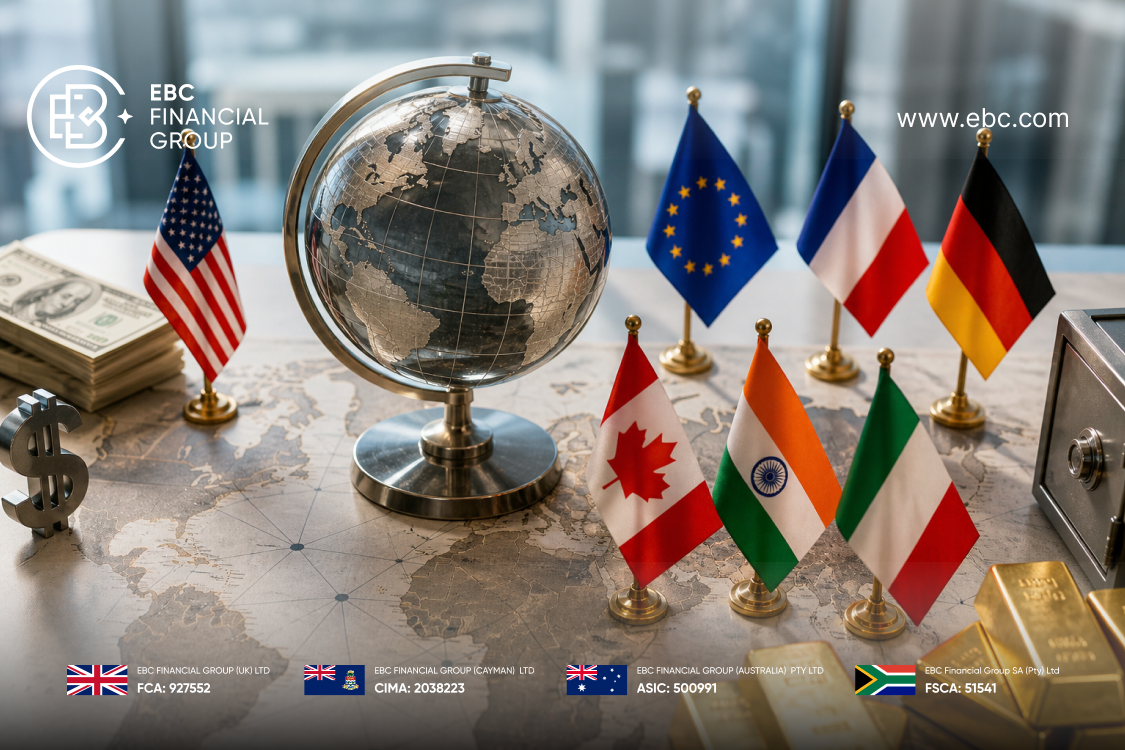
The Western economic alliance that emerged after 1945 was built on a foundation of mutual benefit: allied nations traded with the United States on favorable terms and received security guarantees and market access that made the arrangement worth maintaining. The current tariff regime, applied broadly across allies and rivals alike, has altered that calculation for every major partner economy at once.
Canada has publicly declared the old relationship over and is building new trade partnerships. Europe is borrowing independently, accelerating defense autonomy, and pursuing Asian trade agreements with renewed urgency. Japan is pledging hundreds of billions in U.S. investment while steadily constructing the trade architecture to reduce its reliance on a single market.
For investors tracking trade flows, sovereign debt, and currency positioning, the relevant question is no longer whether the Western alliance is adjusting. The adjustment is underway. The question is how far it goes, and how permanently it reshapes the trade routes, capital flows, and economic partnerships that have defined the global economy for 80 years.