Published on: 2026-05-26
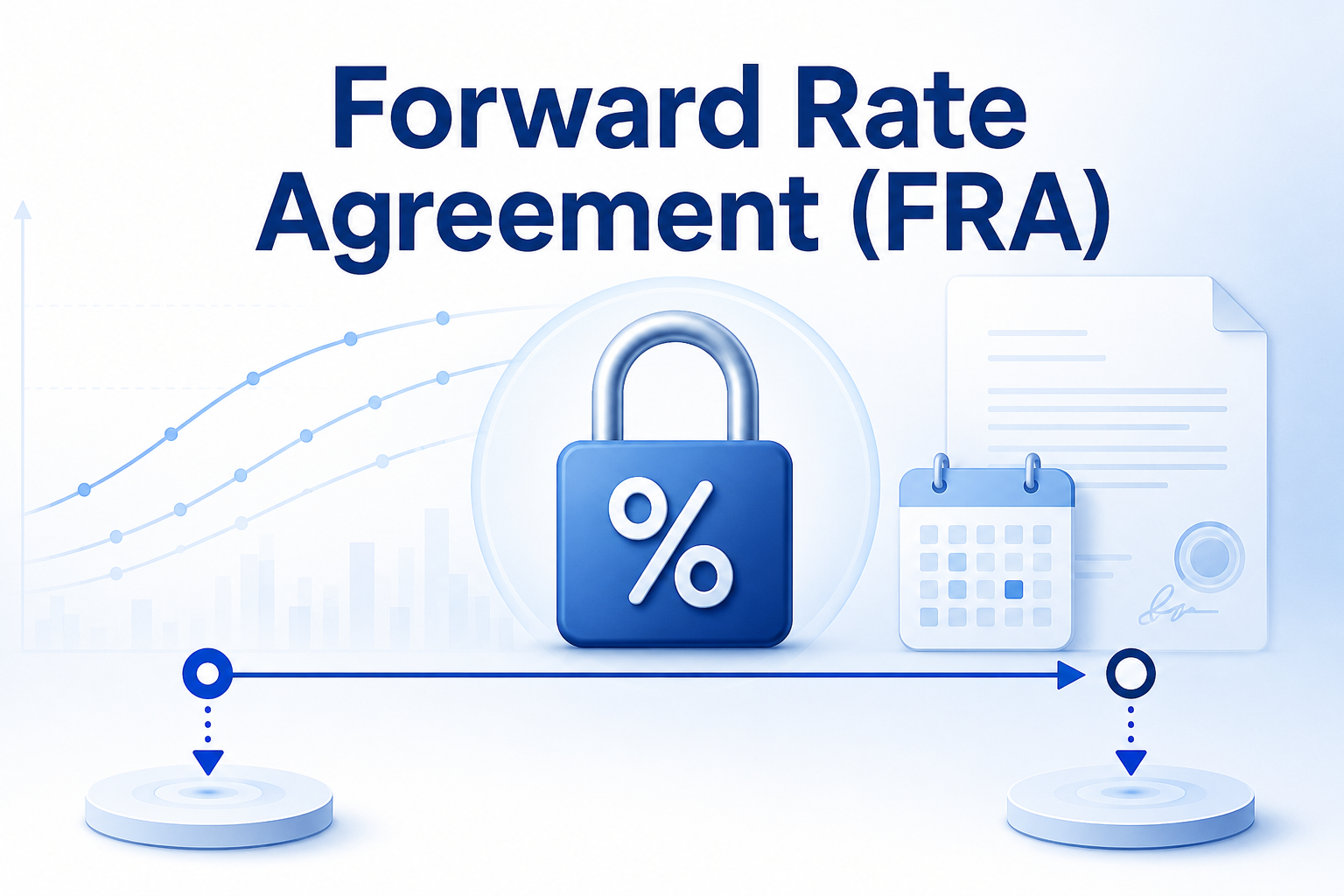
A forward rate agreement (FRA) is an over-the-counter (OTC) interest rate derivative that locks in an interest rate for a future borrowing or lending period. Banks, corporations, and institutional investors use FRAs to manage exposure to future interest rate changes before a loan, deposit, or investment period begins.
An FRA does not involve an exchange of loan principal. Instead, the parties agree on a notional amount and settle the difference between the agreed fixed rate and the market reference rate at the future settlement date.
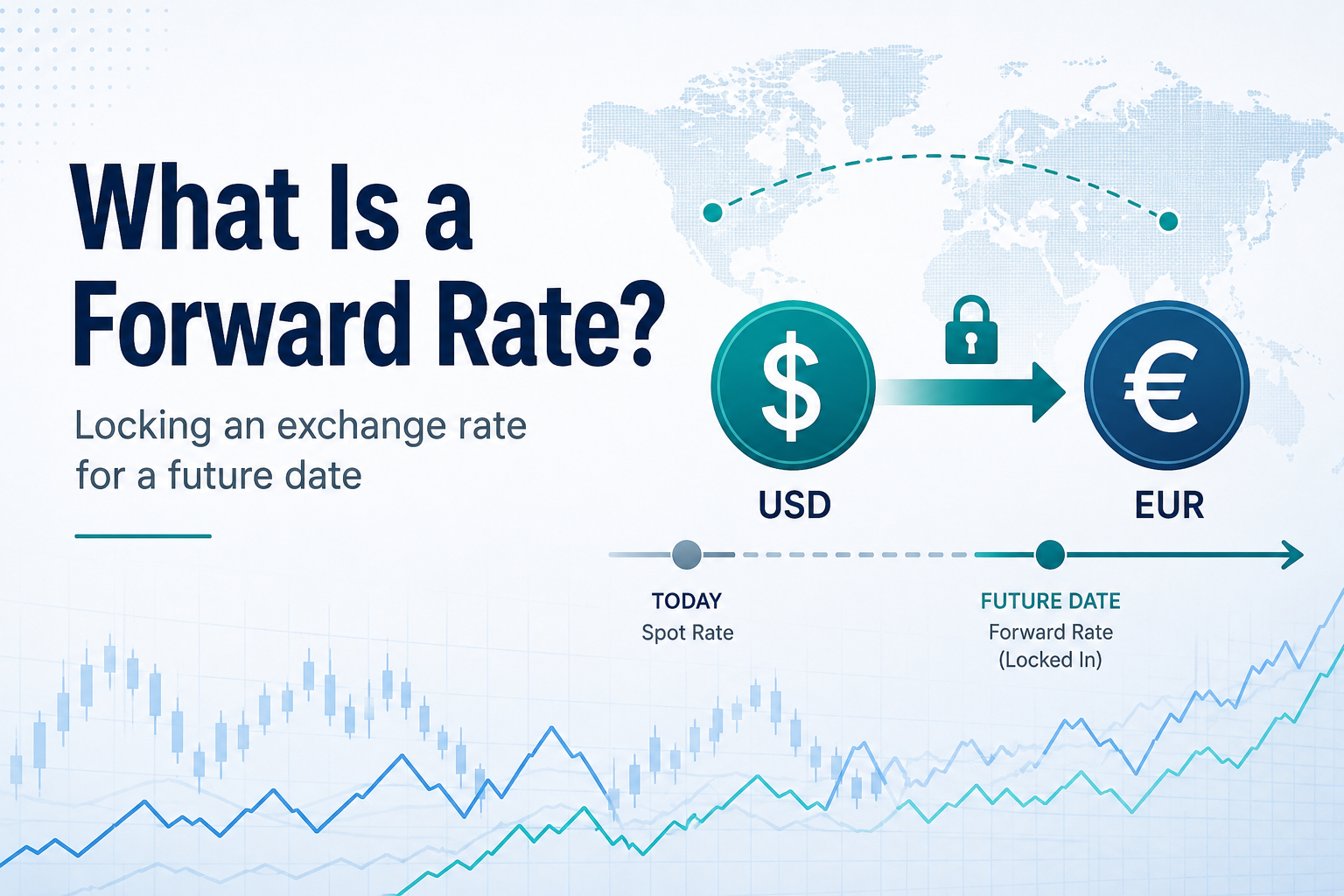
A simple way to understand the difference is this: a foreign exchange forward locks in a future exchange rate, while an FRA locks in a future interest rate.
An FRA is based on four main terms:
Notional amount
Future start date and end date
Agreed fixed interest rate
Floating reference rate used for settlement
For example, a company expects to borrow $10 million for six months, starting three months from today. It is worried that interest rates may rise, so it enters into an FRA at 4.5%.
If the relevant market rate rises to 5.5% when the borrowing period begins, the FRA produces a cash settlement that helps offset the higher borrowing cost. If the market rate falls below 4.5%, the company pays the difference instead. This means the FRA protects against rising rates but also limits the benefit of lower rates.
The notional amount is used only to calculate the settlement amount. It is not borrowed, lent, or exchanged between the parties.
FRAs are often written using two numbers, such as 3x9.
A 3x9 FRA means the contract starts in three months and covers the interest rate period ending nine months from today. In other words, it locks in a six-month rate that begins three months from now.
This notation helps traders and treasury teams quickly identify both the start date and the length of the underlying interest rate period.
Institutions mainly use FRAs to reduce uncertainty around future borrowing or lending rates.
FRAs can be useful during periods of:
Central bank tightening
Inflation uncertainty
Rising interest rate volatility
Shifting monetary policy expectations
Large planned borrowing or refinancing needs
A borrower may buy an FRA to protect against rising rates. A lender or investor may use an FRA to protect against falling rates.
FRA pricing is also watched by institutional traders because it reflects market expectations for future short-term interest rates. However, an FRA rate is not a guaranteed forecast. It is a market price based on current expectations, liquidity, benchmark rates, and risk conditions.
FRAs are linked to a reference interest rate. Historically, many examples used LIBOR, but benchmark reform has changed market conventions in several major currencies.
In U.S. dollar markets, SOFR-based rates have replaced U.S. dollar LIBOR in many contracts. Other markets may use benchmarks such as EURIBOR or other approved local reference rates.
Because benchmark conventions vary by currency, traders should always check which reference rate, day-count convention, fixing date, and settlement terms apply to the specific FRA.
An FRA is not a loan. It does not provide money upfront, and the notional amount does not change hands. It is a derivative contract used to manage interest rate risk.
FRA prices reflect market expectations for future interest rates, but they do not guarantee where rates will be at settlement.
An FRA can protect a borrower if interest rates rise. However, if rates fall, the borrower may have to make a settlement payment and miss out on cheaper market borrowing costs.
The reference rate matters. Settlement can differ depending on the benchmark, currency, day-count convention, and contract terms. This is especially important after global benchmark reforms.
Interest Rate Risk: The risk of loss or higher cost caused by changing interest rates.
Interest Rate Swap: A derivative contract used to exchange interest payment obligations.
Forward Contract: A private agreement to buy or sell an asset, rate, or financial exposure at a future date.
Hedging: A strategy used to reduce financial risk.
Monetary Policy: Central bank actions that influence interest rates, credit conditions, and liquidity.
Reference Rate: The benchmark interest rate used to calculate floating payments or settlement amounts.
A forward rate agreement is used to lock in a future borrowing or lending rate before market interest rates change. This helps institutions reduce uncertainty, plan financing costs, and hedge exposure to interest rate movements.
FRAs are commonly used by banks, corporations, institutional investors, and treasury departments. These participants often use FRAs when they have future borrowing, lending, refinancing, or investment exposure linked to short-term interest rates.
No. An FRA locks in a future interest rate for a specific period. An interest rate swap involves exchanging multiple interest payments over a longer period. Swaps are generally used for broader or longer-term interest rate management.
Only the cash settlement amount changes hands. The notional principal is used to calculate the payment, but it is not exchanged between the parties.
FRA pricing is influenced by benchmark interest rates, expected central bank policy, inflation expectations, market liquidity, credit conditions, and the shape of the yield curve.
A forward rate agreement is an OTC interest rate derivative used to lock in a future interest rate. It helps institutions manage borrowing costs, hedge interest rate exposure, and reduce uncertainty before a future loan, deposit, or investment period begins.