Published on: 2026-04-13
Updated on: 2026-04-13
Key Takeaways
Failed talks put Hormuz risk back into oil pricing and pushed crude above $100.
Markets reacted without a full closure of the strait, showing how little disruption Hormuz can withstand.
Futures fell as higher oil reopened inflation and earnings risk at the start of the reporting week.
The next move depends on enforcement, ship traffic, and whether this premium fades or hardens.
The Hormuz blockade oil shock hit markets on April 13 after U.S.-Iran talks in Pakistan ended without agreement and Washington said it would begin a blockade of ships entering or leaving Iranian ports. U.S. Central Command said the measure would start Monday at 10 a.m. EDT and apply to Iranian ports and coastal areas on the Persian Gulf and Gulf of Oman.
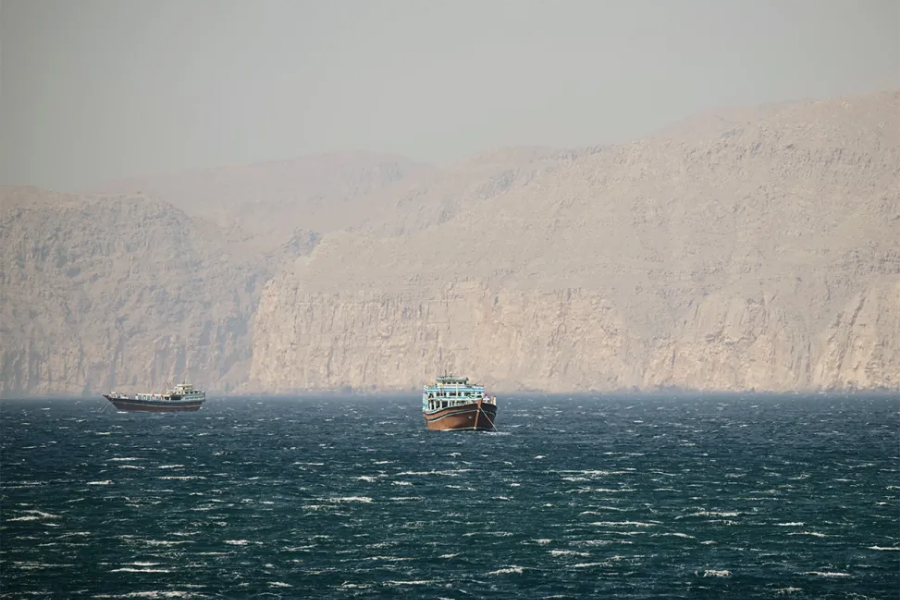
This was not a full closure of the Strait of Hormuz. U.S. Central Command said ships traveling between non-Iranian ports could still transit the strait. Markets still treated it as a supply-risk event. U.S. crude rose 8% to $104.24 a barrel, Brent rose 7% to $102.29, and U.S. stock futures turned lower in early trade.
Markets reacted as if supply risk had risen sharply. Flows through Hormuz in 2024 and the first quarter of 2025 accounted for more than one-quarter of global seaborne oil trade and about one-fifth of global oil and petroleum product consumption. A route that important does not need to be fully closed to move prices. It only needs to look less reliable.
A ceasefire had briefly lowered market stress. Iran had agreed to a two-week ceasefire and to talks in Islamabad, while the Strait of Hormuz was expected to reopen as negotiations continued. That framework broke down over the weekend when the talks ended without a deal.
Washington then moved from diplomacy back to pressure. The U.S. announced a blockade of Iranian ports while still allowing transit through Hormuz to non-Iranian ports. That distinction mattered legally, but it mattered less to the market because Hormuz remains the critical bottleneck.
Ship traffic had already appeared to halt or remain sharply reduced as tensions escalated, leaving the market with little room to absorb another layer of risk.
U.S.-Iran talks in Pakistan ended without a deal.
Washington announced a blockade of Iranian ports beginning Monday.
Non-Iranian ships were still allowed to transit Hormuz, but the market priced the broader chokepoint risk anyway.
Oil surged above $100, and U.S. stock futures fell before the opening bell.
Oil did not jump because Hormuz was fully closed. It jumped because the market stopped trusting the route to function normally. The U.S. move was limited to Iranian ports, but traders still treated it as a supply-risk event because Hormuz is too important to absorb new friction quietly.
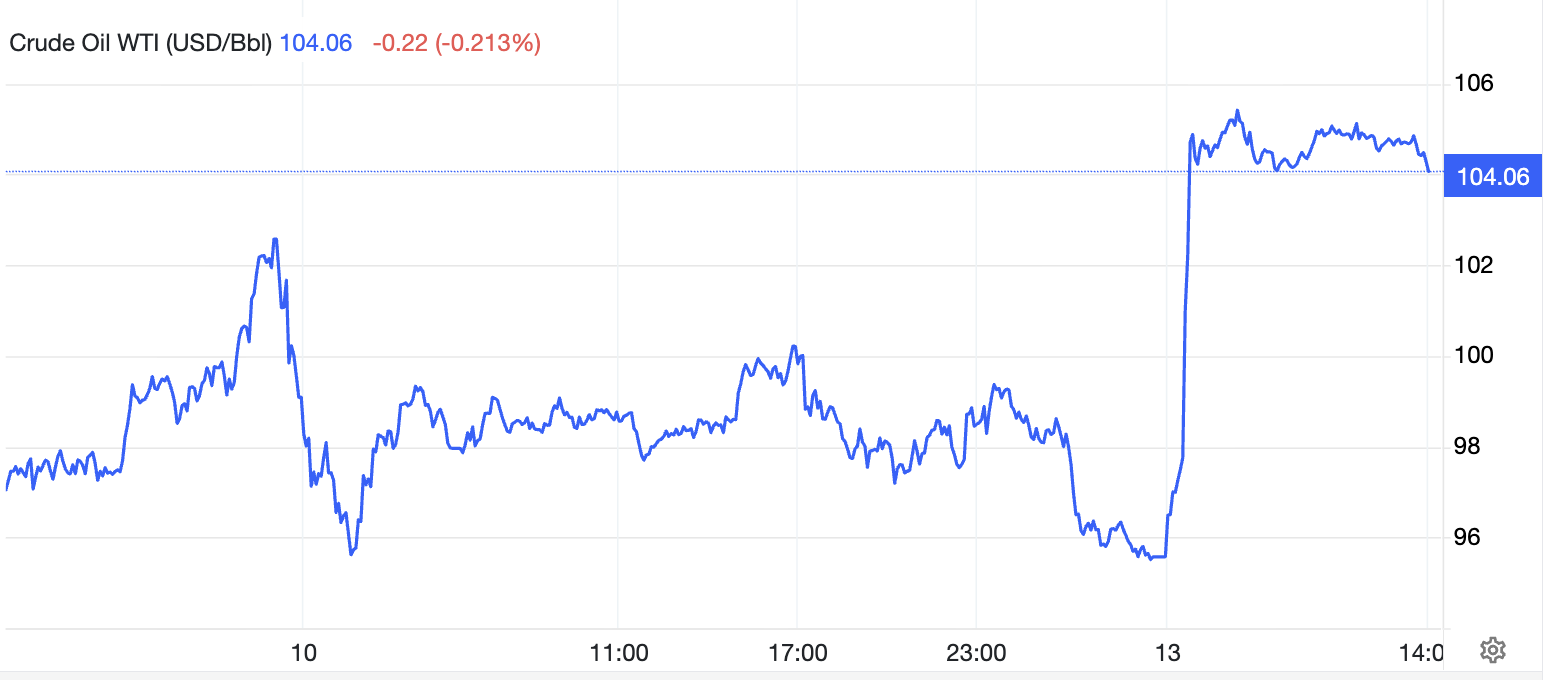
The numbers explain the move. Hormuz handled 20.9 million barrels a day in the first half of 2025, according to EIA, and still carries a large share of global oil and LNG trade. A chokepoint that large does not need to be fully shut to send crude above $100. It only needs to look less dependable.
Duration matters more than the first spike. EIA’s April outlook assumes the conflict does not persist past April, yet still says traffic would resume only gradually and would not return close to pre-conflict levels until late 2026. That means the market is pricing more than a headline. It is pricing a damaged corridor.
Futures fell because the market treated the oil spike as a macro shock, not a narrow energy trade. Early pricing showed Dow futures down 0.8%, S&P 500 futures down 0.5%, and Nasdaq futures down 0.9% while crude moved back above $100. That is the pattern of a risk-off move, not a sector rotation.
Higher oil created three immediate risks:
Inflation risk rose as higher crude threatened to push energy costs back into the market.
Corporate cost pressure increased because higher oil feeds into fuel, freight, and input costs.
Earnings risk grew because companies were heading into results week with a fresh external shock to explain.
That last point mattered because major bank earnings were due immediately. Goldman Sachs was scheduled for April 13, and JPMorgan Chase for April 14. When oil jumps and futures fall together at the start of earnings week, investors pay closer attention to commentary on costs, demand, and risk appetite.
| Market | Early move | Why it mattered |
|---|---|---|
| WTI crude | $104.24, up 8% | Higher inflation and fuel-cost risk |
| Brent crude | $102.29, up 7% | Confirms the shock is global |
| S&P 500 futures | -0.5% | Broad risk-off reaction |
| Dow futures | -0.8% | Pressure on cyclicals and financials |
| Nasdaq futures | -0.9% | Growth stocks were not insulated |
Hormuz does not need to be fully closed to disrupt markets. If ships can still pass on paper, but traffic stays thin and traders no longer trust normal flows, the strait can function like a damaged route anyway.
That can be enough to lift oil prices because Hormuz still carries more than one-quarter of global seaborne oil trade and about one-fifth of global oil and petroleum product consumption.
The real issue is duration. The current U.S. move still allows transit between non-Iranian ports, but markets reacted because the route was already under strain before the latest escalation. Even EIA’s baseline assumes flows recover only gradually and do not return close to pre-conflict levels until late 2026. In other words, Hormuz can stay technically open while remaining commercially unreliable.
Hormuz is unlikely to return to normal quickly. Even EIA’s baseline case, which assumes the conflict does not continue past April, says traffic would resume only gradually, and production would not return close to pre-conflict levels until late 2026. That is not a clean reopening. It is a route that stays operational in form and impaired in practice.
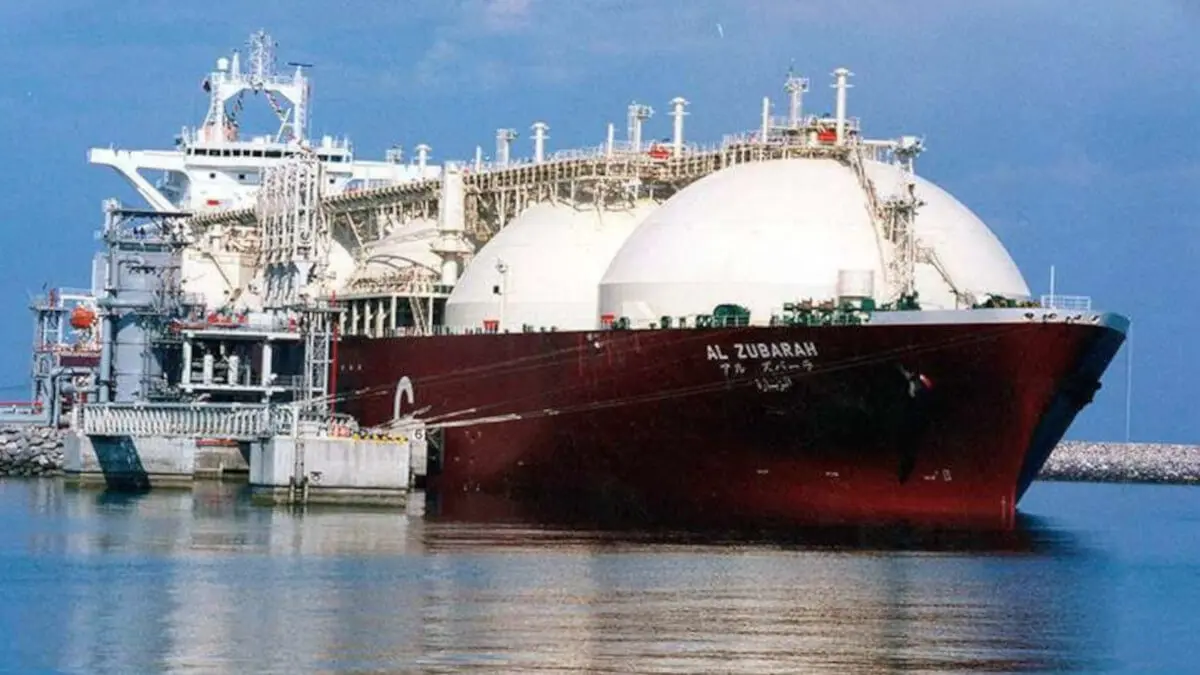
The pressure first lands in Asia, which takes most of Hormuz's crude and LNG flows. EIA says 84% of Hormuz crude and condensate flows and 83% of Hormuz LNG flows went to Asia in 2024, while the U.S. imported only about 0.5 million barrels a day through Hormuz, equal to 7% of U.S. crude imports and 2% of U.S. petroleum liquids consumption.
This is less a direct U.S. supply crisis than an Asia-first oil, gas, and shipping shock that feeds back into global inflation and corporate margins.
U.S.-Iran talks failed, and Washington then announced a blockade of ships entering or leaving Iranian ports starting Monday. The move stopped short of a full closure of the Strait of Hormuz but still triggered an immediate market reaction.
No. U.S. Central Command said ships traveling between non-Iranian ports could still transit the strait. The disruption is serious, but it is not a total shutdown.
Because traders added a fresh risk premium to a route that handles more than one-quarter of global seaborne oil trade and about one-fifth of global oil and petroleum product consumption.
Because the oil spike was treated as a macro shock. Higher crude raises inflation risk, threatens margins, and hits just as earnings season began. Early trade showed Dow, S&P 500, and Nasdaq futures all lower.
Hormuz was not fully closed, but that did not matter to markets. Failed talks and the U.S. move against Iranian ports were enough to lift oil above $100 and push futures lower because traders no longer trusted flows through the world’s most important oil chokepoint to stay stable.
The real issue now is duration. If this remains a brief disruption, part of the premium can unwind. If not, markets will have to price a longer energy, inflation, and earnings shock.
Disclaimer: This material is for general information purposes only and is not intended as (and should not be considered to be) financial, investment or other advice on which reliance should be placed. No opinion given in the material constitutes a recommendation by EBC or the author that any particular investment, security, transaction or investment strategy is suitable for any specific person.