Published on: 2026-04-01
Updated on: 2026-04-01
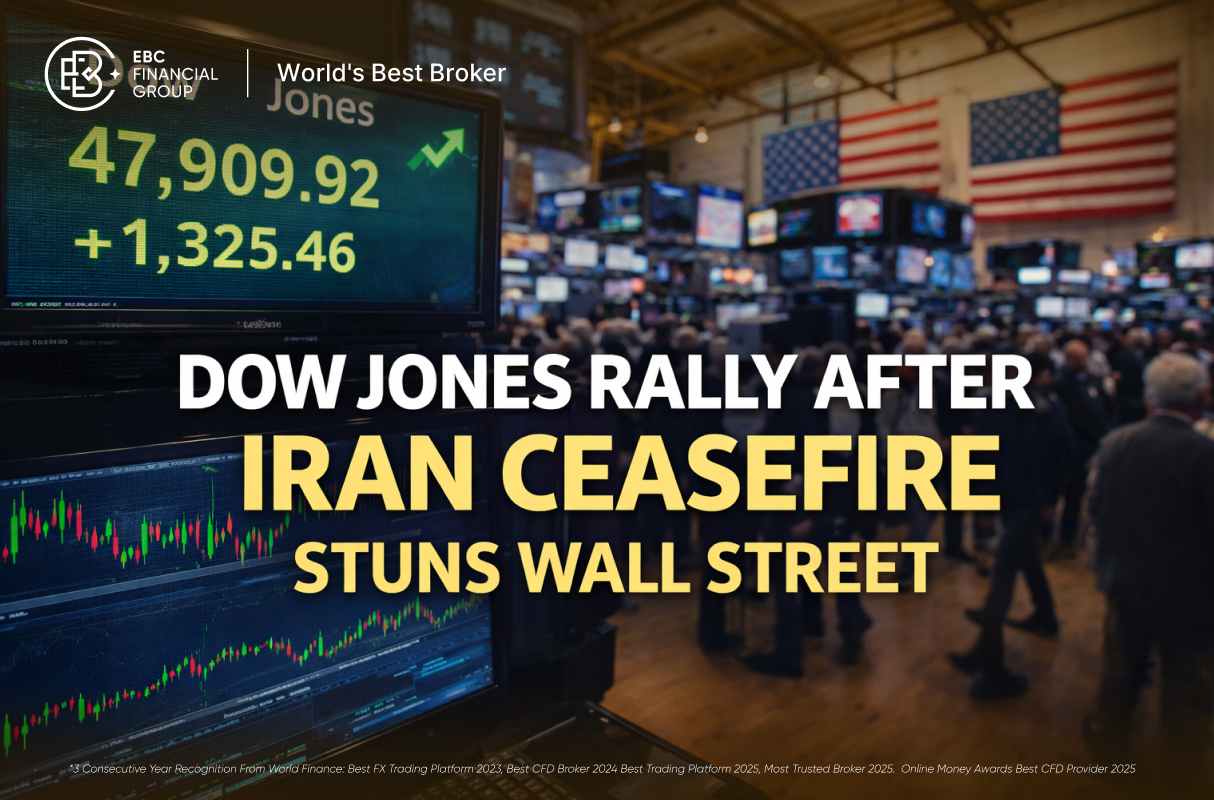
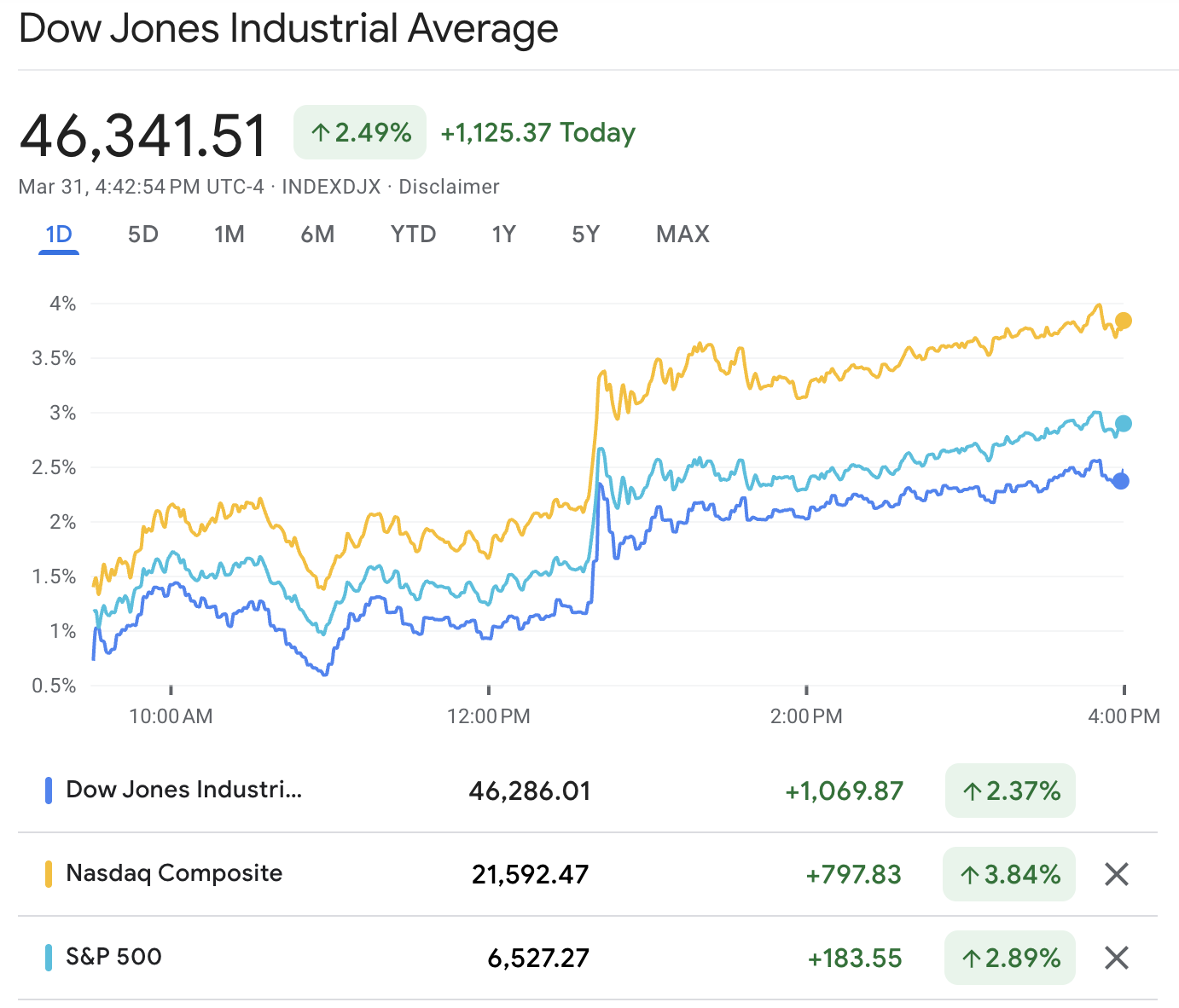
U.S. stocks surged on March 31, 2026, as the Dow Jones Industrial Average gained 1,125.37 points, or 2.5%, the S&P 500 rose 2.9% to 6,528.52, and the Nasdaq Composite jumped 3.8% to 21,590.63. All three indexes posted their biggest one-day gains since May 2025.

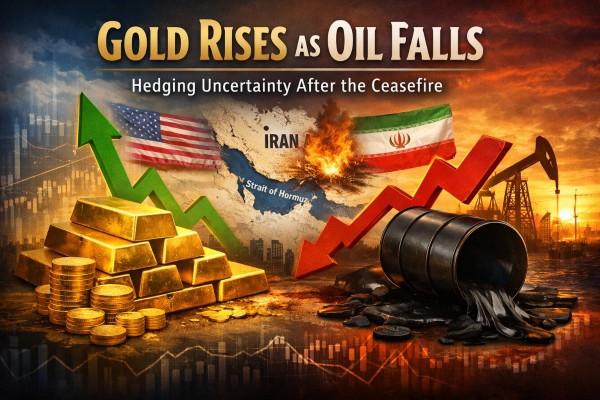
The move was driven by fresh hopes of de-escalation in the Iran war after President Donald Trump signaled openness to ending the U.S. military campaign and Iranian President Masoud Pezeshkian said Iran had "the necessary will to end the war" if its security conditions were met.
Oil and Treasury yields both fell, which helped risk assets recover. Brent crude settled down 3.2% at $103.97 a barrel, easing some immediate inflation pressure, though the Strait of Hormuz remained the key unresolved risk.
| Metric | Latest reading | Why it matters |
|---|---|---|
| S&P 500 | +184.80 points, or 2.9%, to 6,528.52 | Best one-day gain since May 2025 |
| Dow Jones Industrial Average | +1,125.37 points, or 2.5%, to 46,341.51 | Strongest daily point gain in months |
| Nasdaq Composite | +795.99 points, or 3.8%, to 21,590.63 | Growth stocks led the rebound |
| Brent crude | $103.97, down 3.2% | Lower oil eased some immediate inflation pressure |
| U.S. crude | $101.38, down 1.5% | Confirms lower near-term energy stress, but prices remain elevated |
| 10-year Treasury yield | 4.31%, down from 4.35% the prior day | Lower yields helped rate-sensitive stocks recover |
| Q1 2026 S&P 500 return | -4.6% | Worst quarter since summer 2022, despite the late rally |
| High-yield credit spreads | ICE BofA US High Yield OAS at 3.46% on March 30, up from 3.19% on March 24 | Credit still signals caution even after the equity rebound |
| Institutional take | Relief rally, not confirmation of a durable bottom | De-escalation hopes helped, but oil and shipping risk remain unresolved |
The rally was driven by two overlapping de-escalation signals rather than one confirmed breakthrough.
First, overnight reporting suggested President Trump was open to ending the U.S. military campaign even if the Strait of Hormuz remained largely closed. Later in the day, Iranian President Pezeshkian said Iran had "the necessary will to end the war" if there were guarantees against renewed aggression.
Markets responded because those signals lowered, at least temporarily, the perceived probability of a prolonged oil shock. That does not mean investors were pricing a full peace agreement. They were pricing a lower near-term risk of a worse energy and inflation scenario.
This distinction matters. The S&P 500 still finished the first quarter down 4.6%, the Dow down 3.6%, and the Nasdaq down 7.1%. Tuesday's move repaired sentiment faster than it repaired the broader technical damage.
Equities reacted immediately to the de-escalation headlines, but credit markets still argue for caution. The ICE BofA US High Yield Option-Adjusted Spread stood at 3.46% on March 30, up from 3.19% on March 24.
That is not a crisis signal by itself, but it does suggest risk appetite has not fully normalized. In plain terms, stocks welcomed a lower probability of further escalation, while credit still reflects tighter financial conditions and lingering default risk.
That gap is one reason to treat this move as a relief rally first and a durable bottom only if follow-through data improves.
The sector message was more nuanced than the headline indexes suggest. On March 31, information technology and communication services led the rebound, while energy and utilities lagged as crude prices pulled back.
Over the quarter, however, energy remained the standout winner because the war-driven oil shock lifted producers and refiners while pressuring fuel-sensitive and rate-sensitive parts of the market. That matters for earnings: one day of cheaper oil helps sentiment, but sustained oil above $100 can still squeeze transport, consumer, and industrial margins.
That is why the market can rally sharply on a de-escalation headline while still facing a difficult macro setup underneath.
The technical situation improved on March 31, but it has not completely reset. One day earlier, the S&P 500 had fallen to more than 9% below its all-time high, which put it close to correction territory before Tuesday's rebound.
The key test now is whether the index can regain and sustain its position above the 200-day moving average, rather than merely bouncing back for one session due to geopolitical events. That remains important because the market had already slipped below that trend gauge during the March selloff.
The primary risk remains unchanged: if the Strait of Hormuz is disrupted and Brent crude prices stay high, inflationary pressures may keep the Federal Reserve cautious, limiting the potential rebound of equities. That is the structural ceiling on this rally.
The Bureau of Labor Statistics releases the March Employment Situation on Friday, April 3, 2026. A weak report would reinforce concerns that higher fuel costs and tighter financial conditions are hitting growth. A stronger report would weaken the stagflation case.
The next meeting of the Federal Open Market Committee is scheduled for April 28-29, 2026. With oil still elevated, markets will focus less on whether the Fed moves immediately and more on whether Chair Powell treats the energy shock as temporary or persistent.
The Strait of Hormuz remains the key macro variable because it carries more than one-quarter of global seaborne oil trade and about one-fifth of global oil and petroleum product consumption. Any credible improvement in transit conditions could quickly change the inflation, growth, and policy outlook.
The rally was substantial, but one strong session is not enough to confirm a lasting recovery. For a more convincing turnaround, we would likely need to see a sustained decline in oil prices, clearer signs that shipping risks are decreasing, and a Federal Reserve policy that ceases to become more restrictive.
Tech led because falling oil prices and lower Treasury yields both helped longer-duration growth assets. When inflation fears ease and discount-rate pressure softens, investors usually rotate back into large-cap technology first. On March 31, Nvidia rose 5.6% and was the single biggest positive driver for the S&P 500.
The signal was significant for the market, but it was not equivalent to a signed agreement or a verified ceasefire. Iran's foreign ministry denied having direct talks with Washington but later acknowledged that messages were exchanged through intermediaries rather than through formal negotiations. (1)
Tuesday's surge was a relief rally driven by lower perceived odds of a worse oil shock, not proof that the macro risk has passed.
If the Strait of Hormuz remains disrupted and Brent crude stays elevated, inflation pressure can keep the Federal Reserve cautious and limit how far equities can rebound. Until those constraints ease, treat this move as a sharp reassessment of risk, not a confirmed trend reversal.
Disclaimer: This material is for general information purposes only and is not intended as (and should not be considered to be) financial, investment, or other advice on which reliance should be placed. No opinion given in the material constitutes a recommendation by EBC or the author that any particular investment, security, transaction, or investment strategy is suitable for any specific person.