Published on: 2026-05-22
Updated on: 2026-05-22
An exotic currency is a currency from a smaller, developing, or emerging-market economy that is traded less frequently in the global foreign exchange market.
Exotic currencies are different from major currencies such as the US dollar, euro, Japanese yen, British pound, Swiss franc, Canadian dollar, Australian dollar, and New Zealand dollar. They usually have lower liquidity, wider bid-ask spreads, and sharper price movements.
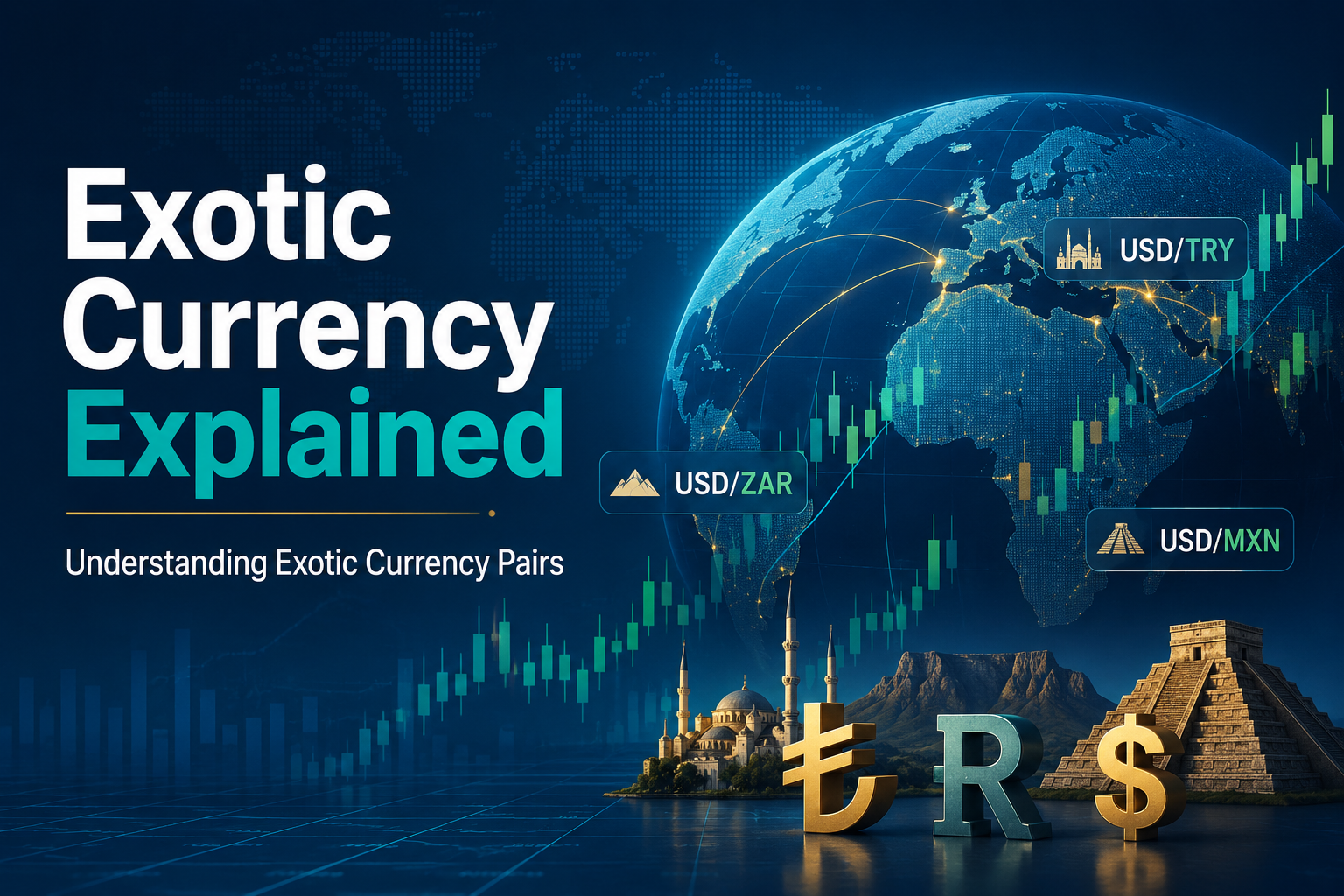
Common examples of currencies often treated as exotic or emerging-market currencies include:
Turkish lira (TRY)
South African rand (ZAR)
Thai baht (THB)
Mexican peso (MXN)
Hungarian forint (HUF)
In forex trading, exotic currencies are usually paired with a major currency. These combinations are known as exotic currency pairs. Examples include:
USD/TRY
USD/ZAR
USD/MXN
USD/THB
EUR/HUF
Exotic currencies can attract traders who want exposure to emerging markets or larger price movements. However, they also carry higher trading risk because market conditions can change quickly, and transaction costs are often higher.
Currencies and currency pairs are commonly grouped into three categories:
Major currency pairs
Minor currency pairs are also called cross pairs.
Exotic currency pairs
Major currency pairs include the most actively traded global currencies and usually involve the US dollar. Examples include EUR/USD, USD/JPY, GBP/USD, and USD/CHF.
Minor currency pairs, or cross pairs, do not include the US dollar but still involve widely traded currencies. Examples include EUR/GBP, EUR/JPY, and AUD/NZD.
Exotic currency pairs usually combine one major currency with a less-traded currency from an emerging or smaller economy. Some platforms may also classify pairs between two less liquid emerging-market currencies as exotic.
Because fewer market participants trade exotic currency pairs, these markets often have:
Lower liquidity
Wider bid-ask spreads
Higher trading costs
Larger price gaps
Faster price swings during news events
Exotic currencies are often influenced by domestic and global factors, including:
Political stability
Inflation
Interest rates
Commodity prices
Foreign investment flows
Central bank policy
Capital controls
Global risk sentiment
During periods of economic uncertainty or global risk aversion, emerging-market currencies may weaken or become more volatile as investors move toward more liquid currencies.
These pairs usually trade with lower liquidity than major pairs such as EUR/USD or USD/JPY. The exact classification may vary by broker, exchange, or trading platform.
Exotic currencies can provide trading opportunities, but they require careful risk management.
Higher Volatility
Exotic currency pairs often move more sharply than major currency pairs. This volatility may create trading opportunities, but it can also lead to faster losses.
Interest Rate Differences
Some emerging-market economies may have higher interest rates than developed economies. This can attract traders who focus on interest rate differentials, although exchange rate losses can outweigh any interest income.
Emerging-Market Exposure
Exotic currencies give traders exposure to economies that may be driven by different growth trends, commodity cycles, or policy decisions than developed markets.
Diversification
Trading exotic currencies may diversify forex exposure beyond the most heavily traded major pairs. However, diversification does not remove trading risk.
Exotic currency trading can be riskier than trading major currency pairs.
Wider Spreads
Lower liquidity usually leads to wider bid-ask spreads. This increases the cost of entering and exiting a trade.
Lower Liquidity
It may be harder to open or close positions at the expected price, especially during volatile market conditions or outside the most active trading hours.
Higher Volatility
Prices can move sharply after political events, central bank decisions, inflation data, or changes in global risk appetite.
Slippage and Price Gaps
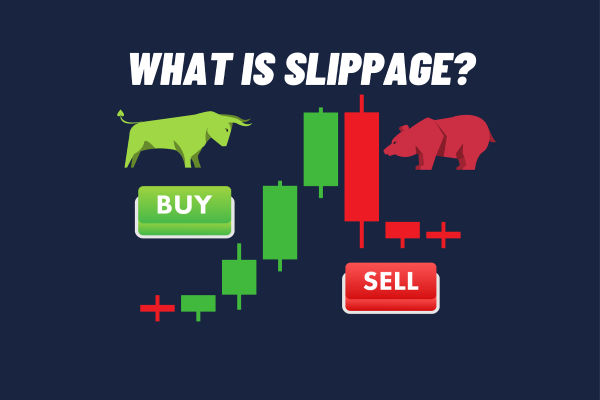
Because exotic pairs are less liquid, orders may be filled at a different price than expected. Price gaps can also occur after major news or during periods of thin trading.
Political and Economic Risk
Emerging markets may face higher risks from inflation, debt, policy uncertainty, capital controls, geopolitical tensions, or sudden changes in investor confidence.
Understanding these categories helps traders compare liquidity, cost, volatility, and risk before choosing a currency pair.
One common mistake is assuming that higher volatility means higher profit potential. Volatility can create larger price movements, but it also increases the risk of rapid losses.
Another mistake is ignoring spreads. A trade in an exotic pair may require a larger price move just to offset the higher transaction cost.
Traders may also underestimate local political and economic risks. Exotic currencies can react strongly to elections, central bank decisions, inflation data, changes in commodity prices, or capital control measures.
Forex Market: The global marketplace where currencies are bought and sold.
Major Currency Pair: A heavily traded currency pair that usually includes the US dollar.
Minor Currency Pair: A currency pair that does not include the US dollar but involves widely traded currencies.
Volatility: The degree of price movement in a market over time.
Liquidity: The ease with which an asset can be bought or sold without causing a large price change.
Bid-Ask Spread: The difference between the buying price and selling price of a currency pair.
Currency Intervention: Action taken by a central bank or government to influence an exchange rate.
An exotic currency is a less frequently traded currency from a smaller, developing, or emerging-market economy.
An exotic currency pair usually combines a major currency, such as the US dollar or euro, with a less-traded emerging-market currency.
Yes. Exotic currencies usually carry higher risk because they have lower liquidity, wider spreads, and higher volatility than major currency pairs.
Traders may trade exotic currency pairs for emerging-market exposure, diversification, interest-rate differentials, or larger price movements.
Major currency pairs are highly traded and usually have deep liquidity and tighter spreads. Exotic currency pairs are less liquid, often more volatile, and usually involve a currency from an emerging or smaller economy.
Exotic currencies give traders access to smaller and emerging-market economies in the global forex market. They can offer larger price movements and exposure to different economic trends, but they also involve higher risks linked to liquidity, spreads, volatility, and political or economic uncertainty.
Before trading exotic currency pairs, traders should understand how these markets behave, carefully review trading costs, and use risk management suited to less liquid currency markets.