Published on: 2026-04-13
Updated on: 2026-04-13
In Q1 2026, Hong Kong raised HK$109.9 billion (about US$14.1 billion) from 40 IPOs, a 489% increase year-on-year. This marks its strongest first quarter in five years and the highest global IPO proceeds.
The surge is driven by larger deals, not just a higher number of listings. A+H listings made up 15 of the 40 IPOs but contributed HK$66.9 billion (about US$8.6 billion), or 61% of total proceeds.
A+H issuers were significantly larger than others. The average A+H IPO raised HK$4.46 billion (about US$572 million), compared to HK$1.72 billion (about US$221 million) for non-A+H issuers, a difference of 2.6 times.
New economy listings raised HK$73.8 billion (about US$9.5 billion) from 27 IPOs. Chapter 18C specialist technology companies contributed HK$19.5 billion (about US$2.5 billion) from six listings, highlighting the growing impact of AI, semiconductors, and robotics.
Secondary-market conditions also improved. By the end of March, HKEX market capitalisation reached HK$45.9 trillion (about US$5.9 trillion), and average daily turnover for the first quarter rose 14% to HK$276.7 billion (about US$35.5 billion).

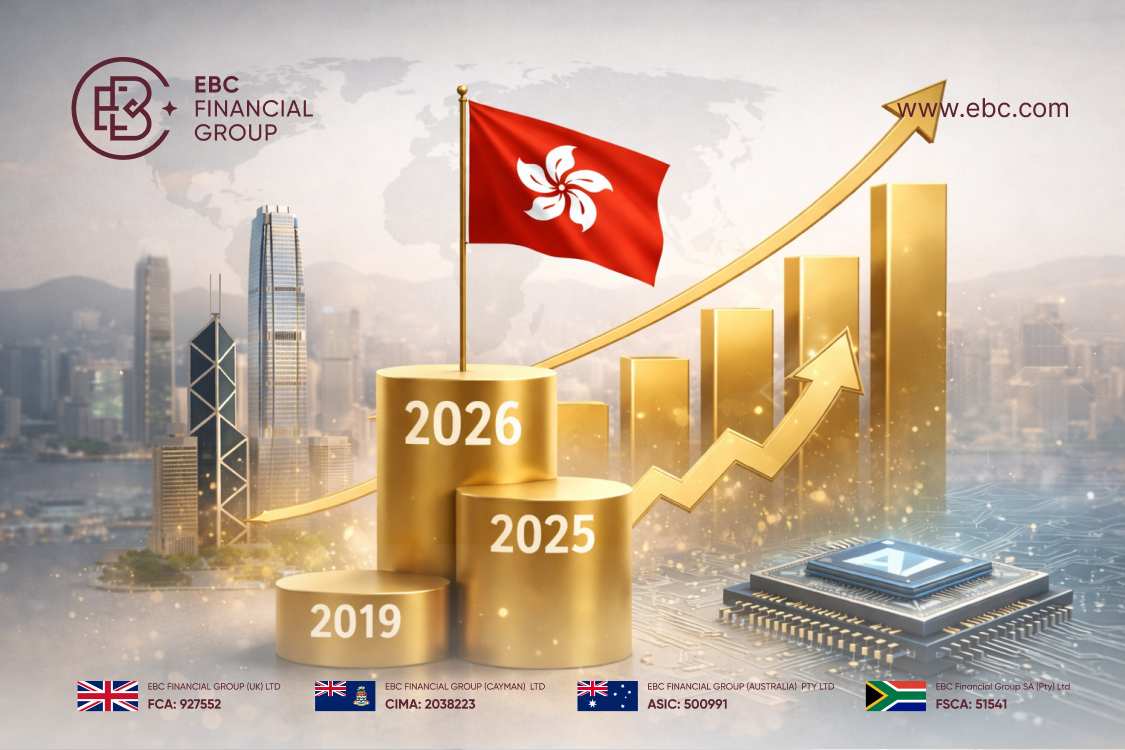
Hong Kong's resurgence began before Q1 2026. The city reclaimed the global top spot for full-year IPO proceeds in 2025, its first since 2019. The strong performance in Q1 2026 confirms the recovery's momentum into the new cycle.
In reality, the origins of this rebound actually trace back even further. In April 2018, HKEX overhauled its listing regime to admit three categories that had previously been harder to attract: pre-revenue biotech companies, issuers with weighted voting rights, and qualifying overseas-listed companies seeking a secondary listing in Hong Kong.
By March 2021, 146 new economy companies had raised HK$682.2 billion under this framework, along with 31 pre-revenue biotech companies and 13 homecoming secondary listings. The current boom is stronger because it builds on this earlier market redesign, not just temporary sentiment.
While the headline figure is impressive, it is important to distinguish between breadth and size. Hong Kong achieved both: more companies listed, and those listings were significantly larger.
| Metric | Q1 2026 | Q1 2025 | What it suggests |
|---|---|---|---|
| IPO proceeds | HK$109.9B (US$14.1B) | HK$18.7B (US$2.4B) | A near sixfold jump in capital raised |
| IPO count | 40 | 15 | Broader issuance activity |
| Average proceeds per IPO | HK$2.75B (US$353M) | HK$1.25B (US$160M) | Larger issuers returned |
| A+H proceeds | HK$66.9B (US$8.6B) | Minimal base effect | Mainland dual listings became the main funding engine |
| Chapter 18C proceeds** | HK$19.5B (US$2.5B) | Nil | Specialist tech became investable at scale |
| Average daily turnover | HK$276.7B (US$35.5B) | HK$242.7B (US$31.1B) | Better liquidity to absorb new supply |
*Table figures use KPMG's IPO review, HKEX market statistics, and simple calculations based on those published totals.
**HKEX’s Technology Enterprises Channel (TECH), which provides dedicated support and confidential filing for Chapter 18C (and 18A) applicants, was only launched in May 2025, after Q1.
The key message is that Hong Kong is not just hosting more small listings. It is once again attracting large issuers that influence global rankings.
This enabled the city to raise US$14.2 billion in one quarter and capture 35% of global IPO proceeds, despite only 251 IPOs globally totaling US$42.6 billion.
In summary, Hong Kong is leading in value, not just in volume.
This clearly indicates that established issuers, rather than speculative newcomers, are driving the current revival.
An A+H listing refers to a mainland China-listed company that also lists in Hong Kong, providing access to a broader investor base and offshore fundraising.
In Q1 2026, 15 A+H IPOs raised HK$66.9 billion, meaning 37.5% of deals generated 61% of proceeds. As of 31 March 2026, KPMG reported 101 active A+H applications with a combined market capitalisation of approximately RMB4.85 trillion.
HKEX introduced Chapter 18C on 31 March 2023 to establish a listing route for specialist technology companies. By Q1 2026, this framework had become significant.
Specialist technology companies raised HK$19.5 billion from six IPOs in the quarter, compared to none in the previous year. KPMG identified robot technology, artificial intelligence, and semiconductors among the sectors represented.
Overall, new economy listings raised HK$73.8 billion from 27 IPOs, accounting for about two-thirds of Hong Kong's IPO proceeds for the quarter.
This combination distinguishes the current cycle. A+H listings provide scale, credibility, and recognition, while Chapter 18C listings offer growth and access to future-oriented sectors. Together, they add both depth and a compelling narrative to the market.
A sustainable IPO market requires more than a few large deals. It needs a strong pipeline, sector diversity, and sufficient secondary-market liquidity to support new issuances. Hong Kong is making progress in all these areas.
As of 31 March 2026, KPMG reported 366 active public IPO applications, the highest in several years. The pipeline is diversified: TMT accounts for 35%, healthcare and life sciences for 23%, and industrials for 21%. This diversification reduces reliance on any single trend or policy theme.
Liquidity has improved as well. At the end of March, HKEX's market capitalisation was HK$45.9 trillion, and average daily turnover for the first quarter reached HK$276.7 billion. While this does not guarantee strong post-listing performance, it allows for larger offerings.
Global factors also contribute to Hong Kong's gains. EY describes the 2026 IPO market as open but selective, with investors focusing on larger issuers with strong fundamentals. In Greater China, EY notes that over 100 A-share companies have applied for dual H-share listings to fund overseas supply chains and global expansion. This reflects a structural trend rather than a temporary funding surge.
Policy support also plays a role. HKEX completed most consultations on IPO price discovery and open-market requirements in August 2025, with new listing rules taking immediate effect. This demonstrates ongoing efforts to maintain competitiveness.
KPMG notes that the 10 largest Hong Kong IPOs accounted for 63% of proceeds in Q1 2026. While large issuers are beneficial, this concentration may overstate the market's strength compared to conditions for smaller or mid-sized deals.
A strong league-table position does not guarantee consistent demand across all IPOs.
KPMG reports that regulators have taken steps to address pressure on professional resources and concerns about the quality of listing documents amid the surge in applications.
This is significant, as markets can lose momentum if professional resources are overstretched or if disclosure standards decline as activity increases.
EY reported that rising tensions in the Middle East increased volatility in Q1, causing some launch delays. Other deals were priced below target due to a more risk-averse environment.
Hong Kong may lead the world in IPO proceeds yet still experience periods of fragility, reflecting its close ties to international capital flows.
Hong Kong reclaimed the global top spot for the full year in 2025 for the first time since 2019. Q1 2026 suggests that leadership was not a one-off because the city remained first in the following quarter in terms of proceeds.
Technology is a major factor, but not the sole driver. Specialist tech raised HK$19.5 billion in Q1, and the active pipeline also includes significant healthcare, life sciences, and industrial companies.
No. A strong IPO market reflects fundraising activity and liquidity, but individual stock performance depends on valuation, sector conditions, earnings quality, and overall market risk appetite.
Hong Kong's IPO boom reflects improved market quality, not just sentiment. The city is increasing fundraising by attracting larger issuers through two main channels: mainland A+H listings and specialist technology companies.
Enhanced trading liquidity and a broad application pipeline support the view that this is more than a temporary rebound.
However, growth remains concentrated and sensitive to regulatory changes and global risk sentiment. Nonetheless, Q1 2026 demonstrates that Hong Kong is not just rejoining the global IPO conversation; it is shaping it.
Disclaimer: This material is for general information purposes only and is not intended as (and should not be considered to be) financial, investment or other advice on which reliance should be placed. No opinion given in the material constitutes a recommendation by EBC or the author that any particular investment, security, transaction or investment strategy is suitable for any specific person.