Published on: 2026-04-13
Updated on: 2026-04-13
This shift is broad and not limited to specific sectors. The U.S. CHIPS Act allocates $52.7 billion, the EU's SAFE facility can issue up to €150 billion (~$175.7B) , and Germany plans to increase defense spending from over €86 billion in 2025 to €152.83 (~178.6B) billion by 2029.
Energy security is being repriced along with industrial security. Japan's energy self-sufficiency rate was 12.6% in FY2022, the lowest in the G7, and 14 reactors had restarted by August 2025.
Semiconductor localization now extends beyond the U.S. and China. India's semiconductor mission offers an incentive framework of ₹76,000 crore (~$8.2B), with 10 approved projects totalling ₹1.60 lakh crore across six states as of December 2025.
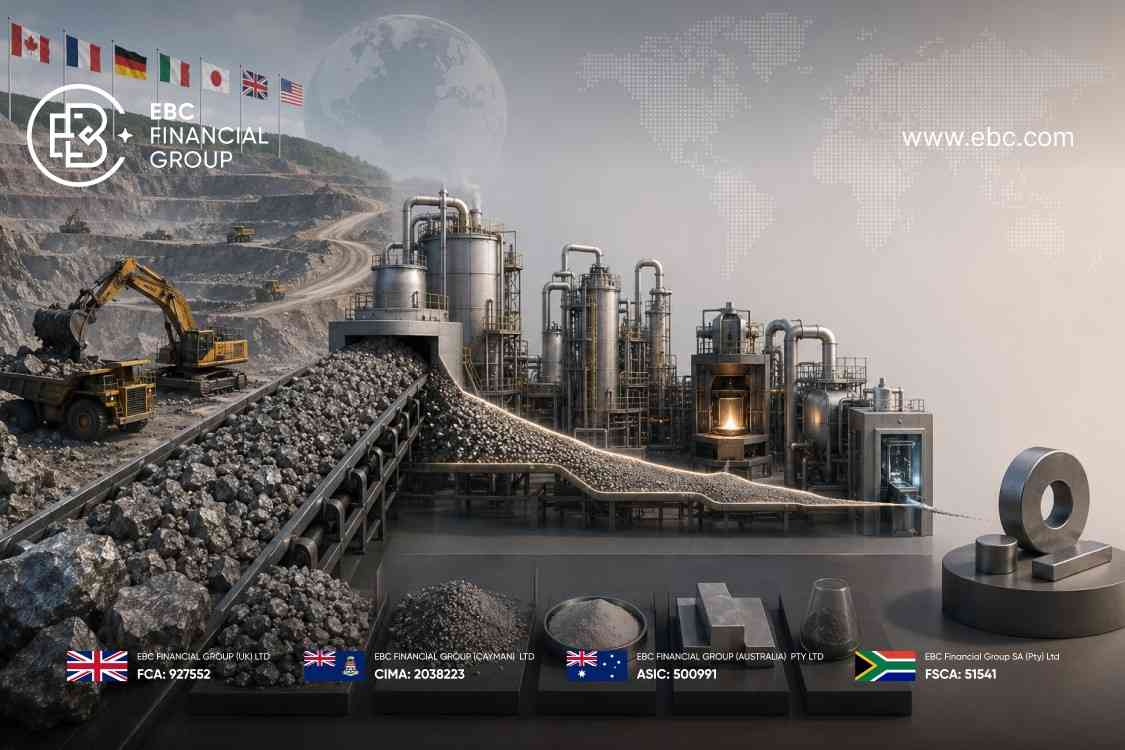
Commodity security is becoming more expensive. China controls refining for 19 of 20 strategic minerals, averaging a 70% market share. OECD data show export restrictions on industrial raw materials have increased more than fivefold from 2009 to 2023.
Inflation may slow, but price levels remain elevated. The IMF projects global headline inflation at 4.2% in 2025 and 3.6% in 2026. However, Bank of England research finds that fragmentation adds inflationary pressure and may require tighter policy to maintain targets.
For three decades, global production focused on minimizing costs by concentrating where labor, energy, and scale were cheapest. This model is now being partially reversed.
Federal Reserve research from 2025 highlights that foreign direct investment is fragmenting due to reshoring, nearshoring, friendshoring, and derisking. Capital is now allocated based on political alignment and supply-chain security, not just cost minimization.
Price stability depends on production organization, not just central bank actions. Duplicating fabs, defense plants, refining chains, reserve systems, and payment rails replaces global spare capacity with national redundancy.
This leads to higher capital expenditures and a lasting increase in the global fixed-cost base. Bank of England analysis shows trade fragmentation contributes to inflation from both supply and demand, requiring more restrictive monetary policy to maintain targets.
| Economy / bloc | Strategic push | Current metric | Why it lifts the price floor |
|---|---|---|---|
| United States | Semiconductor reshoring | $52.7B CHIPS Act; $39B incentives; $11B R&D | Domestic fab redundancy raises fixed capex and skilled-labor demand |
| European Union | Defense industrial rebuilding | Up to €150B SAFE funding; ~€650B fiscal space from a 1.5% GDP defense increase over four years | Public borrowing, procurement guarantees, and duplicated supply chains raise costs |
| Germany | Rearmament and procurement | >€86B available in 2025; €152.83B core budget planned for 2029 | Sustained demand for metals, electronics, energetics, and logistics |
| Japan | Energy security | 12.6% self-sufficiency in FY2022; 14 reactors restarted by Aug. 2025 | Resilience is prioritized over lowest-cost imports |
| India | Semiconductor localization | ₹76,000 crore incentives; ₹1.60 lakh crore approved projects | Subsidized domestic capability lifts capex intensity |
| China | Parallel strategic systems | 19/20 strategic minerals refined with ~70% average share; CIPS 180T RMB annual volume in 2025 (~$26.1 trillion) | Diversification by others requires expensive alternative capacity |
The central trend is duplication. Governments are prioritizing parallel supply chains, domestic capacity, and strategic redundancy over cost optimization. This increases resilience but also raises the structural price floor.
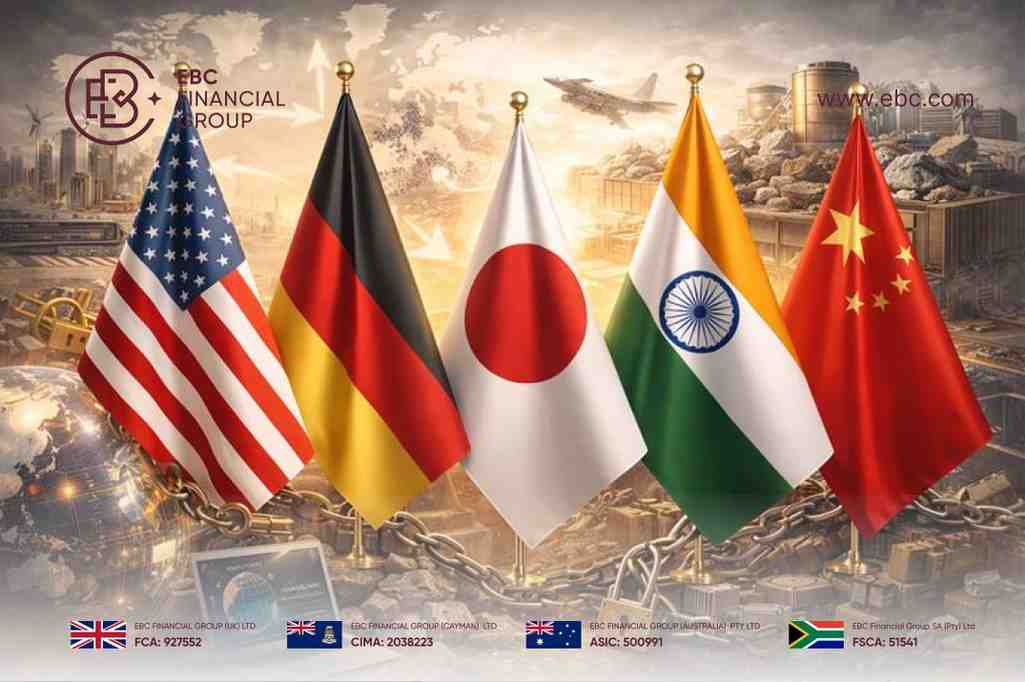
This trend is evident across regions. The United States and India subsidize semiconductor localization, Europe and Germany expand defense capacity, Japan invests in energy security, and China’s dominance in strategic inputs compels others to fund costly alternatives. In each case, resilience takes precedence over the lowest-cost global model.

IMF forecasts global headline inflation slowing to 4.2% in 2025 and 3.6% in 2026. While the pace of increase slows, strategic premiums in energy, defense, semiconductors, and transport remain.
Once higher-cost domestic capacity is established, the baseline price level rises even if annual inflation moderates.
Countries are now incurring insurance-like costs to guard against sanctions, blockades, export controls, cyber risks, and supply shocks from conflict. Japan's energy plan specifically emphasizes resilience and emergency readiness.
Europe's defense strategy focuses on common procurement and industrial readiness. India's semiconductor program emphasizes technological self-reliance. Higher prices are the premium for reduced strategic vulnerability.
The IEA's 2025 outlook shows China dominates refining for 19 of 20 minerals analyzed, with an average 70% market share. This concentration makes diversification necessary, but building alternative supply chains is more expensive and starts at a smaller scale.
The OECD's 2025 inventory highlights that export restrictions on industrial raw materials have increased more than fivefold since 2009, accelerating sharply in 2023. Concentrated supply and rising restrictions directly drive structurally higher input costs.
Food security illustrates the same trend. IMF research on 48 major commodities finds that further fragmentation can cause significant price changes and volatility, as production is concentrated and difficult to substitute quickly.
FAO's 2025 Food Outlook warns that trade tensions and policy uncertainty can affect food import costs, especially for sensitive products. While food inflation may be cyclical, building redundancy in food systems incurs additional costs.
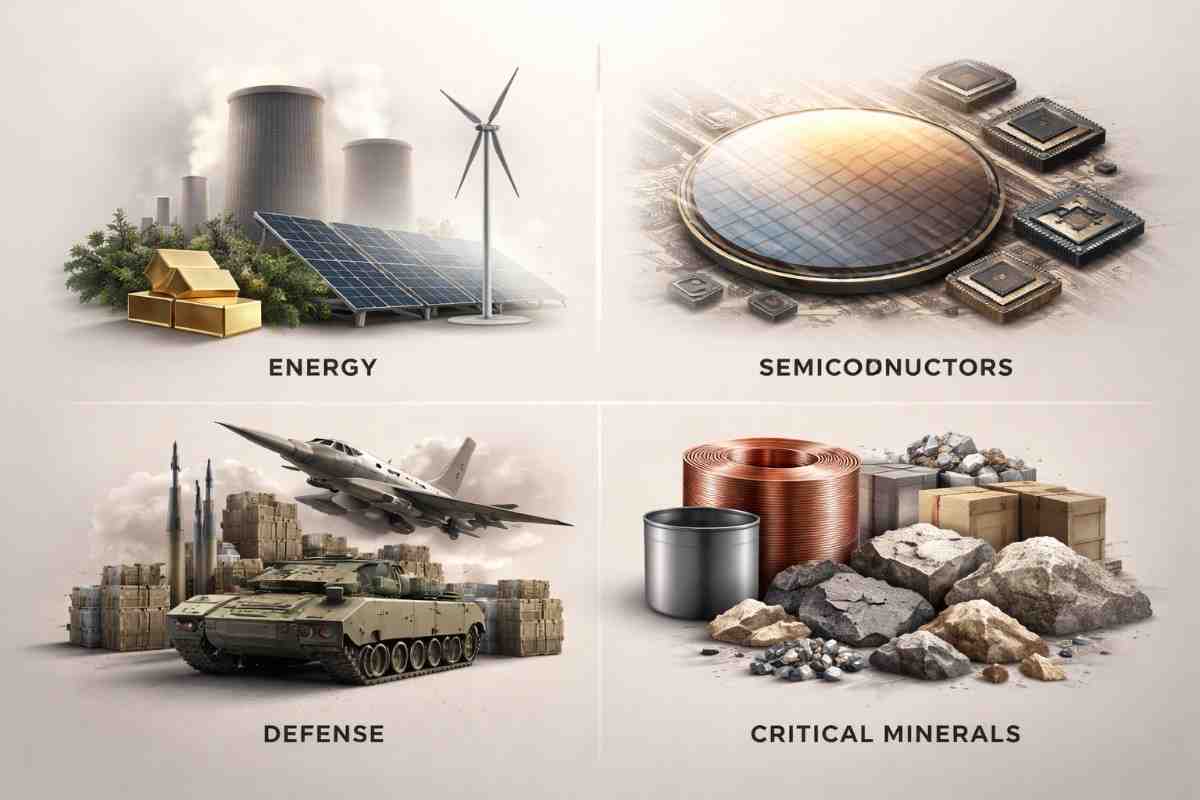
Markets still tend to view these developments as isolated events, such as chip subsidies, defense budgets, or mineral restrictions. However, they collectively require more public spending, industrial subsidies, domestic inventories, skilled labor, and accepted inefficiency.
This environment supports a higher floor for nominal growth and real yields, rather than a return to the zero-rate, low-friction conditions of the 2010s. Not every sector has the same strategic advantage. The greatest advantage lies where policy support, capacity scarcity, and long lead times intersect.
Defense contractors, munitions suppliers, grid equipment makers, nuclear-service firms, power-electronics manufacturers, semiconductor equipment providers, and specialty metals processors are more aligned with the new capital expenditure cycle than sectors reliant on discretionary consumer demand. Their risk-adjusted potential is driven by backlog visibility and policy demand, rather than cheap capital or offshore margin expansion.
China’s parallel financial infrastructure adds another dimension. In 2025, CIPS reported 194 direct participants, 1,597 indirect participants, and an annual business volume of RMB 180 trillion. While this does not replace the dollar system, it demonstrates that self-sufficiency now extends beyond physical supply chains to settlement systems as well.
High prices persist not due to a single central bank's policy error, but because the world is rebuilding strategic capacity across multiple systems. The United States is subsidizing semiconductors, Europe is financing defense rearmament, and Germany is increasing its defense budget to over €150 billion by 2029.
Japan is investing to improve energy resilience, given its low self-sufficiency rate among the G7. India is funding domestic semiconductor capacity. China maintains dominance in strategic mineral refining and is expanding parallel payment infrastructure.
Each initiative is strategically sound individually. Collectively, they replace efficiency with redundancy, which imposes a lasting cost.
Disclaimer: This material is for general information purposes only and is not intended as (and should not be considered to be) financial, investment or other advice on which reliance should be placed. No opinion given in the material constitutes a recommendation by EBC or the author that any particular investment, security, transaction or investment strategy is suitable for any specific person.