Published on: 2026-04-14
Updated on: 2026-04-14
318 million people face crisis-level hunger in 2026 across 68 countries, more than double the 2019 figure. Another 45 million could be pushed into acute food insecurity if the Middle East conflict persists past mid-year.
Nigeria (27.2 million), Democratic Republic of Congo (26.7 million), Sudan (19.1 million), Yemen (18.1 million), and Afghanistan (13.8 million) account for the five largest food crises on the planet.
Urea fertilizer prices have surged roughly 50% since the Hormuz closure. Farmers across Sub-Saharan Africa and South Asia entered the planting season without adequate inputs. The yield impact will hit food markets in Q3 and Q4 2026.
In 2010-2011, a 40% spike in food prices helped topple four governments across the Middle East and North Africa. The 2026 crisis is larger in scale, broader in geography, and hitting countries with less fiscal capacity to absorb it.
Markets are focused on oil. The bigger story is food. The World Food Programme’s 2026 Global Outlook puts 318 million people at crisis-level hunger or worse across 68 countries. That number has more than doubled since 2019.
Two simultaneous famines are running in Gaza and Sudan, the first time this century two famines have occurred at the same time. And the fertilizer shock triggered by the Hormuz closure has not yet reached harvest data or grocery shelves.
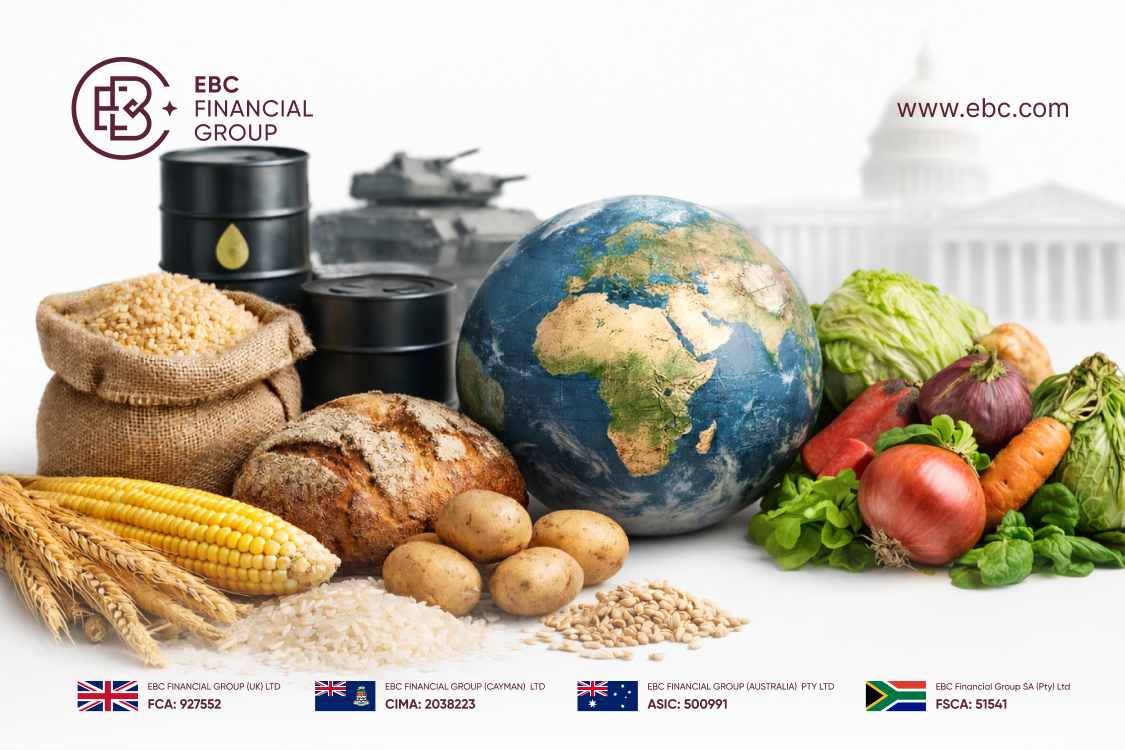
The last time global food prices spiked on a comparable scale, four governments fell. The conditions building in 2026 are worse, and spread across more countries, with fewer resources available to contain them.
The IPC, the globally accepted food security classification system, tracks acute hunger by country and severity. The numbers for 2026 read like a map of political risk.
Nigeria leads the world with 27.2 million people in crisis-level hunger or above. The Democratic Republic of Congo follows at 26.7 million. Sudan, in the middle of a civil war and confirmed famine, has 19.1 million people. Yemen, after a decade of conflict and economic collapse, has 18.1 million. Afghanistan has 13.8 million.
These five countries alone account for more than 115 million people who cannot reliably feed themselves.
The list continues: South Sudan (7.6 million), Pakistan (7.5 million), Somalia (6.5 million), Haiti (5.9 million), Kenya (4.1 million), Malawi (4 million), Guatemala (3 million), Cameroon (3.1 million), Central African Republic (2.3 million), Chad (1.9 million), and Niger (1.9 million). Sixteen hunger hotspots have been identified by the FAO and WFP, with six at the highest concern level where populations face imminent risk of famine: Sudan, Gaza, South Sudan, Yemen, Mali, and Haiti.
These are not projections. These are current conditions, measured before the full impact of the Hormuz fertilizer shock reaches food markets.
The oil-to-food inflation chain now unfolding operates through a sequence most analysts are not tracking: crude oil and natural gas prices spike, which raises the cost of producing nitrogen fertilizers, which raises input costs for farmers, which either reduces fertilizer application or passes costs through to food prices, or both.
The Strait of Hormuz carries roughly one-third of globally traded fertilizer. Since the war began on February 28, those flows have been severely constrained.
The World Bank reported urea prices surging nearly 46% month-on-month between February and March 2026. Industry analysts tracking Egyptian granular urea, a nitrogen fertilizer benchmark, saw prices jump from $400-$490 to around $700 per metric ton.
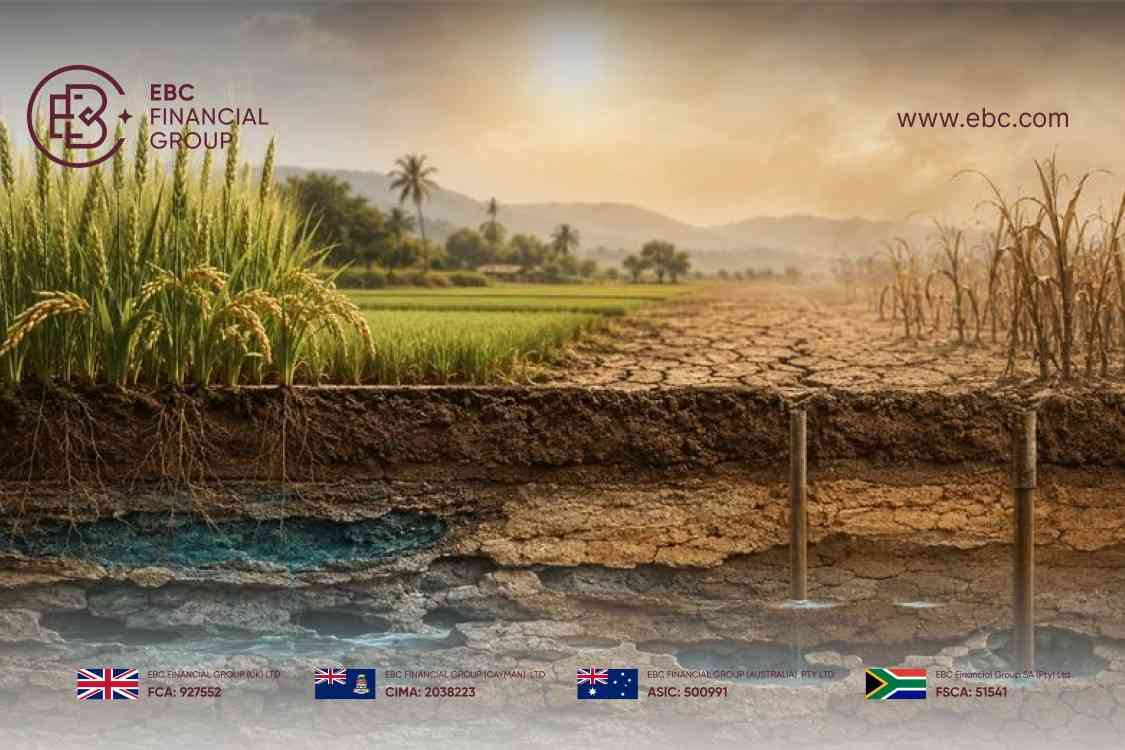
This article focuses on where that shock lands: the planting fields of Sub-Saharan Africa, South Asia, and Southeast Asia, where over 90% of fertilizer is imported, and spring planting decisions were being made precisely when supplies were cut, and prices doubled.
The FAO’s chief economist, Maximo Torero warned on April 14, 2026 that the “clock is ticking” on fertilizer deliveries. Farmers who cannot afford or access nitrogen inputs will produce with less, and that means lower yields. Lower yields mean tighter grain supplies and higher food prices in Q3 and Q4 2026.
The World Bank’s latest commodity update confirms the early signals: wheat prices 13% higher, the cereal price index is up 7%, and quarterly food price inflation is increasing in low-income countries between late 2025 and early 2026. These are the opening numbers. The full impact of the harvest has not arrived.
The WFP released a separate analysis in March 2026 modeling what happens to global hunger if oil stays above $100 per barrel through mid-year. The conclusion: almost 45 million additional people fall into acute food insecurity.
The regional breakdown makes the exposure concrete. In East and Southern Africa, 17.7 million more people could cross the hunger threshold. Across 10 Asian countries, 9.1 million more face that risk. In Latin America and the Caribbean, an additional 2.2 million people are projected to reach crisis levels.
The countries hit hardest are those that import both their food and their fuel and lack the fiscal reserves to subsidize the gap. Sudan imports 80% of its wheat. Somalia has seen essential commodity prices rise at least 20% since the conflict began. Neither has the capacity to absorb another shock.
Food prices have never been a standalone cause of revolution. But peer-reviewed research from the New England Complex Systems Institute, the International Food Policy Research Institute, and studies published in Nature and ScienceDirect converge on one finding: rising food prices act as a “precipitating condition for social unrest,” converting simmering grievances into open revolt.
Between 2010 and 2011, global food prices surged roughly 40%, driven by a historic drought in Russia that destroyed one-third of the wheat harvest and triggered an export ban. In Egypt, grain prices jumped 30% even with subsidies that consumed 8% of GDP.
When the government could no longer buy its population’s compliance through cheap bread, protests erupted in January 2011, and Tunisia, Libya, Yemen, and Egypt all saw their governments fall.
The word for bread in Arabic, “aish,” also means life. When the price of bread becomes unaffordable, the political equation changes overnight.
Three structural differences make the current food crisis a larger political risk than in 2011.
First, scale. 318 million people facing hunger across 68 countries far exceeds the 2011 figures. The crisis spans three continents, not a single region.
Second, the disruption source. In 2011, it was the weather. In 2026, it is energy infrastructure. The Hormuz closure simultaneously raises oil, natural gas, fertilizer, shipping, and food prices. A drought hits one input. An energy chokepoint hits all of them at once.
Third, fiscal capacity. Governments across Sub-Saharan Africa and South Asia have been hollowed out by pandemic debt, inflation, and declining aid.
WFP needs $13 billion to reach 110 million of the most vulnerable in 2026, but expects to receive roughly half. Global humanitarian aid now covers less than half of total needs, and WFP funding dropped 40% between 2024 and 2025.
The IMF notes that food accounts for approximately 36% of household consumption in low-income countries, compared to 20% in emerging markets and 9% in advanced economies. When a third of household spending goes to eating, and prices spike, the political pressure on governments becomes existential.
Over 90% of fertilizer consumed on the continent is imported. Farmers who entered planting season without nitrogen inputs will produce lower yields, generating a second wave of price increases in late 2026.
Nigeria, already managing 27.2 million in food crisis, faces the added strain of fuel subsidy removal and naira depreciation. Sudan’s 19.1 million food-insecure population is growing while supply routes through Port Sudan are under attack. Somalia has 6.5 million in crisis-level hunger, with commodity prices up 20% since the conflict began.
The Sahel belt, spanning Mali, Burkina Faso, Chad, and Niger, is experiencing simultaneous conflict, displacement, and collapsing harvests.
India, Bangladesh, Pakistan, and Thailand all rely on imported nitrogen fertilizers and natural gas to produce them domestically. Pakistan has 7.5 million people in food crisis amid the residual impacts of 2025 monsoon floods, prolonged drought, and border insecurity with Afghanistan.
Afghanistan’s 13.8 million food-insecure population faces compounded pressure from drought, the aftermath of an earthquake, and cross-border conflict. Bangladesh hosts nearly one million Rohingya refugees in camps dependent on external food assistance that is being cut.
In Nepal, millions of households relying on remittances from Gulf countries face rising transport costs and disrupted mobility.
Haiti has 5.9 million people in food crisis, more than half its population. Gang violence has disrupted supply chains, destroyed crops, and forced the suspension of WFP hot meal programs. Guatemala has 3 million in acute food insecurity. These are small economies with no fiscal buffer and no domestic fertilizer production.
Financial markets have priced the oil shock. They have not priced the food-to-instability chain that follows by three to six months.
The transmission runs from fertilizer shortages to reduced crop yields to higher food prices to strained household budgets to political pressure on governments without reserves. Each link adds a lag.
The currencies, sovereign bonds, and equity markets of the most exposed countries across the Sahel, the Horn of Africa, and South Asia do not yet reflect the political risk embedded in Q3 and Q4 harvest data. When crop yield reports arrive, and food price inflation accelerates, the repricing will be concentrated and sudden.
In 2010, the early signal was a Russian export ban. Markets ignored it for months. By January 2011, four governments were falling. The early signal in 2026 is the Hormuz fertilizer shutdown. The lag is the same. The scale is larger.
Every major food price shock in modern history has produced political consequences that financial markets failed to anticipate.
The 2008 crisis triggered riots in 48 countries. The 2011 spike toppled four governments and started a civil war. The 2026 crisis is unfolding at a larger scale, across more countries, with fewer resources to contain it.
The 318 million people facing hunger today are a forward indicator of sovereign risk, currency pressure, and political instability across three continents, and the harvest data will arrive in Q3.
Disclaimer: This article is for informational purposes only and does not constitute financial advice. Always conduct your own research before making trading decisions.