Published on: 2026-04-16
Updated on: 2026-04-16
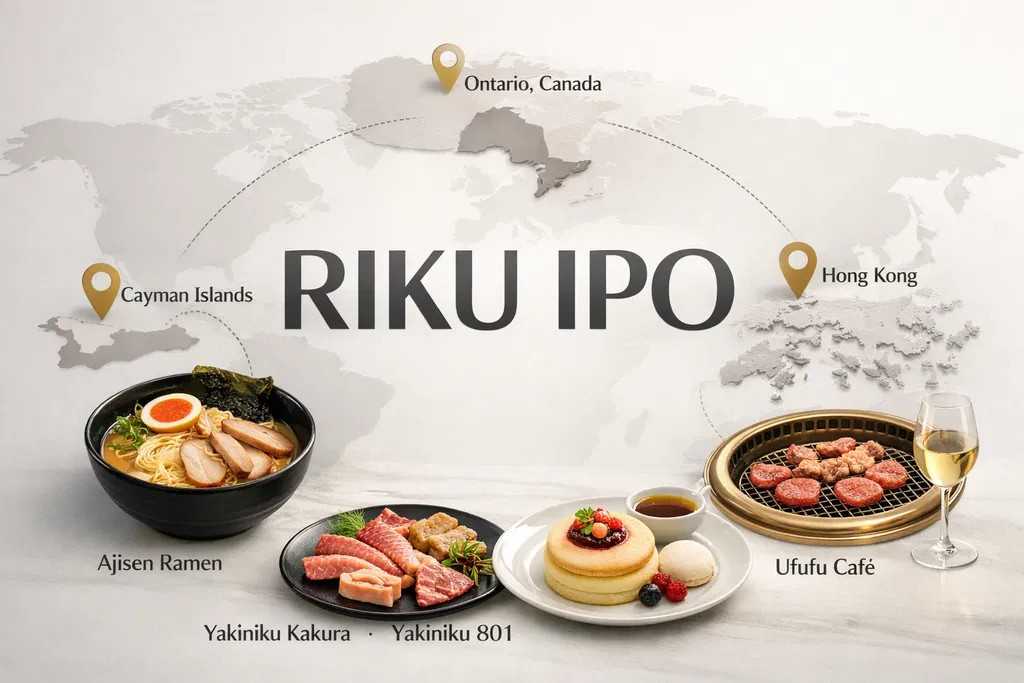
The proposed Riku IPO covers 5.0 million Class A shares at $4.00 to $6.00, implying a post-offering equity value of roughly $92 million to $138 million, or about $115 million at the midpoint.
A previously effective registration was withdrawn without anyone selling any securities, and Riku reintroduced the deal.
Riku is still primarily an operating restaurant business, not an asset-light royalty story. Self-operated restaurants generated 85.5% of fiscal 2025 revenue, while franchise fees, management fees, and ingredient sales accounted for the remaining 14.5%.
Filing quality is an issue. The prospectus cites 2,738,888 resale shares in some places and 1,643,334 in others, while the use-of-proceeds summary does not match the detailed allocation section.
Governance risk is heavy. The controlling shareholder is expected to hold about 61.2% of voting power after the offering, and the shares are expected to trade initially below $5.00, placing them in penny-stock territory.
The Riku IPO does not have a confirmed date yet. Riku's IPO is still a proposed transaction, not a priced one. The filing says the sale will begin "as soon as practicable" after effectiveness. The current public SEC record still points to the March 16 F-1 and the April 9 marketing filing, rather than a final pricing prospectus.
| IPO Metric | Current Detail |
|---|---|
| Proposed Ticker | RIKU |
| Exchange | Nasdaq Capital Market, subject to approval |
| Shares Offered | 5,000,000 Class A ordinary shares |
| Indicative Price Range | $4.00 to $6.00 per share |
| Gross Proceeds | $20.0 million to $30.0 million |
| Midpoint Gross Proceeds | $25.0 million |
| Post-IPO Share Count | 23,000,000 shares, assuming no over-allotment |
| Over-Allotment Option | Up to 750,000 additional shares |
| Implied Market Cap Range | About $92 million to $138 million |
| Midpoint Implied Market Cap | About $115 million |
| Controller Voting Power After IPO | About 61.2% |
The valuation is where the deal starts to look stretched. At the $5 midpoint, Riku would trade at about 7.2x fiscal 2025 revenue. That is an aggressive multiple for a micro-cap restaurant issuer whose trailing revenue declined 11.2% and whose earnings turned negative.
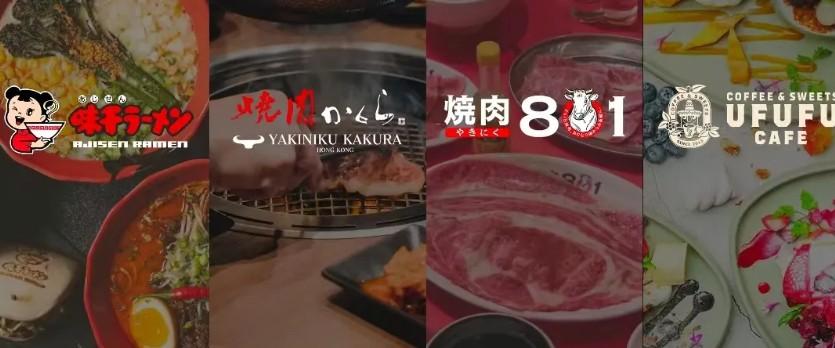
Riku is not a single-brand ramen chain. It is a Cayman holding company with operating subsidiaries in Canada and Hong Kong, built around four Japanese restaurant concepts: Ajisen Ramen in Ontario, and Yakiniku Kakura, Yakiniku 801, and Ufufu Café in Hong Kong.
In Canada, Ajisen has 13 locations across Ontario, including four self-operated restaurants and nine sub-franchisees, all supported by a central kitchen. In Hong Kong, it operates five restaurants and oversees two sub-franchised Yakiniku Kakura sites.
| Revenue Stream | Fiscal 2025 Revenue | Share Of Revenue |
|---|---|---|
| Self-Operated Restaurants | $13.74M | 85.5% |
| Franchise Revenue | $0.19M | 1.2% |
| Management Service Fees | $0.49M | 3.1% |
| Sales Of Food Ingredients | $1.65M | 10.2% |
| Total Revenue | $16.07M | 100.0% |
That mix is the most constructive part. Ingredient sales and management fees generate recurring revenue for the franchise network, while the central kitchen provides Riku with a supply-chain advantage that many small restaurant operators lack.
But the mix also shows the model's limits today. The higher-quality fee and supply lines are still too small to offset weak traffic at the core operating stores.
That weakness is visible in the operating data. Self-operated revenue fell 12.2% year over year, and average sales volume in Canada declined 6.8%, while average sales volume in Hong Kong rose only 0.7%.
In short, this is not a business listing for accelerating demand. It is a business asking investors to fund both stabilization and future expansion simultaneously.
Riku's revenue is split almost evenly between Canada and Hong Kong, with Canada contributing 50.5% of fiscal 2025 revenue and Hong Kong 49.5%. That balance looks diversified on paper, but the consumer backdrop in both markets is mixed rather than strong.
In Canada, food service sales rose 1.3% month over month in January 2026 to C$8.7 billion, but restaurant prices were also up sharply from a year earlier. That means nominal sector growth is not the same as healthy traffic growth, which fits Riku's own disclosure that customer traffic softened and Canadian average sales volume fell.
Hong Kong is somewhat better, but only selectively. Full-year 2025 restaurant receipts rose just 0.2% in value and fell 0.9% in volume overall. Yet non-Chinese restaurants, the category closest to Riku's positioning, grew 4.0% in value and 3.4% in volume. That's why Hong Kong held up better than Canada in the filing, but it does not amount to a broad consumer boom.
| Filing Risk | Why It Matters |
|---|---|
| Prior Effective Deal Was Withdrawn | The December 2025 registration became effective, but no IPO occurred and no securities were sold. |
| Internal-Control Weaknesses | The company disclosed material weaknesses, including insufficient U.S. GAAP capability. |
| Controlled-Company Structure | Post-IPO voting control stays concentrated at roughly 61.2%. |
| Penny-Stock Risk | Shares are expected to initially trade below $5.00. |
| Resale Overhang | Selling shareholders are registering stock for resale. |
| Drafting Inconsistencies | Resale-share counts and proceeds allocations do not align across the filing. |
The filing says cash from operating activities fell to $653,909 in fiscal 2025 from $2.28 million a year earlier, which suggests the IPO is at least partly about restoring financial flexibility, not just funding growth. In that context, inconsistent disclosure carries more weight, not less.
Riku has not yet disclosed a final public pricing date in the current SEC record.
Not really. Riku has franchise-related revenue streams, but 85.5% of fiscal 2025 revenue still came from self-operated restaurants.
No. At the midpoint, Riku would come to market at roughly 7.2x trailing sales. That is difficult to call inexpensive for a shrinking micro-cap restaurant issuer in a selective IPO market, especially when the business has not yet reestablished earnings momentum.
Riku's blend of self-operated stores, franchise income, management fees, and ingredient supply creates a superior commercial structure compared to a simple restaurant roll-up.
However, Riku's IPO is still asking investors to pay a growth-style valuation for a business with weaker recent traffic, lower cash generation, control-heavy governance, and filing quality that still needs work.
The opportunity is not impossible. It is simply narrower than the branding suggests, and the margin for error at the proposed valuation looks thin.
Disclaimer: This material is for general information purposes only and is not intended as (and should not be considered to be) financial, investment or other advice on which reliance should be placed. No opinion given in the material constitutes a recommendation by EBC or the author that any particular investment, security, transaction or investment strategy is suitable for any specific person.