Published on: 2025-12-26
Updated on: 2025-12-26
Asian equity markets opened mostly higher on Friday as holiday closures across major financial centres drained liquidity, magnifying price moves in pockets of risk assets and commodities.
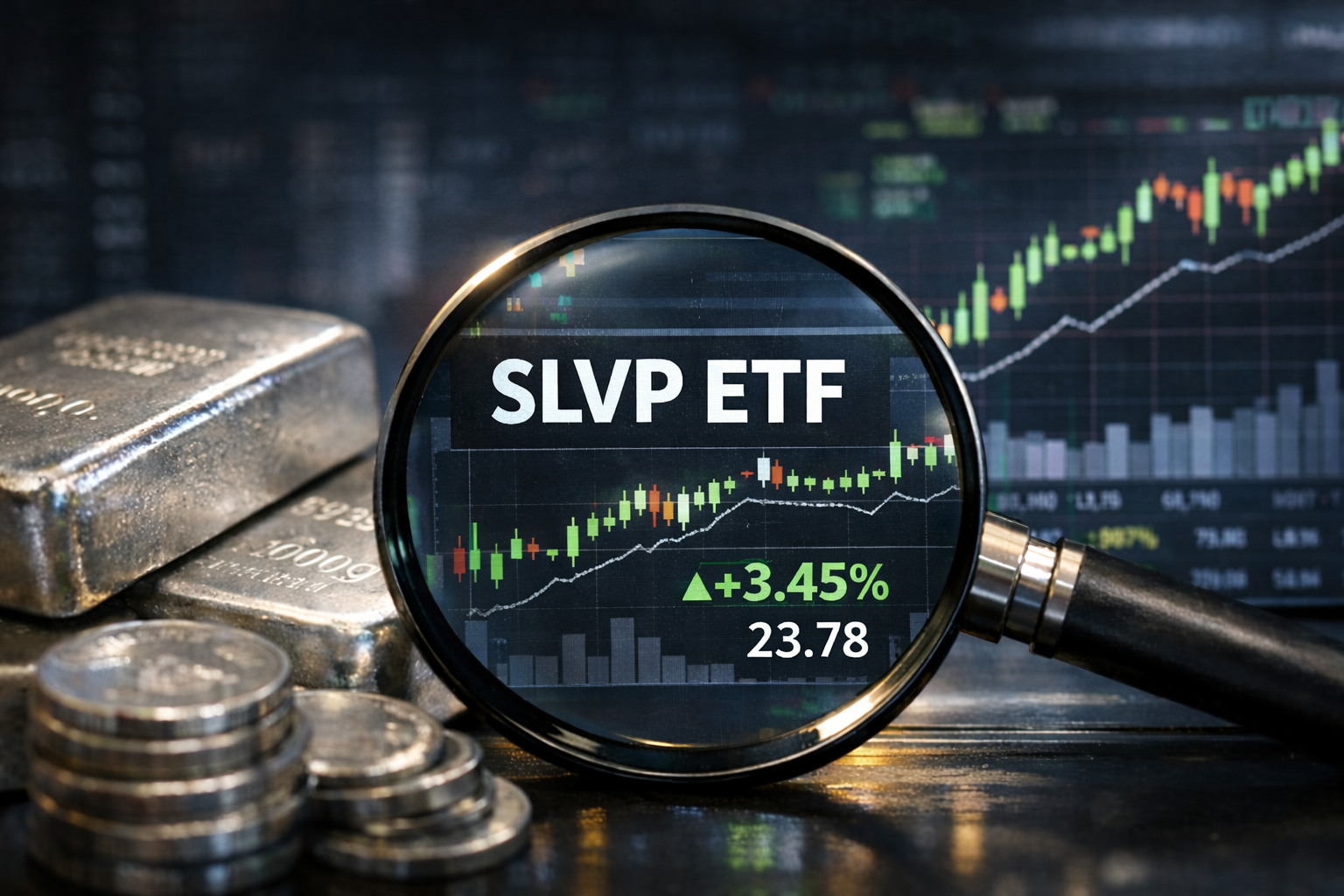
The standout was silver, which surged more than 5% to push above $75 an ounce for the first time, extending an already exceptional 2025 rally and pulling broader precious metals higher.
The mix of thin trading and elevated geopolitical risk has become the defining late-December backdrop: fewer active participants, wider bid-ask spreads, and sharper reactions to headline risk.
That combination is particularly potent in metals, where silver’s price action has been underpinned by a multi-year structural deficit, rising industrial demand, and the tailwind of lower yields and a softer dollar earlier in the week.
A large part of the “thin tape” on December 26 is mechanical. Hong Kong’s cash market was closed for both December 25 and December 26, though certain derivatives continued to trade, with the main cash market set to reopen on December 29.
Australia’s cash equities market was also closed for Boxing Day, removing another major Asia-Pacific liquidity pool and pushing incremental flows into the markets that remained open.
In Europe, several key venues were shut as well. London marked Boxing Day as a non-trading day, while major German trading venues were closed through December 26, keeping price discovery concentrated in a smaller set of markets and in futures.
The United States, by contrast, is open on December 26, after an early close on December 24 and a full closure on December 25. That reopening often draws disproportionate attention because it can reset global risk sentiment after two days of limited cross-asset interaction.
Japan’s equity market remained the primary regional barometer, with the Nikkei holding near fresh highs around the 50,800 to 50,900 area in late-December trade as local investors weighed supportive global growth signals against a gradually normalising domestic rate environment.

In South Korea, large-cap stocks also stayed firm, with the KOSPI hovering around the 4,130 level as investors balanced strong year-end momentum against policy uncertainty and currency volatility.
Taiwan’s market opened near 28,384, a level that reflects both the broader 2025 AI-led equity expansion and the sensitivity of mega-cap technology supply chains to shifts in U.S. demand expectations.
China remained a more complicated read. Policymakers have been leaning on targeted measures to stabilise credit transmission and support borrowers, including steps aimed at improving household credit access.
The direction of travel has been supportive at the margin, but investors continue to price uneven demand conditions and a still-fragile property backdrop.
India opened into a cautious setup, with pre-market indicators pointing to a restrained start as traders navigated thin global cues and year-end positioning. Local market attention remained highly stock-specific, reflecting the late-cycle pattern of rotation and profit-taking rather than broad risk-on conviction.
The most recent U.S. close provided a constructive anchor for global risk appetite. The S&P 500 finished Christmas Eve at a fresh record near 6,932, extending a 2025 climb powered by resilient consumer-led growth and persistent enthusiasm around AI-linked earnings durability.

That record closes matters into the year-end because benchmark-driven flows often intensify in the final sessions of December.
With many international markets shut, a larger share of global “risk sentiment” can be expressed through U.S. index futures and a smaller set of liquid Asia venues, increasing correlation across assets that might otherwise trade on local fundamentals.
Rate expectations remain the central organising force for cross-asset pricing, even in holiday trade. The Federal Reserve’s target range sits at 3.50% to 3.75% following its December decision, keeping the policy stance restrictive but no longer at the peak settings that defined the earlier inflation fight. [1]
U.S. Treasury yields have stabilised into year-end around levels consistent with a “soft landing” narrative. The 10-year yield was near 4.15% in the latest official curve snapshot, a level that keeps real rates meaningful while still allowing risk assets to justify higher multiples when earnings growth holds up.
In Europe, the policy picture is more mixed but still broadly supportive for risk assets. The ECB has kept its key rates unchanged, with the deposit facility rate at 2.00%, while signalling that future decisions remain data-dependent. [2]
The Bank of England, meanwhile, reduced Bank Rate to 3.75% at its December meeting, underscoring a more visible easing cycle as inflation pressures cool relative to prior peaks. [3]
In Asia, policy divergence remains a source of FX volatility. Japan’s inflation prints have moderated but stayed above target, reinforcing the market’s sensitivity to any hint that policy normalisation could accelerate or pause. Tokyo’s CPI and other late-December activity data have continued to feed that debate.
South Korea’s central bank has explicitly emphasised that the timing and scale of any additional rate reductions will depend on incoming data, while also highlighting heightened FX-market volatility as a constraint on policy flexibility.
The broad U.S. dollar picture into the final week of the year has been softer than in prior years, though daily moves are exaggerated by thin liquidity. A weaker dollar is mechanically supportive for dollar-priced commodities, particularly precious metals, by improving affordability for non-U.S. buyers.
Silver’s break above $75 was the defining cross-asset event of the session, not only because of the psychological milestone but also because it came after an already record-setting 2025.

The metal’s move, described as a record above $75.4 in spot terms, arrived on a fifth straight session of gains and was explicitly linked to escalating geopolitical tensions in the latest market reporting.
The deeper drivers are structural and have been building for years. Silver demand has increasingly been pulled by industrial use, while supply has struggled to keep pace, leaving the market in deficit for multiple years. That fundamental imbalance has been amplified by safe-haven buying and the macro tailwind from lower yields and a weaker dollar during parts of the year.
Gold has ridden the same currents, pushing to new highs earlier in the week, supported by a mix of geopolitical risk, expectations for easier policy over time, and persistent reserve-diversification demand. In the latest record phase, spot gold traded around $4,493 after touching fresh peaks near $4,498.
Platinum and palladium also posted sharp gains in the same window, reflecting both their safe-haven halo during risk spikes and idiosyncratic supply-demand dynamics tied to autocatalyst policy expectations.
Oil prices rose on Friday as markets repriced geopolitical and supply risks, with Brent around $62.48 a barrel and WTI near $58.58. The near-term bid has been shaped by concerns around potential supply disruption linked to Venezuela, as well as other security-related developments that could affect production and transport flows.
Even with Friday’s bounce, crude is tracking its steepest annual decline since 2020, weighed down by expectations of oversupply in 2026 and the reality that non-OPEC supply growth and demand uncertainty can overwhelm episodic geopolitical spikes.
Industrial metals have remained sensitive to China’s policy stance and to the global manufacturing cycle. Copper’s year-end resilience has been supported by electrification demand narratives, but price discovery is still heavily influenced by China credit conditions and the state of construction-linked demand.
Cryptocurrencies traded with a firmer tone into the holiday window, a pattern often seen when liquidity is thinner and marginal flows can have an outsized impact. Bitcoin was around $88,859, while ether traded near $2,977 in the latest available pricing snapshot.
For macro investors, crypto’s year-end behaviour is increasingly interpreted through the same lens as high-beta equities: a function of real-rate direction, liquidity expectations, and risk appetite. That link can tighten into late December, when equity rebalancing and options-related hedging can spill over into correlated assets.
The key risk into the final sessions of 2025 is that thin liquidity can turn ordinary headlines into abrupt cross-asset swings. Metals, high-beta FX pairs, and index futures are especially exposed because they are widely used for fast positioning when underlying cash markets are shut. [4]
The policy calendar becomes more influential again as January approaches. The Federal Reserve’s next scheduled meeting is January 27 to 28, a potential inflection point if incoming data forces markets to rethink the pace of any further easing. [5]
Japan’s next policy meeting window in late January will also be closely watched given the sensitivity of global carry trades to yen volatility and to any shift in guidance on rates and bond-market functioning. [6]
In China, investors will track whether credit-support measures translate into stronger consumption and private-sector borrowing, or whether policy continues to prioritise stability over aggressive stimulus. That balance will shape not only domestic equities but also commodity demand expectations across the region.
For now, the message from the tape is straightforward: risk assets are holding firm into year-end, but the cleanest signal is coming from commodities. Silver’s push through $75 is both a symptom of thin liquidity and a reminder that, beneath the seasonal noise, the market is still pricing a world of elevated geopolitical risk and shifting monetary conditions.
Disclaimer: This material is for general information purposes only and is not intended as (and should not be considered to be) financial, investment or other advice on which reliance should be placed. No opinion given in the material constitutes a recommendation by EBC or the author that any particular investment, security, transaction or investment strategy is suitable for any specific person.
[1] https://www.federalreserve.gov/newsevents/pressreleases/monetary20251210a1.htm
[2] https://www.ecb.europa.eu/press/pr/date/2025/html/ecb.mp251218~58b0e415a6.en.html
[3] https://www.bankofengland.co.uk/monetary-policy-summary-and-minutes/2025/december-2025
[5] https://www.federalreserve.gov/monetarypolicy/fomccalendars.htm