Published on: 2026-02-09
Updated on: 2026-02-09
The AGBK IPO is scheduled to launch on 11 February 2026, with a base offer targeting gross proceeds of $720 million at a $15 to $18 price range, implying an equity value (market cap) of about $3.0 billion at the midpoint. This valuation requires investors to weigh the bank’s strong returns on equity against the increased regulatory scrutiny of its core product by Brazil’s social security system (INSS).
AGI Inc, the holding company for Brazil’s Agibank, is marketing a U.S. listing centered on scale in payroll-deducted lending and a hybrid distribution model that integrates digital servicing with a national physical presence. The outcome of this offering will indicate whether global equity investors are prepared to reassess Latin American consumer finance based on earnings quality rather than growth alone.
The AGBK IPO launch process involves three key dates: the roadshow, pricing, and the first day of trading. Market calendars indicate a near-term debut, with the stock expected to list around February 11, 2026 (NYSE: AGBK), and pricing anticipated within the same week.
Brazilian financial media have reported that pricing is scheduled for February 10, in alignment with the latest prospectus timeline, which is consistent with trading commencing the following day. Renaissance Capital has described the deal as expected to price the week of February 9, 2026. The timetable remains highly sensitive to investor demand during bookbuilding and to any negative developments in the regulatory environment for payroll-deducted lending.
The offering is marketed at $15 to $18 per share for 43,636,364 Class A shares in the base offer (primary issuance). At the midpoint, the base offer targets $720 million in gross proceeds to the issuer and an implied market cap of about $3.0 billion, based on post-offer shares disclosed in the prospectus.
In addition, up to 6,545,455 Class A shares are described as a secondary sale by existing shareholders, which increases the total offering size but not the issuer proceeds.

| Item | Details |
|---|---|
| Company | AGI Inc (Agibank) |
| Exchange / Ticker | NYSE: AGBK |
| Base Deal Size | 43,636,364 Class A shares |
| Price Range | $15 to $18 |
| Gross Proceeds (Range) | $654.5M to $785.5M (≈ $720.0M at midpoint), before fees |
| Overallotment Option | Up to 6,545,455 additional shares |
| Expected Pricing / Listing | Pricing: week of Feb 9, 2026 (expected) • Listing: Feb 11, 2026 (expected) |
| Underwriters | Goldman Sachs; Morgan Stanley; Citi; Bradesco BBI; BTG Pactual; Itaú BBA; Santander; Société Générale; XP Investimentos |
| Co-Managers | Not publicly disclosed in the latest terms announcement |
The deal terms imply 183.57 million shares outstanding in the equity story used for the IPO valuation. At the top of the range, $18 × 183.57M ≈ $3.30B implied market capitalisation. At the midpoint, implied market cap is ~$3.03B, consistent with public deal framing.
A practical valuation cross-check is price-to-sales. Trailing twelve-month revenue is ~$1.04B (≈ R$5.53B).
On this basis, the midpoint valuation implies ~2.9× trailing sales, rising to ~3.2× at the top of the range. A second cross-check is price-to-earnings. Trailing net income is ~$191M (≈ R$1.03B), implying ~15.8× trailing earnings at the midpoint and ~17.3× at the top.
If the greenshoe is exercised as incremental issuance, the additional 6.55M shares would lift implied shares outstanding to roughly 190.12M and would mechanically increase the top-range market cap to ~$3.42B. The multiple investors ultimately pay will depend less on headline loan growth and more on credit performance through the cycle, funding costs, and how effectively the bank scales distribution without diluting unit economics.
In December 2024, Agibank was valued at around R$9.3 billion in its last funding round, which included a ~R$400 million investment from Lumina Capital, with Lumina’s founder joining the board.
The underwriting syndicate is notably strong for a Brazilian financial issuer, with Goldman Sachs and Morgan Stanley as lead banks, joined by Citi and major Brazilian and European institutions, including BTG Pactual, Itaú BBA, Bradesco BBI, Santander, Société Générale, and XP. While a robust syndicate supports placement, it does not resolve the primary challenge: investors will require clear evidence of the sustainability of the origination channel and the durability of returns.
AGBK is positioned not as a purely digital bank, but as an institution with a distribution advantage: a digital platform combined with a comprehensive national network of Smart Hubs designed to acquire and serve customers who are less digitally native. The company identifies its target market as Brazil’s underserved mass segment, including social security beneficiaries and both private- and public-sector workers.
The company estimates a substantial opportunity, citing a target market of 107 million individuals and an addressable financial-services market exceeding R$1.9 trillion as of September 30, 2025. The key strategic issue is not market size, but whether the bank can consistently convert this market into low-cost deposits and cross-sold fee products, rather than depending excessively on a single regulated channel for loan origination.
Agibank’s recent results demonstrate rapid business growth while maintaining credit metrics that remain attractive to investors in a high-interest-rate environment.
| Metric | 2023 | 2024 | Notes / latest indicators |
|---|---|---|---|
| Total revenue | R$5.1b | R$7.5b | 2024 revenue +46.1% vs 2023 |
| Net income | R$430.1m | R$870.9m | 2024 net income +102.5% vs 2023 |
| Credit portfolio | R$15.8b | R$24.0b | Sep/25 portfolio shown as R$33.8b on IR dashboard |
| 90+ day delinquency | 3.9% | 3.0% | Coverage ratio 134.7% (2023) to 138.1% (2024) |
| Active customers | 2.7m+ | 3.9m | IR dashboard highlights 6.4m active clients (Sep/25) |
Earnings quality is fundamental to the valuation thesis. Banks that expand secured portfolios while reducing delinquency rates are typically rewarded, particularly in restrictive interest-rate environments where weaker lenders must slow growth.
The operating model incurs significant costs. Sustaining a physical network alongside digital servicing must result in improved customer retention, a higher share of principal, and enhanced cross-sell economics. If Smart Hubs become a fixed-cost liability during slower cycles, margins may compress rapidly.
Brazil’s credit market is not operating from a near-zero interest rate base. The Monetary Policy Committee (Copom) has maintained the Selic rate at 15.00%, and inflation closed 2025 at 4.26%, keeping monetary policy restrictive relative to targets. According to Brazil’s statistics agency (IBGE), GDP growth reached 2.7% (four-quarter cumulative through Q3 2025), with unemployment at approximately 5.6% in the same period.
For Agibank, these macroeconomic conditions present a mixed outlook:
High rates raise funding costs and increase the hurdle rate for growth capital.
Secured payroll credit can remain resilient if employment and benefit payments are stable.
Consumer stress tends to surface first in refinancing behavior, complaints, and servicing costs, which is where compliance failures become most expensive.
Given this macroeconomic environment, investors are likely to prioritize the sustainability of underwriting discipline over topline growth acceleration, assessing whether such discipline is structural or merely cyclical.
In early December 2025, the INSS (Instituto Nacional do Seguro Social) announced an indefinite suspension of new payroll-loan registrations for Agibank, citing an audit that alleged irregularities, including contracts without explicit consent and other operational concerns. Even if the company can remediate and continue operating, the episode raises two investor-grade questions:
Can the bank sustain growth if INSS-related flows are constrained or more closely monitored?
What is the long-run compliance cost of operating at scale in payroll-deducted lending?
In its SEC filing, Agi Inc states that the suspension was lifted on January 12, 2026 following a settlement with the INSS that reinstated the ability to process new payroll-loan deductions, subject to enhanced obligations and INSS oversight. Even with operations reinstated, investors may apply a higher risk discount until governance, consent controls, and auditability are consistently demonstrated.
Investment decisions are likely to depend on a limited set of underwriting variables:

Evidence that customer consent, refinancing processes, and audit trails are robust will matter more than growth projections. The INSS episode makes operational governance a valuation driver rather than a footnote.
Investors will seek evidence that revenue generation can diversify beyond a single channel, with a clear trajectory toward increased fee income and deeper primary banking relationships. While service revenues in 2024 increased significantly, they remain secondary to the balance-sheet-driven growth narrative.
The decline in delinquency from 3.9% in 2023 to 3.0% in 2024 is a positive indicator. The key consideration moving forward is whether this stability can be maintained as the portfolio approaches the R$33.8 billion level projected for September 2025.
A dual-class share structure that concentrates control may be justified for long-term strategic purposes; however, U.S. investors typically require either a valuation discount or exceptional transparency. Founder control of approximately 70% through unlisted, super-voting Class B shares is a significant factor. Shareholder protections and disclosure quality are real considerations.
Market calendars indicate AGBK is expected to debut on the NYSE around February 11, 2026, with pricing likely a day earlier during bookbuilding. Timing can shift with demand and any late regulatory sensitivity.
The marketed range is $15 to $18 per share for the base offer of 43,636,364 Class A shares. At the midpoint, gross proceeds are targeted at $720 million.
With the additional 6,545,455 shares, the total number of shares sold could reach just over 50 million. At $18, that implies a total offering size up to roughly $903.3 million. The additional shares are described as secondary, so proceeds from those shares would go to selling shareholders rather than the issuer.
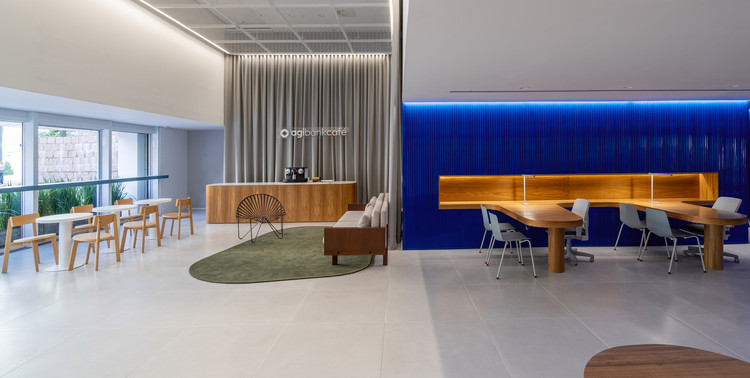
Agibank operates a hybrid model: a digital banking platform supported by 1,100+ Smart Hubs designed to acquire and assist customers who are less digitally native. The model is positioned to reach underserved segments, including social security beneficiaries and workers.
Regulatory risk around payroll-deducted lending is the key variable. INSS announced an indefinite suspension of new payroll-loan registrations for Agibank in December 2025, tied to alleged irregularities, and the market will price in the risk of tighter oversight or renewed restrictions, even after the company stated the suspension was lifted in January 2026.
Agibank reported net income of R$870.9 million in 2024 on total revenue of R$7.5 billion, with a reported 90+ day delinquency rate of 3.0% and coverage of 138.1%.
The AGBK IPO is positioned as a profitable scale opportunity in Brazilian consumer finance, anchored by secured lending products and a distribution model targeting customer segments underserved by large banks and digital-only institutions. The financial results support this narrative: earnings doubled from 2023 to 2024, credit quality improved, and the physical network continues to expand.
Ultimately, the success of the offering will depend on credibility rather than ambition. The INSS intervention compels investors to view compliance and operational controls as fundamental. If investors determine that the origination platform is sustainable and governance risks are adequately managed, the valuation is likely to be maintained.
Otherwise, AGBK may be valued similarly to banks facing regulatory challenges, irrespective of growth prospects.
Disclaimer: This material is for general information purposes only and is not intended as (and should not be considered to be) financial, investment or other advice on which reliance should be placed. No opinion given in the material constitutes a recommendation by EBC or the author that any particular investment, security, transaction or investment strategy is suitable for any specific person.
1) https://www.bcb.gov.br/en/monetarypolicy/committee
2) https://ri.agibank.com.br/en/noticias/3555/