Published on: 2026-01-16
Updated on: 2026-01-16
West Texas Intermediate, commonly known as WTI, sits at the heart of global energy markets.
Quoted daily in US Dollars, referenced by traders worldwide, and watched closely by governments and investors, WTI is more than just crude oil.
It is a benchmark that reflects supply, demand, geopolitics, and economic confidence in real time.
Understanding WTI helps explain why fuel prices change, why oil markets react sharply to news, and why energy remains one of the most influential commodities in the world economy.
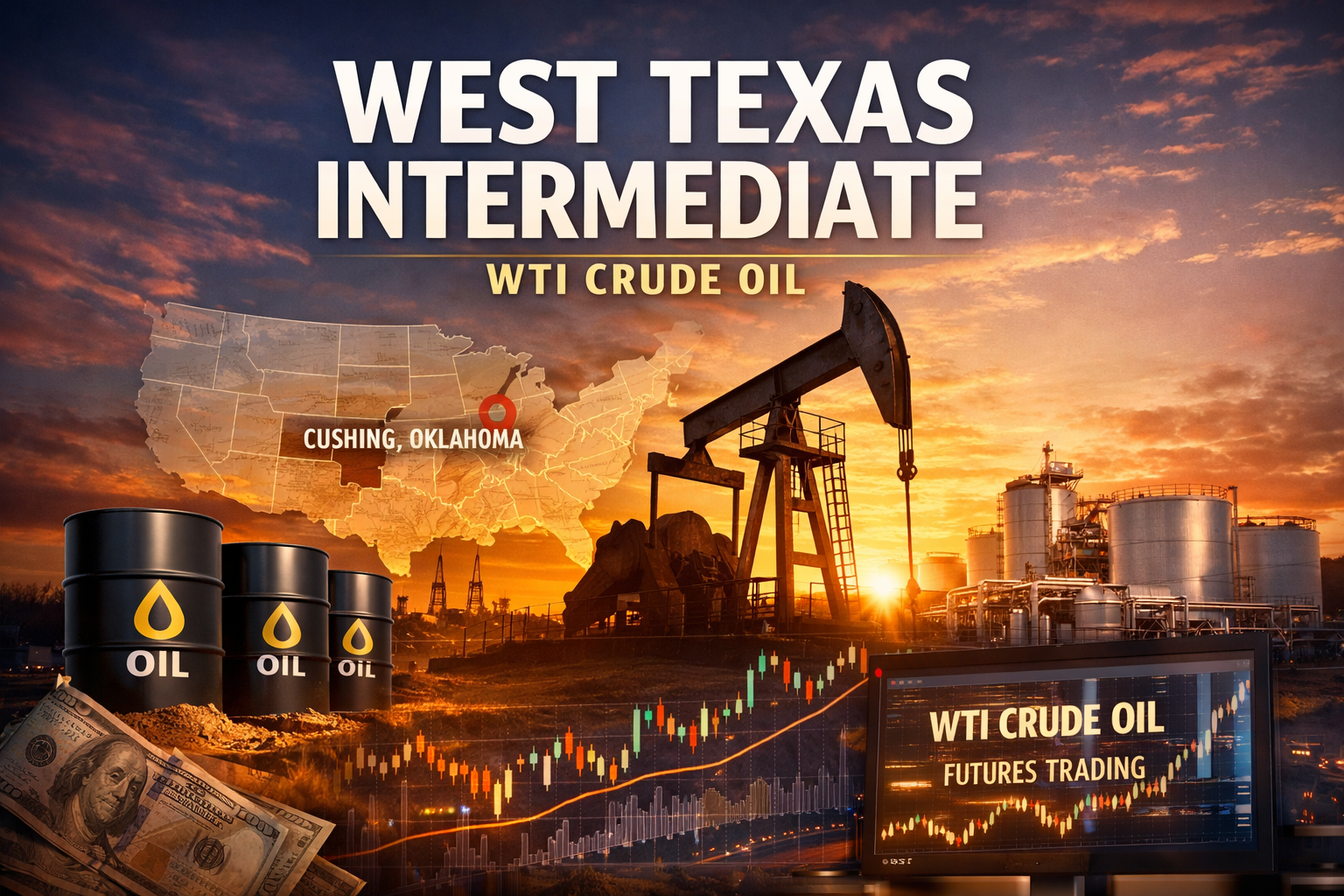
West Texas Intermediate is a grade of crude oil primarily produced in the United States. It is considered a light and sweet crude, meaning it has low density and low sulphur content. These qualities make it easier and cheaper to refine into products such as petrol, diesel, and jet fuel.
WTI is used as a benchmark for oil pricing, especially in North America. A benchmark is a reference price against which other oil grades are compared. When analysts talk about oil prices rising or falling, they are often referring to movements in WTI or Brent crude.
One defining feature of WTI is its delivery point. Physical settlement takes place in Cushing, Oklahoma, a major oil storage and pipeline hub. Cushing connects oil fields, refineries, and transport networks across the United States, making it a strategic location for energy logistics.
WTI is traded heavily on futures markets. Futures contracts allow buyers and sellers to agree on a price today for oil delivered at a future date. These contracts are primarily listed on the New York Mercantile Exchange, now part of the CME Group. Trading activity here determines the daily quoted price of WTI.
The price of WTI is influenced by several factors. Supply levels in the United States play a major role. When domestic production increases, prices tend to face downward pressure. When production falls or faces disruptions, prices may rise.
Demand is equally important. Strong economic growth usually increases demand for oil, pushing prices higher. Slower growth or recession can reduce demand and weigh on prices. Seasonal patterns also matter, such as higher petrol demand during summer driving months.
Geopolitical events often have a direct impact on WTI prices. Conflicts, sanctions, or political instability in oil-producing regions can cause sudden price spikes, even if those regions are outside the United States. Oil markets are global, and expectations matter as much as actual supply.
Inventory data is closely watched by traders. Weekly reports on US crude oil stockpiles can trigger sharp price movements. Rising inventories suggest oversupply, while falling inventories point to tighter market conditions.
WTI is often compared with Brent crude, another major benchmark. Brent reflects oil prices in Europe, Africa, and the Middle East, while WTI is more US-focused. Price differences between the two can highlight regional supply constraints, transport costs, or export restrictions.
Historically, WTI traded at a premium to Brent due to its higher quality. However, shifts in US shale production and pipeline capacity have sometimes caused WTI to trade at a discount. This relationship continues to evolve as infrastructure and export policies change.

WTI also plays a role beyond physical oil markets. It is widely used in financial products such as exchange-traded funds, contracts for difference, and options. Investors who never intend to take delivery of oil still trade WTI to speculate on price movements or hedge against inflation and currency risk.
In April 2020, WTI made history when prices briefly turned negative. This unprecedented event was driven by collapsing demand during the pandemic and a lack of storage capacity at Cushing. It highlighted the importance of logistics and physical constraints in commodity pricing.
Despite such extremes, WTI remains one of the most transparent and liquid commodities in the world. Its price acts as a barometer for energy markets and often reflects broader economic sentiment.
When analysing WTI, focus not only on headline prices but also on market structure. Futures curves, whether in contango or backwardation, reveal expectations about future supply and demand. Monitoring inventory trends and refinery utilisation can provide early signals before major price moves occur.
Brent Crude: A major global oil benchmark representing crude produced in the North Sea. Brent is often used to price oil in Europe, Africa, and the Middle East, and is frequently compared with WTI to assess regional supply and demand differences.
Cushing, Oklahoma: The primary delivery and pricing point for WTI crude oil futures. Cushing serves as a key storage and pipeline hub in the United States, and inventory levels here can significantly influence WTI prices.
Light Sweet Crude: A classification describing crude oil with low density and low sulphur content. WTI falls into this category, making it easier to refine into high-value products such as petrol and diesel.
Oil Futures Contracts: Financial agreements to buy or sell crude oil at a predetermined price on a future date. WTI futures are actively traded and play a central role in price discovery and risk management in energy markets.
Oil Inventory Data: Regular reports showing the amount of crude oil stored in the United States. Changes in inventory levels often trigger short-term price movements in WTI by signalling shifts in supply and demand.
1. What does WTI stand for in oil markets?
WTI stands for West Texas Intermediate. It refers to a specific grade of crude oil produced mainly in the United States and used as a benchmark price for oil trading, particularly in North America. Its quality and transparency make it widely followed by markets.
2. Why is WTI considered light and sweet crude?
WTI is classified as light because it has low density and sweet because it contains low sulphur. These properties make it easier to refine into high-value fuels, which historically support stronger pricing compared to heavier, more sulphur-rich crude oils.
3. How is the price of WTI determined?
The price of WTI is determined mainly through futures trading on the New York Mercantile Exchange. Supply and demand expectations, inventory data, economic indicators, and geopolitical events all influence the price quoted in US Dollars.
4. What is the difference between WTI and Brent crude?
WTI reflects oil produced in the United States with delivery in Cushing, Oklahoma, while Brent reflects oil from the North Sea region. Brent is more internationally focused, while WTI is more sensitive to US production, storage, and infrastructure conditions.
5. Can individual investors trade WTI?
Yes, individual investors can trade WTI through futures, exchange-traded funds, or derivative products offered by brokers. However, oil markets are volatile, and prices can change rapidly, so risk management and market understanding are essential.
Summary
West Texas Intermediate remains a cornerstone of global energy markets. As a light, sweet crude oil benchmark priced in US Dollars, it shapes how oil is valued, traded, and analysed worldwide.
From physical supply chains in Cushing to financial markets across continents, WTI connects real-world energy needs with global economic forces.
Understanding WTI offers valuable insight into oil prices, market behaviour, and the broader dynamics that drive the modern economy.
Disclaimer: This material is for general information purposes only and is not intended as (and should not be considered to be) financial, investment, or other advice on which reliance should be placed. No opinion given in the material constitutes a recommendation by EBC or the author that any particular investment, security, transaction, or investment strategy is suitable for any specific person.



World's Best Broker