Published on: 2026-07-02
Updated on: 2026-07-02
Wall Street banks are unwinding their bullish euro bets, as markets see the US outpacing Europe on interest-rate hikes for the rest of this year. The currency is hovering around a one-year low.
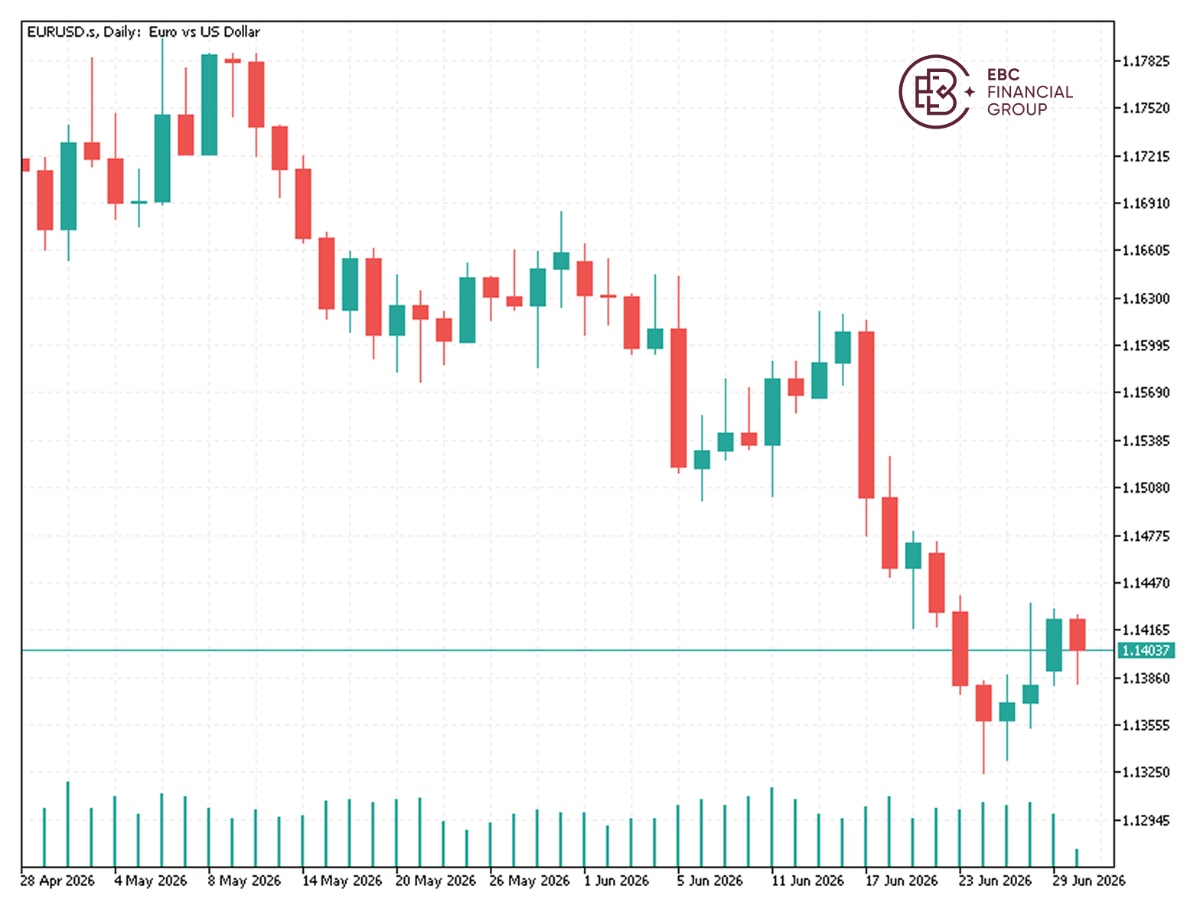
The likes of JPMorgan Chase and Morgan Stanley see the euro slide over 3% to hit $1.10 in the next year. Earlier this year, it broke above the $1.2 mark, which fanned jitters of its impact on exports.
BofA and Wells Fargo have also cut their calls. While such forecasts often adapt to market trends, these latest downward revisions are so severe that the consensus in ta Bloomberg survey is brought lower.
One-year risk reversals are the most bearish on the euro since March 2025. That means increasing costs of hedging against or bet on further euro weakness over the next year - another sign of dim outlook.
"The euro's run is largely over," said Kit Juckes, chief currency strategist at Societe Generale SA. He drew a parallel to 2022, when surging energy costs after Russia's invasion of Ukraine deal a below to the bloc.
The bank also noted EBC board member Isabel Schnabel was walking back a 'faux pas' by President Christine Lagarde, who remarked on Monday that she saw no need for a 'more forceful policy response at this stage.'"
Traders see a one-in-three chance of the policymakers raising rates already at its July meeting, with a move seen as more likely in September followed by a possible final hike next year.
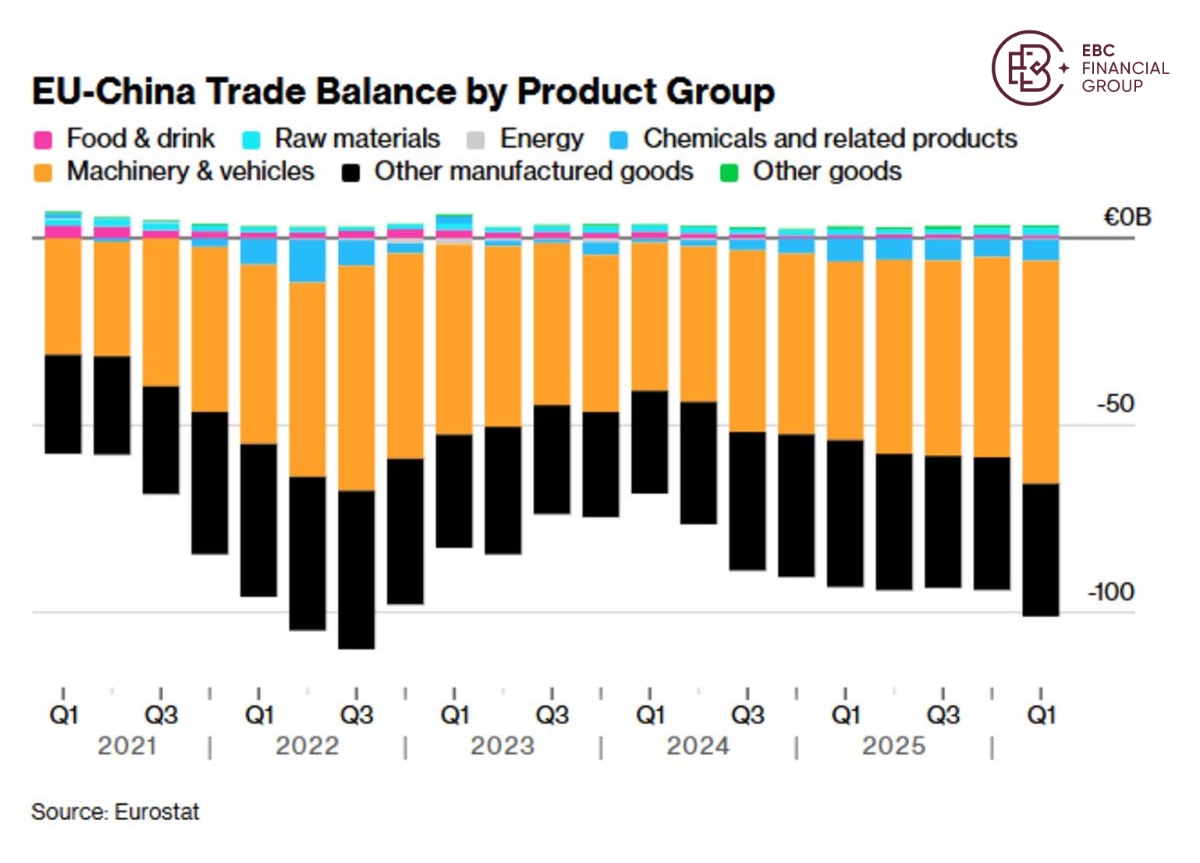
The EU is demanding concrete progress by October to narrow its €360bn annual trade deficit with China, as both sides establish a dialogue to reduce economic tensions.
EU trade commissioner Maroš Šefčovič and and Chinese commerce minister Wang Wentao set up a monitoring mechanism. If there was a surge in Chinese goods entering the EU, it would trigger immediate high-level talks.
China abruptly cancelled two important diplomatic meetings with the EU earlier this month. EU leaders have signalled they were ready to back European Commission President Ursula von der Leyen's more confrontational stance.
Brussels threatened fresh tariffs on Chinese goods to protect the industrial base, especially in sectors such as the car industry. In April nearly one out of every 10 cars purchased in Europe was from a Chinese brand.
A strategic partner across the pond is another hassle. Trump has threatened to place a 100% import tariff on any European country that imposes a tax on digital services from US companies.
On top of that, Washington has proposed additional tariffs of 10% on EU goods alleging that insufficient efforts to combat forced labour in supply chains harm US commerce.
The federal government is projected to post a $2 trillion deficit in fiscal year 2026, double the 3% of GDP target that has bipartisan support in Congress, according to Treasury's quarterly refunding documents.
Driven by a renewed conviction in "US exceptionalism," international capital is flooding back into the greenback. Investors anticipate that the booming AI sector will ensure the US economy eclipses global competitor.
This optimism triggered the biggest weekly surge in bullish dollar futures since 2018, lifting net-long positions to their highest level in over a year, according to data from the CFTC.
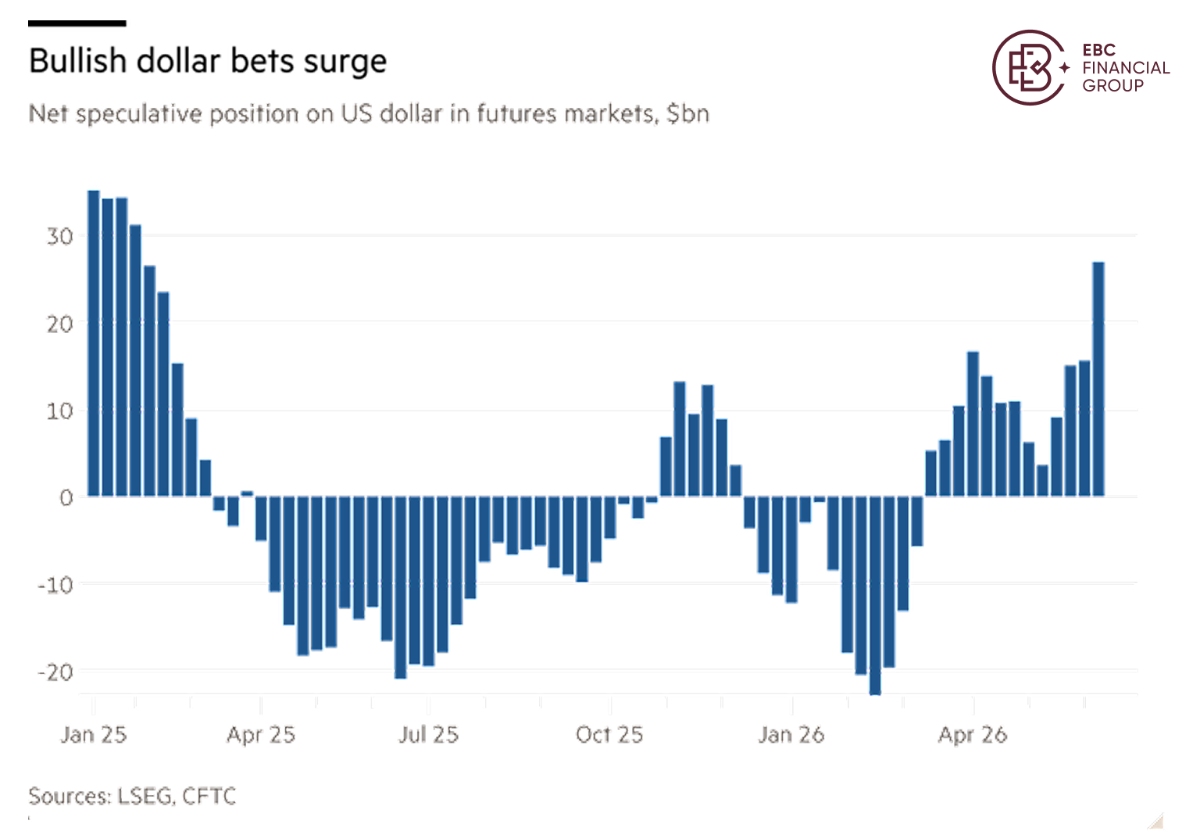
"There is a positive dollar story beyond the Iran war," said Steven Englander, global head of G10 forex research at Standard Chartered. "The US economy is doing just fine, the fears about the labour market were overblown."
Markets are currently pricing in a 25-bp increase in borrowing costs by March next year. Last week Trump returned to his calls for interest-rate cuts, though inflation rate topped 4% in May.
The spread between US and German 10-year bonds remains well above 100 bps. Euro area annual inflation sits at a flash estimate of 2.8% for June, while the rate is estimated to stay around 4%.
However, according to a new global survey by the OMFIF, the number of central banks planning to scale back their US dollar holdings over the next decade outnumbers those intending to increase them.
The report noted a "gradual" de-dollarisation is seeing central banks move towards the euro and the renminbi. Two-thirds said the euro had become more attractive for use in global trade.