Published on: 2026-08-14
Updated on: 2026-08-14
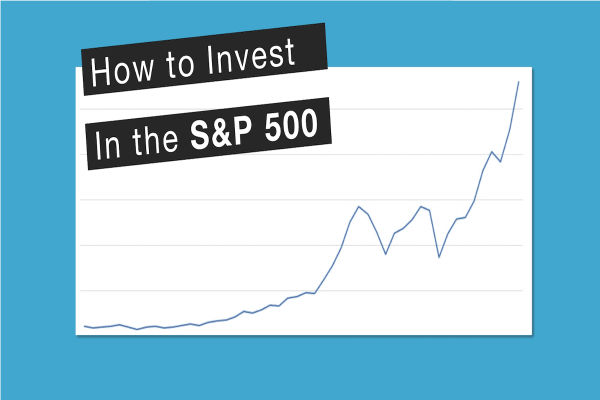
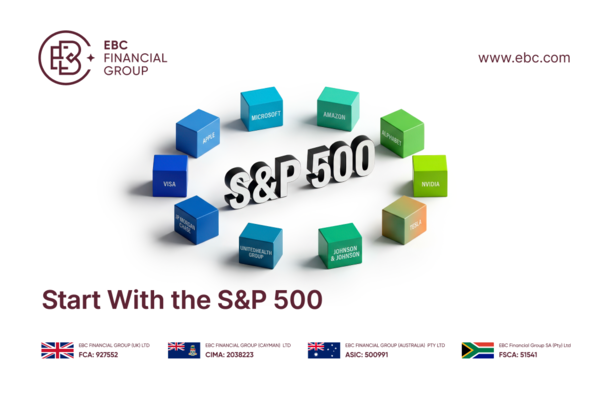
Picking individual stocks means making a call on each company yourself. An S&P 500 exchange-traded fund (ETF) offers another route by giving you exposure to around 500 large US companies in a single fund.
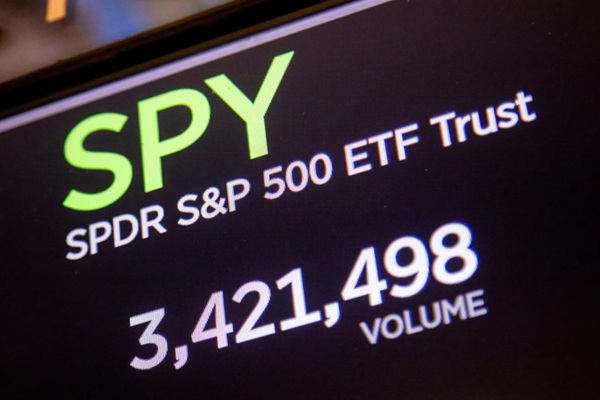
Three well-known examples are the State Street SPDR S&P 500 ETF Trust (SPY), Vanguard S&P 500 ETF (VOO), and iShares Core S&P 500 ETF (IVV). All three are designed to track the S&P 500, one of the most widely followed US stock market indexes.
You’ll see how an S&P 500 ETF gives you exposure to around 500 large US companies, why SPY, VOO, and IVV can follow the same index but still differ, what changes when you trade an ETF through a contract for difference (CFD) instead of owning the fund, and which fees apply when trading ETF CFDs.
The S&P 500 tracks around 500 of the largest US companies across all 11 major market sectors.
S&P 500: the index.
S&P 500 ETF: fund that tracks the index.
The index is weighted by market value, so larger companies carry the most influence over how it moves and a single big name can shift its performance far more than a small one.
An ETF that tracks the S&P 500 spreads your exposure across a broad group of companies rather than tying it to one business. It doesn’t remove market risk. If large US stocks fall broadly, an ETF falls with them.
So, if several ETFs follow the same index, why are there different ones to choose from?
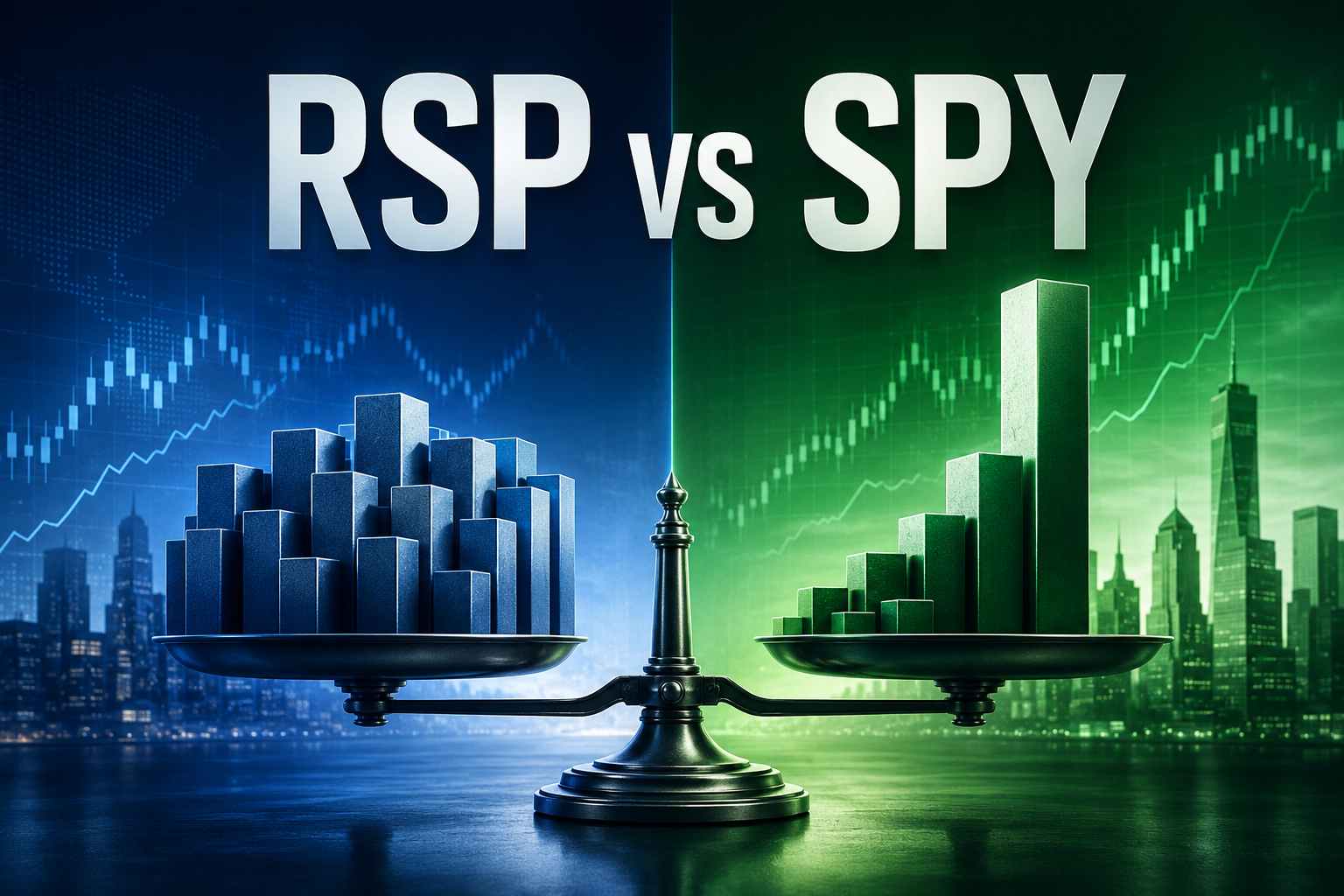
SPY, VOO, and IVV all track the S&P 500, but they are run by different fund providers. That is why their fees, liquidity, and fund structure can differ even though they follow the same benchmark.
Here is a simple comparison:
| SPY | VOO | IVV | |
|---|---|---|---|
| Provider | State Street | Vanguard | iShares |
| Tracks | S&P 500 | S&P 500 | S&P 500 |
| Expense ratio | 0.0945% | 0.03% | 0.03% |
If someone is buying the funds directly, the differences worth weighing are expense ratios, liquidity, and provider.
For a beginner, the more important point is not to read SPY, VOO, and IVV as three different bets on the US market. They are three funds from different providers designed to follow the same benchmark. One thing to keep separate: the expense ratios above belong to the ETFs themselves. They are not the same as trading costs such as spreads, commissions, and overnight financing that may apply when accessing an ETF through a Contract for Difference (CFD).
Traders who want to access US ETFs through CFDs, EBC is currently offering zero commission and zero overnight swaps on eligible ETF CFD trades during the campaign period.
You’re exposed to similar price movements, but the two work differently.
| Buying an ETF | Trading an ETF CFD |
|---|---|
| You own shares in the fund | You don’t own the fund |
| You can buy it without using leverage | CFDs can use leverage |
| You generally benefit when its price rises | You can trade rising or falling prices |
With an ETF CFD, you take a position on movements in the ETF's price without owning shares in the fund itself.
Leverage allows a trader to open a position using part of its full market value as margin.
For example, with 2x leverage, a 2% rise in the ETFs price would result in roughly 4% gain or loss on the margin/capital used for the position.
If ETF CFDs fit the way you trade, you can explore EBC's zero commission and zero swaps offer on eligible ETF CFDs.
It’s worth taking the time to understand these three costs:
Spread: the difference between the price at which you can buy and sell the CFD.
Commission: a transaction charge applied when opening or closing a trade under the broker's standard pricing.
Overnight swap: a financing adjustment applied when an eligible leveraged position is kept open overnight.
The spread is the of the cost of entering and exiting the market. Commission is tied to making the trade, while overnight swaps apply when a position is held overnight.
EBC's current campaign sets commission and overnight swaps to zero on eligible US stock and ETF CFD trades from 12 June to 11 September 2026, subject to the campaign terms and conditions.
During the campaign, overnight swaps are neither charged nor credited. The spread still applies.
For traders who trade frequently, zero commission removes a cost that would normally apply to eligible trades. For positions held overnight, zero swaps removes the usual overnight financing adjustment.
Neither changes the direction of the market or removes the risk of loss.
For traders who want to find out more, explore ETF CFDs with EBC.