Published on: 2026-08-14
Updated on: 2026-08-14
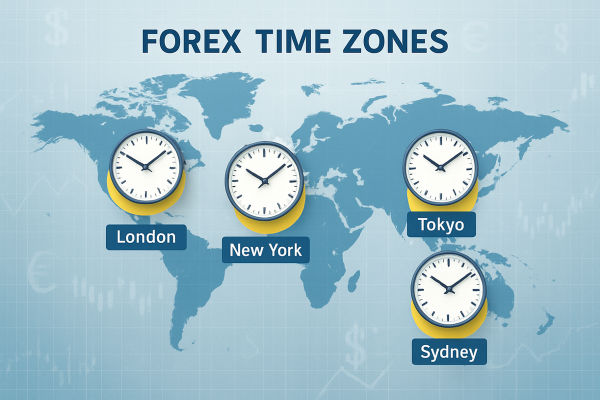
The best time to trade GBPUSD is usually the London-New York overlap, from 12:00 to 16:00 UTC during most of the Northern Hemisphere summer and 13:00 to 17:00 UTC during winter. London sterling flow and US dollar trading are active together, giving the pair deeper liquidity and usually more intraday movement than quieter hours.
London carries unusual weight in foreign exchange. The UK handled $4.745 trillion in average daily FX turnover in April 2025, equal to 37.8% of global activity, while the US dollar was on the other side in 89.2% of global FX trades. GBPUSD therefore reaches its busiest part of the day when the world’s largest FX centre overlaps with the main trading hours of the world’s dominant trading currency.

The London-New York overlap, normally 12:00–16:00 UTC in summer and 13:00–17:00 UTC in winter, gives GBPUSD its strongest combination of liquidity, tighter spreads and active order flow.
The London open is the next window worth watching because UK economic releases and European trading activity arrive after the quieter Asian session.
US CPI, nonfarm payrolls, Bank of England decisions and Federal Reserve announcements can override normal session patterns and produce some of the pair’s sharpest intraday moves.
GBPUSD’s daily volatility changes constantly. ATR was around 72 pips in late July 2026, although that is a current reference rather than a fixed daily range.
EBC Financial Group provides GBPUSD to trade as one of its 37 available forex pairs, with access through MT4 and MT5, minimum trade sizes from 0.01 lot and Standard or Professional pricing structures.
The London-New York overlap provides the clearest starting point when deciding when to trade GBPUSD.
London is already several hours into its session when New York becomes active. European banks and funds remain in the market as US institutions enter, increasing the amount of liquidity available on both sides of the pair. That normally produces more competitive spreads and gives larger orders more capacity to trade without moving the market as sharply as they might during thinner hours.
US economic releases are another source of movement. Consumer inflation and the Employment Situation report, which includes nonfarm payrolls, are normally published at 8:30am Eastern Time. That converts to 12:30 UTC while the US is on daylight saving time and 13:30 UTC during standard time, placing both releases directly inside the usual overlap.
The London open is the second period worth watching. UK inflation and other major ONS releases are commonly published at 7:00am London time, bringing fresh economic information into the market as European desks become active.
| Session | Summer (UTC) | Winter (UTC) | Typical GBPUSD Conditions |
|---|---|---|---|
| Asian/Tokyo | Around 23:00-08:00 | Around 23:00-08:00 | Often narrower ranges and lighter sterling flow |
| London | 07:00-16:00 | 08:00-17:00 | UK data and European flow increase activity |
| New York | 12:00-21:00 | 13:00-22:00 | US data and dollar flows become more influential |
| London-New York overlap | 12:00-16:00 | 13:00-17:00 | Usually deepest liquidity and strongest intraday window |
There are two short exceptions each year because the US and UK change their clocks on different dates. In 2026, US daylight saving time began on March 8 and ends on November 1, while British Summer Time runs from March 29 to October 25. During March 8-28 and October 25-31, London and New York are only four hours apart, extending their normal session overlap to roughly 12:00-17:00 UTC.
Check the platform clock during those transition weeks rather than assuming the same UTC schedule applies throughout March and October.
GBPUSD often trades in a narrower range during Asian hours because neither London nor New York is fully active. Unexpected news can still produce a large move, although strategies that rely on sustained momentum or breakouts generally have less sterling order flow to work with than they do after London opens.
Liquidity can also thin around the daily New York rollover. Spreads may temporarily widen as one trading day ends and another begins, while positions held across rollover can become subject to overnight financing.
Late Friday brings another decline in participation once European desks close and positions are reduced ahead of the weekend. There is little value in treating Tuesday, Wednesday or Thursday as automatically superior, however. The economic calendar can easily make a Monday with a major catalyst more active than a quiet midweek session.
Session timing tells you when liquidity is available. Scheduled releases tell you when that liquidity may suddenly turn into volatility.
| Event | Summer (UTC) | Winter (UTC) |
|---|---|---|
| UK CPI and major labour data | 6:00 AM | 7:00 AM |
| Bank of England rate decision | 11:00 AM | 12:00 PM |
| US CPI and payrolls | 12:30 PM | 1:30 PM |
| London 4pm benchmark fix | 3:00 PM | 4:00 PM |
| Federal Reserve rate decision | 6:00 PM | 7:00 PM |
ONS releases are generally published at 7:00am London time, while Bank of England monetary-policy decisions are published at noon. Major US CPI and employment reports normally arrive at 8:30am Eastern Time, with FOMC statements released at 2:00pm Eastern Time.
The London 4pm fix creates a different type of activity. Institutional transactions tied to benchmark exchange rates can concentrate order flow around the calculation period. WMR uses a five-minute calculation window around the 4pm London fix, so a sudden move at that point can fade once benchmark-related orders have passed through the market.
A useful habit is to check what is scheduled before entering. The same GBPUSD setup can behave very differently five minutes before US CPI than it does during an ordinary overlap session.
GBPUSD does not have a permanent daily pip range. Volatility expands around economic surprises, central-bank repricing and large moves in the dollar, then contracts when markets have fewer catalysts.
On 28 July 2026, the pair’s daily Average True Range was around 72 pips, with its 90-day average near 73 pips. Those figures provide a recent volatility reference rather than a promise that GBPUSD will travel roughly 70 pips in every session.
ATR becomes more useful when it is compared with a planned stop. If GBPUSD has recently been covering around 70 pips a day, a 10- or 15-pip stop occupies a relatively small part of that movement. The stop may still be technically correct, although it needs to sit at a level where the original trade idea has genuinely failed rather than simply inside ordinary market noise.
Position sizing comes after that decision. Identify the invalidation level, measure the stop distance, then calculate the position from the amount of capital you are prepared to risk.
Start with the clock and the economic calendar together. The London-New York overlap generally provides the most active trading environment, although an ordinary overlap and one containing US CPI or a central-bank decision can behave very differently.
A demo account allows you to watch the pair around the London open, New York open and major economic releases without committing capital. Pay attention to spread changes, failed breakouts and how quickly price reacts when new data reaches the market.
One standard GBPUSD lot represents £100,000. A 0.10-lot position represents £10,000 and 0.01 lot represents £1,000. Because USD is the quote currency, one pip is worth approximately $10 on one standard lot, $1 on 0.10 lot and $0.10 on 0.01 lot.
A 20-pip stop and a 60-pip stop require different position sizes if the amount being risked is supposed to remain the same. Leverage changes the margin needed to hold the position; it does not change the value gained or lost from each pip.
EBC Financial Group provides GBPUSD as one of 37 forex pairs available on its trading platform. The pair can be traded through MT4 or MT5, with minimum forex position sizes from 0.01 lot. EBC provides Standard and Professional account structures, giving users a choice between spread-based pricing and tighter starting spreads with a separate commission.
Set the entry, invalidation level and intended exit before opening the position. Higher liquidity during the overlap creates a better trading environment; it does not tell you whether GBPUSD should rise or fall.
The London-New York overlap is therefore best treated as a trading window, not a trading signal. Direction still has to come from the setup, data or market view behind the trade.
No broker can guarantee the lowest GBPUSD spread at every moment of the trading day. Spreads respond to liquidity and market risk, so the price available during a normal overlap session can be very different seconds before CPI, during a central-bank surprise or around daily rollover.
A broker advertising spreads “from 0.0 pips” is quoting the minimum available under certain conditions. Execution also deserves attention. A narrow displayed spread loses part of its advantage if an order in a fast market is ultimately filled away from the requested price.
For traders who want to trade GBPUSD with EBC Financial Group, the pair is available under both its Standard and Professional account structures. The Standard account uses spread-based pricing, while the Professional account offers spreads starting from 0.0 pips on major pairs with a $6-per-lot commission. EBC also reports execution speeds averaging around 20 milliseconds and connectivity to more than 25 institutional liquidity sources.

Those figures still need to be judged under the conditions in which you actually trade. A trader focused on GBPUSD during the London-New York overlap should compare the live spread during that window, add any commission and consider the actual execution price rather than relying on the lowest advertised spread alone.
GBPUSD starts trading when the forex market opens on Sunday evening, around 21:00 UTC during US daylight saving time and 22:00 UTC during winter. Trading then continues almost continuously until Friday evening, although activity increases significantly once London opens.
GBPUSD is usually most volatile during the London-New York overlap, from 12:00-16:00 UTC in summer and 13:00-17:00 UTC in winter. Volatility can increase further when US CPI, nonfarm payrolls or major Bank of England and Federal Reserve decisions are released.
GBPUSD’s daily range changes with market conditions. In late July 2026, its daily ATR was around 72 pips, with the 90-day average near 73 pips, although major economic releases can produce much larger moves.
EURUSD is one of the pairs most commonly correlated with GBPUSD because both are quoted against the US dollar. They often move in the same direction when the dollar strengthens or weakens broadly, although the relationship can change when UK- or euro-specific factors take over.
GBPUSD trades almost around the clock, yet its conditions change substantially as liquidity passes from Asia into London and then New York. The London-New York overlap brings sterling activity, dollar liquidity and many of the economic releases capable of setting the day’s range into the same four-hour window.
Start there. Check the economic calendar, measure current volatility and decide where the trade is invalidated before choosing position size.
EBC Financial Group provides GBPUSD to trade alongside 37 other forex pairs, with access through MT4 and MT5 and minimum forex positions from 0.01 lot. Watching GBPUSD through several London-New York overlap sessions on a demo account can show how its spreads, speed and intraday range change when both major financial centres are active.