Published on: 2026-07-15
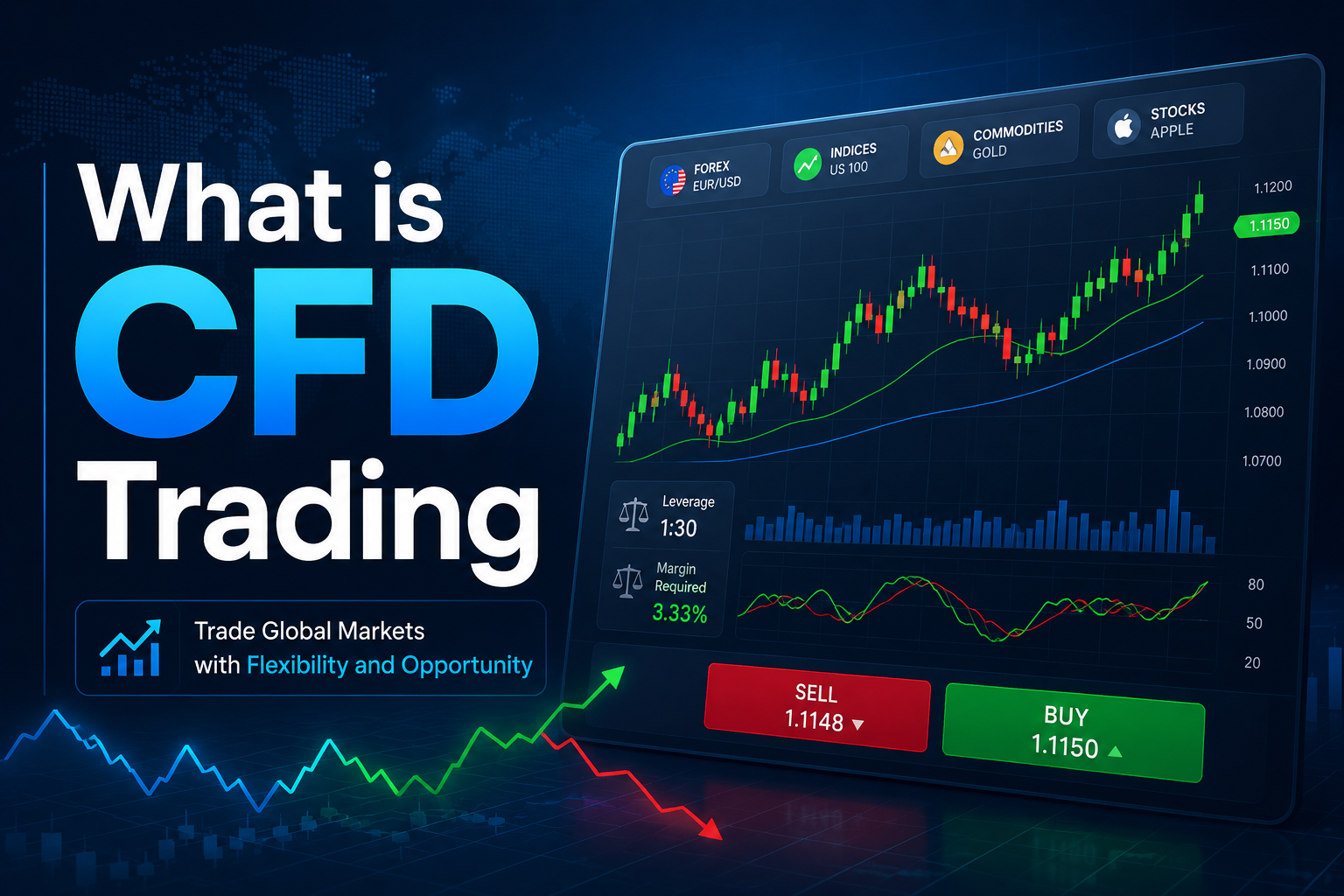
Commodity CFDs are contracts that let traders speculate on prices of commodities such as gold, crude oil, and natural gas without buying or storing the physical asset. Traders can go long when they expect the price to rise or go short when they expect it to fall.
The contract settles the difference between the opening and closing prices. Profit or loss also depends on position size and trading costs. Gold and oil CFDs may look similar on a platform, but they are not always priced or charged in the same way.
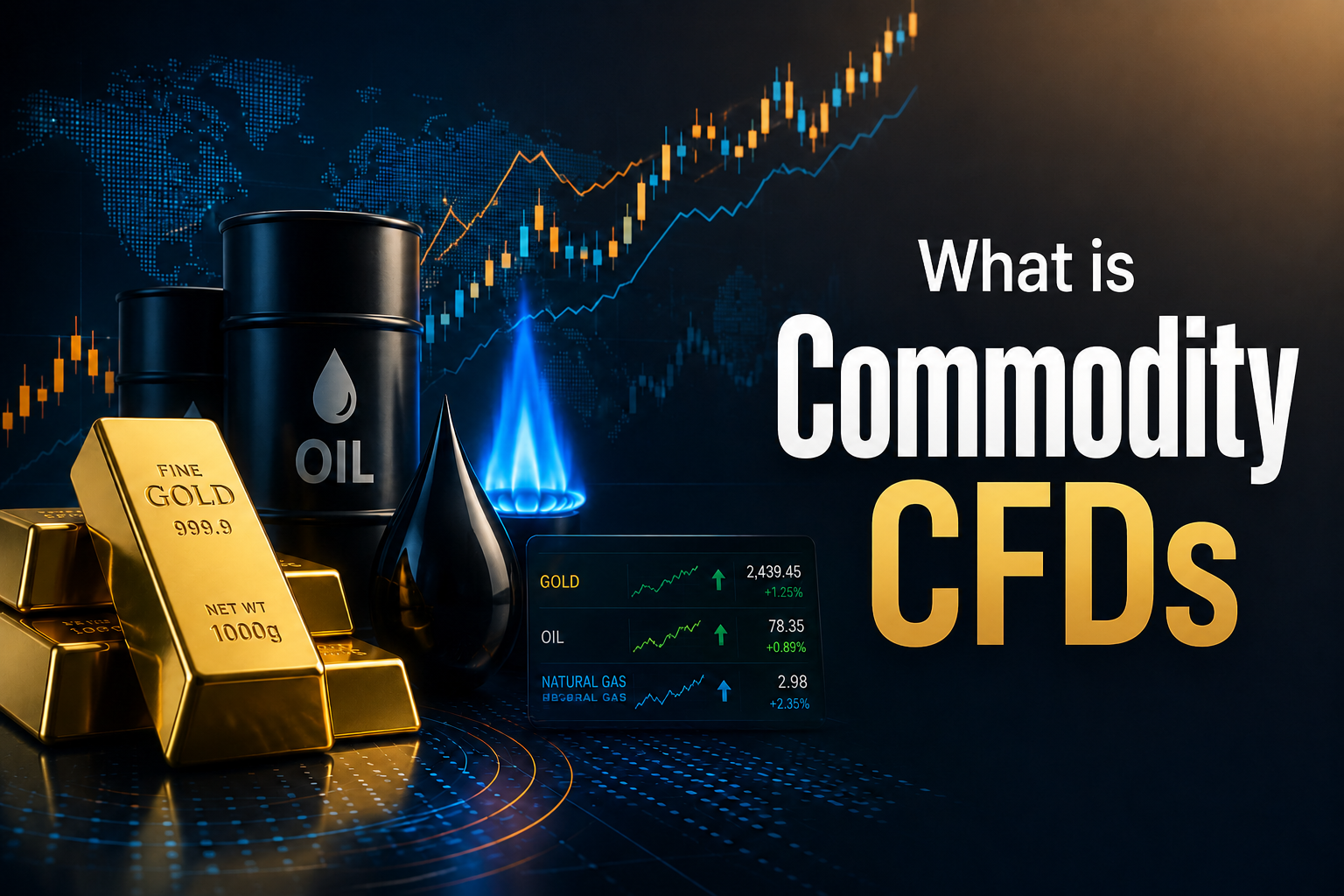
CFD stands for contract for difference. It follows the price of another market.
No gold bar or barrel of oil changes hands. The trader is simply taking a view on whether the commodity price will rise or fall.
Suppose gold rises from $3,300 to $3,350. A trader holding a long gold CFD gains from that $50 move without owning physical gold. The exact amount depends on the contract size.
Gross profit or loss = price movement × contract size × number of contracts
Commodity CFDs are usually leveraged. Instead of paying the full position value, the trader deposits a smaller amount called margin. Leverage lowers the cash needed to open a trade, but it also magnifies gains and losses.
Buying some commodities directly is impractical. Physical gold needs secure storage and insurance. Crude oil involves transport, storage and delivery.
A CFD follows the price without transferring ownership and also makes short selling easier. The trade-off is that the trader never owns the commodity itself.
Commodity CFDs also behave differently from stock CFDs. A stock CFD follows one company’s share price. A commodity CFD follows a market shaped by supply, demand, storage and production. Oil can move after an inventory report or OPEC+ decision, while gold often reacts to interest-rate expectations and the US Dollar.
For traders, the practical difference is what happens while the position is open. Many gold CFDs use a spot-style price and mainly involve the spread and overnight funding. Many oil CFDs follow WTI or Brent futures, so rollover may also apply.
| Feature | Gold CFDs | Oil CFDs |
|---|---|---|
| Common price source | Spot-style gold price | WTI or Brent crude futures |
| Typical quotation | US dollars per troy ounce | US dollars per barrel |
| Main drivers | Interest rates, the US dollar, and safe-haven demand | Supply, inventories, and global demand |
| Common holding cost | Overnight funding | Overnight funding and possible rollover |
Brokers do not all use the same setup. The instrument page should state the price source, contract size, expiry rules and holding costs.
Gold often reacts to interest rates, inflation expectations, the US Dollar and demand for safer assets.
Real yields are interest rates after inflation. When real yields rise, interest-bearing investments can look more attractive than gold, which pays no interest. When real yields fall, gold may become more appealing.
Because gold is usually priced in dollars, a stronger US Dollar can make it more expensive for buyers using other currencies. Central bank purchases, investment flows, jewellery demand, mine supply, and geopolitical uncertainty can also move the market.
Oil is closely tied to physical supply and demand.
An inventory draw means stored oil has fallen. An inventory build means it has risen. A larger-than-expected draw may point to stronger demand or tighter supply, while an unexpected build may suggest weaker consumption or higher production.
Oil traders also watch OPEC+ decisions, US shale output, refinery activity and forecasts for global growth.
Geopolitical news matters when it threatens the flow of oil. Conflict can lift prices if it disrupts production, blocks an export route, raises shipping costs or makes insurance harder to obtain. Headlines often fade when supply continues normally.
Price movement is only part of the result. An accurate market view can still yield a weaker outcome if costs are high.
Spread: The difference between the buy and sell prices.
Overnight funding: A charge or credit that may apply after the daily cutoff.
Rollover adjustment: An adjustment when a futures-linked CFD changes contract month.
Slippage: An order may fill at a different price during a fast market.
Leverage risk: A small move can create a much larger gain or loss relative to margin.
Price gaps: Gold and oil can jump after unexpected news.
Price differences: A CFD quote may differ from another platform because brokers can use different price sources and spreads.
These details matter most for positions held overnight or through futures expiry.
Many oil CFDs follow futures contracts, and every futures contract has an expiry date.
Suppose an oil CFD is based on the August WTI contract. Before it expires, the broker may move the CFD to September.
If August trades at $70 and September at $71, the CFD quote may move higher during the switch. That $1 change is not usually a sudden profit for a long position. The broker may apply an adjustment to account for the gap.
Some oil CFDs roll automatically. Others expire on a set date and must be reopened. The rollover calendar and adjustment method should appear in the contract details.
A futures contract sets a price for buying or selling a commodity on a future date. Oil futures trade with several expiry months available at once.
The nearest actively traded contract is often called the front-month contract. Many oil CFDs use it as their price source.
A futures price can differ from the current physical oil price because it also reflects storage costs, financing and expectations for future supply and demand.
Beginners do not need to study every contract month. The useful questions are: Which contract does the CFD follow? When does it change? Will the switch create a rollover adjustment?
Yes, if the CFD is linked to futures and stays open through rollover.
Contango means later futures contracts trade above nearer contracts. The current oil contract might be $70 while the next is $71.
Backwardation means later contracts trade below nearer ones. The current contract might be $70 while the next is $69.
The gap can create a rollover adjustment when the CFD switches contracts.
Neither term predicts the next market move. Contango can reflect storage costs or comfortable supply. Backwardation can point to stronger immediate demand or tighter near-term supply.
| Rollover | Overnight Funding |
|---|---|
| Happens when the CFD changes to a new futures contract | Applies when a position is held past the daily cut-off |
| Usually linked to futures contract expiry | May be charged each trading day |
| Reflects the price difference between contract months | Reflects the cost of financing the position |
A position may face one cost, both costs or neither, depending on how the instrument is set up.
CFD: A contract that follows another market and settles the difference between its opening and closing prices.
Contract Size: The amount of a commodity represented by one CFD contract, which determines how much each price move changes the position’s value.
Overnight Funding: A charge or credit that may apply when a leveraged CFD position remains open after the daily cutoff.
Contango: A futures market structure in which later-dated contracts trade above contracts with nearer expiry dates.
WTI: West Texas Intermediate is a major US crude oil benchmark used for many oil futures and CFDs.
Commodity CFDs are leveraged contracts that let traders speculate on the prices of gold, oil, natural gas, and other commodities without owning the physical asset. Profit or loss comes from the change between opening and closing prices.
Some are, especially oil CFDs. Others use spot-style pricing. The contract details should show the price source, whether the instrument expires and how any rollover adjustment is handled before trading.
A rollover adjustment appears when the CFD changes from an expiring futures contract to a later one. Because the two contracts may trade at different prices, the position needs an adjustment.
No. Overnight funding relates to keeping a leveraged position open after the daily cutoff. A rollover occurs when the futures contract used to price the CFD changes to a later month.
Oil traders commonly watch crude inventories, fuel stocks, OPEC+ decisions, production levels, refinery activity and shipping disruptions. Prices often react most sharply when reported figures deviate widely from market expectations.
Commodity CFDs let traders follow gold, oil and other raw-material prices without buying the physical assets. Gold CFDs often use spot-style pricing, while oil CFDs may also involve futures expiry and rollover. Knowing the price source, holding costs and main market drivers makes each contract easier to understand.