Published on: 2026-04-09
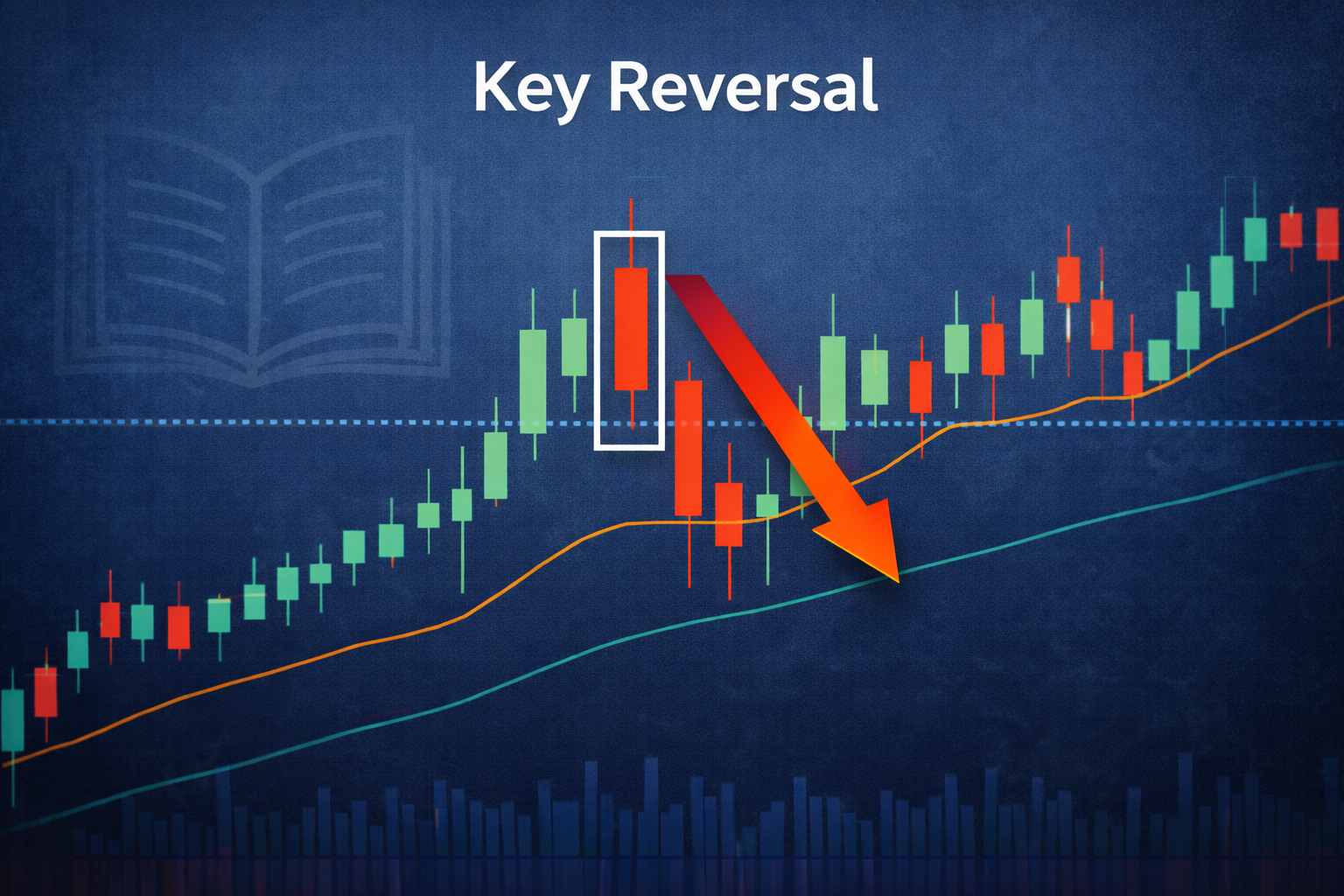
A key reversal matters because it captures both rejection and reversal in a single session. The market first extends the existing move, then fails to hold it.
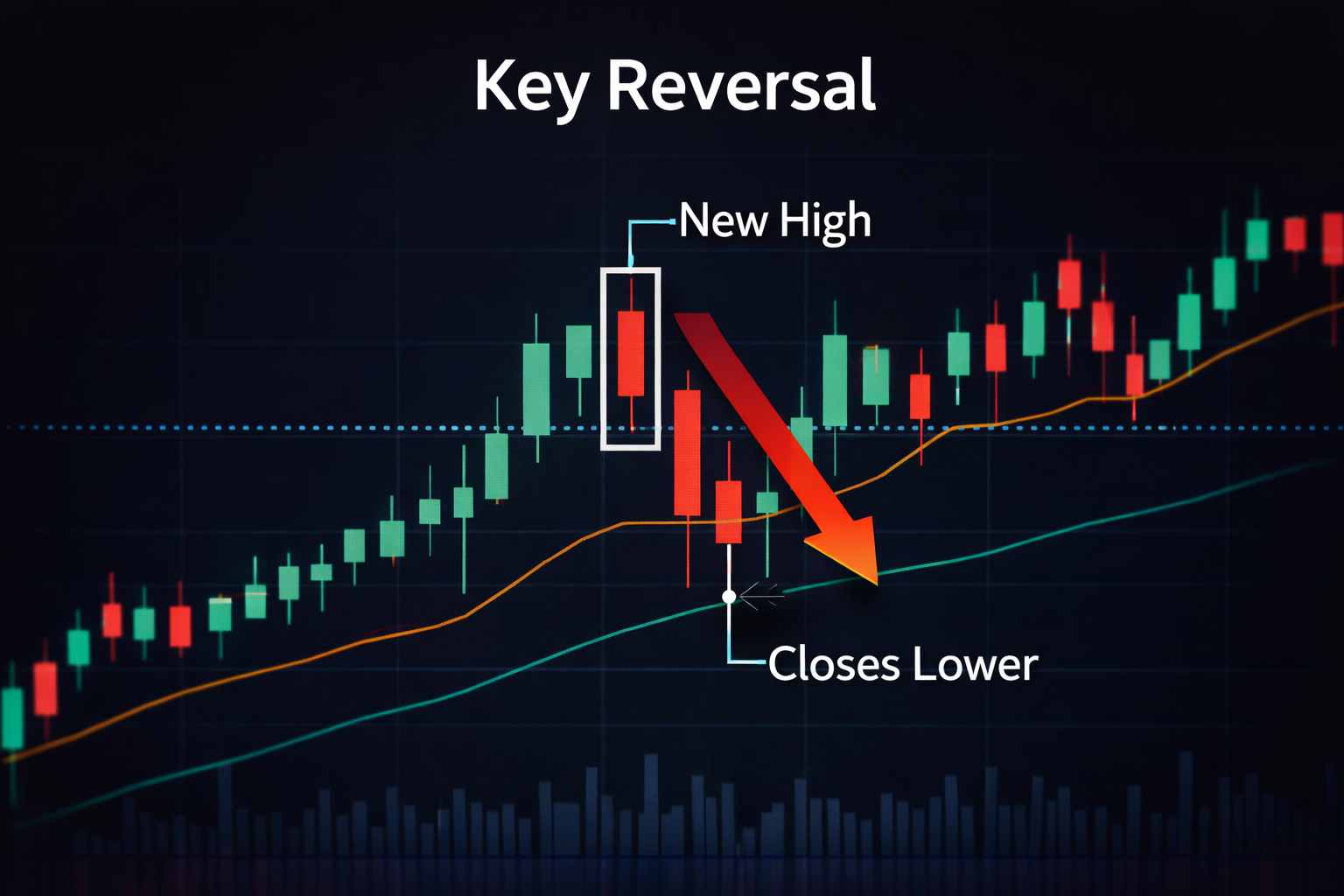
That makes the pattern useful near obvious highs, lows, or key support and resistance areas, where a failed push can carry more meaning than an ordinary red or green candle. Still, it is a warning sign, not a guarantee that a full trend change will follow.
A key reversal is a price-action pattern in technical analysis. It appears that when price pushes to a new high in an uptrend or a new low in a downtrend, then sharply turns and closes in the opposite direction, it hints that control may be shifting from buyers to sellers or from sellers to buyers.
On a daily chart, traders often call it a key reversal day, but the same idea can apply to any single bar on another timeframe.
A simple way to spot it is to look for four elements:
An existing trend is already in place.
Price makes a fresh high or fresh low during the session.
The move then fails sharply.
The session closes against the earlier move, showing rejection.
In a bearish key reversal, the market makes a new high but closes lower, suggesting buyers lost control.
In a bullish key reversal, the market makes a new low but closes higher, suggesting sellers failed to keep pressure on the market.
Imagine EUR/USD has been rising for several sessions and is trading near a visible resistance area.
During one session, the pair rallies to a new short-term high at 1.1045. Later in the day, buyers lose momentum, sellers step in, and price falls back. By the close, EUR/USD finishes at 1.0988, well below the session high and below the earlier bullish tone.
That is a bearish key reversal. The new high attracted breakout traders, but the market could not hold above it. The close lower suggests the move may have been exhausted.
Now flip the logic. If GBP/USD has been falling, prints a new low, then rebounds and closes strongly higher, that would be a bullish key reversal.
Mistaking a retracement for a reversal
Not every pullback is a true reversal. A retracement is a temporary move against the main trend, while a reversal suggests the trend itself may be changing. Traders who confuse the two often react too early.
Ignoring the trend before the pattern
A key reversal is more meaningful when it appears after a clear directional move. In a choppy range, the same candle can be much less important.
Trading the candle in isolation
One session can hint at a shift, but it does not prove one. Many traders wait to see whether the next candle confirms the reversal or whether price reacts around a known support or resistance level.
K-Line: Another name for a candlestick chart, often used in Asian markets.
Price Action: The direct reading of price movement without relying only on indicators.
Resistance Level: A price area where selling pressure may emerge.
Trend: The broader direction of the market, up, down, or sideways.
Fakeout: A false break above resistance or below support that quickly reverses.
A key reversal is best treated as a context signal, not a standalone trade trigger. It becomes more useful when it appears after a stretched move, near a clear reaction zone, and within a wider price-action framework.
In short, it helps traders notice when momentum may be turning before a larger move becomes obvious.
A key reversal is a compact but useful pattern. It shows that price extended the existing move, failed to hold it, and closed the session in the opposite direction.
That does not always mean a new trend has started, but it can be an early clue that the previous move is losing strength. Used with price action, trend context, and support or resistance, it becomes a valuable entry in any trading dictionary.
Disclaimer: This material is for general information purposes only and is not intended as (and should not be considered to be) financial, investment or other advice on which reliance should be placed. No opinion given in the material constitutes a recommendation by EBC or the author that any particular investment, security, transaction or investment strategy is suitable for any specific person.