Published on: 2026-05-15
Updated on: 2026-05-15
Radhakishan Damani’s first edge was not picking winners. It was spotting when leveraged bull trades could break.
D-Mart was built like a controlled position. Avenue Supermarts took eight years to open its first ten stores, proving the model before scaling.
D-Mart reached 500 stores in FY26, showing why Damani’s fortune is tied more to operating scale than stock picking alone.
His investment strategy favours repeat-demand businesses: grocery, tobacco, beverages, logistics and other cash-flow-led sectors.
Quick commerce is now testing D-Mart’s old edge. If speed wins top-up orders, D-Mart must keep winning planned family baskets through price.
Radhakishan Damani built D-Mart after learning how bull markets break. Before shoppers knew him through Avenue Supermarts, Dalal Street knew him as a short seller who studied leverage, crowded trades and the moment rising prices lose support.
That is why his story should not begin with net worth or portfolio size. The better question is why a short seller chose to build a low-margin grocery chain. D-Mart gives the answer: buy carefully, expand slowly, keep costs low and earn the customer’s return visit.
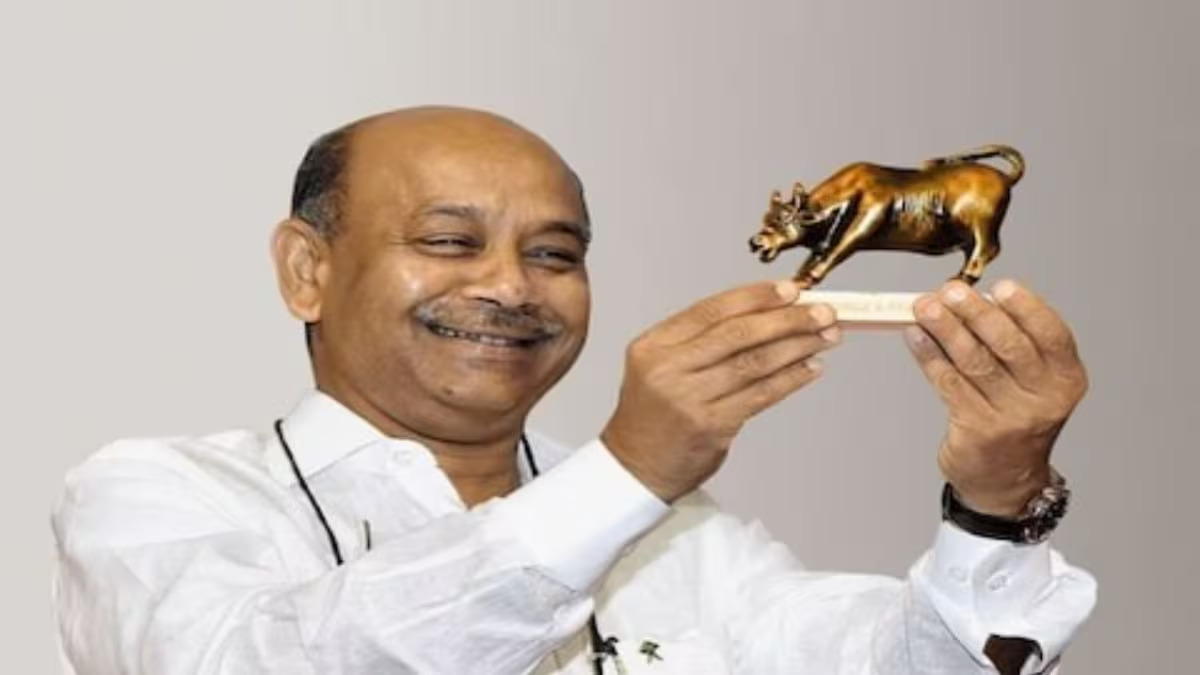
Damani entered Dalal Street before he became a long-term investor, a retailer, or a billionaire. He came from a trading family, left formal commerce education early and moved into the stock market after his father’s death, first as a broker and then as a contrarian trader.
The Bombay Stock Exchange of the 1980s and early 1990s rewarded operators who could read price, funding and crowd behaviour faster than the market could correct itself. Information moved slowly. Price moved violently. Financing was expensive. Bull operators could push selected stocks far beyond fundamental value if the buying chain stayed intact.
That market taught Damani the lesson behind his later fortune: price is not value, and value does not protect a bad position when liquidity turns.
Damani made money in falling markets by studying which stocks were being held up by leverage, operator support and unrealistic expectations. His edge was not pessimism. It was identifying where a rising price had become fragile.
A short seller asks three questions before the crowd does: who is borrowing to buy, which stock needs constant support, and where does the trade break when fresh money stops entering?
ET Retail’s account of Damani’s Dalal Street phase places him in the bear camp during the Harshad Mehta era, when inflated prices and funding pressure shaped one of India’s defining market episodes. The lesson was brutal for anyone trading that period: a stock can be overvalued and still rise long enough to punish the short seller. (ET Retail)
That risk changed Damani’s path. Short selling trained him to see fragility, but long-term ownership solved the timing problem. Instead of fighting bubbles from the outside, he began searching for businesses where time worked in his favour.
Short selling gave Damani a lesson bull markets often hide: being right is not enough if timing, leverage and liquidity are against you.
By 1995, Damani had become the biggest individual shareholder in HDFC Bank. Around 2000, he stepped away from active market trading and began building the retail business that became D-Mart, which opened its first store in 2002.
That sequence shows the shift. Damani moved from betting against fragile prices to owning businesses with durable demand. The short seller who studied forced selling began looking for repeat consumption, clean cash flows and business models where time improved the odds.
D-Mart completed that transition. In the stock market, Damani could identify weakness but could not control timing. In retail, he could control the variables that mattered: purchase cost, store rollout, supplier terms, pricing and customer trust.
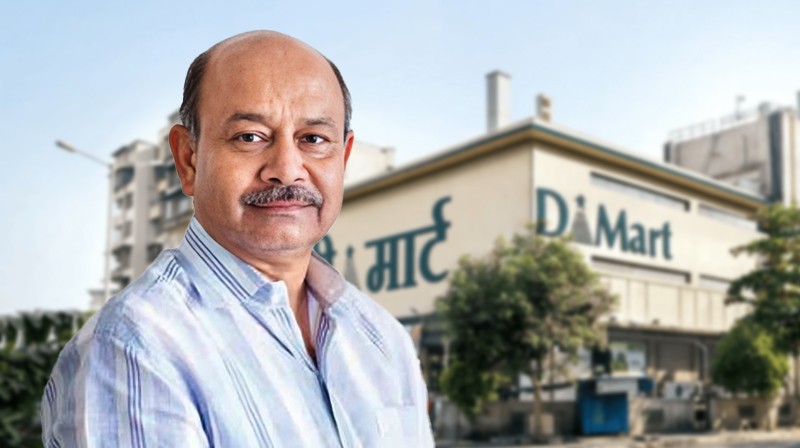
D-Mart became Damani’s biggest trade because it gave him control over variables that markets never fully allow: purchase costs, expansion pace, supplier terms, pricing, and customer trust.
By the late 1990s, Damani had moved from trading into long-term investing and had developed a strong view on Indian consumption. He conceived D-Mart in 2000 as a value-focused grocery chain, then opened the first store in 2002.
D-Mart took eight years to open its first ten stores. That was position sizing in business form: test the model, prove the economics, then add scale.
D-Mart’s promise was plain: good products at low prices. The edge came from the system behind that promise: disciplined buying, careful assortment, local market knowledge, efficient distribution and low operating costs.
For shoppers, the result was a lower bill. For Damani, every successful store became proof that the model could be repeated in another location.
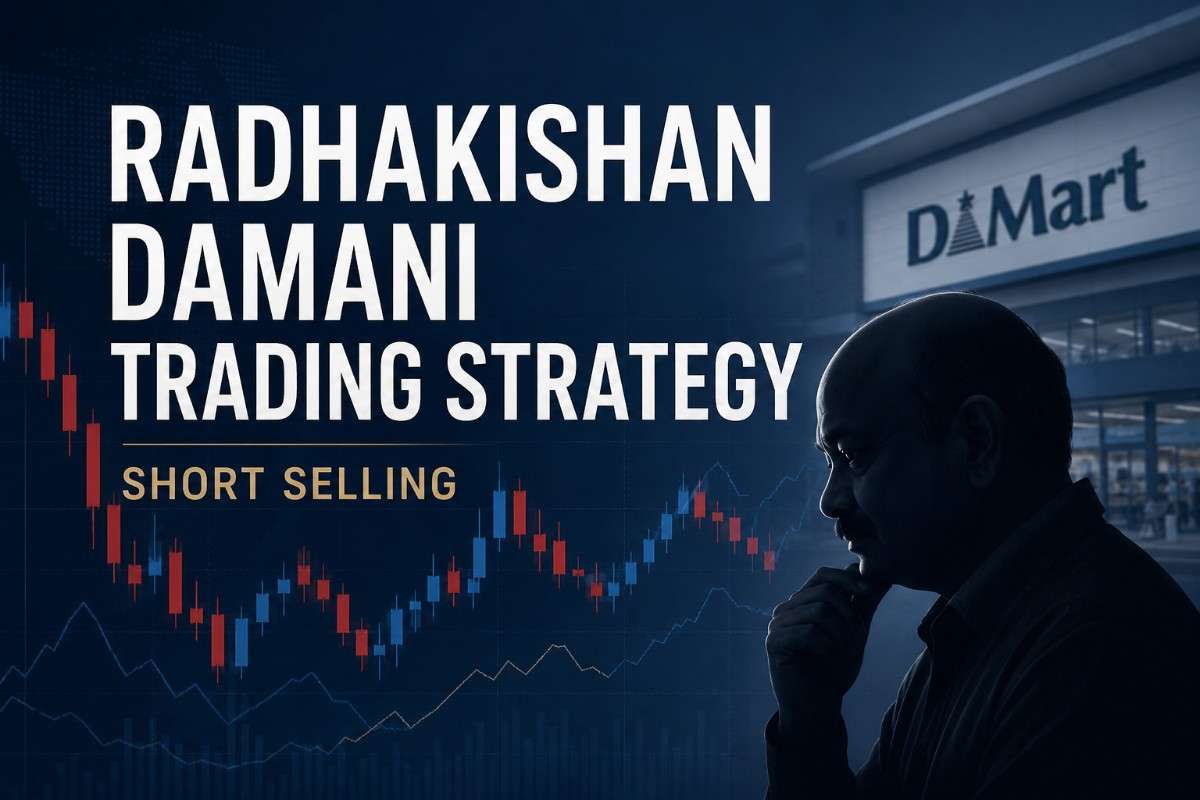
Damani’s short-selling background made risk the first filter. Before asking how much a stock can rise, his method asks what can break: debt, cash flow, valuation, promoter quality or market positioning.
A business with weak cash generation, high leverage or hype-driven pricing offers little margin of safety. The stock may still rise, but the buyer is then depending on another buyer, not the strength of the business.
The Radhakishan Damani portfolio is not a long list of fashionable names. His disclosed holdings are limited, and Avenue Supermarts accounts for most of the value. Public filings tracked by Trendlyne showed 11 holdings worth more than ₹175,331.9 crore as of March 2026.
Concentration is not a shortcut. It is the result of knowing a business well enough to withstand price swings without relying on daily market validation.
Damani’s holdings point toward habits: grocery, tobacco, beverages, logistics and consumer-linked services. Repeat demand reduces dependence on prediction. Families may delay discretionary spending, but they still buy food, household items and daily-use products.
D-Mart turned that principle into a store format. The bet was not on excitement. It was a bet on repeated household behaviour.
Damani’s public market style has rarely been noisy. His career suggests a preference for fewer, larger and longer-duration decisions rather than constant movement.
That is the bridge between his trading years and D-Mart. Short selling taught him where the excess breaks. Ownership gave him a way to let a strong business work without needing the market to agree every week.
D-Mart did not win because organised retail sounded attractive. It won because the operating model was tight: limited frills, strong procurement, efficient distribution, careful assortment and consistent pricing.
A stock story needs buyers. An operating model needs customers who return.
Damani’s disclosed portfolio should not be read as a shopping list. It is better read as a map of what he prefers: businesses with repeat customers, pricing discipline, cash flows and identifiable economics.
| Holding | What It Suggests About Damani’s Framework |
|---|---|
| Avenue Supermarts | His largest wealth engine; value retail built on repeat household spending |
| VST Industries | A consumer franchise with pricing power and steady cash generation |
| 3M India | Preference for quality businesses with specialised products and strong margins |
| United Breweries | Brand strength in a repeat-consumption category |
| Blue Dart Express | Logistics infrastructure tied to India’s consumption and delivery economy |
| Bhagiradha Chemicals | Selective exposure to manufacturing outside mainstream consumer names |
| Advani Hotels | Real-asset exposure linked to travel and hospitality cycles |
| Aptech | Education and training exposure, a long-duration consumer-services theme |
| BF Utilities | Infrastructure-linked exposure with asset-backed optionality |
The pattern is clear. Damani does not appear to chase every market cycle. He favours businesses where the source of profit can be identified: a customer habit, a brand, a distribution advantage, an asset base or a repeat-use service.
Avenue Supermarts sits in a different category from the rest. It is not just another holding in the Radhakishan Damani portfolio. It is the business that turned his investing method into operating control, and then into one of India’s largest personal fortunes.
D-Mart still has scale on its side, but grocery retail rewards discipline more than headline growth. Avenue Supermarts reached 500 stores in FY26 after adding 85 locations, while standalone revenue rose to ₹66,968 crore.
| Avenue Supermarts Metric | FY25 | FY26 | What It Shows |
|---|---|---|---|
| Standalone revenue | ₹57,790 crore | ₹66,968 crore | The store model still scales |
| Net profit | ₹2,927 crore | ₹3,224 crore | Profit grew, but slower than sales |
| PAT margin | 5.1% | 4.8% | Margin pressure is visible |
| New stores added | 50 | 85 | Expansion accelerated |
| Total D-Mart stores | 415 | 500 | The model has national scale |
The lesson is not that D-Mart is slowing. It is that grocery wealth comes from protecting small margins across huge volumes. Every rent decision, supplier term, product mix and delivery cost affects the final rupee of profit.
That brings Damani’s old market lesson back into the business: protect downside first, then add scale.
D-Mart’s modern challenge comes from the phone screen, but quick commerce is only one part of the pressure.
A customer who once planned a weekly basket can now order snacks, staples or household items in minutes. Kearney expects India’s quick-commerce grocery market to triple between 2024 and 2027, reaching ₹1.5 lakh crore to ₹1.7 lakh crore.
D-Mart does not need to become Blinkit to survive. Its edge is still the planned family basket: visible savings, trusted prices and enough assortment to make the store visit worthwhile. The risk is that quick commerce keeps taking high-frequency top-up orders in metros.
The model is also being tested by margin pressure. Avenue Supermarts’ FY26 revenue growth remained strong, but PAT margin narrowed from 5.1% to 4.8%. In grocery retail, small shifts in rent, delivery cost, supplier terms and product mix can change the final rupee of profit.
Avenue Supermarts has already adjusted D-Mart Ready toward key metro towns, home delivery and tighter city selection. If quick commerce keeps winning top-up purchases, D-Mart must keep winning planned household baskets. If household budgets stay tight, price memory becomes a stronger weapon than delivery speed.
Radhakishan Damani became rich through three stages: stock-market trading, long-term investing and concentrated ownership of Avenue Supermarts, the parent company of D-Mart. His biggest wealth engine is D-Mart, where his trading discipline has built a retail business on low costs, slow expansion, and repeat customer demand.
Radhakishan Damani’s net worth is estimated at around $18 billion by global billionaire trackers, while Indian wealth trackers place it above ₹1 lakh crore. The figure changes with Avenue Supermarts’ share price and how promoter-group holdings are counted.
Radhakishan Damani’s disclosed portfolio includes Avenue Supermarts, VST Industries, 3M India, United Breweries, Blue Dart Express, Bhagiradha Chemicals, Advani Hotels, Aptech and BF Utilities. Avenue Supermarts dominates the disclosed value, making D-Mart the centre of his wealth story.
Radhakishan Damani’s investment strategy focuses on downside protection, margin of safety, concentration, repeat-demand businesses and long holding periods. His method favours companies where customer habits, cash flow and cost discipline can compound over time.
Damani turned a bear-market instinct into a bull-market portfolio, then converted both into a retail company built on low prices, controlled growth and consumer trust.
The question for Indian traders is whether Damani’s patience can be learned from his method, or only earned by refusing the trades that look exciting but destroy capital.