Published on: 2026-04-07
Tariffs sit at the intersection of trade, inflation, and policy. A change in tariff rates can affect import prices, company costs, consumer demand, currency moves, and even central bank expectations, which is why traders watch them far beyond the trade desk.
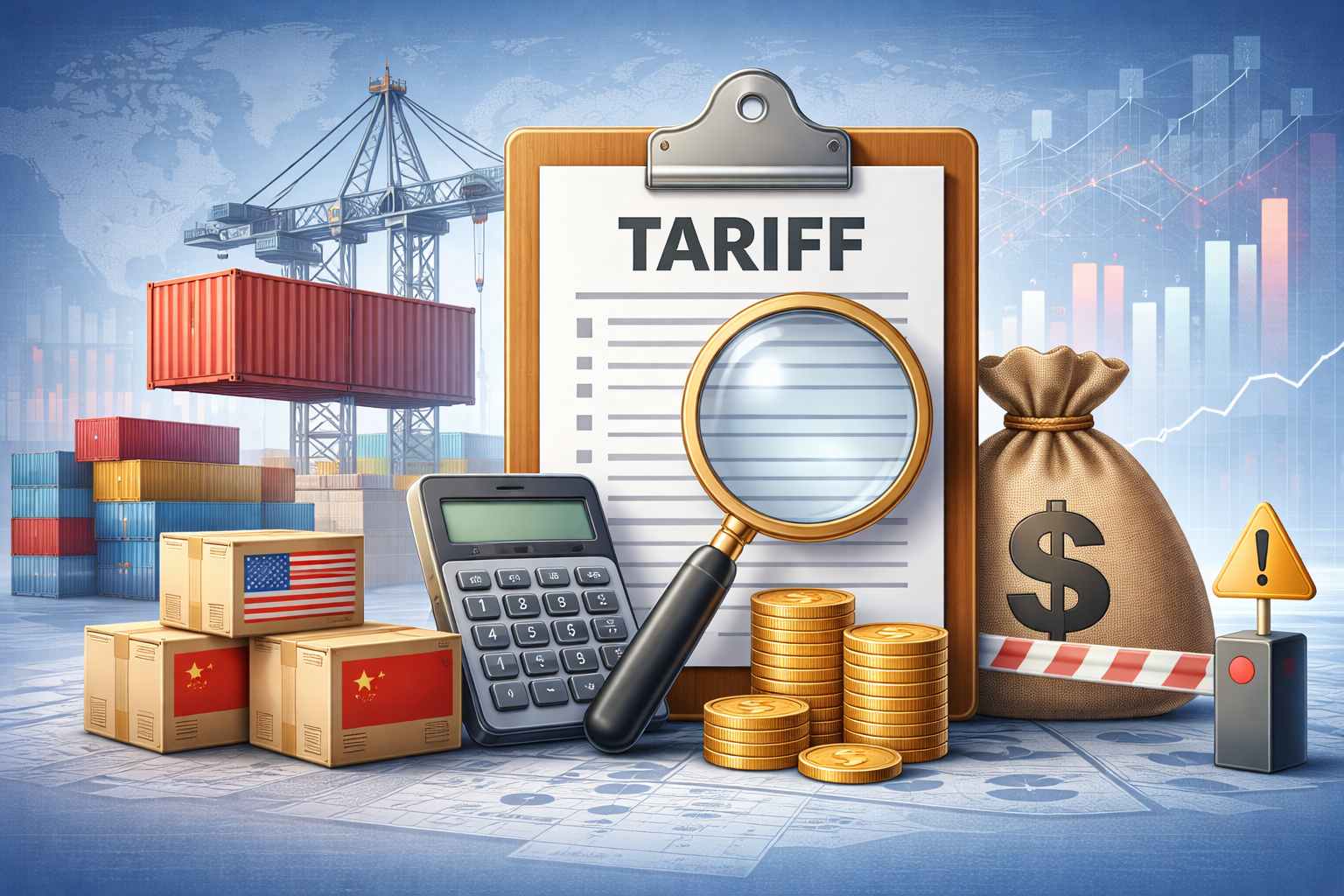
A tariff is a tax or customs duty imposed on goods as they cross a border, most commonly on imports.
In practice, tariffs are usually charged by the importing country’s customs authority and are often used either to raise government revenue, protect domestic producers, or both.
The two main forms of tariffs are:
Ad valorem tariffs, charged as a percentage of the product’s value
Specific tariffs, charged as a fixed amount per unit, such as per kilogram, tonne, or item
Tariffs matter because they raise the landed cost of imported goods. That can push up consumer prices, squeeze company margins, or shift demand toward domestic alternatives.
In some cases, tariffs are used to shield strategic industries or respond to unfair trade practices, but they can also distort supply chains and reduce trade efficiency.
For markets, tariffs are not just a trade-policy story. They can affect:
Inflation, if import costs are passed on to households and businesses
Exchange rates, as trade flows and policy expectations shift
Growth, if uncertainty or higher costs reduce investment and demand
Volatility, especially when tariff changes trigger retaliation or wider trade disputes
Imagine a country imposes a 10% tariff on imported washing machines, each worth $500. That adds $50 in duty before transport, retail, and margin costs.
The importer may absorb part of that cost, but if most of it is passed on, the final selling price rises. Domestic manufacturers may gain some pricing power, while consumers face fewer cheap options.
This is why tariffs often ripple beyond the targeted product. A tariff on one category can feed into supplier pricing, logistics decisions, and broader inflation expectations, especially when the affected goods are widely used across the economy.
“Foreign exporters always pay the tariff.”
Legally, the importer usually pays the duty at the border, although the cost can then be shared across exporters, importers, retailers, and consumers.
“Tariffs only affect trade volumes.”
In reality, they can also affect inflation, investment, exchange rates, and policy uncertainty.
“Tariffs are always good for domestic companies.”
Some firms benefit from reduced foreign competition, but others suffer if they rely on imported parts, raw materials, or cross-border supply chains.
“All tariffs are percentage-based.”
Some tariffs are fixed per unit, while others combine a percentage and a fixed charge.
Inflation: Rising import costs can feed through into consumer prices, making tariffs relevant for inflation analysis.
Fiscal Policy: Tariffs are government taxes and can form part of a broader economic or industrial policy strategy.
Exchange Rate: Tariffs can influence trade flows and market expectations, thereby affecting a currency’s value.
GDP Deflator: Because tariffs can influence economy-wide price pressures, they can show up indirectly in broader inflation measures beyond CPI.
No. A tariff raises the cost of imported goods through a tax, while a quota limits the quantity that can be imported. Both restrict trade, but they work in different ways.
Not always. The inflation effect depends on how much of the extra cost is passed on, how easily firms can switch suppliers, and how demand responds. But tariffs often increase price pressure in the importing country.
Because tariffs can move inflation expectations, corporate margins, currencies, bonds, and equities. They are a policy tool with macro and market consequences, not just a customs issue.
Tariffs are taxes on cross-border goods, usually imports. They are used to raise revenue, protect domestic industries, or pursue trade-policy goals, but they also increase costs and can reshape inflation, exchange rates, and market sentiment.
For traders and investors, tariffs matter because they can turn a policy decision at the border into a broader macroeconomic shock.
Disclaimer: This material is for general information purposes only and is not intended as (and should not be considered to be) financial, investment or other advice on which reliance should be placed. No opinion given in the material constitutes a recommendation by EBC Financial Group or the author that any particular investment, security, transaction or investment strategy is suitable for any specific person.



World's Best Broker