Published on: 2026-04-03
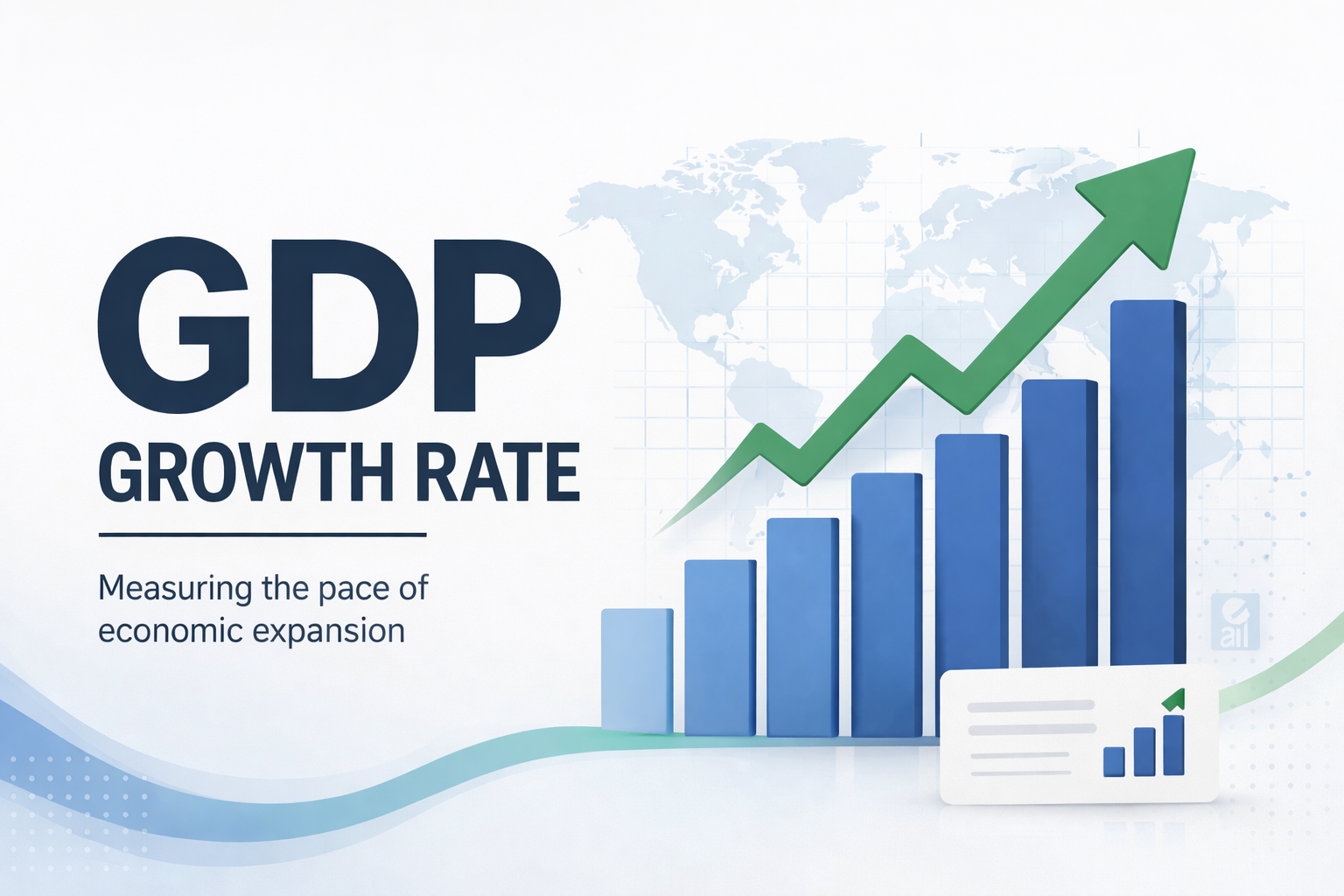
The GDP growth rate is one of the most widely watched economic indicators, showing how fast a country’s economy is expanding or contracting over time. For traders, understanding GDP growth rate provides insight into economic health, potential policy shifts, and market sentiment. It helps investors assess whether an economy is accelerating, stagnating, or entering a slowdown, which can influence currency, equity, and bond markets. Because GDP growth reflects the pace of economic activity, it is often a leading factor in strategic trading decisions.
The GDP growth rate measures the percentage change in a country’s Gross Domestic Product (GDP) over a specific period, typically quarterly or annually. It compares the size of the economy from one period to the next, giving a snapshot of economic momentum.

For example, if a country’s GDP increased from $1 trillion last year to $1.05 trillion this year:

This indicates a 5% economic expansion over the year.
Traders pay attention to GDP growth because it reflects the overall strength of the economy, influencing multiple financial markets:
Central Bank Policy: Strong GDP growth may lead to tighter monetary policy (higher interest rates) to prevent overheating. Weak growth could trigger easing measures, including lower rates or stimulus packages.
Currency Markets (Forex): Faster economic growth often strengthens a country’s currency, as investors expect higher returns. Conversely, slow growth can weaken a currency.
Equity Markets: High GDP growth typically supports corporate earnings, boosting stock prices. Slow growth or contraction may lead to market sell-offs, especially in cyclical sectors.
Bond Markets: Bond yields may rise with strong growth due to higher inflation expectations, while weak growth can lower yields.
The GDP growth rate reflects broad economic trends over a period, not immediate market reactions.
Markets often respond not just to the numbers themselves but to expectations, investor sentiment, and other concurrent factors.
For example, a strong GDP growth report may already be “priced in,” meaning traders might not see immediate market gains.
Implication: The GDP growth rate is better used to assess the longer-term economic environment rather than to time trades on a day-to-day basis.
Rapid economic growth can have mixed effects on financial markets.
While strong GDP growth often signals a healthy economy, it can also trigger inflationary pressures.
Central banks may respond by raising interest rates, which can negatively affect certain assets, such as bonds and high-growth equities.
Implication: Traders should interpret high GDP growth with caution, understanding the broader monetary policy and market context.
Official GDP statistics typically exclude unreported or informal economic activity.
Many small-scale businesses, cash-based transactions, or informal labour may not be reflected in GDP figures.
Implication: The GDP growth rate gives a snapshot of the formal economy. Traders and analysts should remember that actual economic activity might be larger than reported figures suggest.
Traders might anticipate rising interest rates, which could strengthen the currency. Equities in cyclical industries may perform well, while government bond prices may fall.
Investors may expect central banks to lower interest rates or implement stimulus measures. Safe-haven assets such as gold and government bonds may see increased demand, while growth-dependent equities could underperform.
Consecutive quarters of negative GDP growth signal a potential recession. Traders may shift to defensive sectors, short-risky assets, or hedge portfolios accordingly.
Interpreting GDP growth trends alongside other economic indicators, traders gain a macro-level perspective that helps shape entry, exit, and risk-management decisions.
Recession: A period of negative GDP growth lasting at least two consecutive quarters.
Economic Expansion: A period of rising GDP, indicating growth.
Central Bank Policy: Actions affecting interest rates and liquidity to influence growth.
Inflation: The rate at which general prices rise in an economy.
Fiscal Stimulus: Government spending to boost economic activity.
GDP growth rate is calculated as the percentage change in a country’s gross domestic product over a specific period, usually quarterly or annually. It can be measured in nominal terms or adjusted for inflation to reflect real GDP growth and true economic expansion.
Traders watch the GDP growth rate because it indicates the overall health of the economy. Strong growth may influence central bank policy, support currency strength, and boost stock and bond markets, while weak growth can signal potential market volatility or recession risks.
For developed economies, 2–3% annual GDP growth is generally healthy, indicating stable expansion. Emerging markets often target higher rates. Extremely high or negative growth may reflect overheating, financial instability, or economic contraction.
Yes. Consistently negative GDP growth over two or more consecutive quarters typically signals a recession. Traders and investors monitor these trends as early warnings of market risk and potential declines in asset prices.
GDP growth rate is usually reported quarterly by government statistical agencies, with annualised figures also provided. These reports help traders, investors, and policymakers assess economic trends and guide financial and investment decisions.
The GDP growth rate is a fundamental economic indicator showing how fast an economy is expanding or contracting. Traders use it to assess central bank policy, currency strength, equity performance, and bond yields. By interpreting GDP trends alongside other economic data, traders can structure more informed strategies and anticipate potential market reactions. While not a precise trading signal, the GDP growth rate provides critical context for understanding macroeconomic conditions and guiding disciplined trading decisions.
Disclaimer: This material is for general information purposes only and is not intended as (and should not be considered to be) financial, investment or other advice on which reliance should be placed. No opinion given in the material constitutes a recommendation by EBC or the author that any particular investment, security, transaction or investment strategy is suitable for any specific person.