Published on: 2026-03-02
Updated on: 2026-03-02
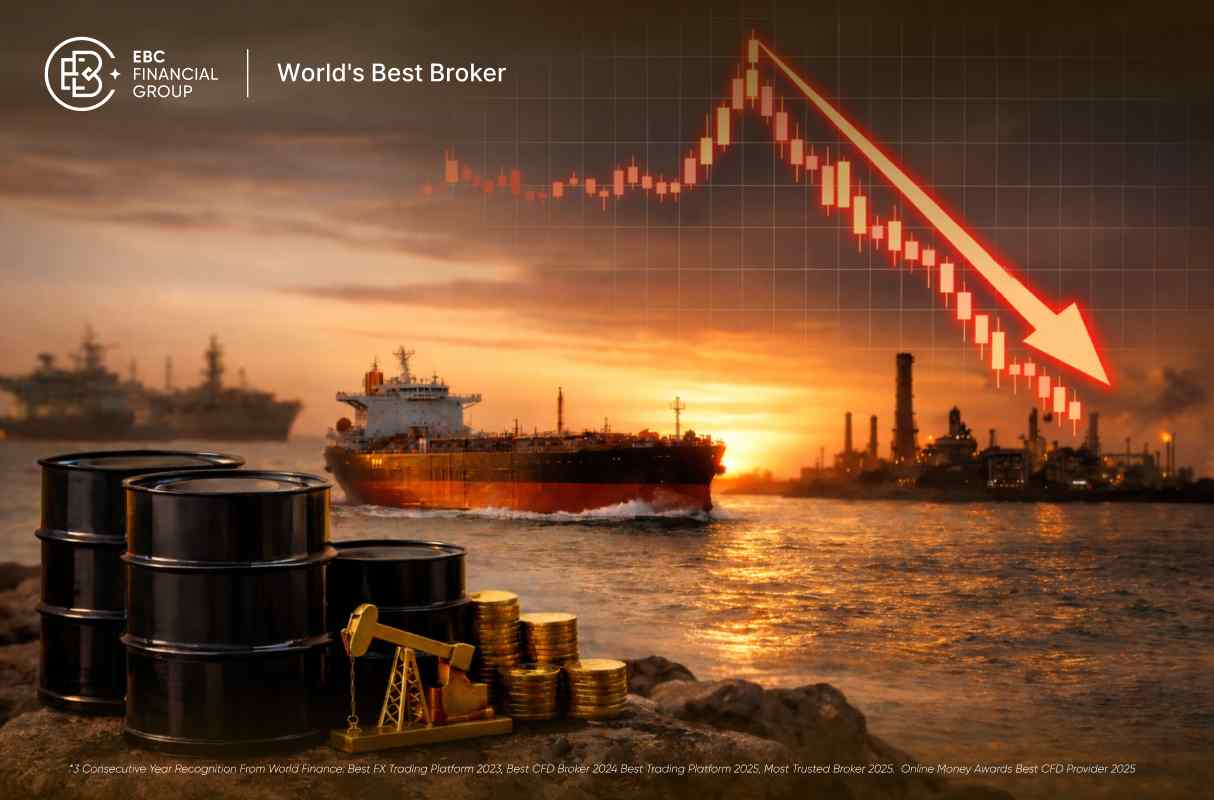
Oil opened the week with a war premium, and equities opened with a risk discount.
After coordinated US and Israeli strikes on Iran over the weekend, crude prices jumped in early Monday trading as markets priced the risk of disrupted flows through the Strait of Hormuz, a key chokepoint for global energy shipping.
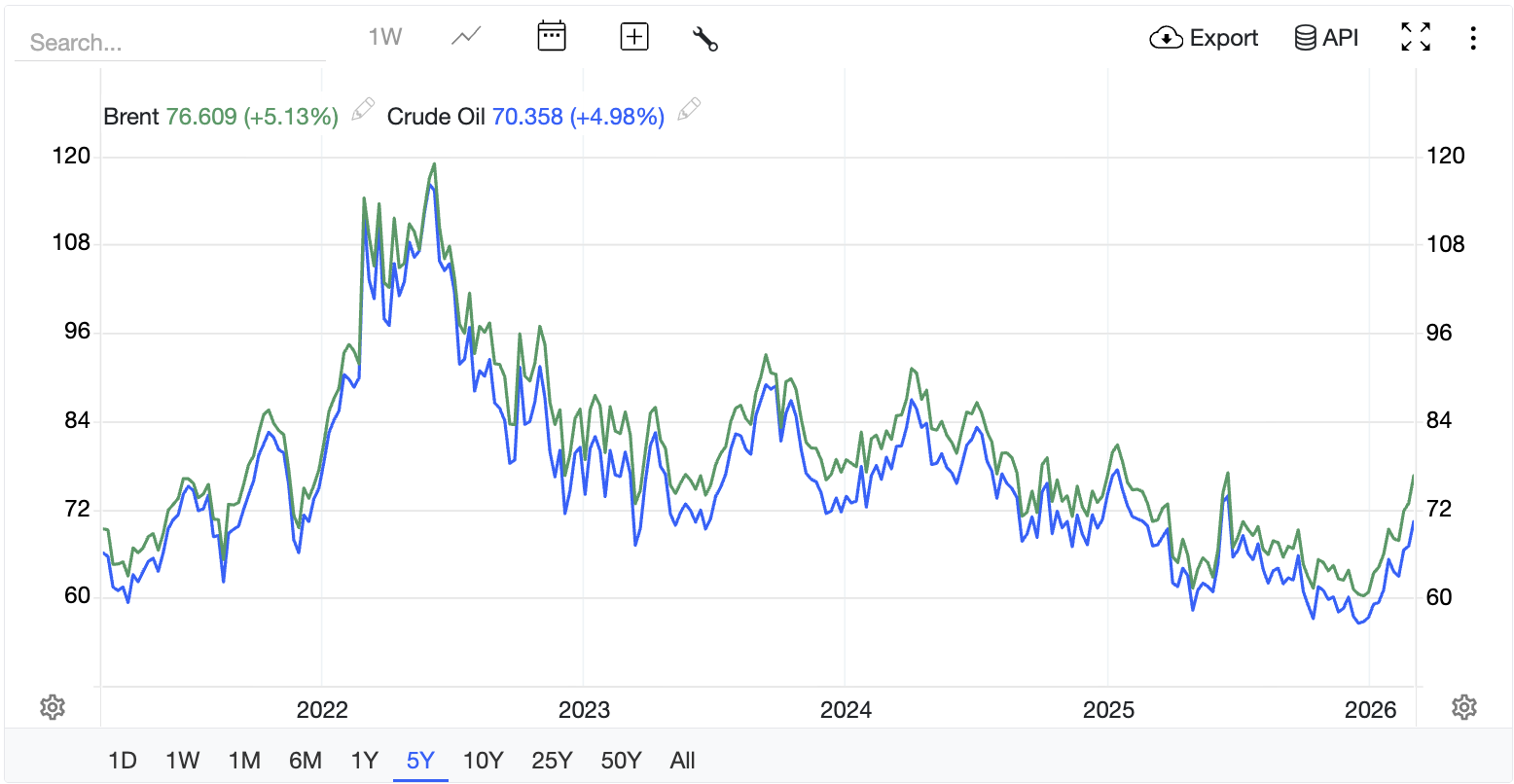
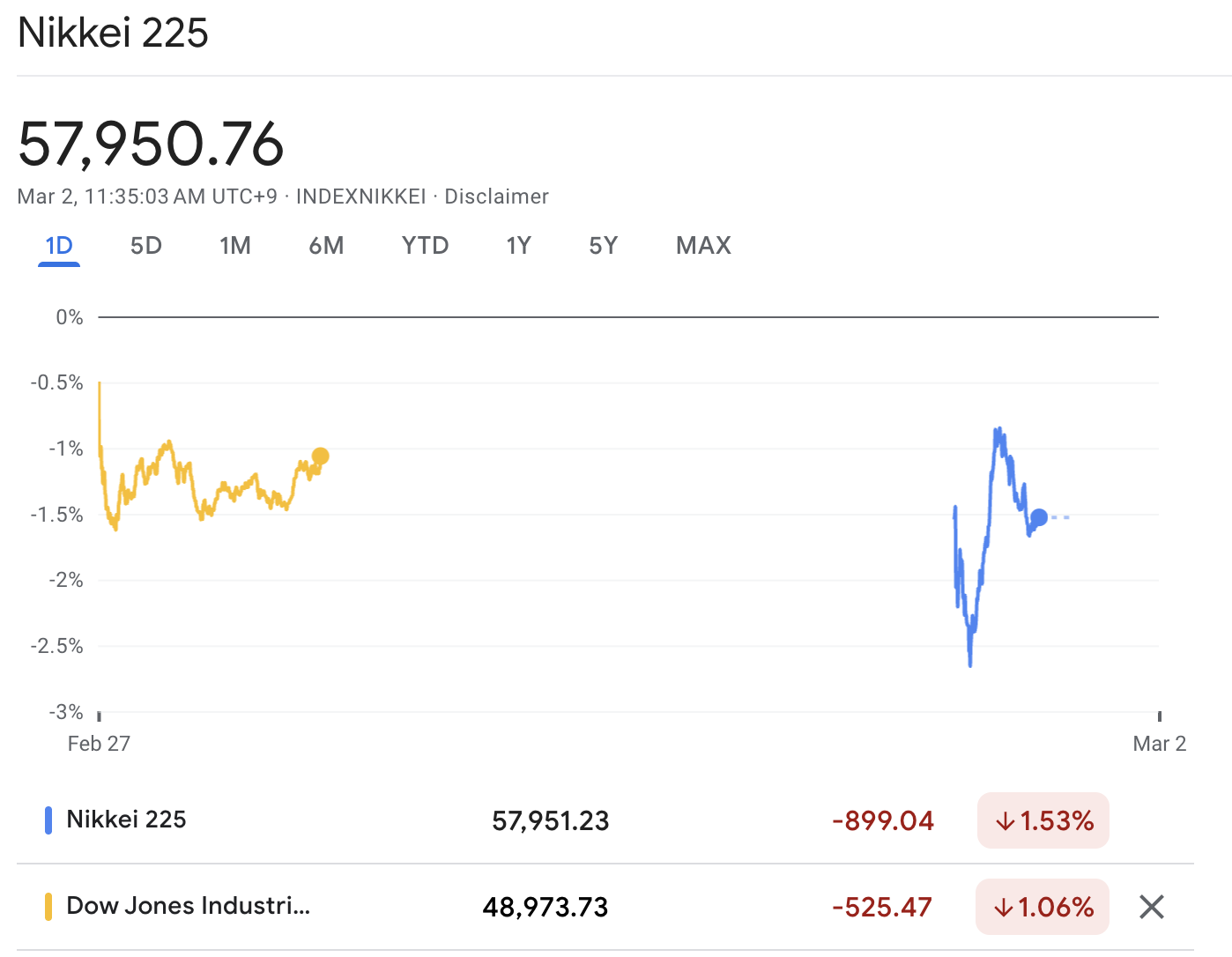
Brent jumped as much as 13% in early trading and briefly traded near $82 a barrel, while US crude also climbed sharply. At the same time, equity markets turned defensive. The Nikkei in Japan declined by approximately 2.4%, while US stock futures dropped more than 1%. Investors shifted their focus to safe havens such as gold.
The big question is whether this shock can push oil back to $100. The honest answer is that $100 is possible, but it requires real disruption, not only fear.
Iran issued warnings to tankers, and maritime traffic dropped as the situation deteriorated. Some shipping firms halted transits through key routes due to security concerns.
That matters because the market does not need a complete closure to panic. Even a partial disruption, higher insurance costs, or fewer ships willing to sail can tighten effective supply.
The Strait of Hormuz is a narrow passage located between Oman and Iran, serving as a critical channel for global energy supplies.
The US Energy Information Administration estimates that oil flows through the strait averaged about 20 million barrels per day in 2024, which is roughly 20% of global petroleum liquids consumption.
When traders hear "Hormuz risk", they do not only think about Iran. They think about the physical ability of the Gulf to export at all.
The price action is telling you that traders are worried about logistics and shipping, not just barrels "on paper."
| Market | Latest move (early trading) |
|---|---|
| WTI crude | Around $71.6–$72.0, up roughly 7% |
| Brent crude | Around $78.3–$78.6, up roughly 7%–8% |
| Brent intraday spike | Up to $82, up as much as 13% |
| US stock futures | Down about 1% across major indexes |
| Japan equities | Down about 2.4% (Nikkei) |
| Gold | Up about 2%–3% |
Oil surged because traders priced three layers of risk simultaneously.
When shipping routes are threatened, market availability can decline even if production remains unchanged.
Fewer tankers sail.
Cargo schedules slip.
Refiners pay up to secure prompt barrels.
Traders bid up near-dated contracts first.
War risk typically shows up as a more rapid move at the front of the curve.
Iran's role is important, but the chokepoint is larger than Iran.
If Hormuz flows are interrupted, the risk extends to multiple Gulf producers and to LNG cargoes, not only to Iranian barrels.
Concerns about Iran's daily exports of roughly 1.6 million barrels per day, largely to China.
Even if those barrels are not completely removed, stricter enforcement, payment issues, or logistical disruptions can make them less reliable, and the market values reliability.
Stocks often fall when oil spikes for a simple reason: higher oil prices can feel like a tax on growth.
Higher energy prices can feed into transport costs and consumer bills, which makes it harder for inflation to fall smoothly.
If inflation risks rise, markets tend to price fewer or later Fed cuts, and that lifts yields.
Increasing fuel and shipping costs can erode profit margins for airlines, logistics companies, and certain retail sectors.
That is why an oil shock often triggers a broad "risk-off" move, even before anyone knows how long the conflict will last.
Yes, $100 can return, but it usually requires one of the following conditions to be true for more than a day or two.
If tankers avoid the route for weeks, the impact can become a supply problem for importers, especially in Asia, even without direct damage to oil facilities.
Analysts have warned that if someone targets Iranian oil infrastructure and impacts supplies, oil prices could rise toward $100. This is partly due to an increased likelihood of attempts to disrupt shipping routes.
Even if production is intact, the market can price $100 if it believes the conflict could drag in more actors and create repeated shipping incidents.
If oil prices remain high, inflation expectations will increase, leading central banks to maintain tighter monetary policies for an extended period. That can keep the risk premium alive because markets are already pricing in a slower economy and higher costs.
| Scenario | What happens in the real world | Likely oil path | Stock market reaction |
|---|---|---|---|
| Quick de-escalation | Strikes stop, shipping continues with limited disruption, and rhetoric cools. | Oil gives back part of the spike and trades with a smaller, fading risk premium. | Stocks stabilize as inflation fears ease and risk appetite returns. |
| Limited conflict, higher insurance costs | No major infrastructure damage, but ships slow, reroute, or pay sharply higher insurance costs. | Oil holds a |
Stocks stay choppy |
| Prolonged disruption near Hormuz | Repeated incidents keep flows constrained for days or weeks, and tanker traffic becomes inconsistent. | Oil can climb toward the upper $80s and potentially test $100 if disruption persists. | Stocks fall further as recession and inflation risks rise together, and defensives outperform. |
| Direct hits to oil infrastructure | Production or export capacity is impaired in a way that is not quickly repaired, and physical barrels disappear from the market. | $100 becomes realistic quickly because the supply shock is real, not just feared. | Risk assets sell off broadly, and energy often outperforms as the market reprices cash flows and inflation risk. |
Shipping advisories and insurer pricing, because they show whether the disruption is becoming operational.
Verified incident reports near Oman and the UAE, because repeated events can keep traffic low.
Official responses from Gulf states are necessary because regional escalation can quickly alter the supply landscape.
OPEC+ messaging, because the market will test whether extra barrels are credible and deliverable.
Oil surged because the US–Iran conflict raised the risk of disruption in the Strait of Hormuz. This chokepoint transports approximately 20 million barrels daily, accounting for about 20% of global petroleum liquids consumption.
Stocks fell because higher oil prices raise inflation risk, threaten profit margins, and can push out rate-cut expectations. US futures and Asian equities fell as investors sought safe havens.
Yes, but it would likely require sustained disruption to Hormuz shipping or a significant loss of supply. Market commentary has already mentioned that $100 is a plausible target if disruptions continue.
In conclusion, oil is surging because markets are paying for the risk that one of the world's most important energy arteries becomes unreliable, even if only temporarily.
Stocks are falling because higher oil prices raise inflation risk and tighten financial conditions, which is a tough combination for growth and consumer demand.
A return to $100 is not the base case, but it is plausible if shipping disruption persists or if oil infrastructure becomes a target. If flows normalize quickly, the market can still keep a smaller risk premium, but the spike will likely fade.
Disclaimer: This material is for general information purposes only and is not intended as (and should not be considered to be) financial, investment or other advice on which reliance should be placed. No opinion given in the material constitutes a recommendation by EBC or the author that any particular investment, security, transaction or investment strategy is suitable for any specific person.