Published on: 2026-05-15
Natural gas prices may get a summer heat premium in 2026, but temperature alone is not the signal traders should follow. The more important question is whether hotter weather can slow EIA storage injections enough to challenge a market that still has above-average inventories and rising production.
That makes summer 2026 a storage test, not just a weather story. Heat waves can lift cooling demand, increase gas-fired power generation and support Henry Hub prices. But the market is not entering summer from a shortage position. Working gas in storage stood at 2,290 Bcf as of 8 May 2026, 140 Bcf above the five-year average and 51 Bcf above year-earlier levels.
Natural gas often trades like a winter commodity because heating demand drives the largest seasonal swings. But summer can also move prices sharply when electricity demand rises.
During heat waves, homes, offices, factories and data centers use more power for cooling. If that demand surge forces utilities to increase gas-fired generation, the extra gas burn can tighten the market during injection season.
That timing matters. From spring through autumn, the market is supposed to rebuild inventories for winter. If heat-driven demand reduces weekly storage builds, traders may start pricing a tighter end-of-season balance.
A hot forecast can move prices for a few sessions. A string of weak storage builds can change the whole summer outlook.
The latest EIA storage report showed an 85 Bcf build for the week ending 8 May 2026. That was close to the five-year average build and left total inventories within the five-year historical range. In other words, the market has a cushion, but not a reason to ignore weather risk.
| Market Signal | Current Read | Summer Meaning |
|---|---|---|
| Working gas in storage | 2,290 Bcf | Inventories remain above normal |
| Weekly injection | +85 Bcf | No clear tightening signal yet |
| Storage vs five-year average | +140 Bcf | Market has a supply cushion |
| Storage vs year earlier | +51 Bcf | Balance is not yet tight |
| Key bullish confirmation | Repeated weak builds | Needed for a stronger rally |
The storage total shows the market is comfortable today. The weekly injection trend will show whether summer heat is starting to change that comfort.
First, heat must be broad. A short heat wave in one region may lift local power prices, but it rarely changes the national gas balance. The stronger signal would be persistent heat across major power-consuming regions such as Texas, the Southeast and the Midwest.
Second, gas-fired power burn must rise. Higher electricity demand is only bullish for natural gas if gas plants carry more of the load. If renewables, coal or imports absorb more of the demand shock, the Henry Hub impact may be smaller.
Third, LNG exports need to stay firm. EIA expects U.S. LNG exports to average 17.0 Bcf/d in 2026, up from 15.1 Bcf/d in 2025. That creates a stronger demand floor, especially if domestic power demand rises at the same time.
The strongest bullish setup would be straightforward: widespread heat, high gas-fired generation, steady LNG flows and weekly storage injections that repeatedly miss expectations.
U.S. natural gas production is still rising. EIA expects Lower 48 marketed production to average 118.9 Bcf/d in 2026, with growth supported by the Permian and Haynesville regions. That supply growth limits the market’s ability to price a durable shortage without stronger demand confirmation.
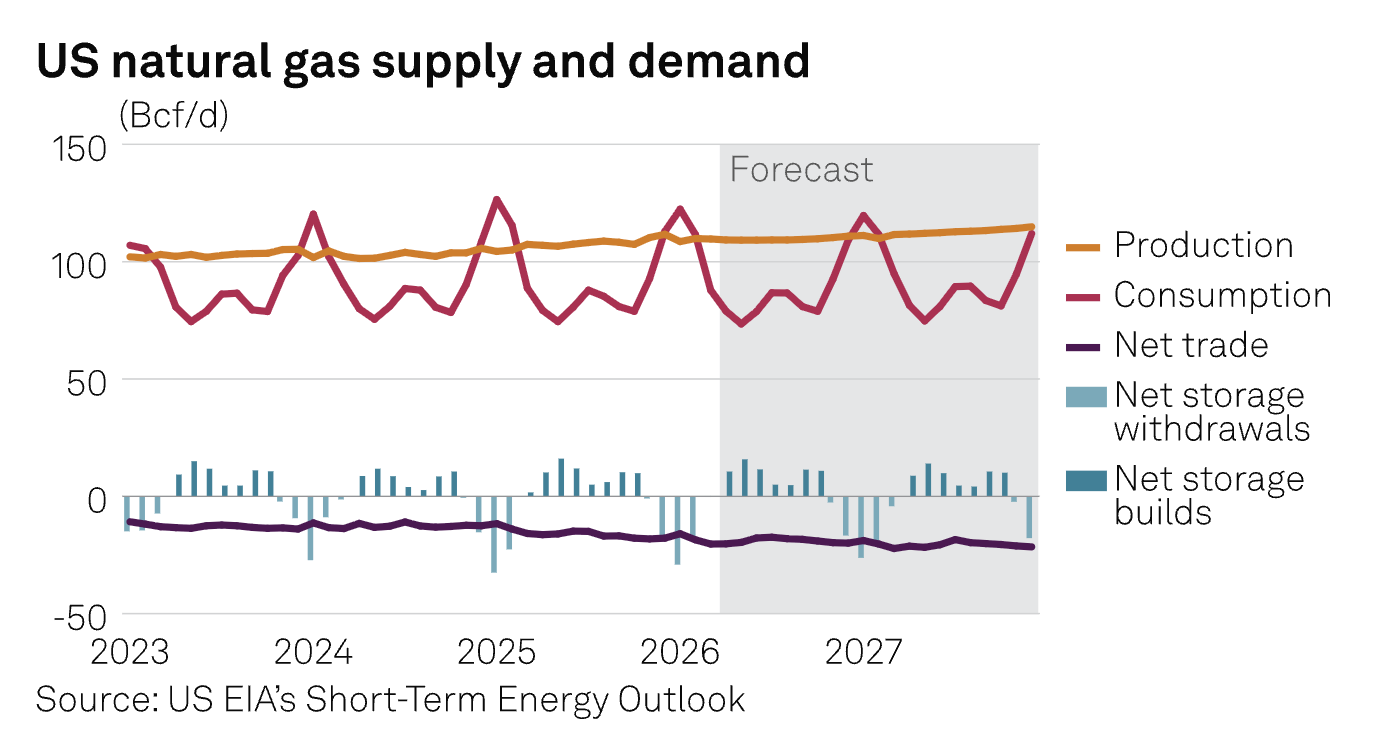
This is why summer heat alone may not be enough. If production keeps rising and storage builds remain healthy, the market can absorb higher cooling demand without a major repricing.
EIA also expects natural gas injections during the April-to-October injection season to be above average and forecasts inventories to end October 7% above the previous five-year average. That is a meaningful cap on the bullish case unless weather demand becomes much stronger than expected.
The summer natural gas trade should be read through confirmation signals, not headlines.
| Signal | Bullish Reading | Bearish Reading |
|---|---|---|
| Weather | Persistent heat across major power markets | Short-lived or regional heat |
| EIA storage | Repeated below-expected injections | Builds near or above normal |
| Power burn | Gas generation rises during peak load | Other fuels absorb demand |
| LNG flows | Exports stay near capacity | Maintenance or softer demand lowers flows |
| Production | Output growth slows | Permian and Haynesville supply keeps rising |
The most important signal is storage. If heat arrives and injections remain strong, the market is absorbing the extra demand. If heat arrives and injections weaken, traders may start pricing a tighter balance before winter.
The summer 2026 outlook is cautiously constructive, but not aggressively bullish.
Henry Hub prices can move higher if heat raises power-sector gas demand and slows storage injections. For the broader annual view, see EBC’s full 2026 Henry Hub natural gas price forecast. LNG exports provide additional support, while rising electricity consumption gives the market a stronger demand base than in previous cycles.
EIA’s long-term outlook also points to continued growth in U.S. electricity consumption, with data center energy use a major factor behind faster commercial-sector demand growth.
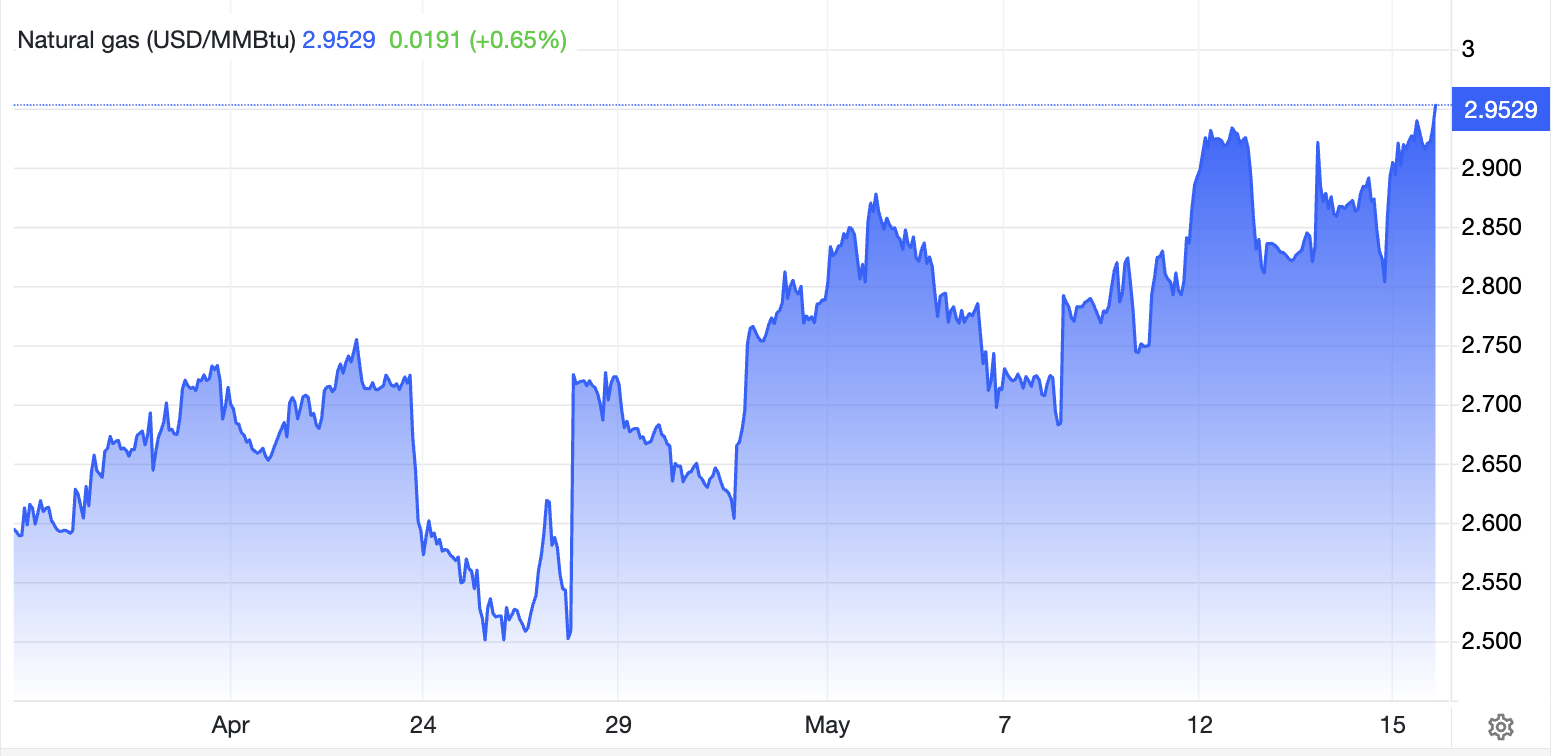
But upside remains conditional. EIA forecasts the Henry Hub spot price will average $2.83/MMBtu in 2Q26, with above-average storage injections expected through the injection season. That does not rule out a summer rally, but it means the rally needs confirmation from weaker storage builds.
For traders, the cleanest reading is this: summer heat can support natural gas prices, but storage data decides whether that support becomes a durable bullish catalyst.
Summer heat can push natural gas prices higher in 2026, but only if it changes the storage path.
The market is not short of gas today. Storage is above average, production is rising, and EIA expects inventories to remain comfortable through the injection season. That makes the bullish case dependent on repeated evidence that cooling demand is tightening the balance.
For traders, the most important signal is Thursday’s EIA storage report. If heat waves arrive and weekly injections slow, Henry Hub prices could build a stronger summer premium. If inventories keep rising comfortably, hot weather may create short-term rallies rather than a sustained breakout.