Published on: 2026-05-28
Updated on: 2026-05-28
Micron has not announced a stock split, but MU’s near-$1,000 price, $1.06 trillion valuation, fiscal Q3 guidance, and share-count math have turned 2026 split speculation into a serious market signal.
A stock split would not change Micron’s value, yet it could become a powerful signal after a $1 trillion AI-memory rally. The real issue is whether Micron’s earnings base has become large enough to make a lower share price feel inevitable rather than cosmetic. What signal would turn split speculation into a credible 2026 event?
MU recently traded at $928.41, giving Micron a market value near $1.06 trillion and a trailing P/E of about 43.8x. That looks stretched on backward earnings, but the picture changes if fiscal Q3 guidance is treated as the new run-rate. The split debate now depends less on price optics than on whether AI memory can sustain forward earnings.
Micron has not announced a stock split, but MU’s move toward $1,000 has made the question more relevant for 2026.
A 2-for-1 split looks cleaner than a larger ratio, cutting the implied price to about $464 while avoiding the share-count pressure of a 3-for-1 or 5-for-1 split.
Micron’s 3.0 billion authorized-share limit matters because larger split ratios would push the company closer to a corporate-approval constraint.
Fiscal Q3 guidance serves as the bull-case anchor, with Micron targeting $33.5 billion in revenue, a roughly 81% gross margin, and $19.15 in non-GAAP EPS.
June 24 is the next major signal, when investors will test whether AI-memory demand can support MU’s near-$1,000 valuation.
The real signal would be a board-approved split with a stated ratio, record date, and execution date. Anything short of that remains market speculation, even if MU’s price makes the idea more plausible.
Micron has not framed a stock split as a management priority in its latest official earnings materials. The company has signaled capital confidence through other channels, including a 30% dividend increase and a quarterly dividend of $0.15 per share, but not through split language.
For Micron, the key question is not whether a split would create value. It would not. The real question is whether management sees the AI-driven rerating as durable enough to reset the share price without making the move look cosmetic.
That is why a split would carry more weight now than it would have a year ago. MU is no longer trading like a routine memory-cycle recovery; it is being priced as a company with strategic leverage to AI infrastructure demand.
A move toward $1,000 changes the optics. It does not change Micron’s intrinsic value, but it makes the stock less accessible to smaller investors and turns the nominal share price into a board-level consideration.
The price level matters because MU is not rising on a modest earnings surprise. Fiscal Q2 revenue reached $23.86 billion, up from $13.64 billion in the prior quarter and $8.05 billion a year earlier. GAAP EPS reached $12.07, while non-GAAP EPS reached $12.20.
That acceleration gives the split debate substance. If Micron were merely enjoying a sentiment rally, $1,000 would be a psychological marker. With earnings moving this quickly, it becomes a test of whether the market is repricing Micron as a scarcity asset rather than a cyclical memory stock.
The split ratio matters because Micron’s authorized-share structure creates a practical limit. Based on 1.274 billion issued shares, a 2-for-1 split would lift issued shares to about 2.548 billion, still below the company’s 3.0 billion authorized-share level. A 3-for-1 split would imply roughly 3.822 billion issued shares, making a larger split harder to execute without added corporate flexibility.
The table shows why the split debate is less about headline optics and more about what Micron can execute cleanly.
| Split Scenario | Implied Price From $928.41 | Implied Issued Shares | Practical Signal |
|---|---|---|---|
| No split | $928.41 | 1.274B | Keeps the premium share price intact |
| 2-for-1 | $464.21 | 2.548B | Meaningful reset within current authorization |
| 3-for-1 | $309.47 | 3.822B | Lower price, but authorization pressure rises |
| 5-for-1 | $185.68 | 6.370B | Strong accessibility reset, but least practical |
The key row is 2-for-1. It lowers MU’s price enough to matter without creating the same authorization problem as a larger split.
A split would look premature if the rally were driven only by momentum. Micron’s fiscal Q3 guidance provides the discussion with substance: revenue of $33.5 billion ± $750 million, gross margin of approximately 81%, and non-GAAP diluted EPS of $19.15 ± $0.40.
That guidance changes the valuation lens. At $928.41, MU looks expensive on trailing earnings, but far less stretched if Q3 represents a sustainable run-rate rather than a peak-cycle quarter. The split question therefore depends on whether Micron can prove that AI demand has changed the memory cycle, not just lifted one quarter.
Pricing is the pressure point. In fiscal Q2, DRAM sales rose 74% sequentially, helped by a mid-60% increase in average selling prices, while NAND sales rose 82%, helped by a high-70% increase in average selling prices. Those gains power the bull case, but they also identify the first point at which the thesis could break.
The next signal is whether Micron’s AI products can keep memory supply tight enough to support elevated margins. Micron says it has begun volume shipment of its HBM4 36GB 12H, designed for NVIDIA Vera Rubin, with bandwidth above 2.8 TB/s and more than 20% better power efficiency than HBM3E.
That wording matters. The stronger investment case is not simply that Micron has a faster memory product, but that advanced AI systems increasingly depend on the availability of high-bandwidth memory. If HBM4 supply remains tight, Micron’s pricing power becomes easier to defend. If supply catches up faster than expected, the split debate loses some of its fundamental support.
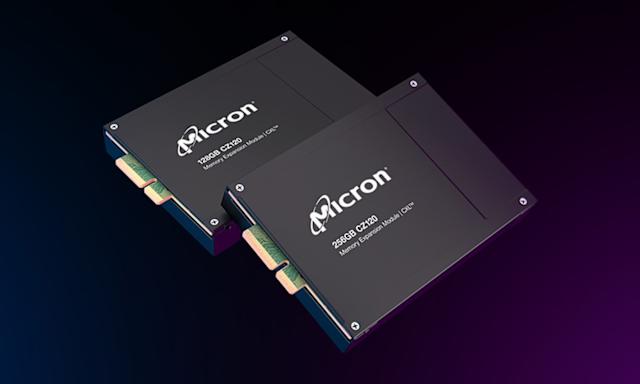
Server memory adds a second test. Micron’s 256GB DDR5 RDIMM modules reach speeds of up to 9,200 MT/s, more than 40% faster than current volume-production modules, while cutting operating power by more than 40% versus two 128GB modules. In power-constrained data centers, memory efficiency becomes a revenue argument, not just a product specification.
The implication is simple: a Micron stock split would look more credible if HBM4 and advanced server memory keep the company positioned as an AI bottleneck supplier. If those products become less scarce, the rally starts to look more cyclical.
No. Micron has not announced a 2026 stock split. The split case is still based on conditions, not confirmation: MU’s near-$1,000 share price, its $1 trillion valuation, and whether fiscal Q3 results support the rally.
A 2-for-1 split looks most realistic because it would lower MU’s implied price to about $464 while staying cleaner under Micron’s current 3.0 billion authorized-share structure. A larger split would create more share-count pressure and may require added corporate flexibility.
No. A split would change the share count and nominal price, not Micron’s earnings power. The market would care only if a split signals management confidence that MU’s AI-memory rerating is durable.
Yes. MU could fall if a split arrives after margins peak, DRAM or NAND pricing weakens, or fiscal Q3 results miss the market’s AI-memory expectations. A split can improve accessibility, but it cannot defend a valuation if earnings momentum breaks.
The next proof point is June 24, 2026. If Micron confirms revenue near guidance, gross margin near 81%, and AI memory demand still running ahead of supply, the split debate will look less like price optics and more like a response to a durable rerating.
If pricing or margins soften, the same $1,000 level will carry a different message. It would point to momentum outrunning the memory cycle rather than a lasting reset in Micron’s earnings power.
For Micron, the real split signal is not whether MU touches $1,000; it is whether June 24 proves that scarcity, not speculation, is setting the price.