Published on: 2026-04-10
Central bank gold holdings now exceed foreign official holdings of U.S. Treasuries for the first time since 1996. The total value of sovereign gold reserves approached $5 trillion by early 2026.
Central banks have purchased over 1,000 tonnes of gold annually for three consecutive years (2022-2024), with 2025 adding roughly 860 tonnes. The buying has been price-insensitive and one-directional.
China extended its gold purchasing streak to 16 consecutive months as of February 2026. Poland added 102 tonnes in 2025. India added 100 tonnes. The buyer base spans more than 40 central banks.
76% of central banks surveyed expect to increase gold holdings over the next five years. 73% expect their dollar reserves to decline. This is not a trade. It is a policy position.
A line was crossed in 2025 that had not been crossed in nearly three decades: the total value of gold held by foreign central banks surpassed the total value of their U.S. Treasury holdings. The last time gold occupied a larger share of global reserves than American government debt was 1996.
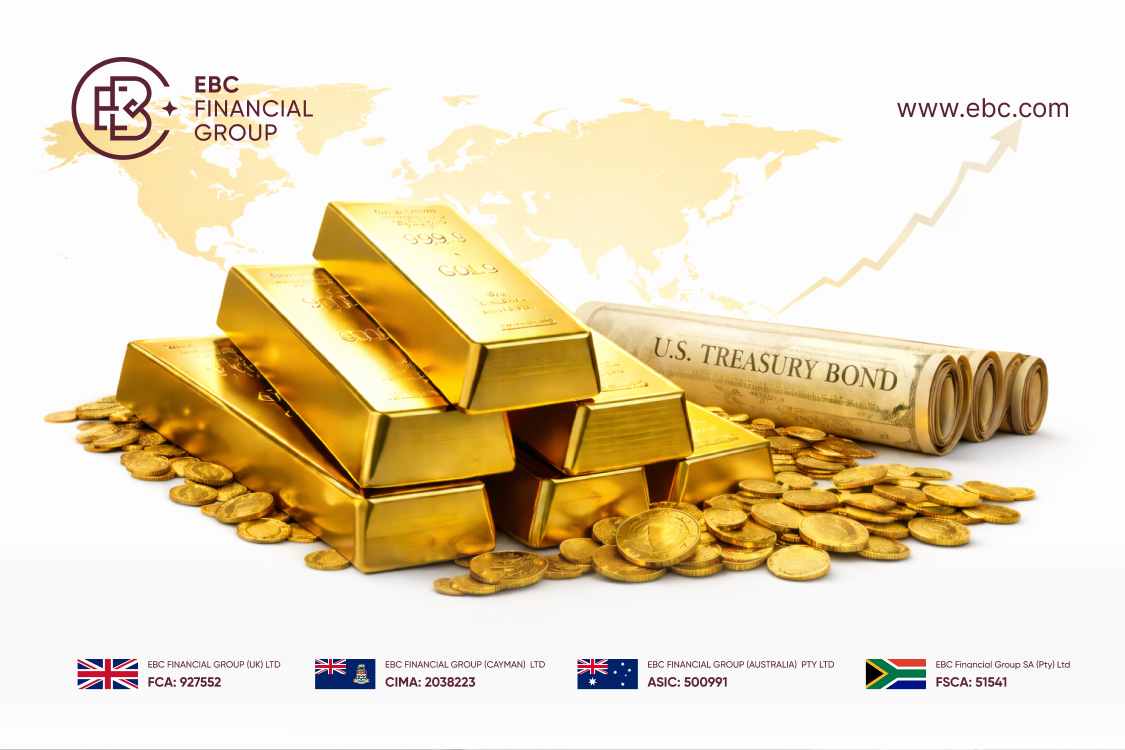
That it has happened again, after decades of dollar dominance, reflects a structural shift in how the world’s most powerful financial institutions define safety.
This crossover did not happen because of a single event. It is the result of over 1,000 tonnes of annual gold purchases sustained across three consecutive years, accelerated by the weaponization of dollar reserves in 2022 and reinforced by every geopolitical crisis since.
Central banks collectively hold between 36,000 and 38,000 tonnes of gold, roughly 18% of all gold ever mined. By early 2026, the market value approached $5 trillion, surpassing the approximately $3.9 trillion in U.S. Treasuries held by foreign official institutions.
Gold now accounts for over 20% of total official reserve assets, a share that has more than doubled since 2015.
China extended its purchasing streak to 16 consecutive months as of February 2026, bringing holdings above 74 million ounces, with gold now representing nearly 10% of total reserves.
Poland added 102 tonnes in 2025 and continued with 20 tonnes in February 2026, while India added 100 tonnes in 2025. The Czech Republic has been buying continuously since mid-2023, one of the longest active streaks among European central banks.
The buyer base spans more than 40 central banks. This is not a single-country story or a geopolitical statement by one bloc. It is a rebalancing by institutions that independently reached the same conclusion about risk.
The acceleration traces directly to the freezing of roughly $300 billion in Russian foreign exchange reserves following the 2022 invasion of Ukraine. That single act rewired how central banks globally assess the safety of dollar-denominated assets.
Reserves held in another country’s financial system can be seized, but gold stored in domestic vaults cannot. Before 2022, central bank gold purchases averaged roughly 450 tonnes per year, and in the three years after, purchases exceeded 1,000 tonnes annually.
The 2025 figure of approximately 860 tonnes represents a moderation from peak levels but remains nearly double the pre-2022 average.
The World Gold Council’s 2025 survey confirmed the institutional mindset: 76% of central banks expect to increase their gold holdings over the next five years, and 73% expect the dollar’s share of global reserves to decline. These are not short-term trading views. They are multi-year policy commitments backed by institutional mandates.
As central banks accumulate gold, they are simultaneously reducing Treasury holdings. Brazil divested $61 billion in U.S. Treasury securities throughout 2025 while doubling its gold reserves, making gold the second-largest component of its portfolio.
France sold 129 tonnes of gold stored at the Federal Reserve Bank of New York between July 2025 and January 2026, replacing it with new compliant bullion held in Paris, generating a 13 billion euro capital gain and bringing all French gold reserves onto domestic soil.
U.S. national debt has surpassed $39 trillion. The CBO projects annual deficits averaging over $2 trillion through 2036.
As the supply of Treasuries increases and foreign official demand softens, the Treasury faces a structural challenge: funding deficits at sustainable rates when the traditional buyer base is diversifying away.
The dynamic is self-reinforcing. As central banks reduce dollar holdings, demand for U.S. debt softens, putting upward pressure on yields, which increases servicing costs, widens deficits, and requires more issuance. The Dollar Index fell more than 9% in 2025, its worst annual performance in eight years.
Gold surged past $5,600 per ounce in early 2026 before correcting to around $4,660 by April. That correction did not slow central bank buying. Official demand has shown remarkable insensitivity to price, a characteristic that distinguishes sovereign purchasing from speculative flows.
Each 100 tonnes of central bank buying correlates with approximately 2-3% price appreciation over six months.
With projected purchases of 800 to 850 tonnes in 2026, central bank demand alone represents roughly 20% of annual gold supply, absorbed as a one-directional flow that creates a structural price floor.
This is the characteristic that makes the current cycle different from previous ones. In past rallies, price appreciation eventually triggered selling by official holders. In this cycle, central banks are buying through record highs because their motivation is sovereignty, not return.
The shift does not mean the dollar is collapsing. It remains the dominant reserve currency at roughly 57% of global allocated reserves, and U.S. capital markets are still the deepest in the world. But the marginal buyer of reserves is no longer automatically a Treasury buyer.
The IMF data, the World Gold Council surveys, and the purchasing patterns of over 40 central banks all point in the same direction: the era of automatic dollar recycling is over. UBS projects 800 to 850 tonnes of central bank purchases in 2026, and J.P. Morgan forecasts gold at $6,300 by year-end.
These forecasts are built on the structural buying behavior of institutions managing trillions in sovereign capital.
In 2025, the total value of foreign central bank gold reserves surpassed their holdings of U.S. Treasury securities for the first time since 1996. By early 2026, gold holdings approached $5 trillion compared to roughly $3.9 trillion in Treasuries.
China, Poland, India, and Turkey have been the largest buyers since 2022. China has purchased gold for 16 consecutive months as of February 2026. Poland added 102 tonnes in 2025, among the largest buyers globally.
The freezing of $300 billion in Russian reserves in 2022 demonstrated that dollar-denominated assets held abroad can be seized. Gold stored domestically carries no counterparty risk and cannot be frozen through international payment systems.
The dollar remains dominant at roughly 57% of global reserves. The shift is gradual diversification, not collapse. Central banks are rebalancing at the margin, but the cumulative effect across 40 or more institutions is producing measurable results.
Recent evidence suggests no. Central banks continued purchasing through gold’s surge past $5,600 and its subsequent correction to $4,660. Official demand is driven by policy mandates rather than price sensitivity, making it structurally different from private investment flows.
Central banks do not make impulsive decisions, and when more than 40 of them independently conclude that gold deserves a larger share of their reserves than U.S. Treasuries, persisting through record prices and geopolitical crises alike, the signal is institutional, not speculative.
The $5 trillion now sitting in sovereign gold vaults represents a judgment about risk that took decades to form and will not reverse with a single rate cut, ceasefire, or market correction.
The era of automatic dollar recycling built the Treasury market into the world’s deepest and most liquid, but the era now forming will require that market to compete for capital it once received by default.
Disclaimer: This article is for informational purposes only and does not constitute financial advice. Always conduct your own research before making trading decisions.