Published on: 2026-05-21
Updated on: 2026-05-21
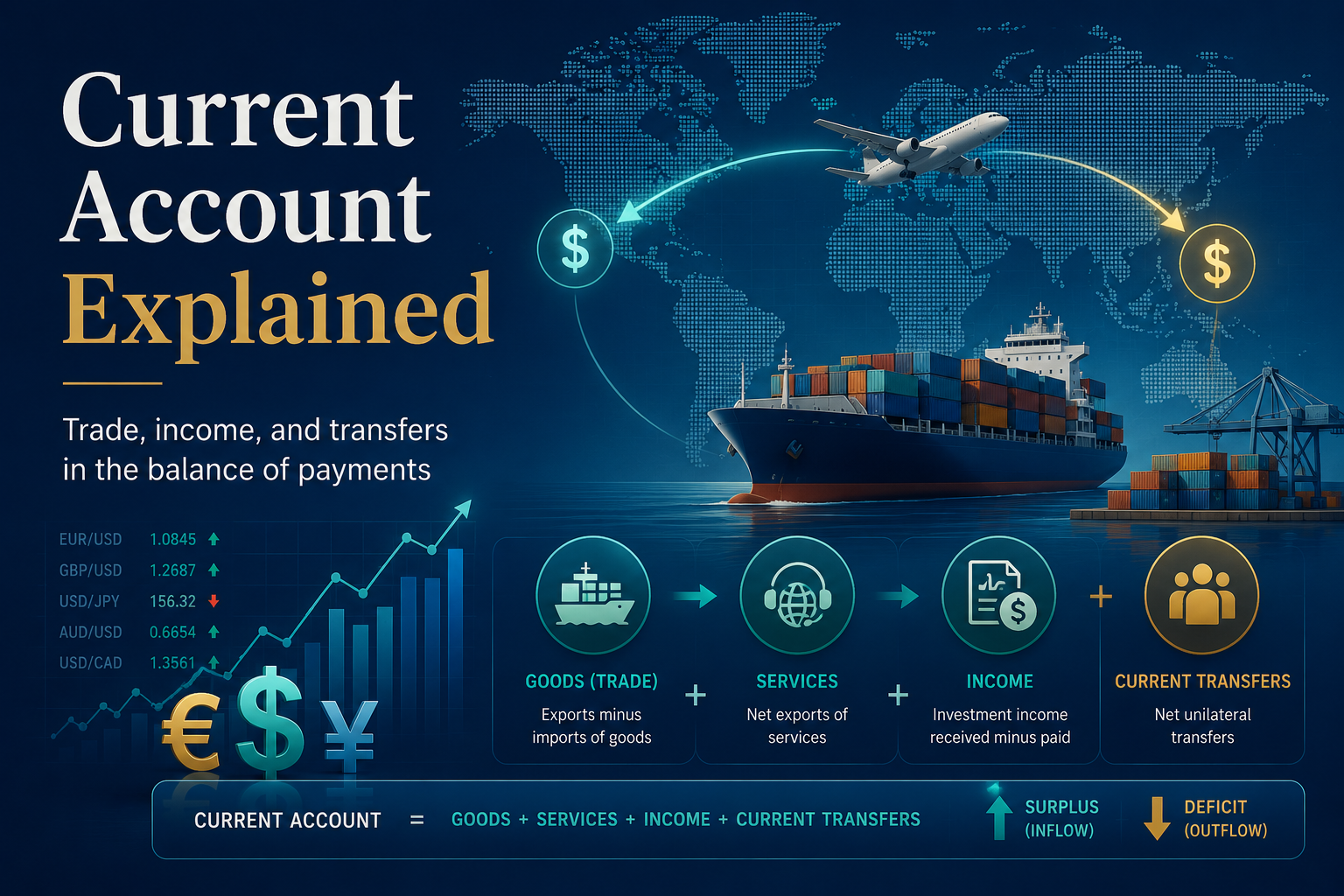
Currency account deficit means that the total value of imports, income payments, and transfer payments exceeds the total value of exports, income receipts, and transfer receipts. It occurs when a country spends more abroad than it earns from the rest of the world through trade, income, and current transfers.
The current account is part of a country’s balance of payments. It records transactions between residents and non-residents in:
Goods and services
Primary income, such as wages, interest, and investment income
Secondary income, such as remittances, foreign aid, and other transfers
Current account deficits are closely watched in forex and macroeconomic analysis because they can affect currency strength, inflation, foreign investment, external debt, and investor confidence.
The basic formula is:
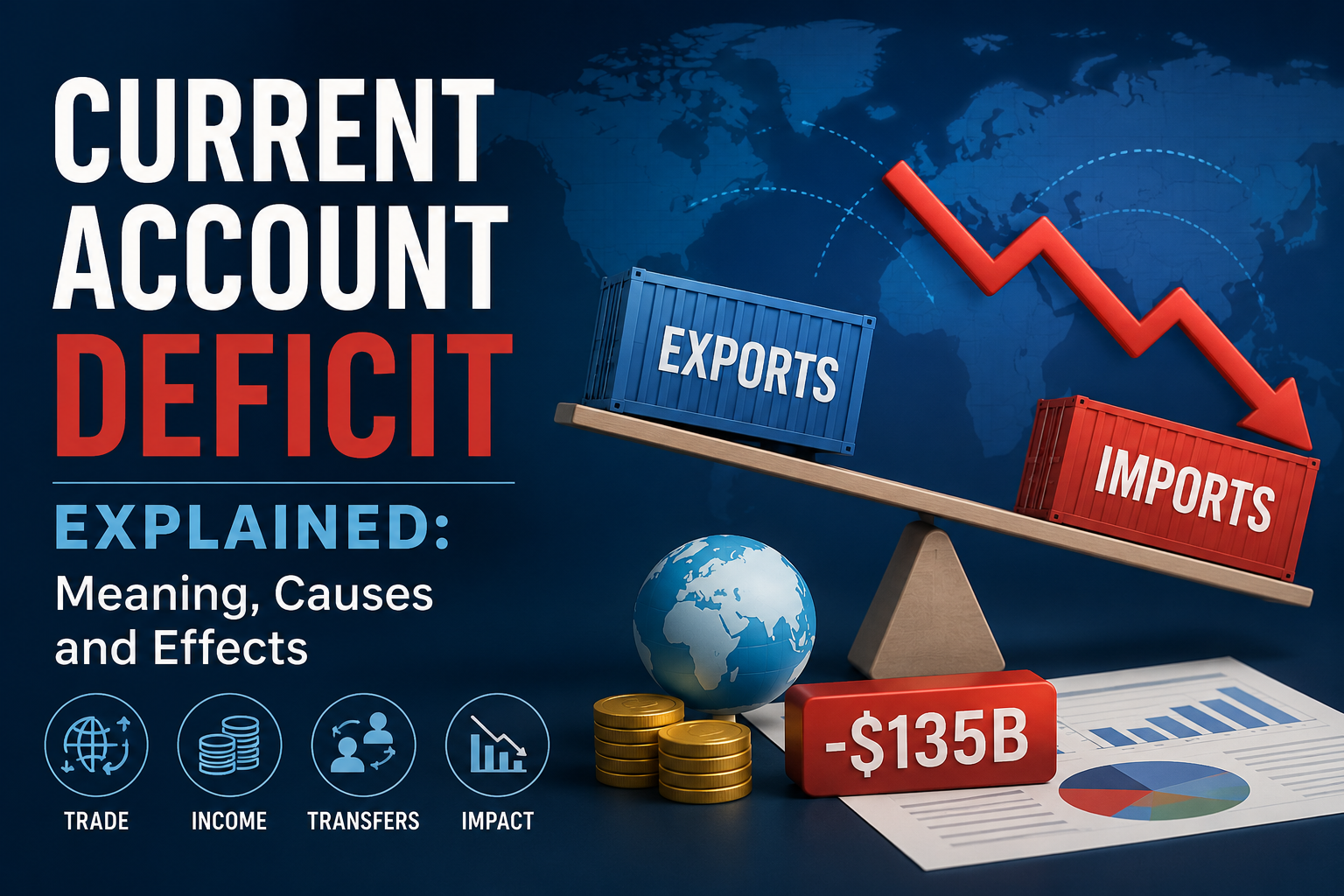
Current account balance = trade balance + net primary income + net secondary income
Where:
Trade balance = exports of goods and services minus imports of goods and services
Net primary income = income received from abroad minus income paid abroad
Net secondary income = transfers received from abroad minus transfers paid abroad
If the result is negative, the country has a current account deficit.
Countries trade with one another by buying and selling goods, services, and financial claims. A current account deficit can develop when:
Imports exceed exports.
Income payments to foreign investors rise.
Consumers and businesses buy more foreign products.
The country sends more transfers abroad than it receives.
Domestic demand grows faster than domestic production.
For example, a country may import large amounts of oil, electronics, machinery, or food while exporting fewer goods and services. In that case, more money leaves the country through the current account than enters it.
To finance the deficit, the country usually needs capital inflows through the financial account. These may include foreign direct investment, portfolio investment, overseas borrowing, or sales of domestic assets to foreign investors.
This is why persistent current account deficits can increase dependence on foreign capital.
Assume Country A records the following annual transactions:
Current account balance:
USD400 billion - USD520 billion - USD10 billion - USD5 billion = -USD135 billion
Country A has a current account deficit of USD135 billion.
This means the country is spending more abroad than it earns from exports, income receipts, and transfer receipts.
Several economic conditions can contribute to a current account deficit.
Strong Consumer Demand
When consumers have high purchasing power, demand for imported goods and services often increases. This can widen the current account deficit if exports do not rise at the same pace.
Strong Domestic Currency
A strong currency can make imports cheaper for domestic consumers and make exports more expensive for overseas buyers. This may reduce export competitiveness and increase import demand.
Rapid Economic Growth
Fast-growing economies often import more machinery, technology, raw materials, and energy to support expansion. A deficit may be sustainable if these imports help raise future productivity.
Low Domestic Savings
Countries with low savings rates may rely on foreign capital to finance investment and consumption. This can lead to current account deficits because domestic spending exceeds domestic income.
High Energy or Commodity Import Costs
Countries that depend on imported oil, gas, food, or industrial metals may record larger deficits when global commodity prices rise.
Weak Export Competitiveness
A country may also run a current account deficit if its export sector is small, concentrated in low-value products, or unable to compete on price and quality.
A current account deficit can be positive, negative, or neutral depending on why it exists and how it is financed.
Currency Pressure
Persistent deficits may put downward pressure on a currency because importers and borrowers need foreign currency to pay overseas suppliers and creditors.
Higher Foreign Debt
If the deficit is financed through borrowing, external debt may rise. This can become a risk if debt grows faster than national income or export earnings.
More Foreign Investment
A deficit is not always harmful. Some economies run current account deficits because they attract foreign investment for infrastructure, business expansion, or productive assets.
Inflation Risk
If the domestic currency weakens sharply, imported goods may become more expensive. This can raise inflation, especially in countries that rely heavily on imported energy, food, or machinery.
Lower Investor Confidence
Large or persistent deficits may reduce investor confidence if markets believe the country is becoming too dependent on foreign financing.
Vulnerability to Capital Outflows
A country that depends on short-term foreign capital may face pressure if investors suddenly withdraw funds. This can affect the exchange rate, reserves, bond yields, and financial stability.
A trade deficit and a current account deficit are related, but they are not the same. A trade deficit occurs when a country imports more goods and services than it exports. A current account deficit is broader because it also includes:
Primary income, such as interest, dividends, and wages
Secondary income, such as remittances and foreign aid
Other current transfers between residents and non-residents
In simple terms:
Trade deficit: Imports of goods and services exceed exports
Current account deficit: Total current payments to the rest of the world exceed total current receipts
A country can have a trade deficit while avoiding a current account deficit if it receives sufficient income or transfers from abroad.
Traders and investors monitor current account deficits because they can reveal pressure points in an economy.
A widening deficit may suggest rising import demand, weaker export competitiveness, higher commodity import costs, or greater dependence on foreign capital.
For forex traders, the current account is useful because it connects trade flows, capital flows, exchange rates, inflation, and investor sentiment. A deficit does not automatically mean a currency will fall, but it can become more important when combined with weak growth, high inflation, low reserves, or political uncertainty.
Trade Deficit: A situation where a country imports more goods and services than it exports.
Trade Balance: The difference between the value of a country’s exports and imports of goods and services.
Balance of Payments:A record of all economic transactions between a country’s residents and the rest of the world.
Currency Depreciation: A decline in a currency’s value relative to another currency.
Foreign Exchange Reserves: Assets held by a central bank, usually in foreign currencies, are used to support monetary and financial stability.
Inflation: A sustained increase in the general price level of goods and services within an economy.
A current account deficit means a country spends more on imports than it receives from exports, income from abroad, and current transfers.
Not always. A moderate deficit may support growth if it finances productive investment. However, a large or persistent deficit can increase financial risks if it depends on unstable capital inflows or rising foreign debt.
A large deficit can put pressure on a currency because the country needs foreign currency to pay for imports and overseas obligations. The actual impact depends on interest rates, capital inflows, investor confidence, and overall economic conditions.
A trade deficit reflects the difference between imports and exports of goods and services. A current account deficit is broader because it also includes income payments, income receipts, and international transfers.
A country can reduce a current account deficit by increasing exports, reducing import dependence, improving productivity, attracting stable long-term investment, increasing domestic savings, or allowing the exchange rate to adjust.
A current account deficit shows that a country is spending more abroad than it earns from the rest of the world through trade, income, and current transfers.
A deficit is not automatically a sign of economic weakness. It may support growth if it finances productive investment. However, persistent or poorly financed deficits can pressure currencies, raise external debt, increase inflation risk, and weaken investor confidence.
For traders and investors, the current account deficit is an important macroeconomic indicator because it helps explain exchange rate trends, capital flow risks, and the broader strength of an economy.



World's Best Broker