Published on: 2026-05-19
Updated on: 2026-05-19
HBM is projected to reach $100 billion by 2028, but no single country controls the entire production chain.
Korea captures the visible HBM margin: SK Hynix’s 72% Q1 operating margin shows that AI memory has been repriced from commodity DRAM to a qualified scarcity supply.
Taiwan controls the conversion gate: more Korean HBM does not become AI accelerator supply unless CoWoS, SoIC, substrates and interposers clear the packaging queue.
Japan enables the yield path: bonding, dicing, testing and packaging materials become more valuable as HBM4 raises stack complexity.
The next pricing-power shift may come from the layer investors least associate with HBM: packaging capacity or yield control, not memory output alone.
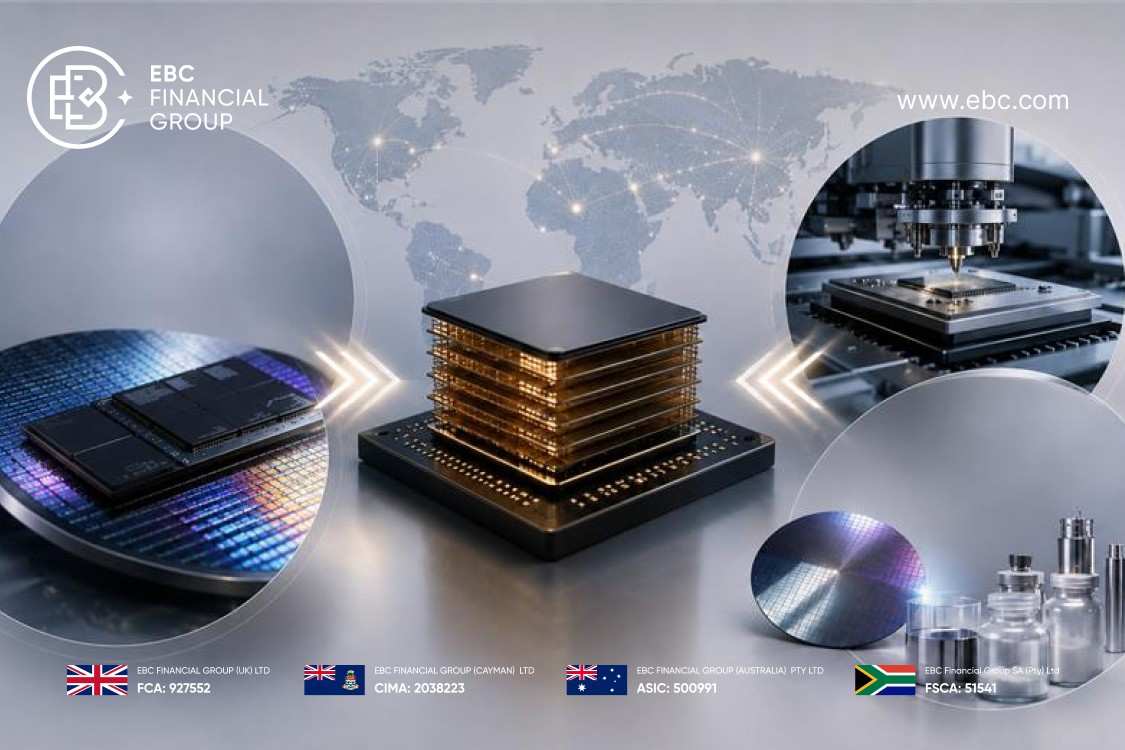
The $100 billion HBM trade is not controlled by the company that makes the memory. Micron expects HBM’s addressable market to rise from about $35 billion in 2025 to around $100 billion in 2028, but the production route is split across countries.
Korea owns the visible margin, Taiwan controls the packaging gate, and Japan decides how much survives production. The market is pricing HBM as a memory shortage, while the next constraint may appear in packaging, testing or yield control.
| Layer | Country or region | What it controls |
|---|---|---|
| Memory production | Korea, U.S. | Qualified HBM supply, allocation and memory margins |
| Packaging conversion | Taiwan | Turning HBM into usable AI accelerator capacity |
| Yield enablement | Japan | Bonding, testing, dicing and materials precision |
| Demand and policy | U.S. | Nvidia platforms, hyperscaler demand and export controls |
| Strategic pressure | China | Catch-up urgency and stockpiling |
Nvidia’s filing gives the clearest public evidence that HBM is not a single-supplier bottleneck. The company uses TSMC and Samsung to produce semiconductor wafers, buys memory from SK Hynix, Micron, and Samsung, uses CoWoS technology for semiconductor packaging, and works with Hon Hai, Wistron, and Fabrinet for assembly, testing, and packaging.
That supplier map changes the HBM question. The trade is not only about who sells the memory. It is about which country controls the point at which the next shortage forms: memory production, packaging capacity, test flow, yield control, or export policy.
Micron’s filing adds the hidden capacity constraint. HBM requires more wafers and more cleanroom space than conventional DRAM to produce the same number of bits at the same technology node. That turns HBM into a cleanroom allocation trade: AI memory can tighten the wider DRAM market even when the headline story appears concentrated in one product category. (Micron SEC Filing)
Korea owns the visible layer of the HBM trade because SK Hynix and Samsung convert AI memory demand into the numbers markets can price: revenue, margins, shipment targets and platform qualifications.
SK Hynix’s Q1 2026 results show how far HBM has pulled memory away from the old DRAM cycle. Revenue reached KRW 52.5763 trillion, operating profit hit KRW 37.6103 trillion, and the operating margin reached 72%, all record levels for a memory business now tied to qualified AI supply.
That margin profile is the market signal. Memory is no longer priced only as commodity bit supply. Qualified HBM capacity carries scarcity value because customers are paying for bandwidth, platform certainty and delivery timing.
Samsung’s Q1 2026 results show the same shift from the challenger side. The company posted consolidated revenue of KRW 133.9 trillion and operating profit of KRW 57.2 trillion, while its Device Solutions division recorded a 86% sequential increase in sales. Samsung’s memory business set quarterly records on higher average selling prices and AI demand.
Korea’s visible profit pool now depends less on announced capacity and more on qualified HBM4 volume. Capacity targets carry less market value when yield, thermals or customer approval delay shipment timing.
Taiwan controls the point at which HBM becomes usable as an AI accelerator supply.
A memory stack alone does not ship as an accelerator. It has to sit beside a GPU, ASIC or AI processor, connect through advanced packaging, pass thermal and electrical validation, and then move into final system assembly. TSMC’s CoWoS platform sits inside that conversion point for high-end AI hardware, and Nvidia names CoWoS as part of its semiconductor packaging process.
TSMC’s latest results show that AI scarcity is being priced beyond the cost of memory. Q1 2026 revenue reached $35.90 billion, gross margin was 66.2%, and operating margin was 58.1%. The company guided Q2 revenue to $39.0 billion to $40.2 billion, keeping the AI infrastructure cycle visible in foundry and packaging economics.
TSMC’s CoWoS and SoIC expansion plans confirm that packaging capacity has become an AI supply constraint, not a back-end service. TSMC said in May 2026 that it was rapidly expanding CoWoS and SoIC advanced packaging capacity as AI demand drove the construction of new fabs and advanced packaging facilities worldwide.
Korean HBM output can rise without a matching increase in AI accelerator shipments when CoWoS, SoIC, substrates or interposers remain tight. Taiwan is where extra memory either becomes AI chip supply or waits in the packaging queue.
Japan’s role is less visible because it rarely appears on the HBM label. Its influence sits in the production steps that decide whether an expensive memory stack becomes sellable supply or turns into yield loss.
A failed bond, weak underfill, poor cut or bad post-stacking test can destroy value after the wafer cost has already been incurred. Japan’s tools and materials gain leverage as HBM moves from HBM3E to HBM4 because higher stack density leaves less room for process error.
Tokyo Electron’s Synapse and Ulucus systems support temporary bonding and debonding for 300mm wafers, including TSV workflows used in 3D integration. Advantest says HBM requires more elaborate post-stacking tests and additional test insertions, raising tester demand compared with standard DRAM wafer tests.
DISCO adds the precision-processing side. The company said cumulative laser-saw shipments exceeded 4,000 units as of February 2026, with demand supported by high-performance memory, advanced logic, and HBM. TOWA adds the packaging-materials layer, with ultra-narrow-gap mold underfill designed for next-generation HBM4 packages stacked vertically with multiple chips.
As HBM4 increases density, interface width and packaging complexity, the quiet process layer gains economic leverage. Japan does not need to dominate HBM branding to influence HBM economics. It needs to sit where yield loss is measured.
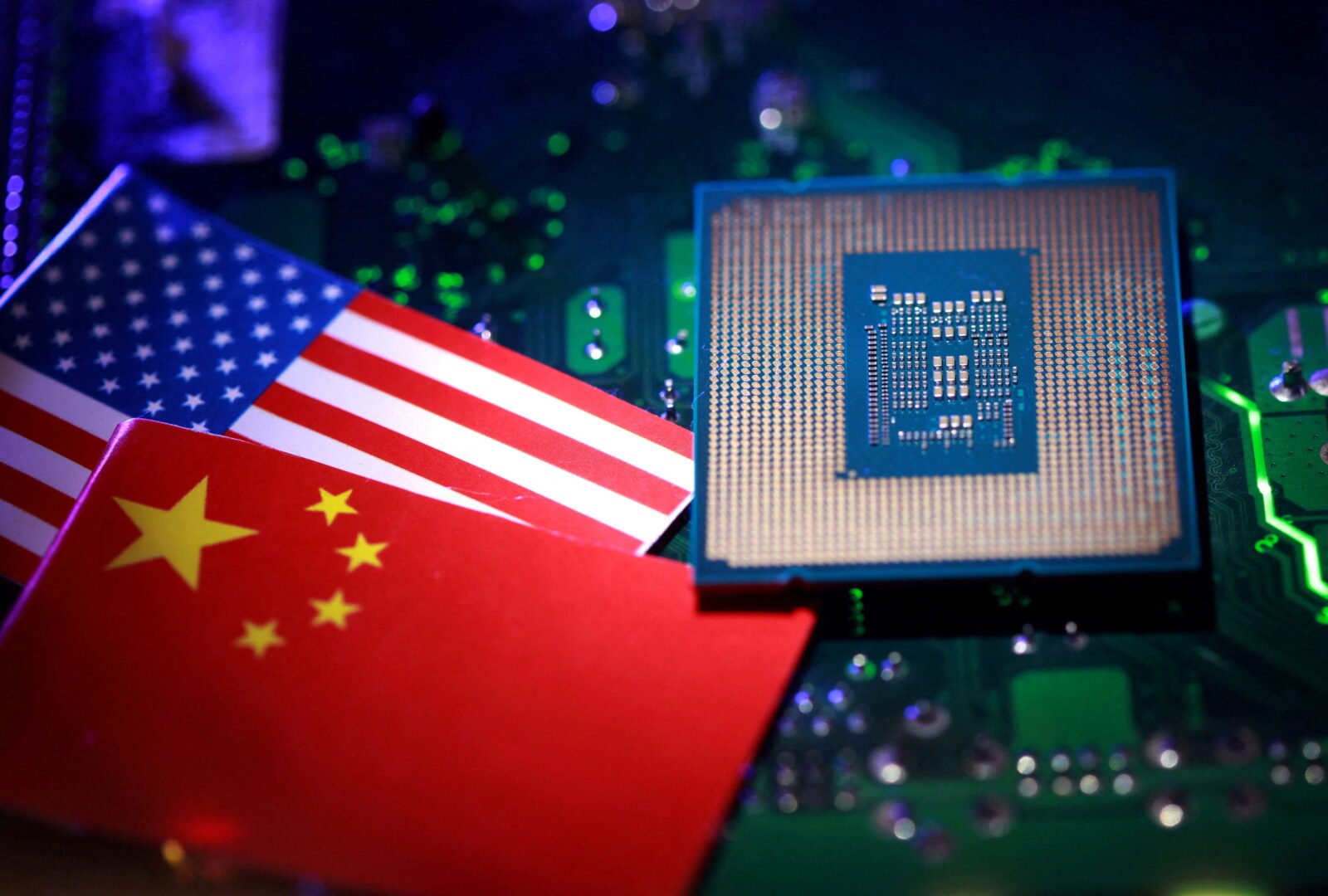
Korea, Taiwan and Japan form the production route, but the pressure around it comes from U.S. platform demand and China’s push to close the AI hardware gap.
Nvidia’s platform cadence sets the timing pressure for HBM qualification. A Blackwell, Rubin or custom accelerator transition can change which memory supplier wins volume before capacity data provides a clear signal. Nvidia also warns that reliance on third-party suppliers for manufacturing, assembly, testing and packaging reduces control over product quantity, quality, yields and delivery schedules.
Policy adds the second pressure point. U.S. export controls have pushed HBM from a component issue into a national-security input by restricting high-bandwidth memory, semiconductor manufacturing equipment and software tools tied to China’s advanced semiconductor production.
China does not control leading HBM supply today, but its domestic memory investment, AI accelerator ambitions and restricted access to advanced HBM shape the strategic value of the entire production route. Korea, Taiwan and Japan now operate in a market where capacity, security and customer access are linked.
The practical implication is that export controls have turned HBM from a technology specification into a geopolitical allocation decision. The U.S. does not manufacture the core HBM stack, but it can influence who receives Korea’s memory, Taiwan’s packaging capacity and Japan’s enabling tools.
HBM4 turns the Korea-Taiwan-Japan supply route into a stress test.
At the memory level, it increases qualification pressure on SK Hynix, Samsung and Micron. At the packaging level, it tightens coordination with TSMC, substrates and advanced integration. At the yield stage, it raises the value of bonding precision, post-stacking tests, molding control and thermal reliability.
Micron’s $100 billion HBM outlook shows the size of the prize. Its filing shows the constraint: higher-performance HBM consumes more wafers and cleanroom space per bit than conventional DRAM, which can tighten the broader DRAM market even when the trade appears concentrated in HBM.
The market consequence is bottleneck migration. A smooth HBM4 ramp keeps the visible profit pool with memory suppliers. Packaging delays shift scarcity toward Taiwan. Yield pressure pushes value into Japan-linked tools, testing and materials. The bottleneck does not need to disappear to change the trade. It only needs to move.
TSMC does not make the HBM memory stack. Its role is advanced packaging. Through CoWoS and related technologies, TSMC helps connect HBM to GPUs, ASICs, and AI processors, making HBM part of a usable accelerator.
Japan sits inside the yield path. Japanese-linked tools and materials support bonding, dicing, testing and packaging steps that determine whether complex HBM stacks survive production. As HBM4 becomes harder to manufacture, that layer gains more leverage.
China is building domestic memory and AI hardware capacity, but leading HBM remains concentrated around SK Hynix, Samsung and Micron. Export controls on HBM, advanced tools and related technology make China’s catch-up path slower and more expensive.
HBM4 raises bandwidth, density, and packaging complexity, making pricing power more mobile. A smooth ramp keeps value with Korean memory makers. Qualification delays shift attention to TSMC’s packaging gate. Yield challenges push more leverage toward Japanese tools, testing and materials.
The unresolved question is no longer whether HBM becomes a $100 billion market. It is whether the next dollar of pricing power stays with Korea’s memory makers, shifts to Taiwan’s packaging gate, or moves into the Japanese tools-and-materials layer that decides how much HBM survives production.