Published on: 2025-12-11
Updated on: 2025-12-11
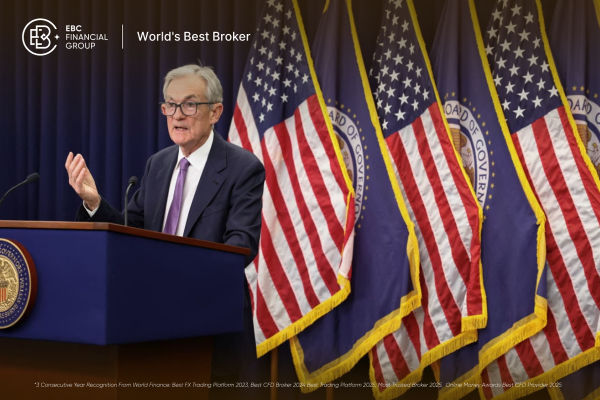
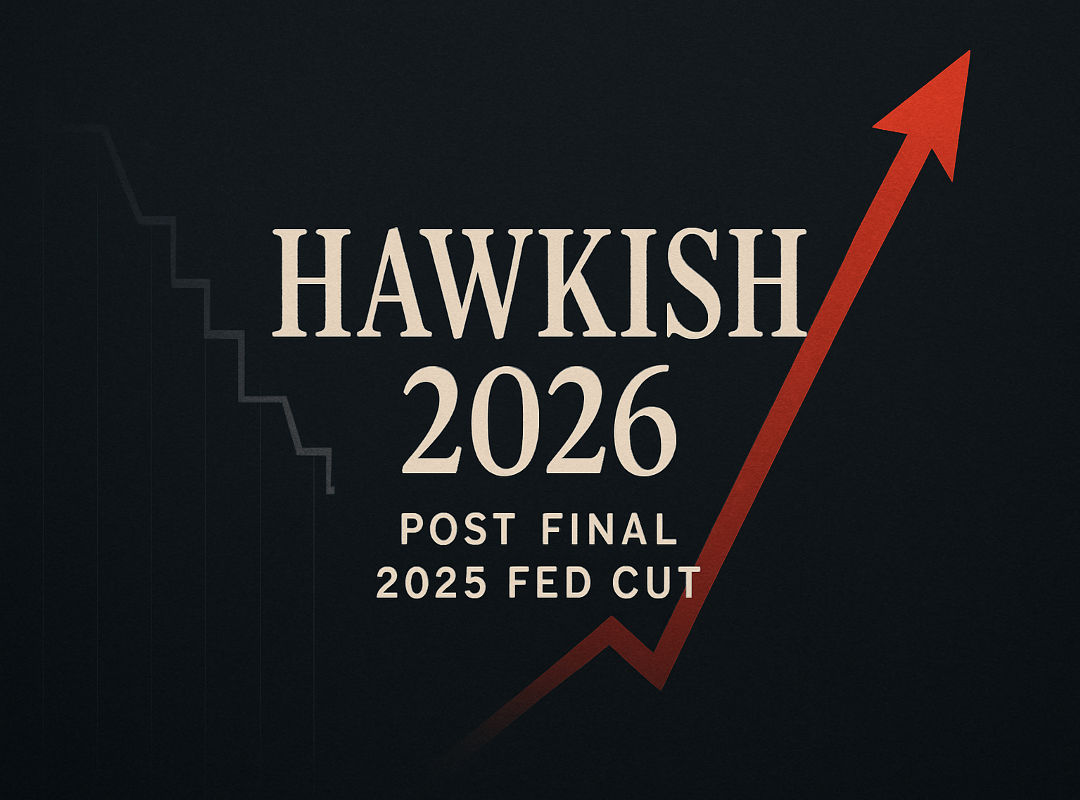
The Fed just delivered the kind of meeting that excites the headlines but complicates the trade. A third straight 25 bp rate cut in 2025, a rare three-way split vote, and a 2026 path that's tighter than the market was hoping for. That's your textbook "hawkish cut".
Equities cheered the move on the day, but the rate path and the dissent pattern send a clear message: the bar for more easing is now much higher. If you trade equities, rates, FX or gold, this is not a simple "risk-on and forget it" event; this sets the tone for the whole of 2026.
| Item | Detail |
|---|---|
| New Fed funds target range | 3.50–3.75% (–25 bp) |
| Number of cuts in 2025 | 3 × 25 bp (total –75 bp since September) |
| Vote split | 9 for, 3 against |
| Dissenters | Miran (wanted –50 bp), Goolsbee, Schmid (no change) |
| 2026 median Fed funds dot | 3.4% (implies one 25 bp cut next year) |
| 2027 median Fed funds dot | 3.1% (one more cut by end-2027) |
| 2026 GDP (median) | 2.3% |
| 2026 PCE inflation (median) | 2.4% |
| 2026 unemployment (median) | 4.4% |
The key facts from the December 9–10 FOMC meeting:
Rate move: Fed cut the funds rate by 25 bp to 3.50–3.75%, the third cut of 2025 and the lowest level in three years.
Vote: 9–3 split: Miran pushed for a 50 bp cut, Goolsbee and Schmid wanted no cut at all, the most dissents since 2019.
Guidance: The statement now addresses the "scope and timing of further tweaks" and emphasises thorough evaluation of information, a typical pause terminology.
Projections: Median Fed funds path shows only one cut in 2026 and one more in 2027, leaving rates around 3.1% by 2027.
Macro outlook: Fed now sees 2026 GDP at 2.3%, PCE inflation at 2.4%, and unemployment stuck around 4.4%.
In short, policy is easier than it was three months ago, but the projected path has not become more dovish. If anything, the message is "we've done enough for now".
From the statement, the dissents break down like this:
Stephen Miran (Governor): Voted for a larger 50 bp cut.
Austan Goolsbee (Chicago Fed): Voted to hold rates unchanged.
Jeffrey Schmid (Kansas City Fed): Also voted to hold.
It is the first 9–3 split in six years, and crucially, the dissents pull in both directions. The committee is split not because they all want to ease more, but because some think they've already gone too far.
For traders, that's important:
It confirms no strong dovish consensus within the Fed.
It raises the political temperature around the Fed going into 2026, with a new chair likely next year.
One line in the statement matters more than the 25 bp cut itself:
"In considering the extent and timing of additional adjustments… the Committee will carefully assess incoming data, the evolving outlook, and the balance of risks."
That phrase "extent and timing" has historically flagged a pause or near-pause. Combined with Powell's comment that the rate is now "within a broad range of estimates of neutral" and that the Fed is "well positioned to wait", the bias is that cuts are now data-dependent, not pre-scheduled.
From the Fed's own projections:
Median Fed funds at end-2025: 3.6%
Median 2026: 3.4% → one 25 bp cut from here
Median 2027: 3.1% → another 25 bp cut
Long-run "neutral": 3.0%
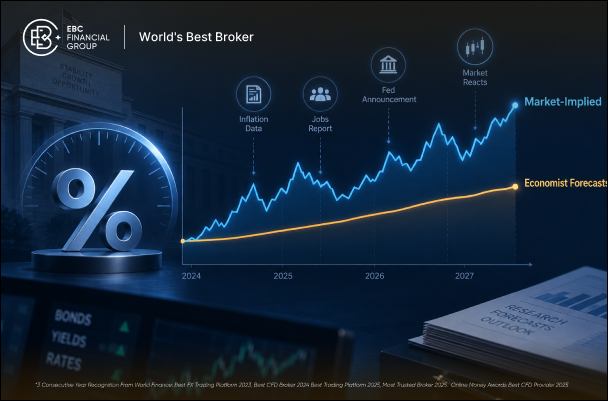
In other words, the Fed sees only 50 bp of additional easing between now and the end of 2027. Market pricing, by contrast, still leans toward two cuts in 2026.
That gap between the dots and the curve is your hawkish 2026.
The macro side of the SEP looks surprisingly upbeat:
Growth: 2026 GDP lifted to 2.3% from 1.8% in September.
PCE inflation: 2026 down to 2.4% (from 2.6% previously).
Unemployment: Flat at 4.4%, not a recession call at all.
The message: the Fed thinks it can run the economy with above-trend growth, stable unemployment, and inflation only slowly gliding back to 2%, without needing to slash rates. That supports a higher-for-longer bias even after this easing cycle.
The dot-plot distribution is where the real story sits:
Some participants still show no cuts in 2026.
A few even pencil in higher rates if inflation doesn't cool.
Range for 2026 fed funds: roughly 2.9%–3.9%.
For investors, that means uncertainty risk is back: the Fed could be forced to re-tighten if tariffs, wages or AI-driven investment keep inflation firm.
On the day, markets heard "cut" more loudly than "hawkish".
| Asset / Index | Level (close) | Daily move vs Tue | Comment |
|---|---|---|---|
| S&P 500 | 6,886.68 | +0.67% | Third-highest close on record, a few points below the high |
| Dow Jones | ~48,058 | ~+1.0–1.1% | Nearly +500 pts; strong breadth |
| Nasdaq Comp. | Higher on day | ~+0.3% | Tech up but lagging cyclicals |
| 10-year UST yield | ~4.15% | ↓ from 4.19% | Modest bull-flattening after decision |
| 2-year UST yield | ~3.6% | Slightly lower | Reflects pause after 3 consecutive cuts |
| U.S. dollar index | ~98.6 | –0.6% | Lowest since October as markets price more cuts than the Fed |
| Gold (futures) | ~$4,260/oz | +0.6% | Sensitive to lower real yields |
| VIX (vol index) | ~17 area | Slight uptick | Vol stays elevated vs early autumn |
For example, equities clearly liked Powell's repeated assurance that rate hikes are "nobody's base case" and that policy is now in a "neutral range".
Roughly:
2-year yield: ~3.6%
10-year yield: ~4.2% intraday high, closing nearer 4.15%.
That keeps 10s–2s at about +50–60 bp, a modestly steep curve, consistent with Fed cuts already delivered and better growth ahead.
For credit and equities, that's usually a favourable combo: the curve is out of the danger zone, but not so steep that markets start to price an inflation shock.
You can think of this meeting as three overlapping messages:
Third consecutive cut, cumulative –75 bp since September.
Funds rate now in the 3.5–3.75% range, lowest since 2022.
That's unambiguously easing.
Only one cut in 2026 in the median dot; one more in 2027.
The long-term rate remained at 3.0%, indicating that the Fed is not lowering its perspective on the neutral rate.
Markets, by contrast, still lean towards two cuts in 2026.
The Fed is telling you: don't count on a deep easing cycle unless something breaks.
Statement language now focused on "extent and timing" of further moves.
Powell stressed that the Fed is "well positioned to wait", not eager to cut again.
Six policymakers would have preferred no cut at all this year; seven see no further cuts in 2026.
Combine those signals, and you get a hawkish cut: the Fed eased today, but raised the hurdle for easing tomorrow.
| Timeframe | Bias | Key support levels | Key resistance levels |
|---|---|---|---|
| Daily | Bullish | 6,840–6,850; then 6,800; deeper 6,720 | 6,895–6,900 (record zone); then ~6,950–7,000 |
| Weekly | Bullish/up-grind | 6,700 (prior range top); 6,550 (old swing high) | 7,000 psychological; 7,100 extension |
| Intraday (1–4h) | Momentum positive but stretched | 6,860; 6,840 | 6,900 round number; minor intraday spikes above |
For a Fed-driven market, the cleanest technical anchor remains the S&P 500.
Using fresh price data around today's close:
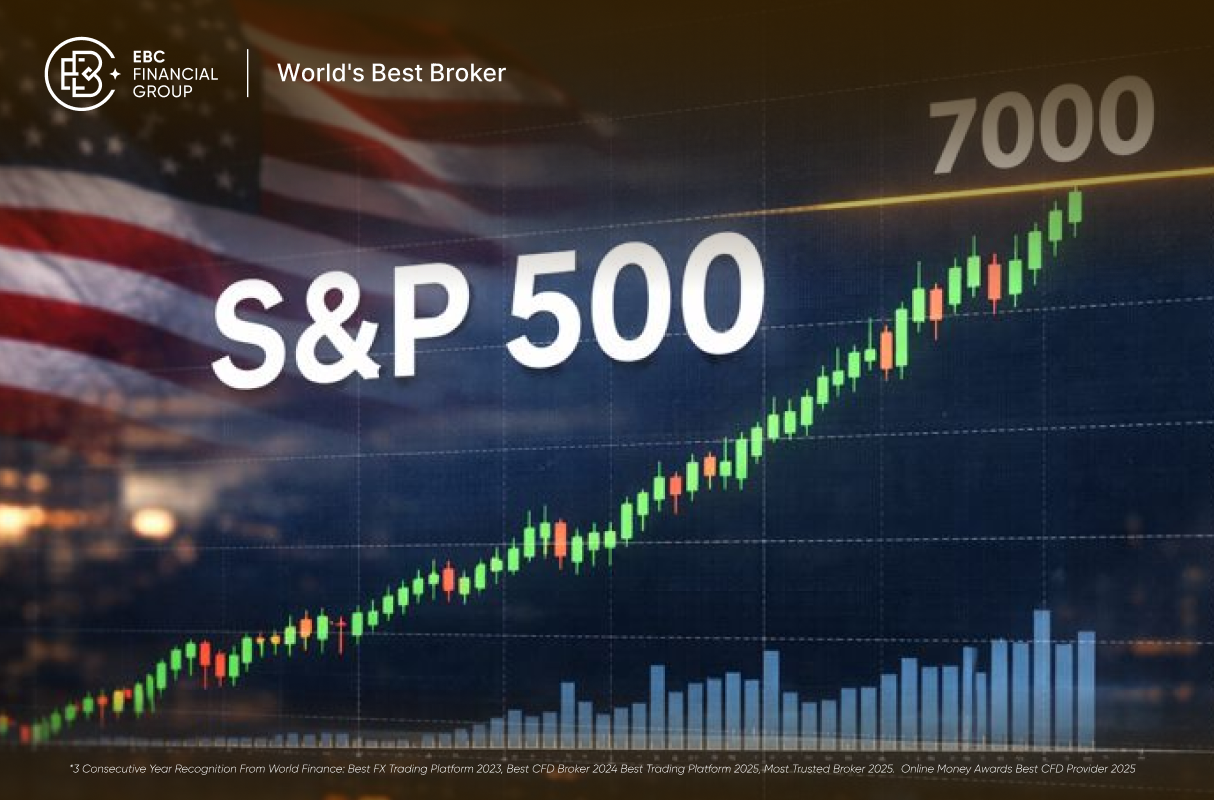
Close: 6,886.68 (up 0.67%, third-highest close on record).
Recent record close: 6,895.78 (28 October).
Short-term bias: Uptrend intact; price remains above rising 50-day moving average and prior breakout zone around 6,800.
Simply put, as long as the index holds above roughly 6,700–6,750, the market is treating the cut as a friendly Fed that has finished the heavy lifting.
Respect the Fed's "higher bar" for more cuts
Equities: buy dips, but don't chase every breakout
Dollar: fade strength while DXY is below 100
Metals: trend is your friend, manage the blow-off risk
Because the Fed sees rising downside risks to employment and wants to lean against a softer labour market without fully abandoning its inflation fight.
Very. It is the first three-dissent meeting since 2019 and signals a deep internal divide about how aggressively to support the labour market versus controlling inflation.
Not fully. Futures still lean toward two cuts next year, especially after the reaction in the 2-year yield. Traders are effectively saying: We hear you, but we think the data will force you to do more.
The delayed labour reports, the next PCE inflation print, and how market pricing for 2026 evolves versus the dots.
In conclusion, the December FOMC meeting didn't shock anyone with the headline. Markets, for the moment, are happy with that compromise: stocks higher, yields lower, dollar softer, metals flying.
But beneath that relief is a clear tension between a central bank that wants to move slowly and traders who still expect a bit more help in 2026.
For investors and traders, the message is straightforward: trade the easing, but don't ignore the dots.
Disclaimer: This material is for general information purposes only and is not intended as (and should not be considered to be) financial, investment or other advice on which reliance should be placed. No opinion given in the material constitutes a recommendation by EBC or the author that any particular investment, security, transaction or investment strategy is suitable for any specific person.