Published on: 2026-03-04
Updated on: 2026-03-04
A whipsaw is a sharp price movement in one direction followed by a rapid reversal that traps traders and triggers false signals.
In practice, when price breaks out, traders enter the market, and then price quickly snaps back in the opposite direction.
A whipsaw occurs when the price suddenly moves strongly in one direction and then reverses quickly, often catching both buyers and sellers off guard.
It is commonly associated with:
false breakouts
sudden volatility spikes
stop-loss triggers
choppy market conditions
The move creates confusion and often results in losses for traders who entered on the initial breakout.
Whipsaws are not random. They often occur under specific market conditions.
When there are not enough buyers or sellers, even small orders can push the price sharply in one direction before it reverses.
During fast-moving markets, prices can swing aggressively as traders react quickly to new information.
Economic releases or unexpected announcements can cause an initial overreaction, followed by a correction.
Large institutions may push prices beyond key support or resistance levels, triggering stop-loss orders before price reverses.
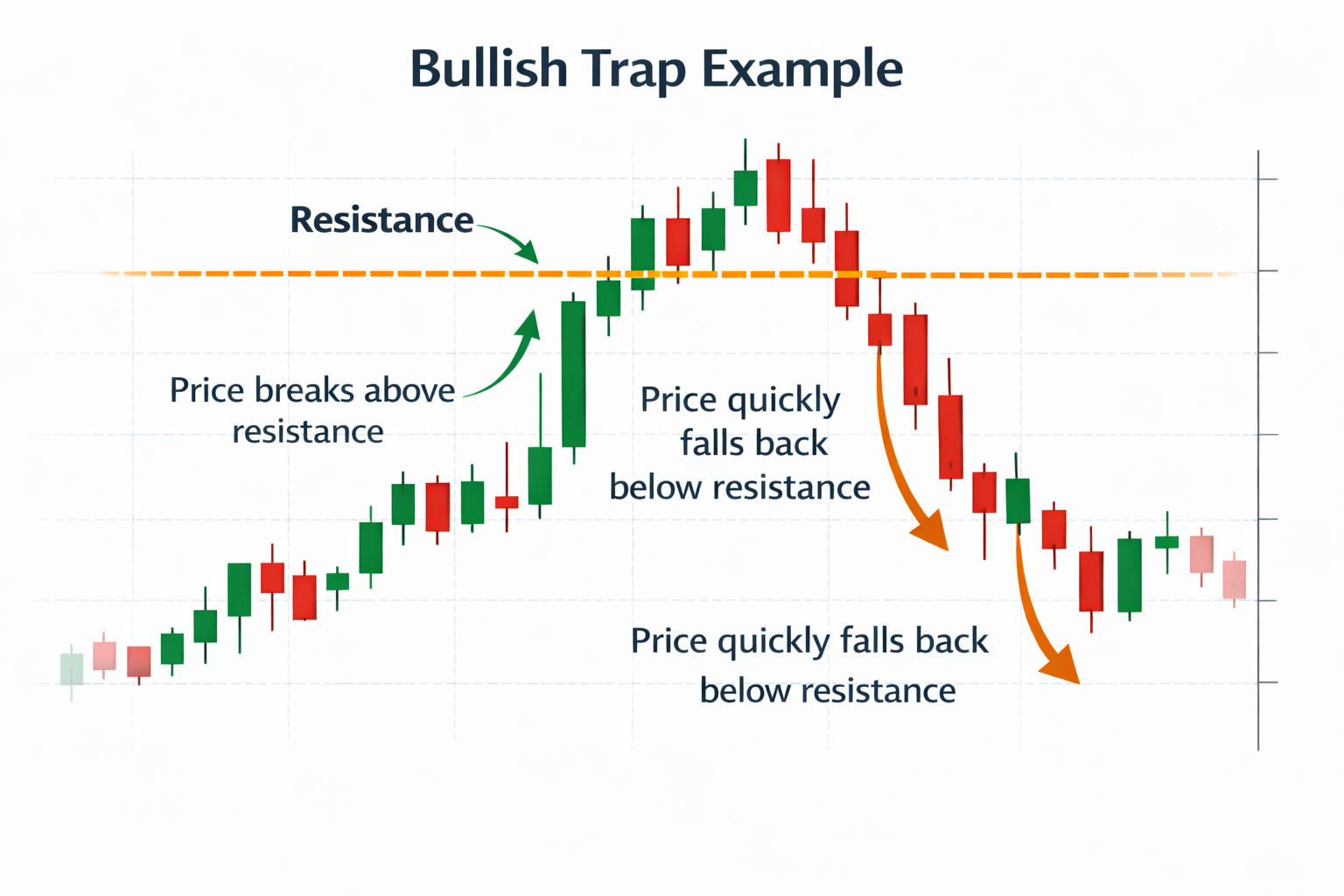
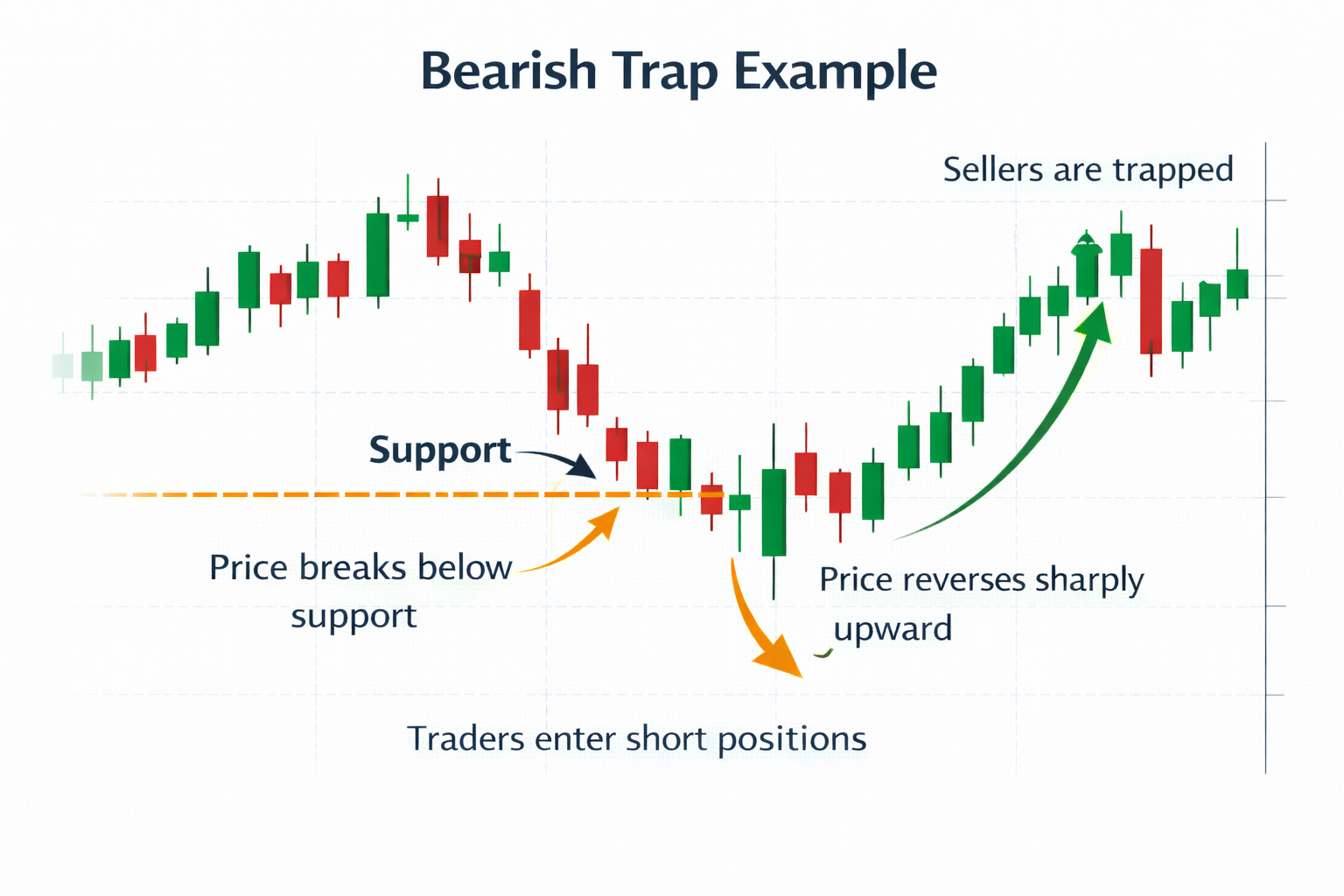
A common whipsaw scenario involves a false breakout.
Price breaks above resistance.
Traders enter long positions expecting continuation.
Price quickly falls back below resistance.
Buyers are trapped, and stop losses may trigger.
Price breaks below support.
Traders enter short positions.
Price reverses sharply upward.
Sellers are trapped.
The defining feature is the speed and sharpness of the reversal.
Real life example: EBC’s AVAV case study shows how AeroVironment’s price spiked and then quickly reversed after shifting headlines and risk sentiment around the SCAR contract highlighting how fast “probability shifts” can flip direction, trap traders on both sides, and create sharp stop-outs before the market stabilizes.
Whipsaws occur more frequently in certain environments:
range-bound markets
sideways or choppy conditions
near major support and resistance levels
during high-impact news releases
in low-volume trading sessions
They are less common in strong, well-established trends.
No method completely eliminates whipsaws, but traders use risk management techniques to reduce exposure.
Common approaches include:
Waiting for candle close confirmation before entering
avoiding trades immediately before major news releases
using wider stop-loss levels in volatile markets
trading in clean trending environments
combining multiple indicators rather than relying on a single signal
Risk management and position sizing are critical because whipsaws are a normal part of market behaviour.
A pullback typically maintains the broader trend. A whipsaw disrupts expectations abruptly.
Not every sharp reversal is a whipsaw. Some reversals mark the beginning of a genuine trend change.
Traders should avoid labelling every losing trade as a whipsaw. Proper analysis requires evaluating:
overall trend direction
volume participation
market structure
broader economic context
Whipsaws highlight the importance of discipline and structured trading plans.
False Breakout: When the price breaks a key level but quickly reverses back into the previous range.
Stop-Loss Order: An automatic instruction to close a position at a specified price to limit losses.
Volatility: The degree of price fluctuation in a market over time.
Range-Bound Market: A market moving sideways between defined support and resistance levels.
Trend Reversal: A change in the overall direction of price movement.
A whipsaw refers to a sudden price move in one direction followed by a rapid reversal that traps traders and creates false signals.
Yes. They are especially common in sideways markets, during volatile conditions, or around major economic news releases.
They cannot be predicted with certainty, but traders can reduce exposure by waiting for confirmation and avoiding low-liquidity conditions.
No. A pullback is a controlled retracement within a trend, while a whipsaw is a sharp reversal that often breaks key levels and traps traders.
No. Whipsaws occur in stock, commodity, index, and forex markets when volatility and false breakouts occur.
A whipsaw is a rapid price move followed by an equally sharp reversal that often traps traders on both sides of the market. It commonly appears during volatile, low-liquidity, or range-bound conditions.
While whipsaws cannot be eliminated, disciplined risk management, confirmation techniques, and awareness of market structure can help traders reduce their impact.
Understanding whipsaws improves patience, strengthens risk control, and reinforces the importance of trading within clear market conditions.
Disclaimer: This material is for general information purposes only and is not intended as (and should not be considered to be) financial, investment or other advice on which reliance should be placed. No opinion given in the material constitutes a recommendation by EBC or the author that any particular investment, security, transaction or investment strategy is suitable for any specific person.