Published on: 2026-03-11
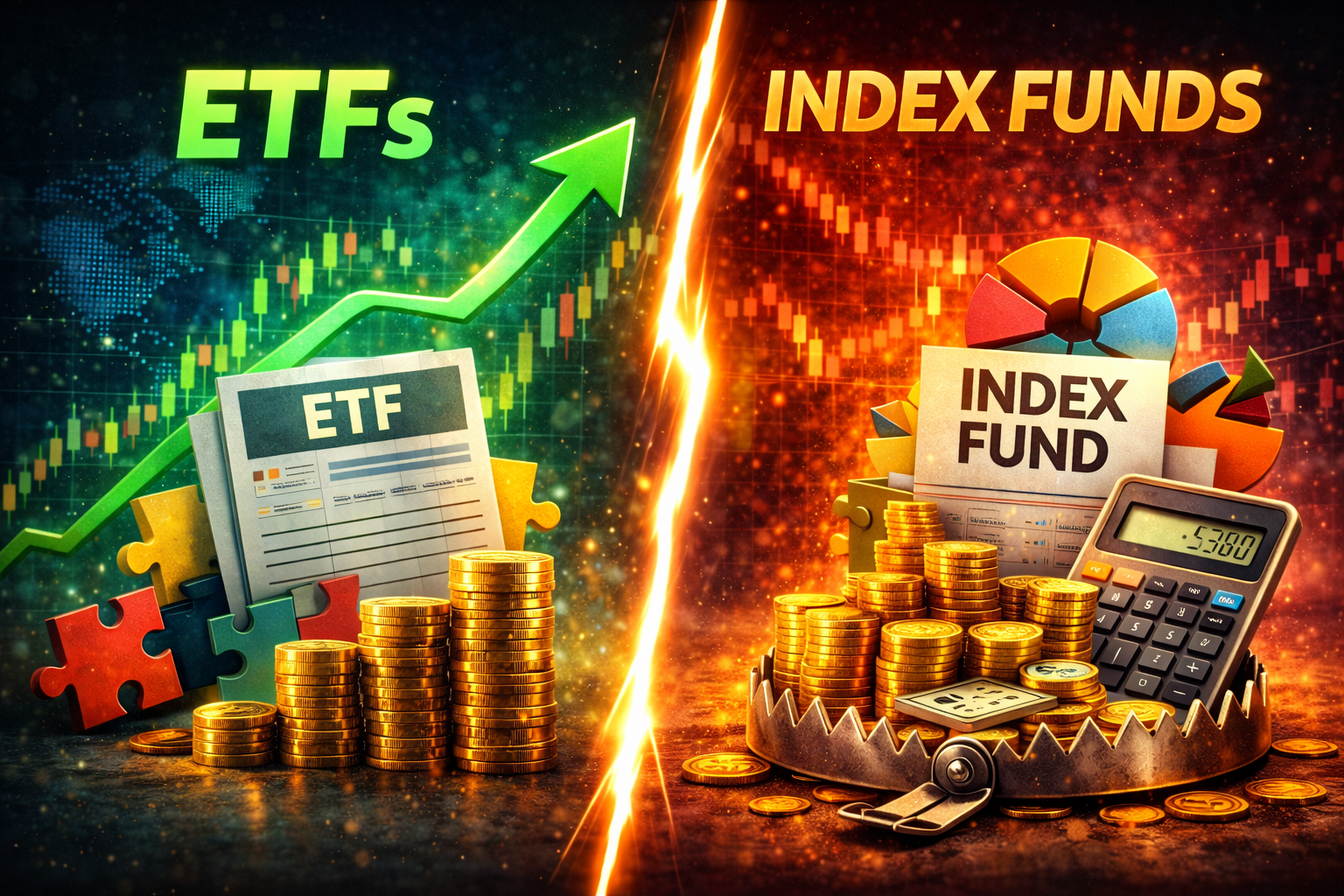
For many new investors, deciding how to start investing can be overwhelming. Among the simplest ways to gain broad market exposure are Exchange-Traded Funds (ETFs) and index funds. Both investment vehicles offer diversification, low costs, and passive exposure to market indices, but they differ in structure, flexibility, and trading mechanics.
Think of ETFs and index funds as friendly baskets of securities that hold a mix of stocks, bonds, and other assets. Both give you the chance to easily access a wide variety of investments, but they differ in how you buy, sell, and manage them. Getting to know these differences can help you find the investment that truly fits your goals, comfort with risk, and unique investing style.
ETFs and index funds provide cost-effective, diversified exposure to market indices.
ETFs trade like stocks, offering intraday flexibility, lower fees, and advanced trading strategies.
Index funds trade at the end-of-day NAV, suitable for long-term, passive investors.
Your choice depends on investment style, trading frequency, and financial objectives.
Both are effective tools for building a long-term investment strategy.
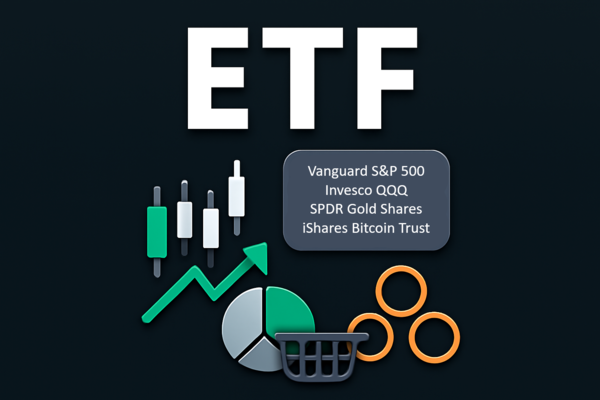
An Exchange-Traded Fund (ETF) is a type of investment fund that holds a basket of assets such as stocks, bonds, commodities, or other securities. ETFs are listed on stock exchanges and can be bought or sold throughout the trading day, similar to individual stocks.
Many ETFs are designed to track market indices such as the S&P 500 or NASDAQ-100. By purchasing a single ETF, investors can gain exposure to hundreds of companies or assets at once.
Because ETFs trade on exchanges, their prices fluctuate throughout the day based on supply and demand.
ETFs offer several benefits that make them attractive to investors.
One key advantage is trading flexibility. Investors can buy or sell ETFs during market hours and use tools such as limit orders or stop-loss orders. This flexibility allows traders to react quickly to market conditions.
ETFs also tend to have low expense ratios, often below 0.1%, making them a cost-efficient way to access diversified portfolios.
Another benefit is their low entry barrier. Many brokers allow investors to purchase as little as a single share or even fractional shares, making ETFs accessible to investors with limited starting capital.
Despite their advantages, ETFs also have some limitations.
Because ETF prices fluctuate throughout the day, investors may be tempted to trade frequently or react emotionally to short-term price movements.
Additionally, ETFs involve bid-ask spreads, which represent the difference between buying and selling prices. Although typically small, these spreads can slightly increase trading costs.
Active trading can also increase transaction costs over time, especially if investors attempt to time the market.
An index fund is a type of mutual fund designed to replicate the performance of a specific market index. Like ETFs, index funds invest in a basket of securities that mirrors the components of an index such as the S&P 500.
However, index funds operate differently from ETFs in terms of trading. Instead of being traded throughout the day, index funds are purchased or redeemed at the end-of-day Net Asset Value (NAV). This means all investors receive the same price once the market closes.
Index funds are widely used by long-term investors who prefer a simple and disciplined investment approach.
One of the biggest benefits of index funds is their simplicity. Investors can contribute regularly without worrying about daily price movements.
Index funds also often provide automatic dividend reinvestment, meaning any income generated by the fund is reinvested to purchase additional shares, helping investors benefit from compounding growth.
Because index funds remove the ability to trade intraday, they naturally encourage long-term investing discipline rather than frequent trading.
Index funds do have some limitations compared with ETFs.
Unlike ETFs, investors cannot trade index funds during market hours. Orders are executed only after the market closes at the day’s NAV.
Many index funds also require a minimum investment amount, which may range from several hundred to several thousand dollars depending on the provider.
Expense ratios for index funds may also be slightly higher than comparable ETFs, although they are still generally much cheaper than actively managed funds.
While ETFs and index funds share the same core purpose of tracking market indices and providing diversification, their structure and trading mechanics differ.
ETFs may be appropriate if you:
Want intraday trading flexibility
Prefer low-cost exposure with minimal fees.
Seek advanced trading strategies, such as stop-loss or limit orders.
Are an active investor, monitoring market movements closely
Index funds may be suitable if you:
Prefer a hands-off, set-and-forget approach.
Focus on long-term growth and disciplined investing.
Value automatic dividend reinvestment
Wish to avoid intraday market noise and trading temptations.
Both ETFs and index funds are low-cost investment options, but it is important to understand subtle differences:
Expense Ratio: ETFs generally have slightly lower fees, often below 0.1%, whereas index funds may range from 0.1% to 0.3%.
Trading Commissions: ETFs may incur small per-trade costs, though many brokers now offer commission-free ETFs.
Bid-Ask Spread: A minor cost unique to ETFs due to the difference between buying and selling prices.
Minimum Investment: ETFs allow purchasing single shares, whereas index funds often require a higher initial investment.
ETFs and index funds can support both wealth accumulation and income generation:
Capital Growth: Both track market indices such as the S&P 500 or NASDAQ-100, allowing participation in long-term market appreciation.
Dividend Income: Many ETFs and index funds distribute dividends from underlying securities. Some ETFs focus on high-dividend stocks, while most index funds automatically reinvest dividends, enhancing compounding.
Flexibility: ETFs give investors control over dividend receipt or reinvestment, which can be useful for tax planning or income-focused strategies.
Note: Choosing between dividend-focused ETFs and index funds that reinvest dividends should align with your overall financial objectives.
Although generally safer than individual stocks, ETFs and index funds carry inherent market risks:
Market Volatility: Both track underlying indices and are subject to price fluctuations.
Tracking Error: Slight deviations from the underlying index's performance may occur.
Concentration Risk: Sector or thematic funds can be more volatile than broad-market funds.
Liquidity Risk: Most ETFs are highly liquid, but niche ETFs may trade at lower volumes.
A diversified portfolio across broad indices can reduce, but not eliminate, these risks.
Yes. Many investors include both ETFs and index funds in the same portfolio. This combination provides the trading flexibility of ETFs while maintaining the simplicity and long-term consistency of index fund investing.
Not necessarily. Risk depends on the assets tracked by the fund. If an ETF and an index fund follow the same market index, their risk and return characteristics are usually very similar.
Yes. Many ETFs distribute dividends earned from the stocks or bonds they hold. Investors can receive these payments as cash or reinvest them to purchase additional shares.
Many index funds automatically reinvest dividends into additional fund units. This reinvestment helps compound returns over time, making index funds popular for long-term investors building wealth gradually.
Both ETFs and index funds can work well in retirement portfolios. Index funds are convenient for regular contributions, while ETFs offer trading flexibility and may provide tax efficiency in some investment accounts.
ETFs and index funds democratise investing, providing broad market exposure without the need to pick individual stocks. The choice between them depends on your investment style, goals, and risk tolerance.
ETFs offer flexibility and trading options for active investors, while index funds provide a hands-off, automatic approach for long-term growth. Understanding their differences helps you make informed, goal-oriented investment decisions.
Disclaimer: This material is for general information purposes only and is not intended as (and should not be considered to be) financial, investment or other advice on which reliance should be placed. No opinion given in the material constitutes a recommendation by EBC or the author that any particular investment, security, transaction or investment strategy is suitable for any specific person.