Published on: 2025-12-09
Updated on: 2025-12-09
Markets are heading into this week's Fed meeting with one huge assumption: they cut, but they don't go soft. The federal funds rate is sitting at 3.75–4.0% after back-to-back 25 bp cuts in September and October, and futures are pricing roughly an 87% chance of a third cut to 3.50–3.75% at the December 9–10 FOMC.
Yet the S&P 500 is still hovering just below record highs around 6,850–6,890, gold is near $4,200/oz, the dollar index (DXY) is parked around 99, and the VIX sits in the mid-teens.
In other words, risk assets have already "bought the rumour" of a gentle easing cycle. The question now is whether a hawkish cut, a rate cut delivered with a colder message about future easing, becomes the trigger for a "sell the news" shake-out.
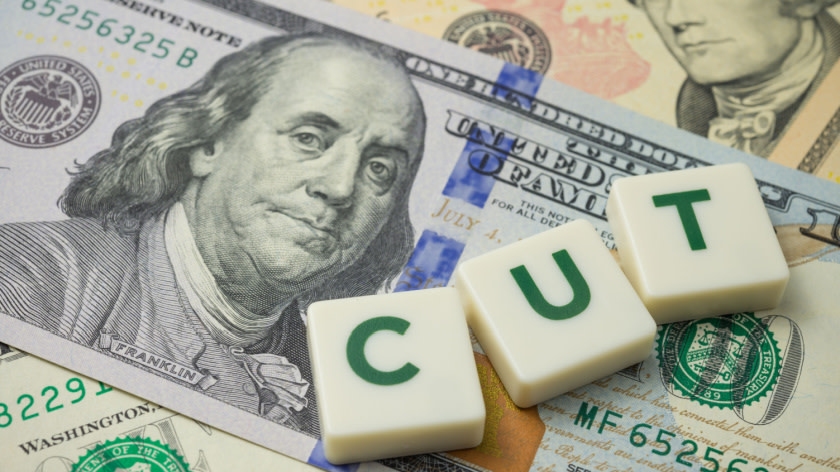
A hawkish cut is simple in concept:
The central bank cuts rates, usually in line with expectations.
But guidance, projections, or votes make it clear that:
Further cuts will be slower or fewer than markets hoped, or
Risks to inflation are still skewed to the upside, or
They're already thinking about when to pause or reverse easing.
We've seen this playbook plenty of times:
Fed, December 2024: Cut rates but paired it with higher expected growth and a higher future rate path; Outlets described the move as effectively a "hawkish cut" that knocked stocks lower as Powell warned against assuming a deep easing cycle.
Fed, March 2025: a 25 bp cut to 4.25–4.50% came with a dot plot signalling only two cuts in 2025, less than markets had priced. It is a move described in institutional commentary as hawkish, even with the cut.
Going into this week:
The Fed funds target is 3.75–4%, with markets almost fully pricing a cut to 3.50–3.75%.
The September 2025 dot plot projected only about 75 bp of additional cuts through 2026, implying a year-end 2026 range around 3.25–3.50%, a very mild easing cycle compared with market hopes.
Recent commentary from banks explicitly highlights the risk of a "hawkish cut" this week, a 25 bp move paired with a reminder that the Fed could be done for a while.
On top of that, the Fed is operating with foggy data thanks to a government shutdown that delayed key labour and inflation reports. Elsewhere, inflation remains above the 2% target, and unemployment has ticked up.
That's a backdrop tailor-made for Powell to say: "We're cutting now, but don't get carried away."

A 25 bp move is not going to surprise anyone:
CME FedWatch put the probability of a 0.25% cut at roughly 84–90%, based on Fed funds futures.
Once a move is priced, the shock can only come from guidance:
Dot plot and 2026–27 rate path
Powell's emphasis on upside inflation risks vs downside growth risks
Dissent count (how many hawks vote against cutting at all).
A large cluster of hawkish dissents plus a dot plot that implies only one or two cuts next year would effectively tell markets: "Enjoy this cut, but don't assume we're back to 2019."
That's the classic sell-the-news setup when everybody came in buying the rumour.
Fed officials have been open about the split:
Policymakers are "divided over whether to cut in December", even as comments from John Williams and Christopher Waller nudged expectations towards a cut.
Others believe the Fed will implement a hawkish cut specifically to acknowledge that disagreement, appeasing the doves with a decision while resonating with the hawks through stricter rhetoric regarding future easing.
A hawkish cut could hit markets through three main channels.
a) Equities (Especially Growth / Long Duration)
If the dot plot implies fewer cuts than futures are pricing, the 2–5 year part of the curve can back up, pushing discount rates higher for long-duration assets (tech, growth, high-multiple names).
With the S&P 500 a hair below record highs and BIS already flagging bubble dynamics, it wouldn't take much for traders to lock in profits.
b) Dollar
Markets expect a hawkish cut to support the dollar by emphasising a shallow easing path versus more aggressive cuts expected from the ECB, BoE and elsewhere.
DXY is sitting on a support zone around 98.8–99.0, so a modest repricing could easily push it back towards the 100–100.5 band, particularly if Powell pushes back against deeper cuts in 2026.
c) Rates and Credit
A hawkish message could keep 2-year yields closer to 3.6–3.7% rather than sliding back towards 3.2–3.3%.
Investors are rotating into intermediate maturities and bracing for a "shallow easing cycle", not a big cutting campaign. That leaves room for disappointment if they misjudge how shallow it is.
Combine those channels and the pattern is clear: small cut, bigger repricing in expectations. That's exactly how you get a "good news" headline with red tape.
| Asset / Indicator | Latest level & context |
|---|---|
| S&P 500 index (SPX) | 6,846–6,870 (Dec 8 close 6,846.5; Dec 5 close 6,870.4), less than 1% below record 6,890.9. |
| US Dollar Index (DXY) | Around 99.0–99.1 in recent sessions, having drifted below 100 for weeks. |
| US 2-year yield | Around 3.56% as of Dec 5, edging up from late-Nov levels. |
| US 10-year yield | Around 4.14% as of Dec 5, with yields rising into Fed week on quake-driven risk and policy uncertainty. |
| Gold (spot) | Around $4,200–4,300/oz, up ~60% YTD and near all-time highs. |
The S&P 500 has already had a big year:
Up around 16–17% year-to-date and recently tagging new all-time highs near 6,890.89.
Closed Monday at about 6,846.5, just a few tenths of a per cent below that record.
Recent days tell you a lot:
The index pulled back 0.3–0.4% on Monday as traders squared risk ahead of the Fed, after flirting with record levels on Friday.
Volatility is still muted, with VIX around the mid-teens, hardly panic territory.
Simply put, optimism is high, fear is cheap, and positioning is tilted long risk. That's classic "sell the news" terrain if the Fed fails to outdo the market's imagination.
On the rates and FX side:
The 10-year Treasury yield has stabilised just above 4.1–4.2%, higher than you'd expect if markets believed in a fast-cutting cycle.
The dollar index (DXY) is hovering around 99, near the lower end of its recent range but not in free-fall.
Data note that bond investors are betting on a mild easing cycle, not an aggressive slashing campaign, and are braced for a hawkish flavour to the cut.
Gold is the tell as it's rallied to around $4,200/oz. However, traders explicitly flag caution about a hawkish Fed tone, which could dampen further upside.
So you've got:
Equities near record highs
Dollar and yields are not especially dovish
A Fed that's already cut twice, with dots that scream "slow and shallow".
That's a market priced for good news, not a miracle.
Likely First-24-Hours Reaction
Knee-jerk:
First algo reaction to the headline cut probably takes futures a touch higher.
Within minutes, markets digest the dots and Powell's tone, realise the easing path is shallower than pricing, and indices fade lower.
Magnitude:
A move from the 6,850s toward 6,700–6,720 on SPX would be a very normal "sell the news" response, roughly a 2–3% shake-out rather than a crash.
2-year yields likely push higher as traders mark down 2026 cuts, even with the immediate move lower in the policy rate.
10-year yields might rise modestly or stay flat, steepening the curve slightly if growth expectations don't collapse.
DXY pops higher; crowded anti-dollar trades feel the squeeze.
Gold gives back some of its recent gains as the path for real rates is repriced a bit higher.
That's the classic hawkish-cut, sell-the-news pattern: the rate move is less important than the message that "this may be it for a while".
It's when the Fed cuts rates, but couples that move with tough guidance. It is a cut where "additional moves aren't guaranteed", even if markets want a full easing cycle.
Fed funds futures imply an 80–90% chance of a 25 bp cut to 3.50–3.75%.
Because the cut is already priced in and the surprise can only come from how far the Fed signals it will go in 2026.
In conclusion, a hawkish cut is the central bank's way of saying: "Yes, we hear the slowdown, but we're not losing the inflation fight to please markets."
Heading into this week's FOMC, risk assets have already pocketed massive year-to-date gains on the assumption that the Fed will coax the economy into a soft landing with gentle, gradual cuts.
A straightforward 25 bp cut paired with careful dots, apparent disagreement, and strong inflation messaging would align with the classic definition of a hawkish cut. That kind of mix doesn't have to start a bear market, but it's exactly the backdrop where you often see a "sell the news" flush.
Disclaimer: This material is for general information purposes only and is not intended as (and should not be considered to be) financial, investment or other advice on which reliance should be placed. No opinion given in the material constitutes a recommendation by EBC or the author that any particular investment, security, transaction or investment strategy is suitable for any specific person.