Published on: 2025-04-10
Updated on: 2025-12-02
Artificial Intelligence (AI) remains one of the most transformative forces in technology. As 2025 progresses and 2026 nears, many companies continue investing heavily in AI.
From chips and data centres to cloud infrastructure and machine-learning services, AI stocks offer opportunities for investors aiming for long-term growth.
In this article, we highlight 10 AI-linked stocks we consider the top picks for 2025, based on market position, recent developments and long-term potential.
| Company / Ticker | Approx. 12-month / YoY return / Notes (2024 → 2025) |
|---|---|
| NVIDIA (NVDA) | Up ≈ +40–50% in 2025. It still among top-performing AI-hardware names. |
| Microsoft (MSFT) | Modest gain as estimates show ~+20% 12-mo return, reflecting stable growth through enterprise AI/cloud. |
| Alphabet (GOOGL) | Strong return as many data sources indicate ~+60% rise in 2025 (driven by renewed AI and cloud enthusiasm). |
| Broadcom (AVGO) | Notable rebound with benefits from AI-infrastructure demand; among 2025’s relative outperformers. |
| Advanced Micro Devices (AMD) | Mixed performance. It faces headwinds due to sector competition, though some AI-chip exposure remains. |
| Palantir Technologies (PLTR) | Very strong with 12-mo total return reportedly ≈ +150% (one of the top-performing AI-related stocks in 2025). |
| Amazon.com (AMZN) | Moderate gain as AWS and cloud-AI exposure provide buffer; return more muted relative to high-growth peers. |
| Meta Platforms (META) | Up but modest as AI/metaverse bets support it, but 2025 gains lower than pure-hardware peers. |
| Tesla (TSLA) | Mixed / volatile. As of late 2025, stock has shown sporadic gains; 2025 return underperforms core AI-infrastructure peers. |
| CoreWeave (CRWV) | High volatility. IPO in March 2025; stock surged by ≈ +160% from IPO, but performance remains choppy due to uncertainty and large losses. |
Leads in AI hardware, especially GPUs and AI accelerators that power data-centres, cloud providers, and large language models. Its dominant position makes it foundational for AI infrastructure worldwide.
Integrates AI across cloud (Azure), enterprise software, and productivity tools, benefiting from growing enterprise AI adoption and cloud demand.
Uses AI in search, cloud, and emerging AI-infrastructure initiatives; recent strategic moves suggest deepening its AI footprint, aiming for long-term dominance.
Supplies semiconductor solutions often used in AI infrastructure and data-centre networking, offering a more diversified chip-infrastructure play beyond GPUs.
Competes in processors and GPUs that support AI workloads, providing an alternate route into the AI-hardware narrative with potentially less hype-driven volatility.
Focuses on AI-driven data analytics and enterprise software, offering AI-powered data intelligence, a niche that may benefit from growing demand for AI solutions beyond infrastructure.
Through AWS and cloud services, Amazon is deeply involved in AI, enabling businesses to build, deploy, and scale AI applications. Its broad business model provides diversified exposure to AI.
Uses AI within its electric vehicles (Autopilot, Full Self-Driving) and potentially in robotics and other AI-enabled mobility services, making it a more speculative but high-reward AI play. (Less infrastructure exposure; more application-level AI.)
Investing heavily in AI for content recommendation, ad targeting, and future products, positioning itself to leverage AI advances in social media, the metaverse, and beyond.
As a more niche player focused on GPU-accelerated cloud workloads for AI, CoreWeave represents a smaller-cap but potentially high-upside "infrastructure + cloud" bet.
(Note: more volatile than mega-caps.)
While Apple does incorporate AI features into devices (e.g. Siri, on-device ML, user-experience enhancements), its core business remains hardware and consumer ecosystems.
Unlike the other picks above, AI is not its primary driver. Thus, for a list focused on AI-driven growth potential in 2025, Apple does not yet offer the same level of AI-infrastructure exposure or scaling potential, which is why it's not included among the top 10.
That said, Apple can still be a solid long-term tech investment, particularly if it pivots more aggressively toward AI in future.
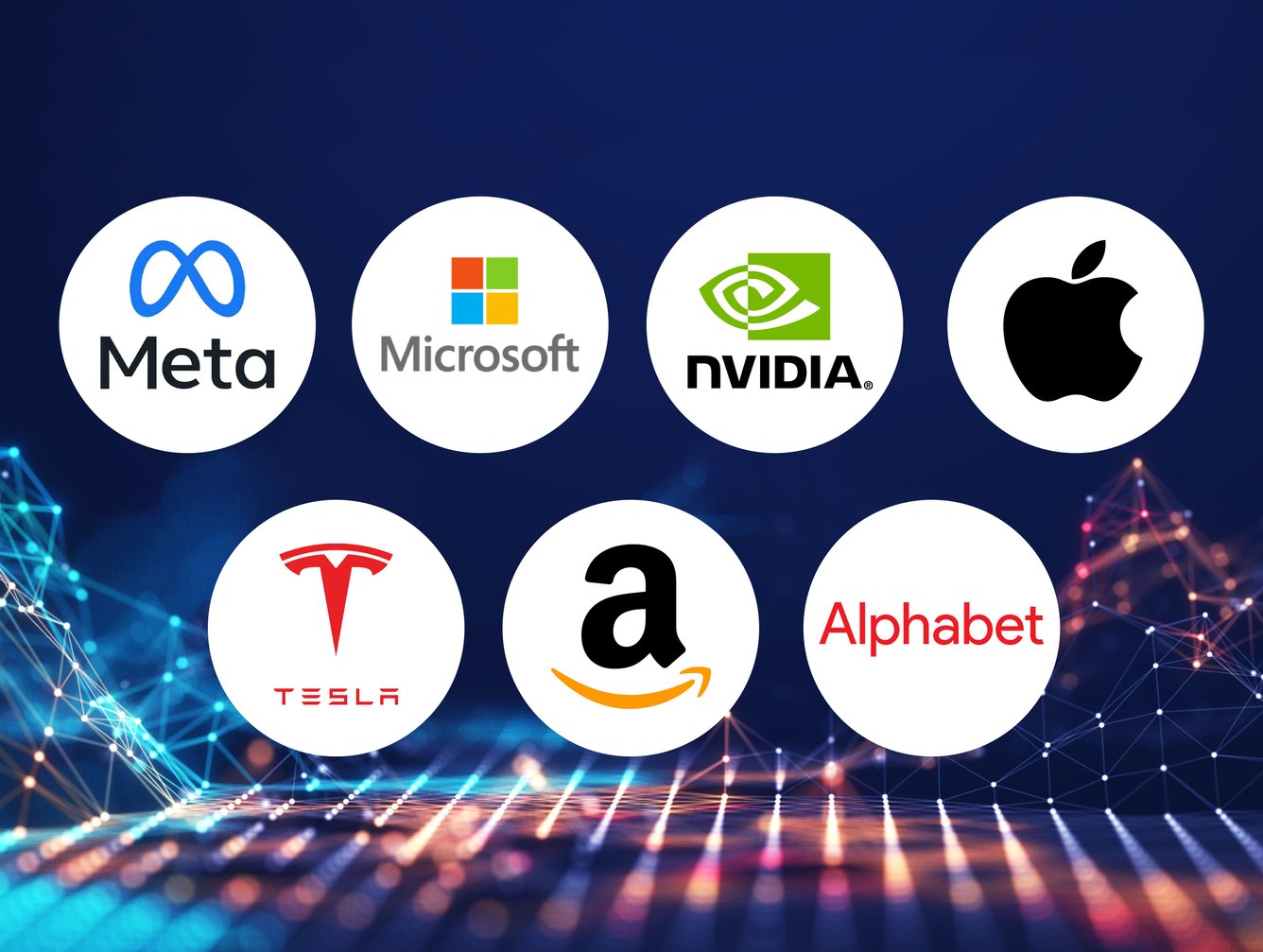
Its GPUs and AI accelerators are still among the most in-demand components for data centres and AI workloads. It remains a foundational AI stock, even after recent volatility.
Companies like Microsoft, Amazon, Broadcom, Meta, and Palantir offer AI exposure without depending entirely on hardware needs, resulting in a more stable risk profile.
As AI infrastructure expands, firms like Broadcom and AMD offer alternatives to a single-supplier ecosystem.
At the same time, some AI stocks have seen valuation compression as investors value competition, margin pressure, and execution risk.
As enterprises shift toward AI-powered services, demand for data-centre capabilities and cloud-AI solutions remains strong, but only the companies with end-to-end infrastructure, cloud capacity, or diversified business models seem well positioned for sustained growth.
| Company / Type | Why They Could Do Well |
|---|---|
| NVIDIA, Microsoft, Alphabet | These remain top candidates due to their scale, diversified AI exposure (chips, cloud, services), and leading positions in both infrastructure and software-AI. |
| Broadcom (AVGO) | Positioned to benefit significantly from rising hyperscaler CapEx on AI: as cloud providers spend more on data-centre and networking infrastructure, Broadcom’s networking & AI-chip products stand to gain. |
| Mixed hardware + cloud/enterprise plays (e.g. AMD, newer infrastructure-cloud firms) | Firms with diversified offerings, beyond only GPUs, may benefit from the broader AI infrastructure trend, especially if cloud demand rises and hardware competition increases. |
| Enterprise-AI / software-analytics firms (data-analytics, cloud software companies) | As businesses adopt more AI-powered tools (not just chips), firms providing enterprise AI services or analytics could see fast growth, offering lower-volatility exposure compared to pure-hardware plays. |
Yes, but selectively. For instance, investors must focus on companies with real revenue growth, strong balance sheets, and clear AI monetisation paths rather than hype-driven names.
NVIDIA (NVDA), Microsoft (MSFT), Alphabet (GOOGL), Broadcom (AVGO) and Palantir (PLTR).
Valuation Compression, Slowing Infrastructure Spend, Competition, Regulation and Cyclicality.
In conclusion, investing in AI stocks in late 2025 remains both promising and risky. The companies above combine scale, infrastructure, recurring revenue models, and leading positions in AI development, which makes them among the most compelling picks for exposure to what could be a decade-long AI wave.
However, as with any high-growth sector, volatility and shifting sentiment are likely. If you choose to invest, consider diversifying across multiple business models and sectors, not just chips or cloud infrastructure.
Disclaimer: This material is for general information purposes only and is not intended as (and should not be considered to be) financial, investment or other advice on which reliance should be placed. No opinion given in the material constitutes a recommendation by EBC or the author that any particular investment, security, transaction or investment strategy is suitable for any specific person.