Published on: 2026-04-17
Updated on: 2026-04-17
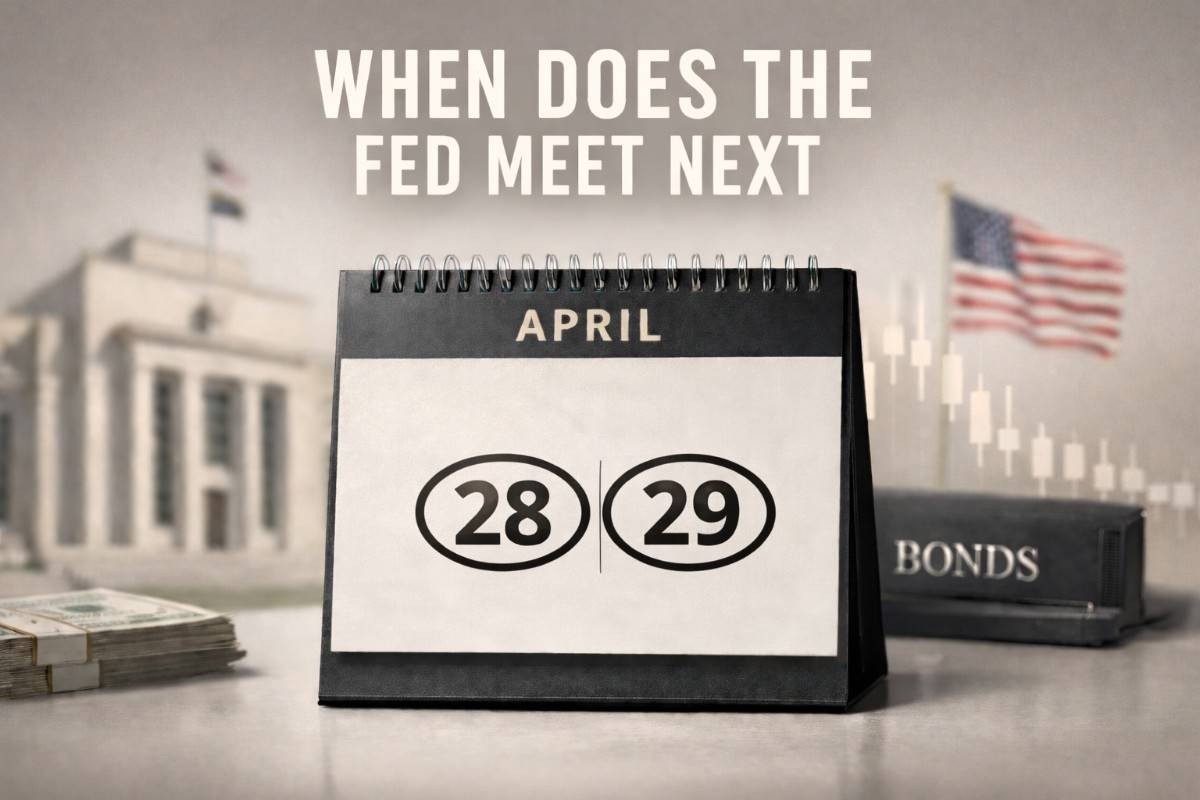
The next Fed meeting is scheduled for April 28–29, 2026, with the policy statement due at 2:00 p.m. ET and the press conference at 2:30 p.m. ET on April 29.
Futures markets expect the target range to remain steady at 3.50%-3.75%. Therefore, the main market catalyst will likely be the Fed's stance on inflation and growth, as well as the potential for rate cuts later this year.
April is not one of the projection meetings marked with an asterisk on the Fed's 2026 calendar.
The current federal funds target range remains 3.50% to 3.75% after the March decision.
In March, inflation reaccelerated, with headline CPI at 3.3% and energy prices rising 12.5% over the year, while core CPI remained at 2.6%.
The labor market is softer than last year but not weak enough to force a quick easing cycle, with 178,000 jobs added in March and unemployment at 4.3%.
With a hold largely priced in, the main market risk is a hawkish hold that pushes Treasury yields and the US dollar higher.
The next scheduled FOMC meeting is April 28–29, 2026. The statement is due at 2:00 p.m. ET on April 29, followed by the Chair's press conference at 2:30 p.m. ET. Because April is not a projections meeting, markets will be unusually sensitive to wording changes and Powell's tone.
Here is the current macro and policy snapshot behind the meeting.
| Indicator | Latest reading | Why it matters |
|---|---|---|
| Next FOMC meeting | Apr. 28–29 | Sets the next policy signal |
| Fed target range | 3.50%–3.75% | Current policy stance |
| Market pricing | Near-certain hold | Decision risk looks low |
| March CPI | 3.3% YoY | Headline inflation reaccelerated |
| March core CPI | 2.6% YoY | Underlying inflation still sticky |
| March payrolls | +178,000 | Labor market still expanding |
| Unemployment | 4.3% | Softening, but not breaking |
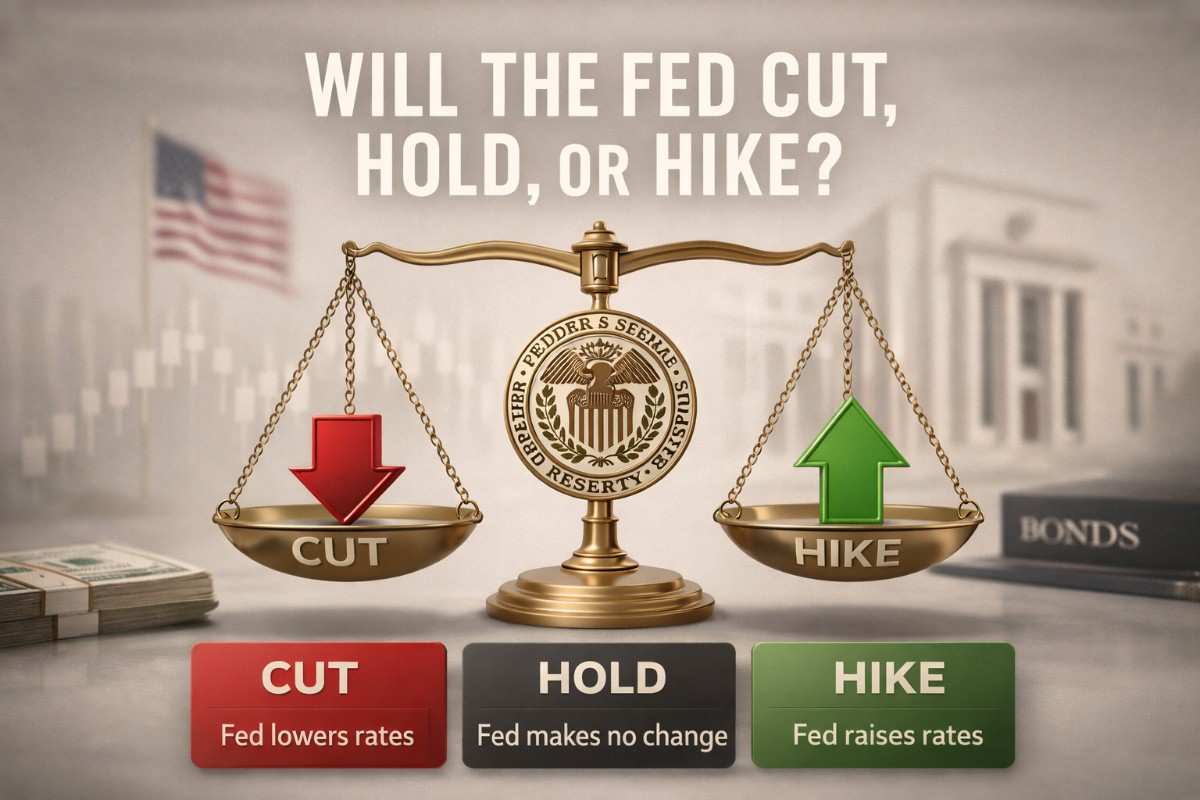
Markets are pricing a hold as the overwhelmingly likely April outcome, leaving the policy range at 3.50% to 3.75%. The real issue is whether officials describe inflation as a temporary energy shock, a broader persistence problem, or a reason to delay cuts deeper into the second half of 2026.
The March statement offers the clearest template. The Fed kept rates unchanged, said uncertainty remains elevated, flagged the Middle East as a source of economic risk, and repeated that it will assess incoming data and the balance of risks. One governor dissented in favor of a quarter-point cut, but the Committee as a whole chose patience.
That patience still fits the data. Headline CPI jumped 0.9% month on month in March, driven by a 21.2% surge in gasoline prices, while payroll growth remained positive and unemployment changed little. That combination gives policymakers room to wait rather than pre-commit to either cuts or hikes.
Markets should watch three things: whether the Fed sounds more worried about inflation, whether it still sees labor conditions as orderly, and whether Powell implies that cuts are delayed rather than abandoned. When the rate outcome is mostly priced in, language becomes the main transmission channel into yields, the dollar, and equity valuations.
First, watch the inflation language. Second, watch whether the Committee maintains its balanced dual mandate framing. Third, watch how Powell reconciles the March projections with current data.
In March, the median projection for the federal funds rate at end-2026 was 3.4%, below the current midpoint, suggesting some easing this year even if April remains on hold.
A balanced hold would likely steady bonds and limit equity volatility. A hawkish hold would probably lift front-end Treasury yields, support the US dollar, and pressure rate-sensitive sectors. That is the asymmetry traders should watch: not the hold itself, but whether the Fed makes the next cut look closer or further away.
Because markets already expect no April move, the cleanest bullish outcome for risk assets is a hold paired with language that keeps later-2026 cuts alive. The cleaner bearish outcome is a hold that leans harder into inflation persistence. In practice, that means the statement and press conference may matter more than the headline decision.
The next Fed rate decision is due on Wednesday, April 29, 2026, after the FOMC's two-day meeting on April 28–29. The statement is scheduled for 2:00 p.m. ET, followed by the press conference at 2:30 p.m. ET.
No. Current futures-based pricing points strongly to no change at the April meeting, which would keep the federal funds target range at 3.50% to 3.75%.
It matters because the market is now trading the path, not the April decision itself. Any shift in language around inflation, growth, or the timing of future cuts can reset bond yields, the dollar, and equity multiples very quickly.