Published on: 2026-06-04
Updated on: 2026-06-04
South Africa reached 300 consecutive days without load-shedding in March 2026, with Eskom’s energy availability factor at 65.85% and diesel expenditure R8.58bn lower year on year. The IMF still projects only 1.0% GDP growth for 2026.
Real GDP per person fell from $5,953.95 in 2010 to $5,715.48 in 2024, leaving South Africans about 4% poorer per person after fourteen years of economic plans, commodity cycles and power crises.
Freight rail volumes recovered to 160.1mn tons in 2024/25, but they remain nearly 30% below the 226.3mn tons recorded in 2017/18. The growth constraint has moved from power generation to economic transmission.
Official unemployment rose to 32.7% in Q1 2026, with employment down 345,000 in one quarter. Youth unemployment reached 45.8%, leaving a 1% economy too weak to absorb its labour force.
Gross fixed capital formation stood at 14.52% of GDP in 2024, below South Africa’s long-term average and far below the investment intensity seen in faster-growing emerging markets.
South Africa fixed the failure everyone could see: 300 consecutive days without load-shedding, lower diesel costs and a stronger Eskom availability factor. The growth did not follow. The IMF still projects 1.0% real GDP growth for 2026, while South Africans remain poorer per person than they were in 2010.
The lights came back before the growth engine did.
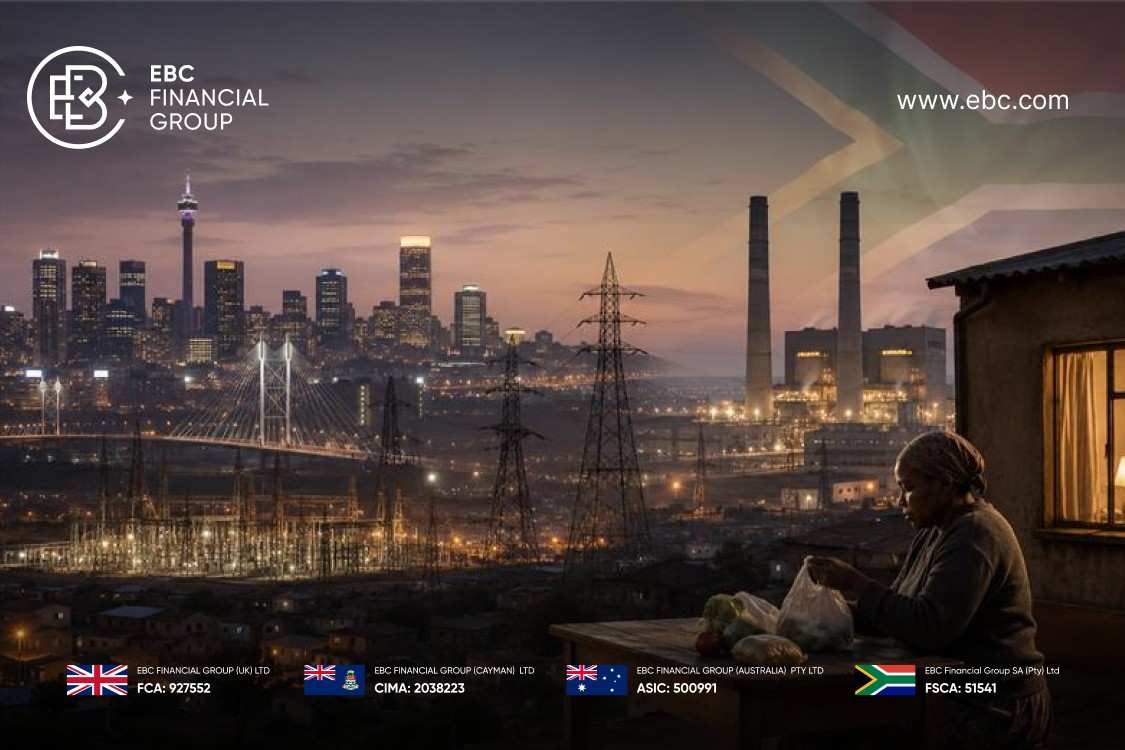
Eskom’s turnaround is real. South Africa reached 300 consecutive days without load-shedding at midnight on 12 March 2026. Eskom reported an energy availability factor of 65.85% for the financial year to date, while diesel expenditure fell by R8.58bn, a 57.35% reduction from the same period a year earlier.
That is an operational recovery, not a statistical footnote. The grid moved from a daily constraint on households, factories, mines and retailers into a functioning platform for production. The economy once priced blackout risk into growth forecasts, investment decisions and working-capital buffers.
Load-shedding had already extracted a high cost. Nova Economics estimates cited by Codera put the economic cost at nearly R45bn between 2007 and 2019, then almost R225bn between 2020 Q1 and 2023 Q1. The recovery removed a major drag. It did not release a growth surge.
The IMF still projects real GDP growth of only 1.0% for South Africa in 2026. That is not a recession. It is the speed of an economy that has repaired its most visible failure and still cannot accelerate. Power stopped being the main explanation for stagnation. It proved that the next constraint sits elsewhere.
The living-standard number is harder than the growth forecast.
In the latest available full-year data, South Africa’s real GDP per person, measured in constant 2010 US dollars, was $5,715.48 in 2024, down from $5,953.95 in 2010. That is a 4% decline across fourteen years. The country did not merely grow slowly. It produced less real output per person after more than a decade of reform plans, commodity cycles and power crises.
The decline equals about $238 less real output per person per year than in 2010. That figure carries the article’s core economic truth: a restored grid does not automatically restore living standards.
Most of the damage began before load-shedding reached its worst phase. Weak investment, poor labour absorption, infrastructure decay, and low productivity were already holding back per capita income. The blackout crisis made the stagnation visible. It did not create all of it.
The 300-day milestone works as a diagnostic. It shows that electricity was a binding constraint, but not the only one. South Africa fixed the megawatts faster than it fixed the mechanisms that turn power into income.
Stable electricity lets an economy produce. Logistics decides whether that output reaches markets.
Transnet moved 226.3mn tons of freight by rail in 2017/18. By 2022/23, that volume had collapsed to 149.5mn tons. The recovery to 160.1mn tons in 2024/25 marked progress, but freight rail was still almost 30% below its earlier peak.
That gap is not an accounting detail. It is export revenue delayed, mineral shipments constrained, agricultural products rerouted, inventories held longer and working capital tied up inside a slower economy. Mines can operate with stable power and still lose output value if rail corridors cannot move coal, iron ore, manganese, chrome or containers at scale.
South Africa’s growth problem moved from generation to transmission. Not electricity transmission. Economic transmission.
The economy can keep the lights on and still fail to move goods.
The logistics constraint does not end at the railhead.
The World Bank’s Container Port Performance Index tracks port efficiency across global container terminals. In the 2024 rankings, South African ports remained near the bottom of the global table. Moneyweb reported Durban ranked last out of 403 ports, Coega second-last, Cape Town at 400th, and Port Elizabeth at 395th.
Those rankings explain why power recovery has not converted cleanly into export acceleration. A factory, mine or farm can produce more reliably, but port delays convert part of that gain into storage costs, demurrage, missed shipment windows and weaker competitiveness.
This is the hidden growth tax. It does not look like a blackout. It looks like a container waiting, a train slot missed, a shipment delayed, a buyer choosing a faster supply chain.
The lights are on. The goods are not moving fast enough.
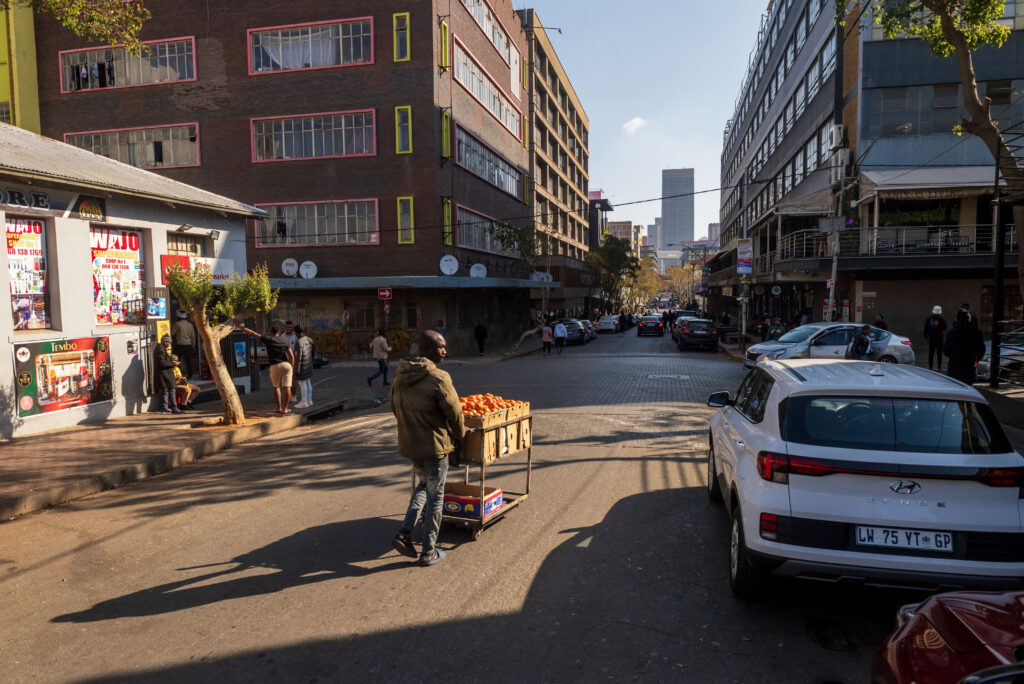
South Africa is not investing like an economy preparing for a breakout.
Gross fixed capital formation stood at 14.52% of GDP in 2024. That is below the previous year, below the long-term average of roughly 19.72%, and far below the investment intensity seen in faster-growing emerging markets.
Low investment turns infrastructure weakness into a loop. Rail and ports underperform, which lowers expected returns on new capacity. Lower returns keep private capital cautious. Cautious capital leaves infrastructure gaps unresolved. The grid can stabilise faster than this loop can be broken.
This is why the end of load-shedding did not produce a clean acceleration. Electricity reliability reduces one risk premium. It does not rebuild freight corridors, repair municipal infrastructure, raise fixed investment or create enough confidence for firms to hire at scale.
A 1% economy is not short of one fix. It is short of transmission from reform to production, from production to exports, and from exports to household income.
The labour market turns weak growth into a social balance-sheet problem.
South Africa’s official unemployment rate rose to 32.7% in Q1 2026. Employment fell by 345,000 to 16.8mn, while the number of unemployed people rose by 301,000 to 8.1mn.
Youth unemployment reached 45.8% in the same quarter. Nearly half of economically active South Africans aged 15 to 34 were unable to find work.
A fixed grid can protect existing activity. It cannot, by itself, create the demand surge needed to absorb millions of workers. At 1.0% growth, the economy is not expanding fast enough to change the labour-market arithmetic.
That is why the per-capita number cuts so deeply. South Africa is not only growing too slowly at the national level. It is failing to generate enough output, employment, and investment per person to reverse a 14-year decline in living standards.
Yes, on a real GDP per capita basis. In the latest available full-year data, real GDP per person fell from $5,953.95 in 2010 to $5,715.48 in 2024, a decline of about 4%.
No. War-hit and crisis economies are weaker. The sharper point is that South Africa is extremely weak for a major emerging market, G20 member and Africa’s most industrialised economy. The IMF’s 1.0% 2026 growth projection is far below the pace needed to repair unemployment and per-capita income.
Logistics is the clearest post-power constraint. Freight rail remains almost 30% below its 2017/18 peak, while major container ports rank near the bottom of global efficiency tables. Stable electricity cannot deliver full growth if goods cannot move at a competitive speed.
South Africa needs freight rail volumes to recover, port turnaround times to improve, fixed investment to rise, and job creation to move beyond low-growth sectors. Faster growth requires a stable electricity supply to support exports, private capital formation, and labour absorption.
South Africa’s blackout story has changed. Its stagnation story has not.
The country restored power reliability, but it did not restore income per person. The next constraint is no longer measured only in megawatts. It is measured in tons not moved by rail, containers delayed at ports, workers left outside the labour market, and investment too weak to rebuild productive capacity.
South Africa fixed the failure everyone could see. The harder failure is still running through logistics, capital formation and employment.
The lights came back. The economy is still waiting for transmission.