Published on: 2026-06-03
Updated on: 2026-06-03
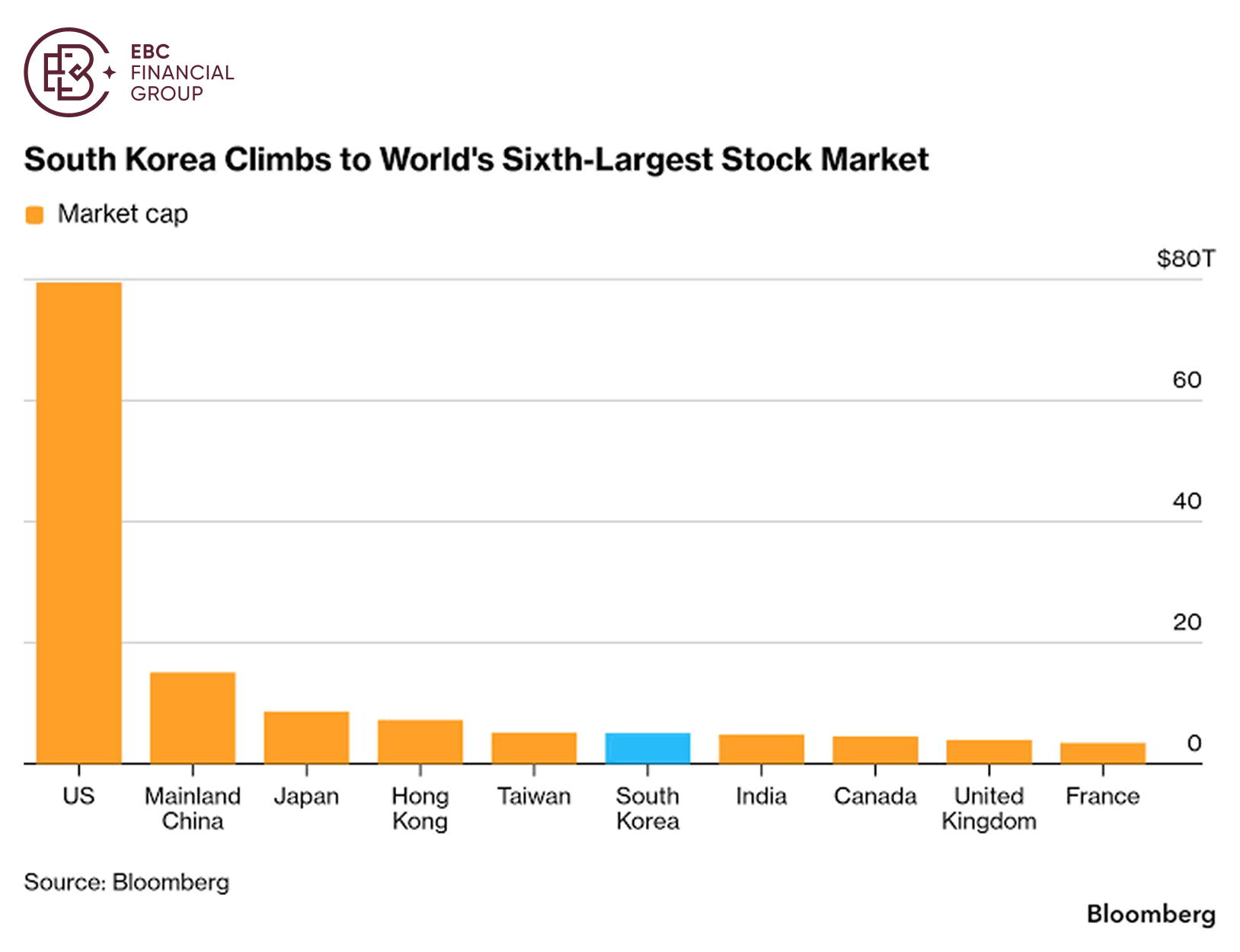
South Korea's equity market has overtaken India's as the world's 6th largest, hitting a milestone of $5 trillion. Earlier this year, the chip powerhouse outstripped Canada and European countries.
It is rewriting financial markets in a way that captures fascination over outsize influence in the AI industry. Apart from AI rush, government's push for corporate reform helps draw foreign funds.
The Asian country's exports grew more than expected in May at the strongest annual rate in over four decades. BOK raised its economic growth forecast for this year to 2.6% from 2.0% last week.
Meanwhile, India is dragged lower by a dearth of companies directly linked to the AI infrastructure. Higher energy costs resulting from the war in Iran have stoked inflation concerns and clouded growth prospects.
The GDP per capita could see a "J-curve in rising domestic consumption at $4,000 or above," said Sumitomo Mitsui DS Asset Management, "long-term thesis still holds, but inflation is creating a near-term headwind."
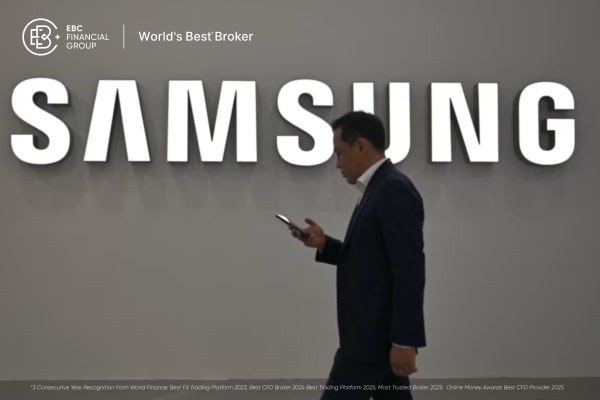
Nvidia CEO Jensen Huang is expected to visit South Korea later this week and meet Korean executives. Both Samsung Electronics and SK Hynix have reached the $1 trillion valuation.
The companies account for more than 40% of KOSPI. Analysts have warned that the concentration could leave the market more exposed to risks, including supply chain disruptions and a slowdown in AI investment.
The chairman of SK Group said on Tuesday its memory chip unit SK Hynix aims to double wafer capacity over the next five years. He warned in March that a global chip wafer shortage was likely to persist until 2030.
Separately, Samsung Electronics said on Friday it started shipping samples of its latest HBM chip to customers. Its shares have been valued at a discount to SK Hynix due to its weaker competitiveness in HBM.
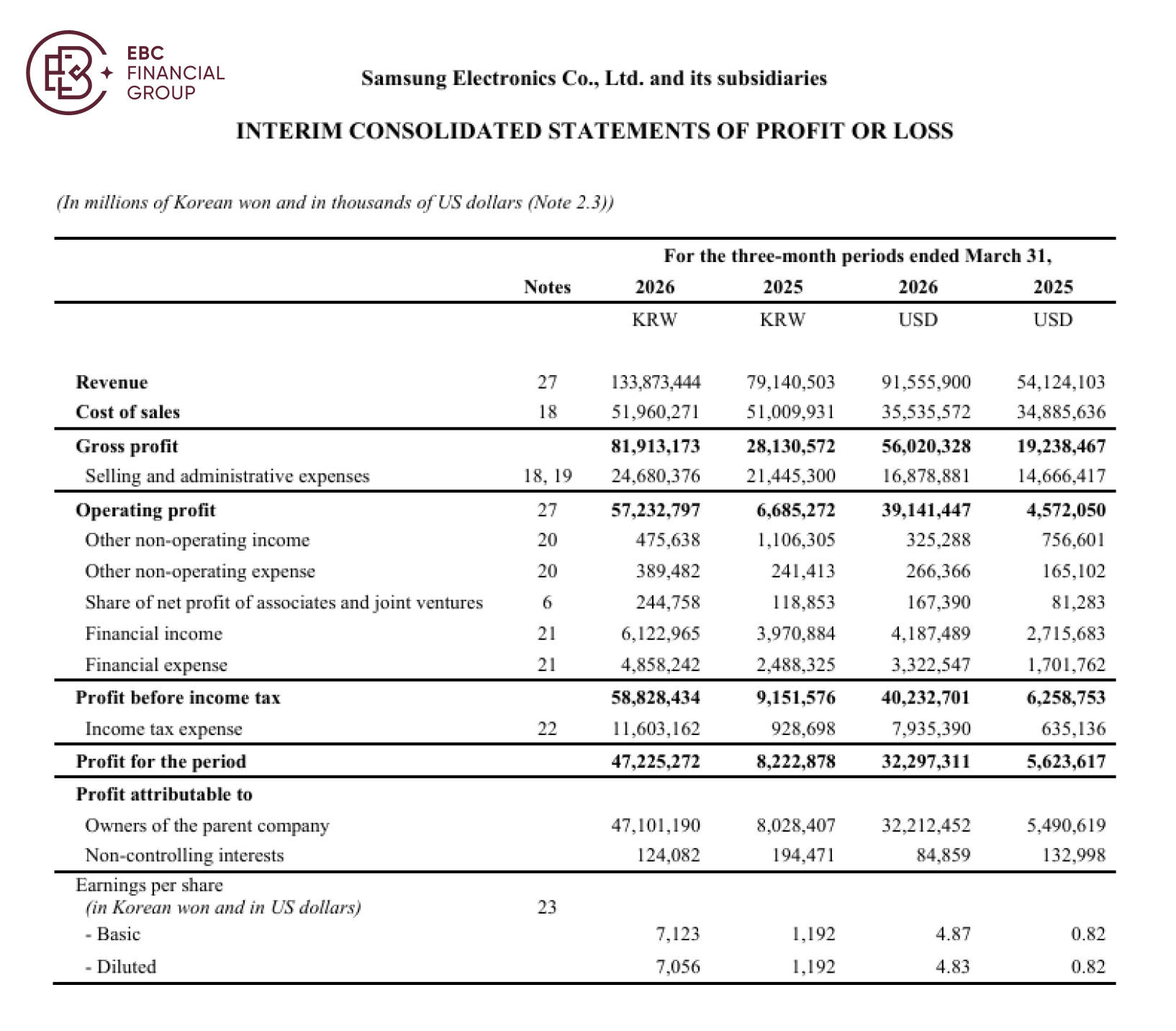
Goldman Sachs raised its 2028 operating profit forecasts for SK Hynix and Samsung Electronics by 24% and 23.3%, respectively, to 454 trillion won and 610 trillion won, citing sustained AI-driven demand.
Structural supply shortage means that memory chip prices could stay high for years. Nomura estimated SK Hynix stock to hit 4 million won and Samsung Electronics to reach 590,000 won over the next 12 months.
But the tech industry features perpetual disruption. Google unveiled TurboQuant in March, a new compression method, which it says could reduce the amount of memory required to run large language models by six times.
Deutsche Bank wrote in a Tuesday note that that it "remains to be seen" whether the technique will create a structural shift in demand. Till now, the risk has not been priced in completely.
Peak optimism around Korean equities is "not too far around the corner" said Steve Brice, global chief investment officer at Standard Chartered. There are signs that local retail investor sentiment is extremely frenzied.
South Korea's currency is trading around multi-decade lows despite surging exports and a booming stock market, puzzling policymakers and traders who had bet on the won appreciating.
The Bank of Korea this month said the won appeared "excessively weak relative to economic fundamentals" and warned that authorities would take "decisive action" if necessary.
Major South Korean companies, including Samsung and SK Hynix, are holding substantial revenues in foreign currencies to support expanding global operations, according to SK Securities.
Brad Setser, a senior fellow at the Council on Foreign Relations, describes this chip-driven manufacturing surplus as "DRam dollars," comparing it to the reinvestment of petrodollars into US assets.
RBC analyst forecast a rush of repatriation should the won begin to strengthen. Sam Konrad, investment manager in the Asian equity income team at Jupiter Asset Management, also expected it to appreciate.
A strengthening currency would cause a sharp structural rotation within the market. While that squeeze profit margin of mega-cap chipmakers, it could benefit home-based businesses by pushing down import costs.
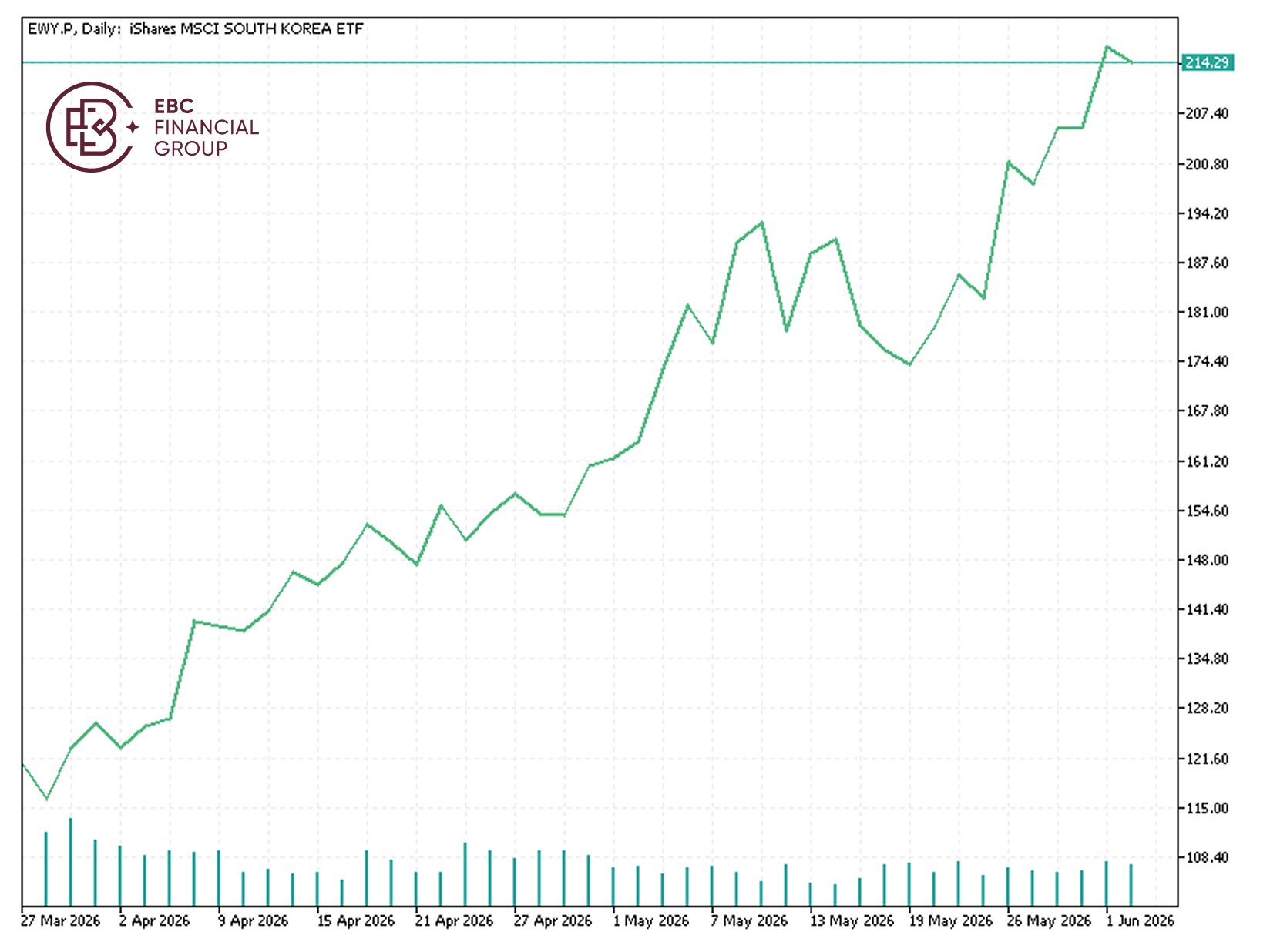
iShares MSCI South Korea ETF has soared over 120% this year. EBC Financial Group analyst sees a narrowing gap between tech and other sectors, potentially bolstering the case for a more steady rally.