Published on: 2026-02-26
Updated on: 2026-02-26
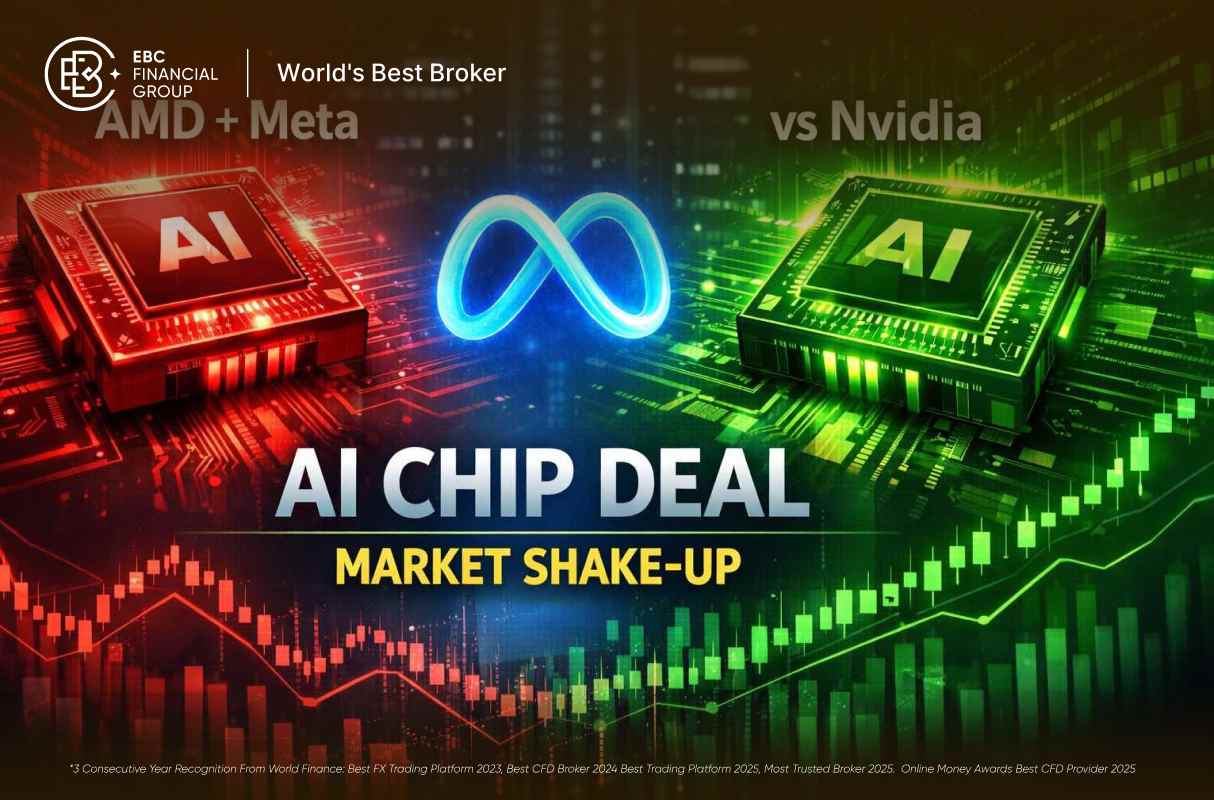
Meta signed a definitive, multi-year agreement to deploy up to 6 gigawatts of AMD Instinct GPUs, with initial shipments beginning in the second half of 2026. The deployment will use AMD’s Helios rack-scale architecture and a custom MI450-based GPU optimzied for Meta workloads.
The agreement includes a performance-based warrant for up to 160 million AMD shares (potentially up to ~10% ownership), effectively making dilution part of the “price” AMD paid to gain deeper access to hyperscaler AI.
This is less about Meta “dumping Nvidia” and more about multi-vendor AI becoming the default as power, supply, and cost-per-token economics force diversification. Meta also maintains a long-term partnership with Nvidia.
Meta’s 2026 capex guidance of $115 to $135 billion frames why gigawatt-scale chip contracts are now strategic, not tactical.
NVIDIA’s latest results underscore why the market leader is not “displaced” near term, even as AMD’s win signals future pricing and share pressure at the margin.
| Metric | Latest Detail | Date / Timing | Units / Notes |
|---|---|---|---|
| Agreement Scope | Up to 6 | Feb 24, 2026 | Gigawatts of AMD Instinct GPU deployments |
| First Ramp | First 1 GW shipments begin | 2H 2026 | Helios rack-scale, custom MI450-based GPU, EPYC “Venice,” ROCm |
| Equity Sweetener | Up to 160,000,000 shares | Performance-based | Warrant vests by shipment milestones and stock-price thresholds |
| Meta 2026 Capex Guide | 115 to 135 | FY 2026 | $ billions, includes finance lease principal payments |
The agreement is a power-scaled deployment commitment, not a unit count. Meta and AMD describe it as “up to 6 gigawatts” across multiple generations of Instinct GPUs, anchored by a custom MI450-architecture accelerator and AMD’s Helios rack-scale design. This represents a capacity reservation for AI factories rather than a single purchase order.
The deployment schedule is as important as the scale. AMD will begin shipments supporting the first gigawatt in the second half of 2026, alongside EPYC “Venice” CPUs and ROCm software. This timing shifts significant revenue recognition to a future period, but it also provides AMD with a contracted path to scale, enhancing roadmap credibility.
Meta’s focus is on “efficient inference compute,” as Zuckerberg highlighted. The partnership aims to optimize Meta workloads at scale. Inference, where model output serves real users, directly affects operating margins through cost per token. By dual-sourcing inference platforms, hyperscalers gain leverage in pricing, supply, and power efficiency.
AMD can be disruptive by delivering competitive inference throughput per watt, even if it doesn't lead in training. If successful, Nvidia’s advantage shifts from dominance to defending its price premium. The market’s positive reaction to the announcement reflects the impact of having a credible second supplier on negotiation dynamics.
The agreement emphasizes co-development. AMD and Meta are aligning GPU, CPU, system, and software roadmaps, with Helios developed through the Open Compute Project collaboration. This approach aims to make the technology stack more portable and less dependent on a single vendor’s architecture.
Nvidia’s competitive advantage extends beyond GPU performance to its comprehensive platform, tooling ecosystem, and large-scale operational capabilities. The AMD-Meta partnership challenges this by enabling Meta’s internal software to treat AMD capacity as a primary resource, rather than a compatibility solution.
Meta is not choosing AMD over Nvidia. It is choosing AMD over Nvidia. Meta’s own newsroom described a “portfolio-based approach” that combines multiple partners with its internal MTIA silicon program.
And Nvidia is still posting numbers that reflect extraordinary demand concentration in its stack. NVIDIA’s official FY2026 Q4 release reported $68.1 billion quarterly revenue and $62.3 billion data center revenue, with management explicitly touting inference economics and its Grace Blackwell platform. In the same release, Nvidia also highlighted a multi-year, multi-generational partnership with Meta involving large-scale deployment of Nvidia CPUs, networking, and “millions” of Blackwell and Rubin GPUs.
The competitive landscape is evolving: AMD is now participating in hyperscaler-scale deployments, while Nvidia continues to offer the broadest platform and the most reliable shipment capacity.
The warrant is not a footnote; it is central economics. AMD issued Meta a performance-based warrant for up to 160 million shares, vesting in tranches as shipment milestones are achieved and further tied to stock-price thresholds and commercial goals.
For AMD, the warrant represents a strategic trade-off: accepting potential dilution to secure a flagship customer, accelerate ecosystem adoption, and provide a proof point for other large buyers seeking contractual certainty and risk-sharing. For Meta, it combines procurement with potential equity upside, ensuring supply while benefiting if AMD meets performance targets.
The key issue is execution risk. If AMD meets shipment milestones, the warrant vests and dilution increases, but AI revenue should also grow. If AMD does not deliver, the warrant does not fully vest, and the associated platform revenue is not realized. This structure requires the market to assess execution risk rather than just the total addressable market opportunity.
Meta’s latest earnings release put a hard number on the macro backdrop: 2026 capital expenditures are expected to be $115 to $135 billion. That is an industrial buildout budget, and it makes gigawatts the relevant unit of competition.
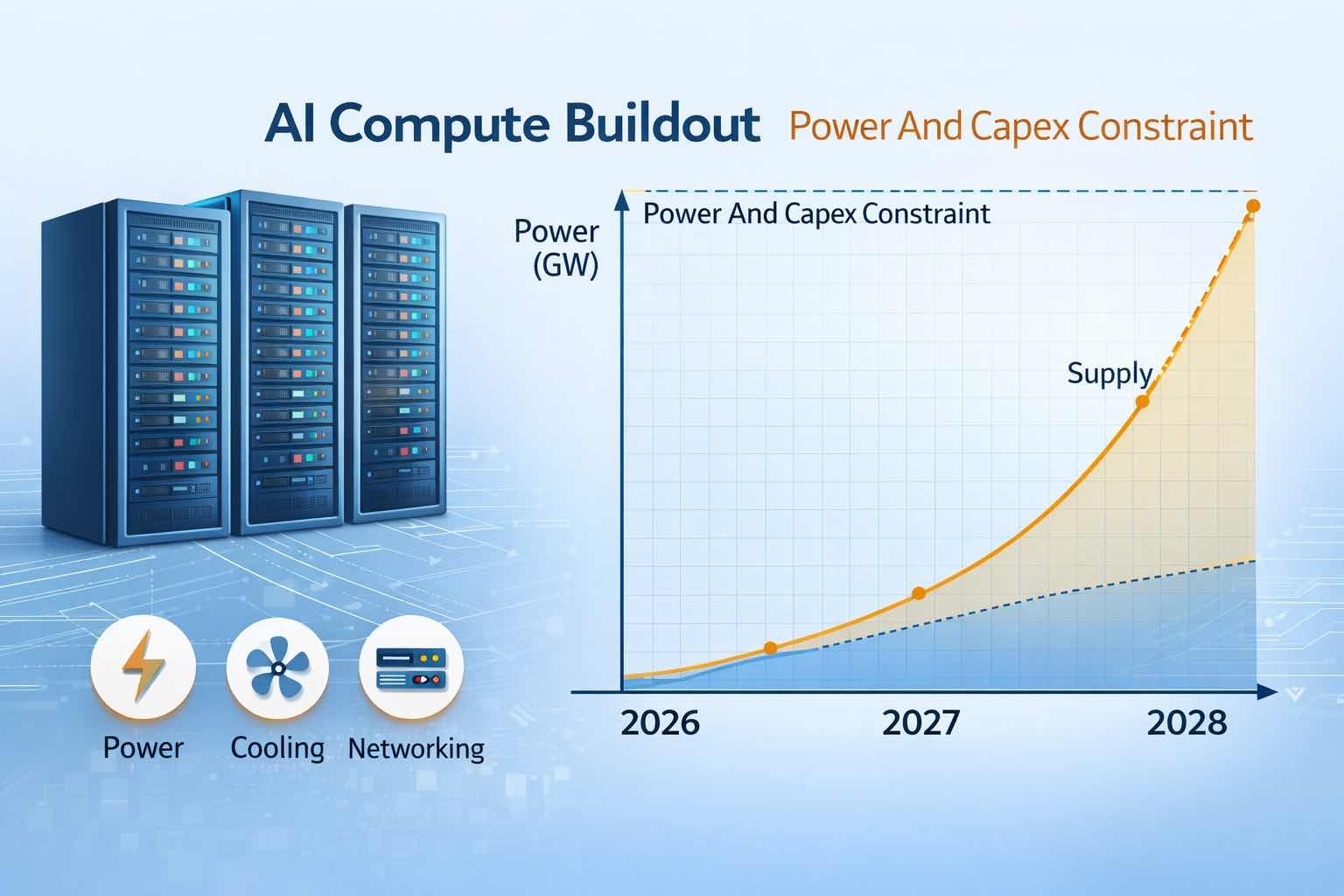
As AI spending becomes constrained by power, vendor strategies shift. Hyperscalers seek supply certainty, improved performance per watt, negotiating leverage, and architectural flexibility. The AMD-Meta agreement addresses these needs, but the critical factor remains AMD’s ability to deliver volume systems on schedule starting in the second half of 2026.
First, monitor AMD’s progress in translating “gigawatt” commitments into tangible milestones such as rack availability, software readiness, and early production deployments. While AMD’s 2025 results show $16.6 billion in Data Center revenue, the Meta agreement represents a significantly larger forward obligation than typical accelerator cycles.
Second, track Meta’s inference economics. If Meta reports measurable unit-cost improvements or throughput-per-watt gains from AMD deployments, this would indicate a significant competitive shift rather than a simple supplier diversification.
Third, observe Nvidia’s likely responses, which may include pricing adjustments, platform bundling, and accelerated product releases. NVIDIA’s recent communications emphasize inference cost leadership and highlight Rubin as the next advancement, maintaining pressure on AMD to demonstrate both competitive technology and timely production.
Neither company disclosed total contract value in the official announcements. The “$100 billion” figure is best treated as an external estimate of potential value if the full 6-gigawatt deployment is realized over multiple years, including systems-level components.
This is a power-scaled commitment, not a simple GPU count. It indicates a multi-site AI factory buildout where power delivery, cooling, and rack integration are key constraints. The agreement also implies phased deployments based on infrastructure readiness and shipment milestones.
Not necessarily. Meta describes a portfolio approach and has also announced a long-term partnership with Nvidia spanning CPUs, networking, and millions of GPUs. In the near term, the more likely outcome is incremental capacity rather than substitution.
The warrant aligns incentives and transfers some execution risk to AMD. Meta gains equity upside only if AMD meets shipment milestones and performance targets. For AMD, this is a strategic customer acquisition cost that may enhance ecosystem credibility but also increases dilution risk.
Three main risks are present: delivering MI450-based systems at scale and on schedule, ensuring reliable performance of ROCm and the broader software stack in production, and securing sufficient advanced packaging and memory supply to meet demand. Any delays could impact both revenue timing and market confidence.
AMD's stock share following Meta’s “up to 6 gigawatts” agreement is justified. This is a significant, high-visibility indication that a hyperscaler is willing to co-design and commit to AMD at AI-factory scale, including a 160 million share warrant to ensure alignment.
However, describing this as an immediate displacement of Nvidia is inaccurate. Meta is diversifying rather than leaving, and Nvidia’s recent results and guidance indicate continued strong demand and an expanding partnership with Meta. The longer-term risk for Nvidia is that multi-vendor strategies may reduce its pricing power and ecosystem dominance over time.
Disclaimer: This material is for general information purposes only and is not intended as (and should not be considered to be) financial, investment or other advice on which reliance should be placed. No opinion given in the material constitutes a recommendation by EBC or the author that any particular investment, security, transaction or investment strategy is suitable for any specific person.