Published on: 2026-06-11
Updated on: 2026-06-11
Although central banks continue to purchase gold, gold prices exhibit significant short-term volatility.
Goldman Sachs projects that official-sector gold purchases will average approximately 60 tonnes per month through 2026. The institution has maintained its end-2026 gold price target at US$5,400 per ounce. However, this forecast allows for the possibility of short-term price declines, particularly if investors liquidate assets to raise cash during periods of market stress.
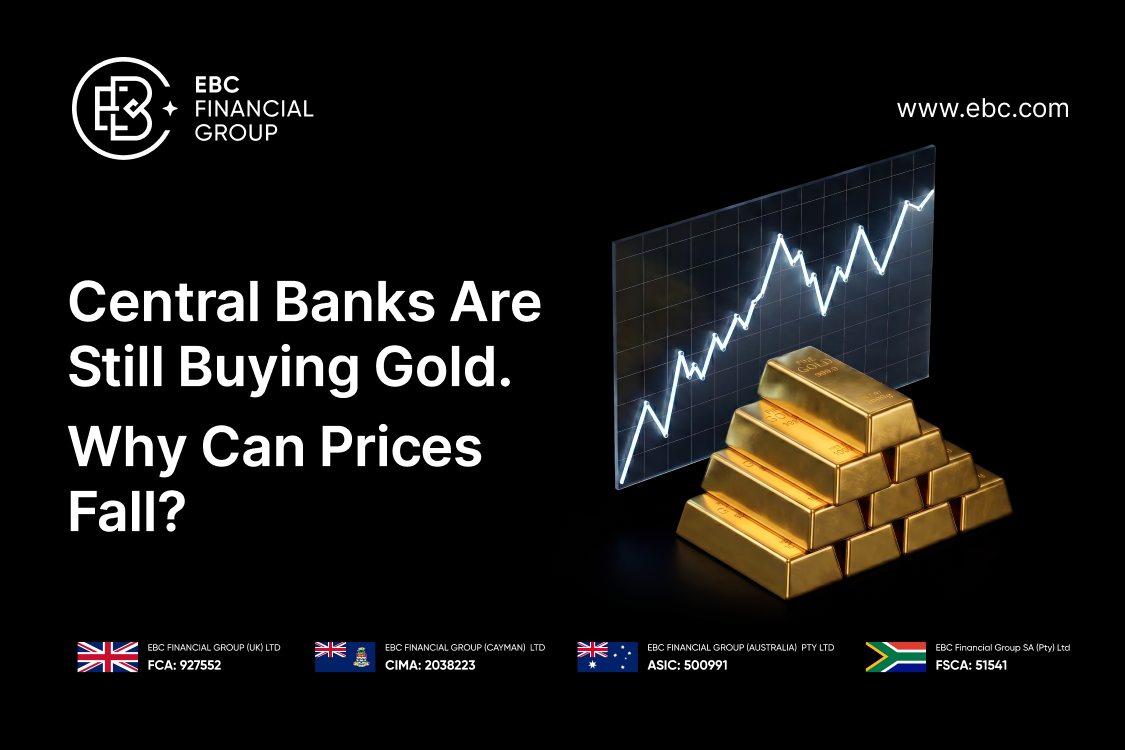
Central bank demand typically evolves gradually, whereas market pricing responds rapidly to new information. Official-sector purchases can provide long-term support for gold prices. In contrast, daily price movements are primarily influenced by real yields, the US dollar, exchange-traded fund (ETF) flows, futures positioning, and short-term liquidity requirements.
Consequently, gold may remain structurally supported over the long term while still experiencing short-term declines.
Goldman's revised forecast addresses both the strength of official-sector gold purchases and the methodologies used to measure such activity.
The bank revised its central-bank demand model because some trade data may no longer capture all gold flows. According to Kitco, Goldman's earlier model had understated sovereign demand since August 2025, partly because UK trade data had not fully recorded gold moving out of London vaults. Under the revised method, Goldman's 12-month moving average estimate for central-bank purchases rose to about 50 tonnes a month, up from 29 tonnes under the earlier approach.
Official gold purchases are not always immediately observable to traders. Some transactions are reported with a delay, while others become apparent only after subsequent data revisions.
The World Gold Council flagged the same issue in its Q1 2026 report, saying unreported buying remained elevated, continuing a trend seen since 2022.
It is insufficient to assess central bank demand based on a single monthly figure. A more meaningful evaluation considers whether the buying trend remains broad, consistent, and substantial enough to absorb available supply over time.
Central banks bought an estimated 244 tonnes of gold on a net basis in Q1 2026, up 17% from the previous quarter and above the five-year average, according to the World Gold Council. Poland was the largest reported buyer, adding 31 tonnes. Uzbekistan added 25 tonnes. China, Kazakhstan, the Czech Republic, Malaysia and several other central banks also increased their reserves.
Not every official institution was buying. The WGC reported higher sales from Turkey, Russia and the State Oil Fund of Azerbaijan. Turkey's official gold holdings fell by around 70 tonnes in Q1, while the central bank also used gold swaps for foreign-exchange and liquidity purposes in March.
The overall trend persists, as individual institutions have varying objectives. Certain central banks acquire gold for long-term reserve diversification, while others may sell or swap gold to obtain cash, foreign currency, or market liquidity.
Official-sector gold purchases can provide long-term price support; however, they do not eliminate short-term selling pressures.
Central banks' motivations for purchasing gold differ from those of short-term traders in the XAU/USD market.
Gold pays no interest, but it also has no issuer. It is not tied to the credit risk of a government, company, or bank. The absence of an issuer makes it useful as a reserve asset, especially during periods of political or financial stress.
The European Central Bank has said survey data show central banks mainly hold gold for three reasons: long-term value, performance during crises and portfolio diversification. It also noted that geopolitical risk, default risk, sanctions concerns and possible changes in the international monetary system have influenced some reserve managers, especially in emerging and developing economies.
These factors help explain the persistence of strong official-sector demand, even during periods when higher real yields would typically reduce gold's attractiveness. Real yields, defined as bond returns adjusted for inflation, tend to exert downward pressure on gold prices when they rise, as investors may prefer bonds or cash-equivalent assets.
But since Russia's full-scale invasion of Ukraine, the ECB said the usual relationship between gold and real yields has weakened, a sign that geopolitics has become a bigger driver of official-sector demand.
The shift is not a sudden move away from the dollar. IMF COFER data, which tracks official foreign-exchange reserves rather than gold holdings, showed that the US dollar still made up 56.77% of allocated reserves in Q4 2025.
The observed pattern suggests gradual diversification, with some central banks increasing gold holdings to mitigate concentration risk rather than rapidly divesting from dollar-denominated assets.
Central bank gold purchases do not insulate the market from all forms of financial shock.
The first risk is real yields. Gold pays no income, so when inflation-adjusted bond returns rise, investors may prefer bonds or cash-like assets, weighing on gold even if the long-term reserve story remains positive.
The second risk is the US dollar. Gold is priced globally in dollars, so when the dollar strengthens, gold becomes more expensive for buyers using other currencies, reducing demand at the margin.
The third risk pertains to liquidity. In the event of a significant equity market decline or funding constraints, investors may liquidate gold holdings due to their relative ease of sale, resulting in price declines even when gold's safe-haven status remains unchanged.
The fourth risk involves private-sector demand. While central banks typically act gradually, ETF investors, futures traders, and leveraged funds can adjust positions rapidly, and their activity often dominates short-term price movements.
The WGC's Q1 2026 data showed a mixed demand picture.
Total gold demand, including over-the-counter activity, reached 1,231 tonnes. Bar and coin demand rose 42% year on year to 474 tonnes, led by Asian investors. Gold-backed ETFs recorded inflows of 62 tonnes, far below the 230 tonnes recorded in Q1 2025. Jeweller demand volumes fell 23% year on year as high prices weighed on consumption.
Central banks and retail bar-and-coin buyers continued to provide support, while ETF demand remained positive but was weaker than the previous year. Jewellery demand declined in response to elevated prices.
The World Gold Council also reported that the LBMA PM gold price reached a record high of US$5,405 per ounce in January before correcting later in the quarter. This combination suggests a more nuanced outlook: while gold demand remained robust, elevated prices began to impact certain market segments.
Central bank activity represents only one component of the broader market context. More significant signals arise from interactions among official-sector demand, ETF flows, real yields, the US dollar, and price momentum.
In the context of XAU/USD, the primary indicator is gold's performance during periods of rising real yields. If gold maintains support despite higher real yields, this may indicate that official-sector demand, geopolitical considerations, or private hedging are mitigating selling pressure.
Performance of the US dollar. If the dollar appreciates and gold prices remain stable, this may reflect underlying market resilience. Conversely, if gold prices decline as the dollar strengthens, short-term macroeconomic pressures are likely influencing the movement.
ETF flows. While central bank purchases occur gradually, ETF demand can shift rapidly. Inflows indicate that private investors are reinforcing the positive outlook for gold, whereas outflows suggest a weakening of tactical demand.
The breadth of central bank purchases. It is important to assess whether acquisitions are distributed across multiple countries or concentrated among a few large buyers. Broad-based buying generally provides a stronger signal than purchases dominated by one or two institutions.
Market liquidity. If financial markets experience stress and gold prices decline alongside equities, this movement may reflect immediate cash requirements rather than a deteriorating long-term outlook for gold.