Published on: 2026-06-10
Updated on: 2026-06-10
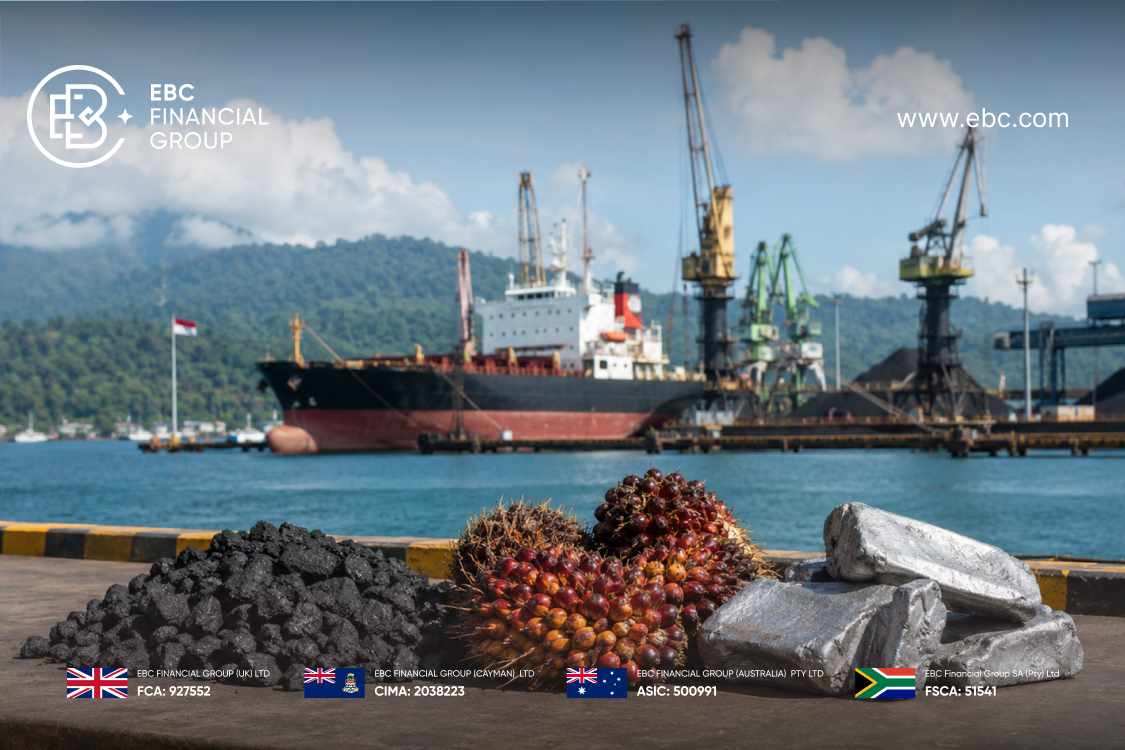
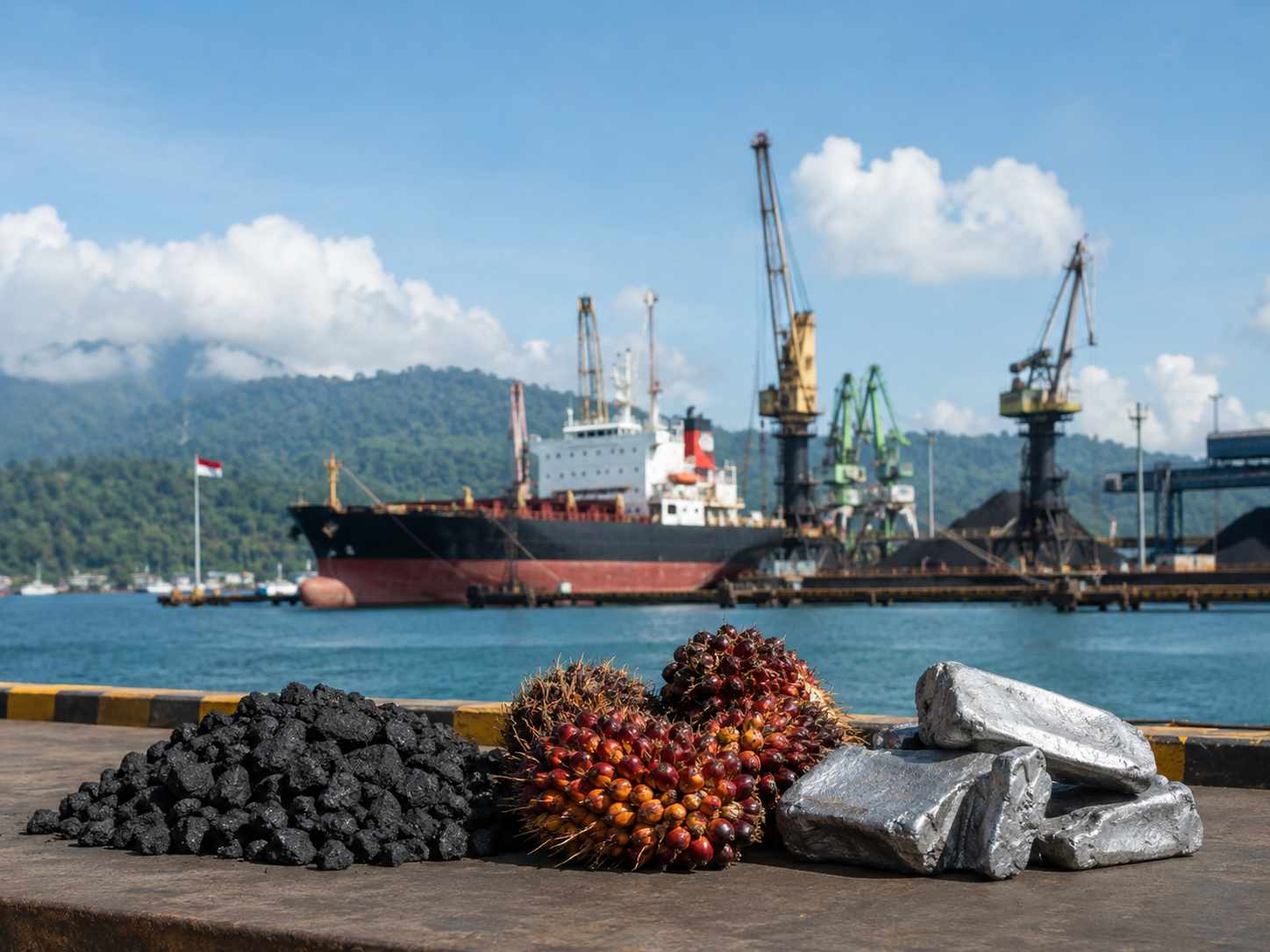
On June 1, 2026, Indonesia began routing its three largest commodity exports, thermal coal, crude palm oil, and ferroalloys, through a single state entity called PT Danantara Sumberdaya Indonesia. President Prabowo Subianto told parliament on May 20 that the three commodities earned $30 billion, $23 billion, and $16 billion, respectively, in 2025, for a combined haul of over $65 billion.
Indonesia ships roughly half of the world’s seaborne thermal coal and close to 60% of globally traded palm oil, and it dominates the ferronickel-based ferroalloy market. No country has ever attempted to centralize the export gateway for three commodities of this scale at the same time.
A parallel rule that took effect the same day forces natural resource exporters to park their foreign earnings in state-owned banks: 100% for 12 months for palm oil and ferroalloys, and 30% for three months for coal. Prabowo blamed 34 years of under-invoicing for $908 billion in lost revenue.
The rupiah broke past 18,000 per dollar for the first time on June 4, and the Jakarta stock index is down about 31% in 2026, the worst performer among more than 90 global indexes. The market is pricing execution risk before the system has proven it can run.
On June 1, 2026, Indonesia stopped letting its largest exporters sell directly to the world. Thermal coal, crude palm oil, and ferroalloys, the three commodities that earned the country more than $65 billion in 2025, now pass through a single state-owned intermediary called PT Danantara Sumberdaya Indonesia, or DSI. President Prabowo Subianto framed the move in a 95-minute parliamentary speech on May 20, telling lawmakers that under-invoicing had cost Indonesia $908 billion in lost revenue between 1991 and 2024.
The reaction in financial markets was immediate and negative. The rupiah weakened past 18,000 against the dollar for the first time on June 4, and the Jakarta Composite Index has lost roughly 31% this year, ranking it last among more than 90 global equity benchmarks tracked by Bloomberg. Materials stocks led the fall, with the sector subindex dropping more than 9% in a single session on June 3.
Indonesia is the dominant seaborne supplier across all three markets, and it is trying to convert that physical weight into the power to set prices rather than accept them.
Indonesia has spent two decades as the biggest seller in markets where someone else sets the price. Palm oil benchmarks are quoted in Malaysia and Rotterdam. Coal references are assessed in offshore trading hubs. Prabowo put the grievance plainly in his speech: “We’re the biggest producers of palm oil, but the price of palm oil is decided in other countries.”
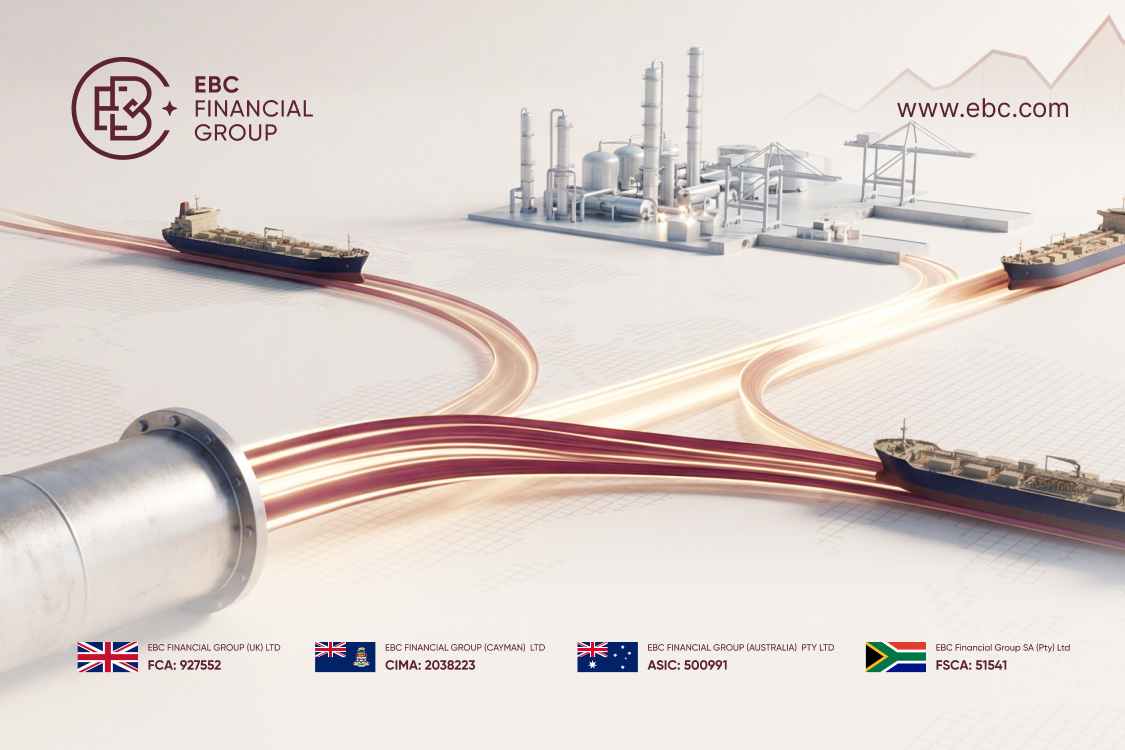
DSI is the instrument designed to change that. During the transition window, exporters keep selling abroad on their own but must report every shipment to DSI through the customs CEISA 4.0 platform. In the second phase, DSI is set to become the sole counterparty to foreign buyers, holding the export rights and managing contracts, shipment, and payment end-to-end.
OPEC offers the wrong template here, since it coordinates production across many governments. The sharper comparison is Saudi Aramco, a single national entity that turned physical supply into market-making influence. Indonesia is pursuing that same shift across three commodity categories in parallel, a scope no resource exporter has attempted before.
Indonesia exported roughly 520 million tonnes of thermal coal in 2025, more than half of all electricity-grade coal traded by sea. Australia, the next largest, supplies around a fifth. That concentration means utilities from Tokyo to Mumbai to Manila build their baseload power costs on Indonesian tonnage.
Coal is also where the plan meets its hardest practical test. One mining executive noted that buying and re-exporting Indonesia’s annual coal output would require around $31 billion in working capital, with ongoing payments to producers while overseas buyers settle on terms of payment. DSI is a brand-new entity with no track record managing financing on that scale.
There is a second obstacle that money alone does not solve. Indonesian coal spans a wide range of calorific values, and large buyers order to precise specifications, which requires blending at specialized terminals. That is operational expertise built over years through long-term contracts, not a capability a state office can assemble in a single transition window.
Indonesia accounts for close to 60%% of the palm oil that crosses borders, and the sector earned about $23 billion in export revenue in 2025, according to the figures Prabowo cited. The crop feeds cooking oil, processed food, cosmetics, and biodiesel across India, China, Africa, and Europe. When Jakarta moves, the global vegetable oil complex moves with it.
The country has shown before that it can swing this market hard. A brief export ban in 2022 sent global cooking oil prices sharply higher within weeks. DSI gives the state a standing lever rather than an emergency one, which is a structurally different kind of power.
Palm oil also carries the heaviest retention burden under the new rules. As a non-energy commodity, 100% of its export proceeds must remain in state-owned banks for 12 months, and growers fear that a longer chain between farm and buyer squeezes the price paid for fresh fruit bunches at the bottom.
Ferroalloys, weighted toward ferronickel from Indonesia’s smelter network, added about $16 billion in 2025. Their inclusion signals intent that goes beyond a one-off fiscal patch. Jakarta is using the export gateway as an industrial policy, tying control of the sales channel to its push up the metals value chain.
The ferroalloy line connects directly to a story EBC readers already know. In a separate analysis of Indonesia’s decision to cut its 2026 nickel mining quota by roughly a third, the focus was on how much metal reaches the market. DSI is the next layer: who controls the channel and the price once that metal is processed and shipped.
Together, those two moves describe a single strategy. Manage the volume at the mine, then manage the gateway at the port, across coal, palm oil, and a metals complex that runs from stainless steel to battery inputs.
DSI does not operate alone. A regulation that took effect the same day requires natural resource exporters to keep their foreign earnings inside Indonesian state-owned banks. Palm oil and ferroalloys face full retention for 12 months, while coal, as an energy commodity, must retain 30% for three months, with the rupiah conversion cap lowered to 50%.
The logic traces straight back to the under-invoicing claim. Finance officials described a recurring pattern in which dollars entered the country, were converted to rupiah, moved through smaller banks, switched back to dollars, and left again, never strengthening the domestic reserve base. Onshore locking is meant to close that channel for good.
Bank Indonesia paired the rule with a forward-looking measure. Exporters can now retain earnings in currencies other than the dollar, including the Chinese yuan, building on Indonesia’s expanding local-currency settlement framework with China, its largest trading partner. That gives Jakarta a second, durable benefit from the system: deeper non-dollar settlement capacity for the years ahead.
The rollout runs in two phases, and the calendar itself is the thing global buyers should watch. The transition began June 1 and runs through at least August 31, with exporters reporting to DSI while selling independently. Officials have pointed to full operational control as early as September 1, 2026, with January 1, 2027, cited as the firm backstop.
The scope is designed to widen. The coordinating economics ministry confirmed the commodity list will be reviewed every 90 days, with additional categories eligible for inclusion. Prabowo has already spoken about extending state price-setting to nickel and gold, naming them directly in his address.
The table below maps the milestones that matter for anyone holding Indonesian commodity exposure.
| Milestone | Date | What changes |
|---|---|---|
| Phase 1 begins | June 1, 2026 | Exporters report all shipments to DSI; sales continue independently |
| Forex retention live | June 1, 2026 | 100% / 12 months for palm oil and ferroalloys; 30% / 3 months for coal |
| Transition review | After 3 months | Government assesses readiness before full control |
| Possible full control | September 1, 2026 | DSI becomes sole counterparty to foreign buyers |
| Backstop full control | January 1, 2027 | End-to-end DSI control over contracts, shipping, payment |
| Scope review cycle | Every 90 days | New commodities, potentially nickel and gold, can be added |
If DSI succeeds even partially, the first visible effect is on declared prices. Eliminating under-invoicing means recorded export values rise toward true market levels, which translates into higher landed costs for buyers who benefited from the old opacity. Importers of Indonesian coal and palm oil should model that repricing into procurement budgets now, not after full control begins.
The harder question is execution. A single new entity taking on tens of billions in working capital, end-to-end contract management, and coal blending logistics all at once is an institutional undertaking with little precedent. Payment delays or contract friction during the handover would ripple straight into power generation and food supply chains across Asia.
There is also a legal overhang. Trade lawyers have flagged that routing all exports through a state gate could run afoul of Indonesia’s WTO commitments, echoing the earlier dispute over the nickel ore export ban. None of this is unfamiliar territory for Jakarta, which has pressed resource nationalism through earlier challenges and kept the policy direction intact.
For older Indonesians, the phrase “single gate” carries an echo. In the early 1990s, the Clove Support and Trading Board centralized clove trade with the stated aim of protecting farmers and stabilizing prices. It became a cautionary tale about how concentrated control of commodities can drift toward rent-seeking when oversight is weak.
Prabowo’s team has answered that memory directly, with Danantara executives invoking OECD governance standards and promising transparency and accountability. The market is not yet convinced, which is precisely what the rupiah and the equity index are signaling. Credibility on governance is now the variable that decides whether this becomes price-setting power or a costly bottleneck.
The stakes are framed by Prabowo’s own arithmetic. He told parliament that closing the leakage could unlock up to $150 billion in value for the state, a number large enough to reshape the budget and fund his growth agenda if the institution can deliver.
Indonesia has decided that owning the supply is no longer enough and that it wants to own the price. The DSI architecture is the most ambitious attempt by any resource exporter to convert physical dominance into pricing power across three commodities simultaneously, and the world’s coal utilities, food processors, and metals buyers are all downstream of whether it works.
The bet rests entirely on execution. The same physical leverage that makes this plan credible also makes any stumble expensive, because a gate that controls half the seaborne coal trade and most of the palm oil market cannot afford to jam.
For investors and traders, the deadlines in September and January matter less than three live signals: the rupiah, the materials index, and the first DSI-cleared contracts. Those will reveal, faster than any official statement, whether Jakarta has built a price-setting machine or a bottleneck wearing the language of reform.