Published on: 2026-06-15
Updated on: 2026-06-15
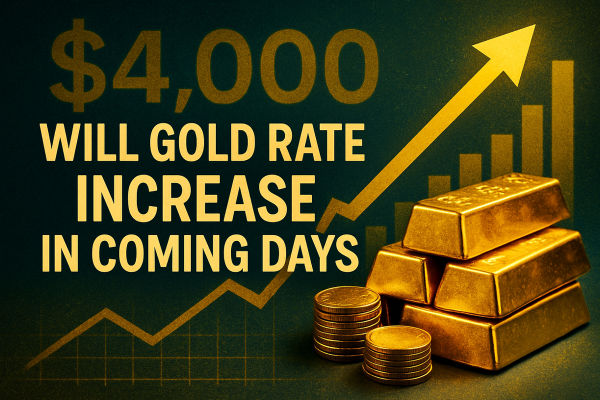
Gold’s highest price ever came in January 2026, when major market references clustered near $5,600/oz and the LBMA PM benchmark reached $5,405. The surprise was speed: gold needed nearly 32 years to move from the 1980 peak to the 2011 record, then roughly 15 months to push from late-2024 highs toward the January 2026 peak.
The question now is whether that acceleration marked a speculative overshoot or a faster monetary cycle built on central-bank buying, ETF demand and currency-debasement fear.

Trading Economics recorded gold’s all-time high at $5,608.35, while the LBMA PM benchmark peaked at $5,405, creating a record range rather than one universal print.
The latest record arrived roughly 15 months after late-2024 highs, compared with nearly 32 years between the 1980 and 2011 peaks.
Q1 2026 gold demand reached 1,231 tonnes, while demand value jumped 74% to a record $193 billion.
Jewellery demand fell 23%, while bar-and-coin demand rose 42%, exposing an investment-led rally.
The next signal sits near $4,200–$4,300, where buyers must prove January was not a cycle top.
Gold has no single record print: January 2026 records ranged from the LBMA’s $5,405 benchmark to Trading Economics’ $5,608.35 high.
| Benchmark | Record Price | Notes |
|---|---|---|
| Trading Economics CFD | $5,608.35 | Highest widely cited market reference |
| Spot gold references | ~$5,589 | Common consumer-facing record level |
| LBMA PM benchmark | $5,405/oz | Institutional gold-market benchmark |
| LBMA Q1 average | $4,873/oz | Confirms a sustained repricing |
All four figures refer to January 2026, except the LBMA Q1 average, which captures the full-quarter price regime.
January 2026 set gold’s modern nominal record, with quoted highs near $5,600/oz. The old 1980 peak of roughly $850/oz is about $3,600 in 2026 purchasing power, depending on the CPI month used. In January 2026, it therefore broke gold’s record in real terms too, not just on a nominal chart.
The price record explains how far gold moved. The buyer mix explains why the move survived the collapse in jewellery demand.
Gold’s January record did not come from household jewellery demand. Jewellery consumption dropped 23% year over year in Q1 2026, while bar-and-coin demand rose 42% to 473.6 tonnes.
Consumers stepped back as prices rose. Investors bought anyway.
Central banks added 243.7 tonnes in Q1 2026, up 3% year over year, keeping gold in reserve portfolios even at record prices. Reserve demand gave the rally a floor as debt risk, currency fragmentation, and geopolitical shocks weakened confidence in paper assets.
Gold-backed ETFs gained 62 tonnes in Q1 2026. ETF demand gave the rally speed because macro fear could move directly into tradable gold exposure.
Gold’s restart time is the real shock. After the 1980 inflation peak, gold needed nearly 32 years to break into a new record zone. After the 2020 high, the wait fell to roughly 3 years. From late-2024 records to the January 2026 peak near $5,600, the gap shrank to about 15 months.
| Cycle Break | Time to New Record | Main Trigger |
|---|---|---|
| 1980 → 2011 | ~32 years | QE, debt crisis |
| 2011 → 2020 | ~9 years | Zero rates, pandemic shock |
| 2020 → 2023 | ~3 years | Banking stress, Fed pivot hopes |
| 2023 → late 2024 | ~1 year | Central-bank buying |
| Late 2024 → Jan 2026 | ~15 months | ETFs, reserve demand, debasement hedge |
Gold once needed a generation to restart. The latest cycle needed barely more than a year.
The speed turns January from a price milestone into a monetary signal. Investors not only paid a higher price for gold; they accepted a faster repricing of monetary risk.
Fast cycles also reverse faster when the marginal buyer steps back. January’s record now has to survive its first real drawdown.

Gold has already fallen far below its January peak. Trading Economics showed gold near $4,342/oz on June 15, 2026, down 4.92% over the previous month but still up 28.32% from a year earlier.
That drop changes the story. The record answered how high gold went; the correction now tests whether the $5,600 move built a new floor or marked a cycle peak.
ETF flows weakened in May. Global gold ETF assets fell 2% month over month to $604 billion, holdings slipped to 4,121 tonnes, and physically backed products recorded $2 billion in outflows. Year-to-date inflows still stood near $17 billion, so the market cooled rather than collapsed.
A break below $4,200 would expose the January record as a possible exhaustion point. A hold near $4,200–$4,300 would indicate that central banks and long-term investors are absorbing the first serious sell-off since the record high in gold prices.
Inflation, real yields and ETF flows now decide the next move. Softer inflation or renewed ETF inflows would keep another record attempt alive. Hotter inflation, higher rate expectations, and continued ETF outflows would make $5,600 look harder to reclaim.
Gold reached its highest price ever in January 2026. Trading Economics recorded $5,608.35, while other spot references cited levels near $5,589. The LBMA PM benchmark reached $5,405/oz, giving institutional confirmation of the record zone.
Gold moved faster than past cycles because central banks, ETFs and hard-asset buyers moved in the same direction. Inflation risk, reserve diversification and currency-debasement fears turned a safe-haven trade into a structural repricing.
Not cleanly. The move above $5,000 carried momentum risk, but the buyer base was broader than a pure speculative bubble. The real test is $4,200–$4,300; losing that zone would make the January record look far more fragile.
Yes, but not on price momentum alone. A new high needs renewed ETF inflows, steady central-bank buying and lower real-yield pressure. A stronger US Dollar and higher rate expectations would delay the move even if long-term demand remains firm.
Gold’s January record has already done its job. It proved how fast capital can move when inflation risk, reserve diversification and currency distrust converge.
The next proof sits lower, around $4,200–$4,300. A defended correction keeps the $5,600 record inside a larger bull cycle. A clean break turns the record into a warning that the fastest gold cycle in modern history ran too far.
The next gold record begins only if buyers defend the first correction after $5,600.