Published on: 2026-06-25
Gold has fallen below $4,000 for the first time since November, even as inflation remains high and geopolitical risk still dominates the headlines. The contradiction is sharp: inflation and geopolitical risk usually support bullion, but they are now strengthening the case for higher US rates and a firmer Dollar.
Gold is losing the fear trade because the market now fears the Fed more than the headlines.

Gold settled at $3,990.30 on 24 June, breaking below $4,000 and hitting its lowest close since November.
US CPI rose 4.2% in May, with energy driving more than 60% of the monthly increase and keeping pressure on Fed policy.
The Fed held rates at 3.50%-3.75%, but its inflation warning kept higher-for-longer expectations alive.
The US Dollar Index held near 101.52, giving gold a currency headwind just as $4,000 gave way.
Gold ETFs posted $2bn in May outflows, showing demand had thinned before the selloff deepened.
Gold is falling because the market has changed the question from “what should we fear?” to “how long will rates stay high?”
| Force | What Usually Helps Gold | What Is Happening Now | Gold Impact |
|---|---|---|---|
| Inflation | Protects purchasing power | CPI at 4.2% keeps Fed pressure alive | Negative |
| Geopolitics | Drives safe-haven demand | Fear premium is fading | Weaker support |
| Fed policy | Rate cuts lower gold’s hurdle | Rates remain at 3.50% to 3.75% | Negative |
| US Dollar | Weak Dollar lifts bullion | DXY holds near 101.52 | Negative |
| ETF demand | Inflows defend dips | May outflows reached $2bn | Negative |
| Central banks | Official buying supports reserves | Demand remains structural | Long-term floor |
Inflation carries the most weight. Until it stops lifting rate expectations, gold’s safe-haven appeal will struggle to regain control.
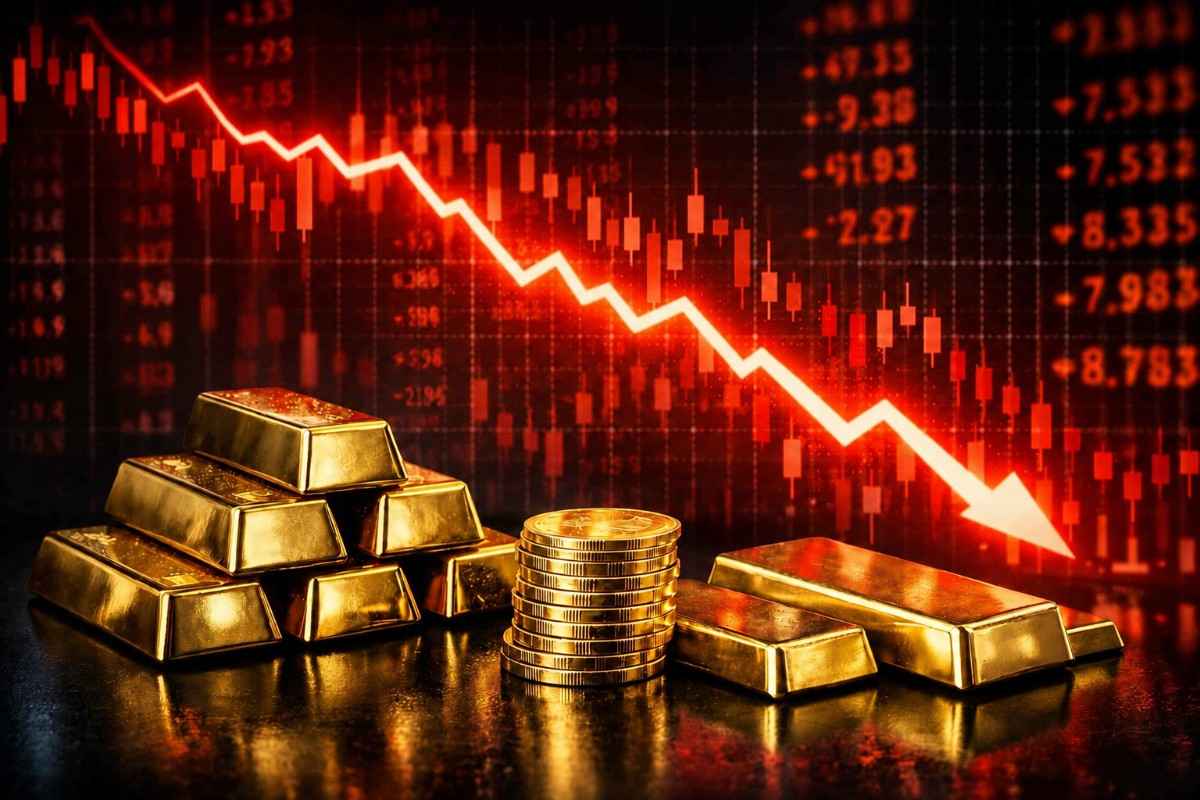
Gold pays no income. When US rate expectations rise, cash and government bonds become stronger competitors.
That pressure intensified after the June Fed meeting. The central bank held rates at 3.50% to 3.75%, while keeping inflation at the centre of policy and linking part of the pressure to energy supply shocks.
Gold can still work as protection when confidence in money weakens. It struggles when inflation gives the Fed a reason to keep policy restrictive.
Inflation is not automatically bullish for gold. The source of inflation decides how the market reacts.
May CPI rose 0.5% from April and 4.2% from a year earlier, while energy jumped 3.9% in a single month. Energy accounted for more than 60% of the monthly increase.
The mix changes the gold reaction. Broad currency debasement can support bullion, but an energy-led inflation shock can delay rate cuts and strengthen the Dollar.
For now, inflation is not giving gold a clean hedge bid. It is keeping the Fed in the driver’s seat.
Geopolitical risk has not disappeared. Gold is falling because the market is no longer willing to pay the same price for that risk.
Safe-haven demand works best when fear is sudden and unresolved. Once markets start pricing less disruption to energy flows or a narrower conflict path, the fear premium can fade quickly.
The aftermath is less supportive for gold. Oil-linked inflation still shows up in the data, while the rush for protection weakens.
The safe-haven trade can disappear faster than the inflation problem itself.
The Dollar is pressing gold just as $4,000 has given way.
The US Dollar Index held near 101.52 on 25 June and remained up 2.37% over one month. That strength makes Dollar-priced gold more expensive for non-US buyers and reinforces the appeal of US assets.
The break below $4,000 adds a psychological layer. Gold not only lost a round number but also a level that made the rally feel secure.
Gold still has long-term support from central-bank buying, reserve diversification, and concern over fiscal credibility.
The short-term problem is weaker marginal demand.
Global gold ETFs recorded $2bn of outflows in May, while assets fell to $604bn and holdings eased to 4,121 tonnes. That shows fewer buyers were willing to defend gold near elevated prices before the latest selloff deepened.
ETF flows do not decide the full gold cycle, but they reveal whether buyers are still chasing the rally. Right now, conviction has softened.
Gold needs one of three signals: softer inflation, lower rate expectations, or a renewed shock that restores safe-haven demand.
The cleanest path is cooler inflation without a growth scare. That would reduce pressure on the Fed and weaken the rate argument against gold.
A weaker Dollar would also help. Gold does not need a Dollar collapse, but it needs the currency headwind to stop building.
Geopolitics can still revive the safe-haven bid if energy or shipping disruption escalates again. The bar is higher now because recent fear headlines have not delivered lasting support.
Gold is falling because inflation is making rate cuts harder to price, not because inflation no longer matters. May CPI rose 4.2%, and the energy-led increase makes a looser Fed stance harder to justify.
Gold pays no yield. When cash and government bonds offer better returns, the cost of holding bullion rises. A stronger Dollar adds another layer of pressure because gold becomes more expensive for non-US buyers.
Yes, but safe-haven demand is not constant. Gold still benefits during severe financial stress, currency weakness, or sudden conflict escalation. The current selloff shows that fear alone is not enough when rate expectations dominate the market.
Yes. A hotter June CPI print, stronger Dollar, or hawkish Fed signal could extend the decline. Gold would have a better chance of stabilising if inflation cools and the July Fed meeting softens the rate outlook.
A sustained close back above $4,000 would be the first sign that selling pressure is easing. The stronger signal would be gold holding $4,000 as support across several sessions, especially if softer inflation data weakens rate expectations. A break below the November sub-$4,000 zone would keep the downside risk alive.
Gold’s next test is not another geopolitical headline. It is the June CPI report on 14 July, followed by the Fed meeting on 28 to 29 July.
A softer inflation reading would give gold a path back above $4,000 by weakening the rate pressure behind the selloff. A sticky reading would make the break below $4,000 harder to dismiss as a temporary washout.
Gold does not need calm to recover. It needs inflation to stop making the Fed the bigger threat.