Published on: 2026-04-23
Updated on: 2026-04-23
Corporate America is expected to deliver exceptionally strong Q1 earnings, partly due to One Big Beautiful Bill Act which is expected to boost growth and free more capitals this year.
FactSet's estimates show that earnings growth could turn out to be as much as 19 percent. Such high level would likely prop up the market if there are guidance reductions as a result of the absence of a peace deal.
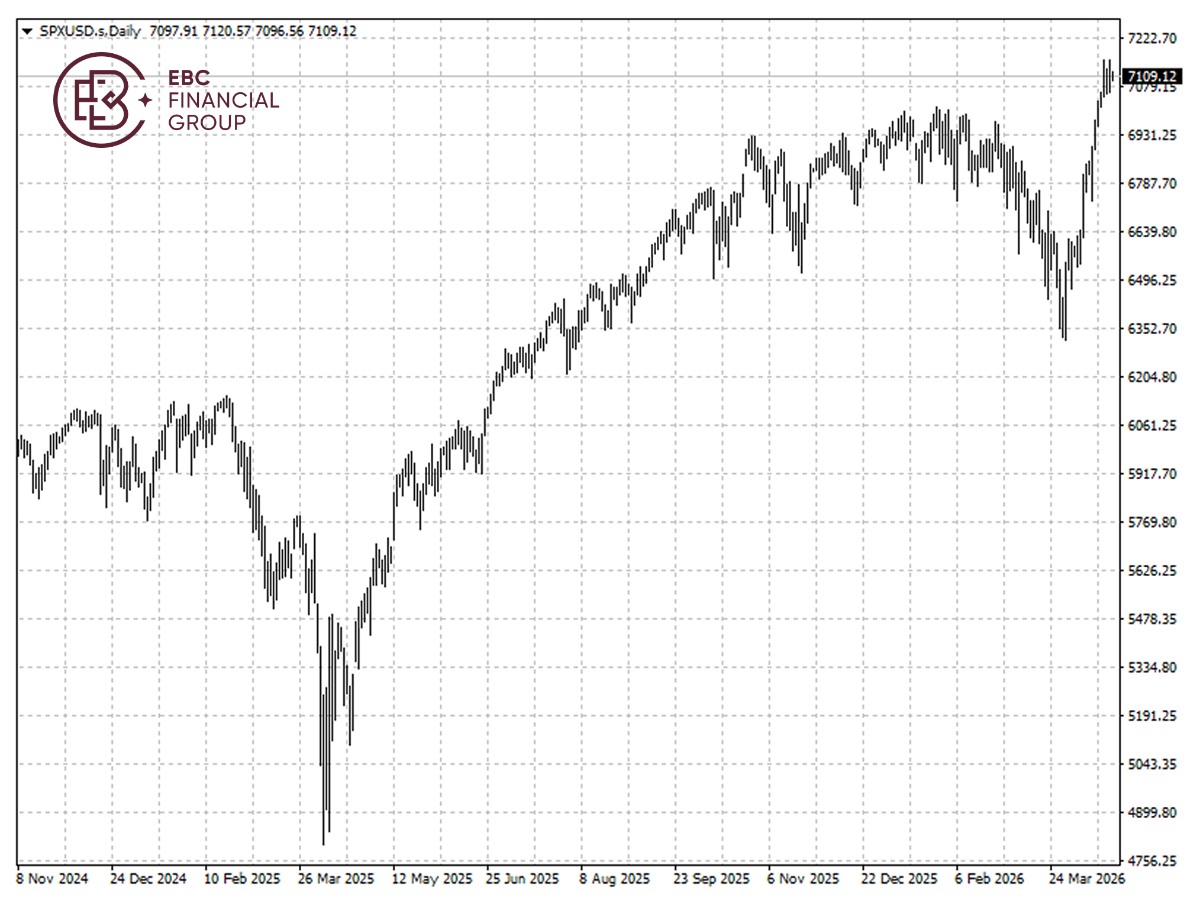
JPMorgan has raised its year-end target for the S&P 500 to 7,600, pointing to stronger-than-expected earnings momentum driven by AI and a temporary ceasefire deal between Iran and the US.
On the other hand, Carson Block, one of the world's best-known short sellers, has said that AI could trigger a stock market upheaval on a scale bigger than the 2008 global financial crisis.
He argued that AI disruption would hit the broader market through job losses. He also said "too much money has gone into" private credit which grapples with making enough high-quality loans.
Software stocks experienced high-profile sell-offs in early 2026, driven by fears that generative AI agents could displace traditional SaaS platforms and erode pricing power.
Oracle began a massive global reduction targeting nearly 30,000 positions as technical support and legacy software maintenance roles are eliminated in favour of automated self-healing systems and AI-driven database management.
Much will once again hinge on the earnings of Silicon Valley's tech giants, as those companies are expected to contribute the vast majority of the benchmark index's earnings growth in Q1.
Peter Oppenheimer, chief global equity strategist at Goldman Sachs, said the recent underperformance of tech stocks were leaving some stocks "looking good and cheap again".
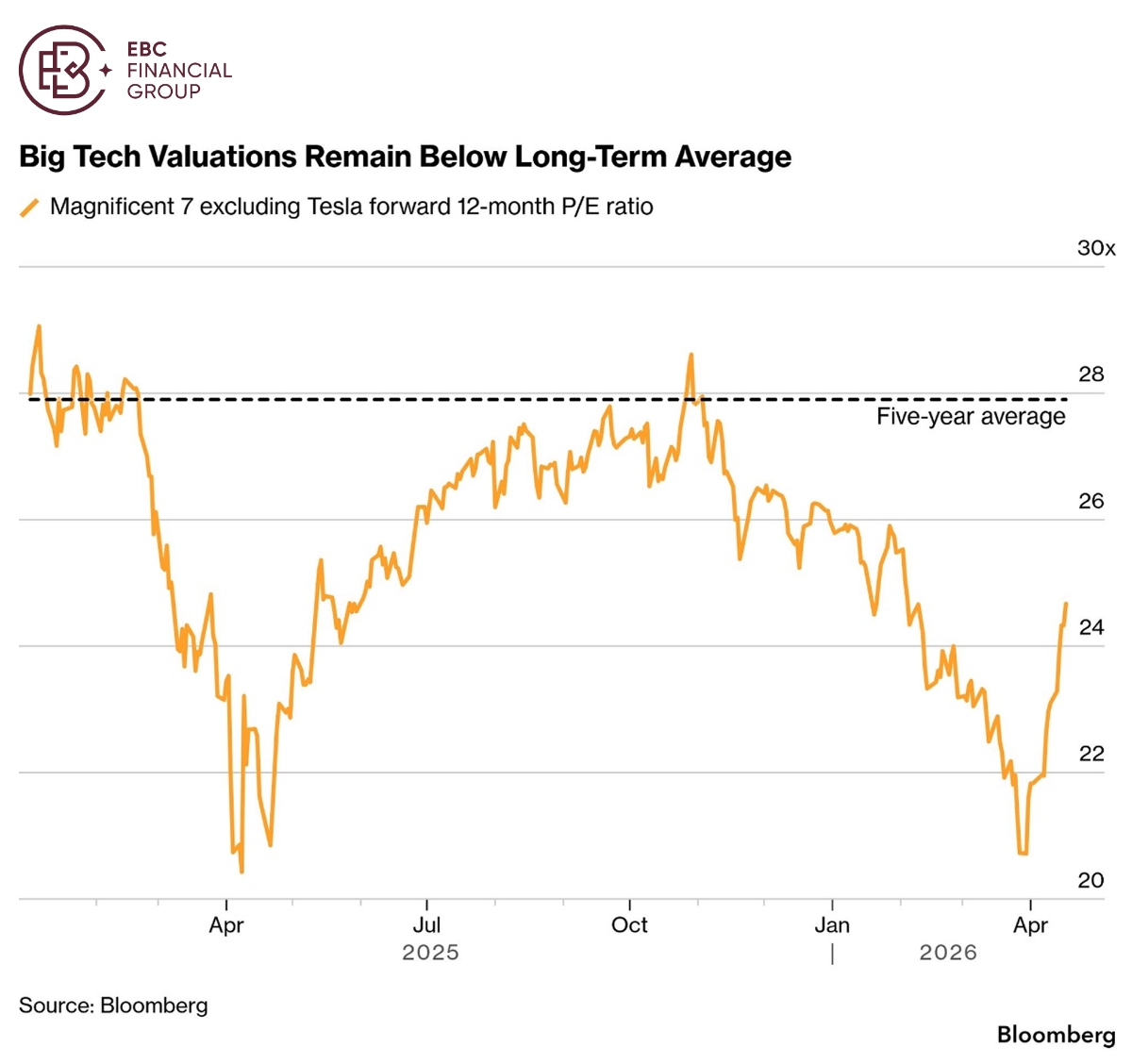
The technology sector has gone from the worst group in the benchmark to the best in April. As of Friday, excluding Tesla, the Magnificent 7 is priced at about 24 times projected profits, down from 29 times at the end of October.
"These companies … remain enormously profitable and kick off a lot of cash. That really affirms their role as the defensive part of the market," said Garrett Melson, portfolio strategist at Natixis Investment Managers Solutions.
Memory makers are riding surging demand to record profits – a sign of new supercycle, yet their stocks are still trading at a fraction of the valuation multiples of other top AI chip names.
Micron Technology has a forward PE ratio of 7.7, compared to Nvidia's 24.5. Some believe that the gap will narrow once the market sees evidence that the trend is more structural than cyclical.
Meanwhile, unease is lingering about hyperscalers' splurge. Amazon, Microsoft, Alphabet and Meta are projected to sink more than $618 billion combined into capex in 2026, according to data compiled by Bloomberg.
The easing in tensions has reignited the wariness toward the currency. Asset managers added to bearish dollar trades in the first couple of weeks of April, based on a Morgan Stanley model.
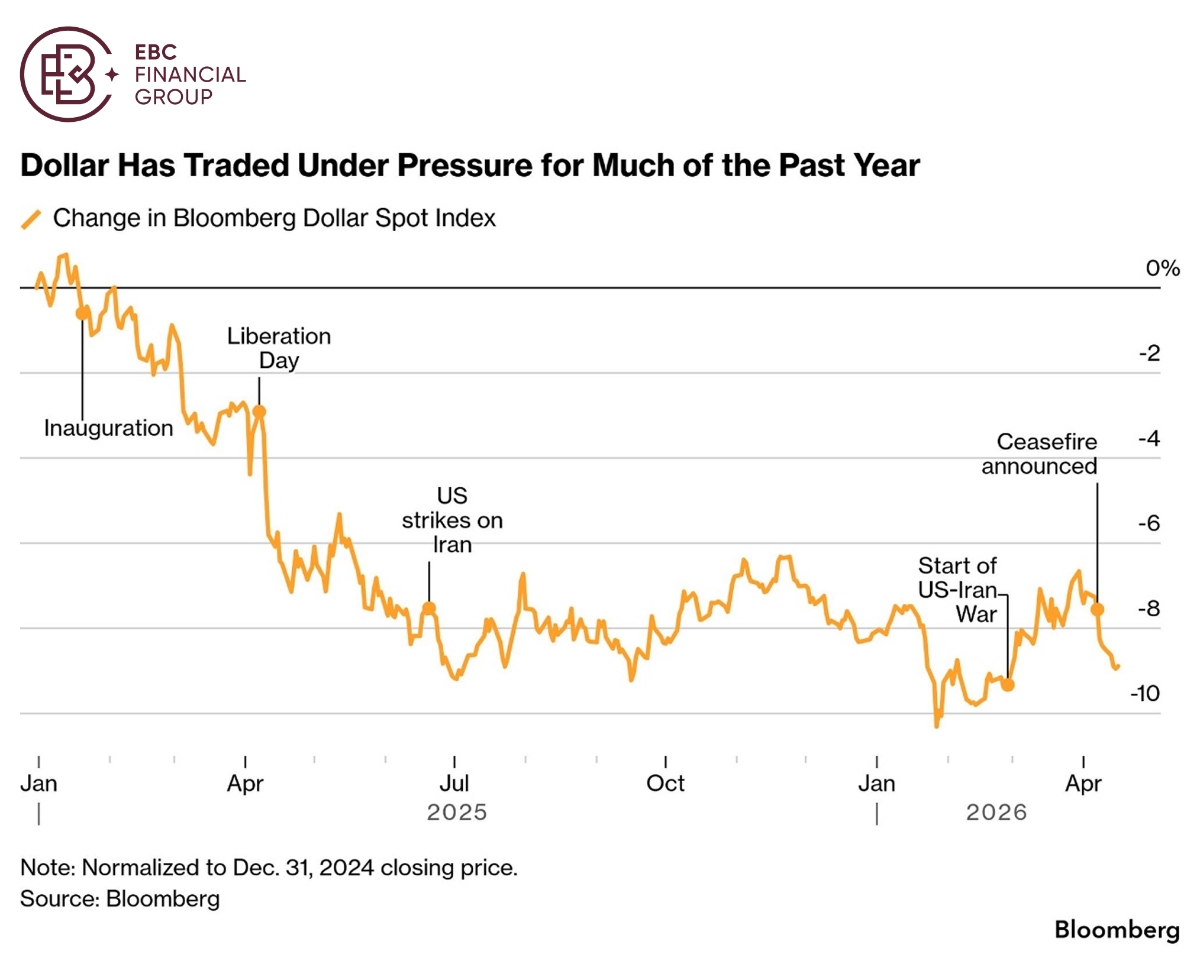
BofA strategists said the Iran war is not seen as "a change in the trend". Deutsche Bank sees scope for the euro to eventually eclipse $1.20 from below $1.18 now.
There is the view among some on Wall Street that Trump would like to see a weaker dollar to support exports, although the administration has repeatedly avowed the long-standing "strong dollar" policy.
He last week again threatened to fire Fed Chair Powell who refused to lower interest rates as quickly as requested. Former Fed Governor Kevin Warsh is nominated as Powell's successor.
The candidate said an AI boom would soon deliver a productivity surge that would hold down prices on a Congress hearing. The dovish tone may pave the way for an expansionary monetary policy.
That will likely continue to provide a tailwind for sectors including energy, materials and technology, which book a large proportion of their revenues overseas in foreign currencies.
However, it may be too soon to bet against the dollar. Citigroup analysts said persistently high commodity prices will cap gains in risk assets, supporting bond yields and the dollar.
Disclaimer: This material is for general information purposes only and is not intended as (and should not be considered to be) financial, investment or other advice on which reliance should be placed. No opinion given in the material constitutes a recommendation by EBC or the author that any particular investment, security, transaction or investment strategy is suitable for any specific person.