Published on: 2026-01-20
Updated on: 2026-01-20
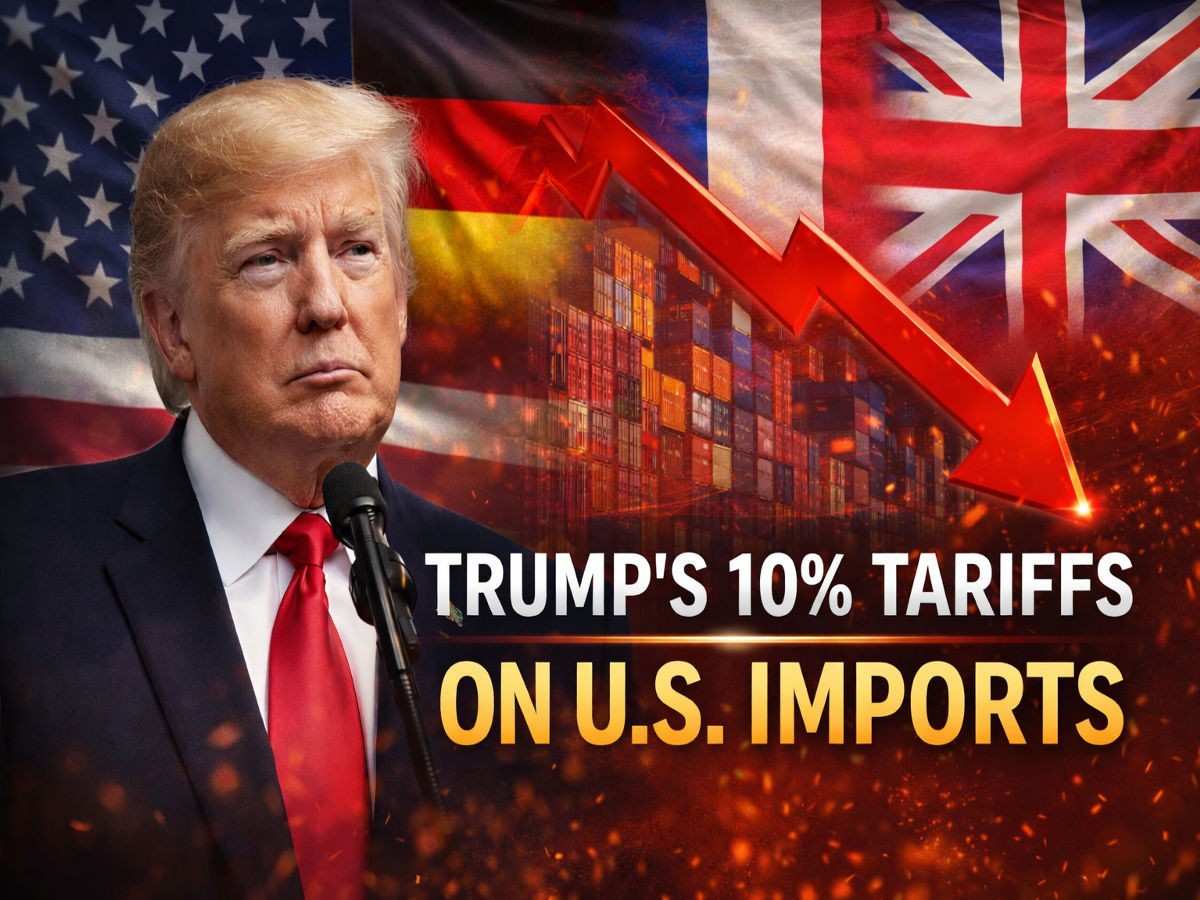
Tariffs are back on traders' screens because markets have started to price a wider "trade shock" risk again. On January 19, 2026, President Donald Trump threatened to impose an additional 10% tariff on goods imported from Denmark, Norway, Sweden, France, Germany, the Netherlands, Finland, and Britain. This tariff could increase to 25% on June 1 if no agreement is reached.
The initial market reaction was a typical risk-off response. European shares fell sharply, and volatility measures jumped. U.S. cash equities were closed for the holiday, but S&P 500 and Nasdaq futures fell more than 1.2% on the day, providing traders with a clear read on sentiment even without a full session.
Thus, could new tariffs cause a stock market crash? The honest answer is that tariffs can help trigger a crash, but they rarely act alone. History shows that tariffs tend to work like a stress test. They expose weak balance sheets, fragile confidence, and policy mistakes.
As mentioned above, the early market reaction was risk-off, but it was not a crash.
European stocks fell sharply, with the STOXX 600 down about 1.2% as investors priced in trade-war risk and sector exposure, especially for autos and luxury.
The S&P 500 and Nasdaq futures dropped over 1.2% during the initial shock window.
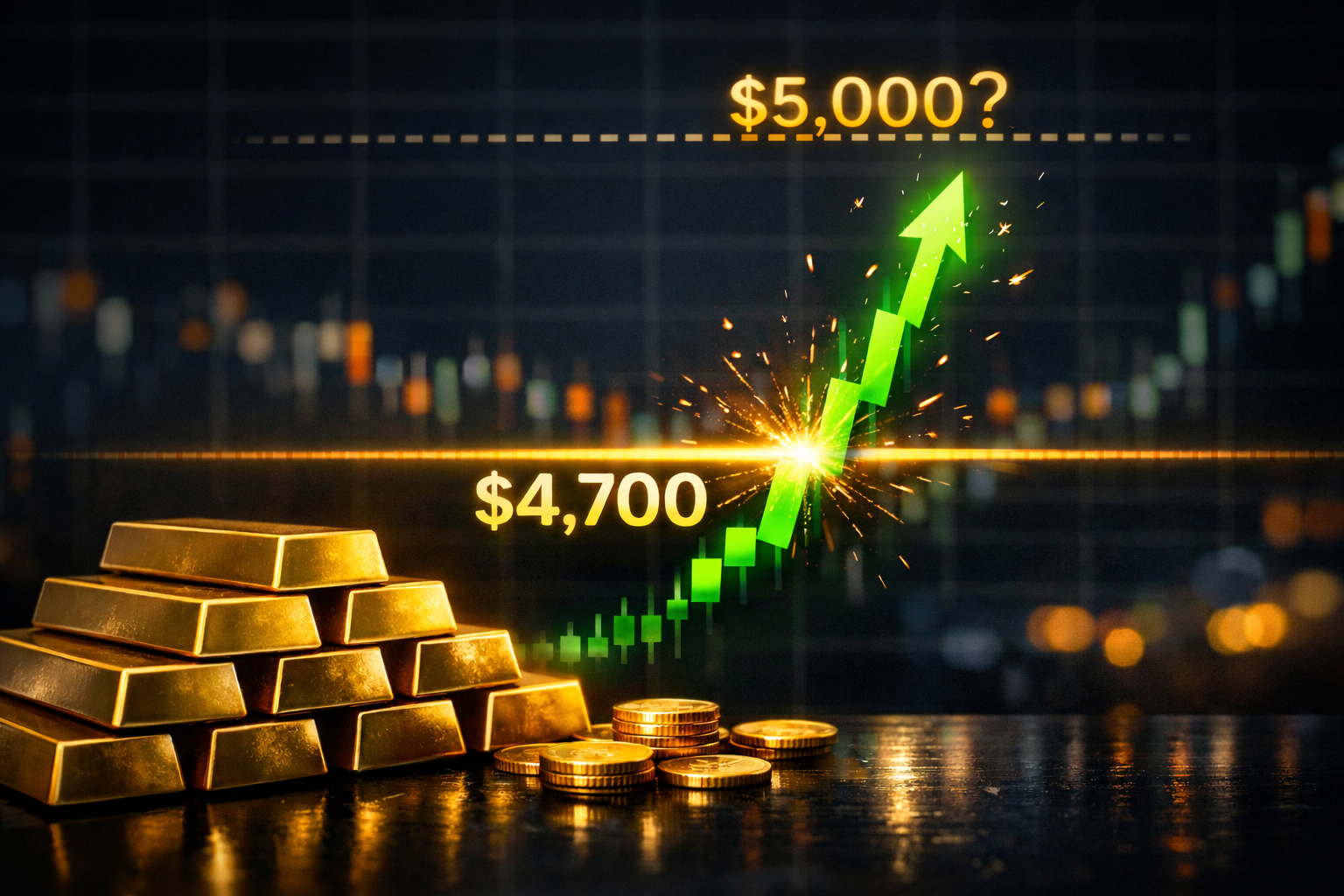
Gold surged above $4,700, which fits the pattern of investors seeking safety when policy risk jumps.
Europe is also preparing countermeasures. For example, EU leaders discussed retaliation, including a tariff package worth about €93 billion and possible use of the EU's Anti-Coercion Instrument.
The main takeaway is simple: Markets are pricing tariffs as a real risk again, but the reaction looks like a volatility shock, not a structural collapse.
A tariff is a tax on imports. For markets, it is not just a trade story. It is a cash-flow story and a discount-rate story.
Tariffs can pressure equities through four main channels:
They squeeze profit margins when companies cannot pass higher input costs to customers.
They hit demand when prices rise, and households or businesses buy less.
They invite retaliation, which can damage exporters and global supply chains.
They raise uncertainty, which often pushes investors to demand a higher risk premium for holding shares.
Academic and central bank research support this. A Federal Reserve paper on the 2018–2019 tariffs notes that most research finds higher prices, lower consumption, reduced business investment, and drops in the valuations of affected firms.
Work on trade policy uncertainty also finds that uncertainty about tariffs can dampen investment and activity, partly because firms delay decisions when the rules keep changing.
In short, a "stock market crash" usually needs forced selling, a liquidity problem, or a sudden break in confidence. Tariffs can contribute to that if they arrive when the market is already stretched.
The 2018–2019 U.S.-China trade conflict is the cleanest modern case study because it produced a series of discrete tariff announcements that markets could react to in real time.
| Tariff announcement date | Headline event | Next trading day market move |
|---|---|---|
| 22 Mar 2018 | US announces tariffs on $60bn of China goods | -2.4% |
| 23 Mar 2018 | China announces retaliation on US exports | -1.9% |
| 13 May 2019 | China raises tariffs on $60bn of US goods | -2.5% |
| 23 Aug 2019 | China retaliates with higher tariffs | -2.5% |
| Cumulative | Across listed event days | -11.5% |
These are not "crashes," but they are the kind of air pockets that can build into something larger if the macro backdrop is fragile.
The IMF also warned at the time that trade tensions could dent business and financial market sentiment and disrupt supply chains, even when the direct growth hit looked modest at that stage.
A New York Fed analysis documented that U.S. stock-market returns were consistently negative on key tariff announcement events, with huge drops around major escalations.
What this shows: tariff headlines can create fast risk-off repricing, and markets treat them as a direct hit to expected cash flows and growth.
The Smoot–Hawley Tariff Act remains the classic historical reference point because it is widely viewed as having worsened the global trade collapse during the Great Depression.
For example, economists warned against the act and that the stock market reacted negatively to its passage. It also states the bill was signed on June 17, 1930.
The critical nuance is timing. The famous 1929 stock crash came first, and the Smoot–Hawley Tariff Act arrived as the economy was already deteriorating. That does not make tariffs irrelevant. It means tariffs can act as an accelerant in an already-stressed system, mainly when retaliation spreads and global trade contracts.
What this shows: Tariffs are most dangerous when they reinforce an existing downturn and trigger broad retaliation.
More recently, markets saw how quickly tariff policy can move prices. In early April 2025, reports indicated that S&P 500 companies lost about $5 trillion in value in two days after sweeping tariff announcements, while the Nasdaq confirmed a bear market, and volatility surged.
A few days later, there was a violent rebound after a tariff pause, followed by another sell-off as investors struggled with the lack of clarity on the "end game."
That episode is an important reminder: Markets do not only fear tariffs. Markets fear uncertainty about tariffs.
A crash becomes more likely when tariffs combine with three conditions:
Breadth: Tariffs hit many products and countries simultaneously.
Stickiness: Tariffs look politically hard to reverse, so firms cannot wait them out.
Policy trap: Inflation risk stays high, so the central bank cannot cut rates to cushion the shock.
Right now, the global macro backdrop is not collapsing, but the risks have increased. The IMF's January 2026 update projects global growth of 3.3% in 2026 and 3.2% in 2027, while noting that technology investment and adaptability are offsetting trade policy headwinds.
At the same time, the Fed's own risk monitoring has treated trade tensions as a primary source of concern for financial stability.
In a spring 2025 survey of financial stability risks, 73% of respondents cited global trade risks as a top concern, and the report warned that an escalatory trade war could have severe consequences.
Markets often overreact to the first headline and then reprice again when details arrive. In January 2026, the latest reports center on threatened tariffs with a staged timeline.
If you want one "big picture" metric, watch the effective rate trend. The OECD's estimate that the effective tariff rate jumped sharply in 2025 is precisely the kind of regime change that can affect long-term valuation.
Retaliation is where tariff stories become macro stories. The OECD explicitly linked U.S. tariffs and retaliation to a larger disruption footprint than in 2018–2019.
If tariffs start lifting inflation prints, rate-cut expectations can fade. That is where equities often take the second leg lower, because discount rates rise even as growth assumptions soften.
Even without a formal "crash," you can monitor whether risk is creeping into rates and equity breadth. For context, SPY recently traded around $691.66.
If stocks drop while long-duration bonds also weaken, it can signal a more toxic mix where inflation worries dominate.
Tariffs do not usually crash the stock market on their own. They more often cause volatility and corrections, and a crash becomes more likely when tariffs combine with weak growth, tight policy, or financial stress.
Stocks often fall on tariff announcements because markets reprice profits and risk premia. The New York Fed's event table shows consistently negative returns on key tariff announcement days in 2018–2019.
It shows that tariff headlines can cause sudden, significant equity declines. Estimates suggest that the U.S. stock market fell 11.5% on tariff announcement days, amounting to about $4.1 trillion in equity value.
Tariffs can lift prices by raising import costs. If inflation risk rises, markets may price fewer rate cuts, which can pressure equity valuations.
In conclusion, new tariffs can absolutely hit the stock market, but history does not support the idea that tariffs alone reliably cause crashes. Modern evidence shows that tariff announcements often produce negative equity returns and sharp risk-off days, as seen in studies of the 2018–2019 trade war.
An actual crash becomes more plausible when tariff escalation is met with retaliation, weakening earnings and tightening financial conditions that limit policy support.
With tariff policy already elevated relative to 2024 by several significant estimates, and fresh January 2026 threats back in the headlines, the right question is not "crash or no crash." The right question is whether tariffs become a broad earnings shock or a tradable volatility shock that markets can absorb.
Disclaimer: This material is for general information purposes only and is not intended as (and should not be considered to be) financial, investment or other advice on which reliance should be placed. No opinion given in the material constitutes a recommendation by EBC or the author that any particular investment, security, transaction or investment strategy is suitable for any specific person.