Published on: 2026-03-06
Updated on: 2026-03-06
Oil markets do not need a confirmed shortage to reprice sharply. They only need to cast doubt on whether oil can move across the supply chain.
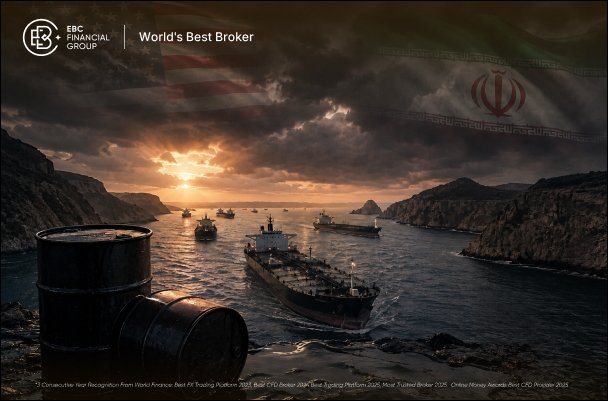
This perspective explains the recent surge in crude prices linked to the Strait of Hormuz. In early March 2026, major outlets reported escalating Gulf security risks, attacks on commercial vessels, and a sharp decline in shipping activity. Maritime insurers moved to cancel war risk covers for shipping in the area. What this means is that shipping companies with vessels in the region will need to seek new insurance cover, likely at much higher cost. Prices increased as markets factored in a disruption premium for near-term supply, even before any clear evidence of lasting production losses emerged.
This is a supply-chain problem with real costs. The Strait of Hormuz is among the world’s most important energy corridors. Markets will have to pay a premium for immediacy and reliability when confidence in this route shakes. Futures prices can rise even while production continues, because the question shifts from “how much oil exists” to “how quickly it can be delivered”.
The following sections explain the significance of Hormuz, common misconceptions during chokepoint disruptions, and key signals that differentiate genuine stress from market noise.
The Strait of Hormuz links the Persian Gulf to global markets. The US Energy Information Administration (EIA) describes it as a critical chokepoint with very limited alternatives if flows are disrupted.
The volume moving through the strait shapes its pricing power. In 2024, the EIA estimates that about 20 million barrels per day transited Hormuz, roughly 20% of global petroleum liquids consumption.
Hormuz accounted for over one-quarter of global seaborne oil trade and about one-fifth of global LNG trade, primarily from Qatar.
Destination is as important as volume. The EIA estimates that in 2024, 84% of crude and condensate and 83% of LNG passing through Hormuz were destined for Asian markets, with China, India, Japan, and South Korea as primary recipients.
This matters for three reasons:
Risk is concentrated. Disruption in this narrow corridor can simultaneously increase delivered costs for many countries, as alternative routes cannot be quickly expanded.
The impact extends beyond oil. Hormuz is also a key route for LNG and refined products, so shipping disruptions can affect crude, gas, and freight simultaneously.
Markets react before the physical impact is clear. Refiners, shippers, and insurers must make immediate decisions on routing and coverage, which increases price volatility.
The key distinction in this episode is between missing barrels and delayed barrels.
A production shock results in a physical loss of output, while a movement shock disrupts the transportation of oil from producers to buyers. Movement shocks can be equally impactful in the short term because oil demand is inflexible and near-term supply is difficult to replace. The EIA notes that threats to oil flows can create uncertainty and increased volatility even before disruptions are fully realised.
Maritime advisories and ship tracking captured the practical problem. A United Kingdom Maritime Trade Operations (UKMTO) and Joint Maritime Information Center (JMIC) advisory assessed the regional maritime risk level as CRITICAL, citing confirmed attacks on commercial vessels. The same note also stated that no formal legal closure of the Strait of Hormuz had been declared through recognised channels, even while the operational environment remained at active hazard levels.
This distinction is important. Markets can react to effective disruptions even without a formal declaration, as shipping decisions depend on risk tolerance, insurer policies, and crew safety.
S&P Global reported a steep drop in vessel transits through Hormuz based on Automatic Identification System (AIS) signals, alongside a surge in tanker rates. It cited AIS data showing 26 vessels navigating the strait on 1 March, versus 91 on 28 February, and an average of 135 per day in February.
This combination characterises a movement shock. When fewer ships transit, delivering the same nominal supply on time becomes more difficult.
Large-scale shipping depends on insurance. When insurers expand high-risk zones or cancel war-risk coverage, transportation costs rise immediately, and availability may decrease.
Reuters reported that London’s Joint War Committee widened the Gulf high-risk area and that war-risk premiums had risen sharply from the prior week, adding to high voyage costs.
In a separate Reuters report, multiple marine insurers and P&I clubs were reported to have cancelled war-risk cover for vessels, with exclusions applying to Iranian waters and surrounding areas, following tanker damage and ships anchoring near Hormuz.
This is significant because insurance costs directly affect freight rates, which in turn influence delivered energy prices. Even brief disruptions can cause sharp price movements, particularly in near-term contracts where timing is critical.
Shipping company updates provide operational signals rather than market commentary.
Maersk announced an emergency freight increase for routes to and from several Gulf destinations, explicitly tying the move to an “effective closure” of Hormuz and significantly disrupted service flows.
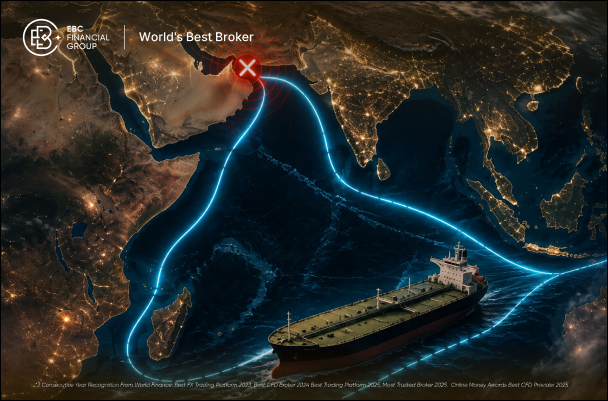
Reuters also reported major shipping groups suspending transits and rerouting vessels, including diversion around the Cape of Good Hope, alongside the introduction of war-risk and emergency surcharges.
When major operators add surcharges and revise routing, the disruption is no longer a distant risk; it becomes an immediate cost for current cargo.
A typical response to Hormuz risk is to cite spare capacity and emergency stockpiles. While these buffers are important, their limitations are often misunderstood.
Some Gulf producers have pipelines that can bypass Hormuz. The EIA estimates that about 2.6 million barrels per day of capacity from Saudi and UAE pipelines could be available to bypass the strait in the event of a disruption.
This provides some relief but does not fully replace Hormuz volumes. Pipelines also do not address broader constraints posed by a movement shock, including insurance availability, port congestion, escort requirements, and tanker shortages on alternative routes.
International emergency response systems are built around oil stocks. The International Energy Agency states that each member country is obliged to hold oil stocks equivalent to at least 90 days of net oil imports, and to be ready to respond collectively to severe supply disruptions.
In the United States, the Department of Energy notes that the Strategic Petroleum Reserve has a maximum nominal drawdown capacity of 4.4 million barrels per day and that oil takes about 13 days to enter the US market following a Presidential decision.
These tools can mitigate worst-case scenarios, but they do not quickly reopen a chokepoint or remove the short-term uncertainty that drives volatility.
Many assume oil has a single price, but in reality, crude is priced using benchmarks.
The EIA explains that three of the most significant benchmarks are Brent, WTI, and Dubai/Oman, and that benchmark crudes help price other grades via differentials.
Brent serves as a global benchmark for internationally traded crude, while WTI is priced at a US hub in Cushing, Oklahoma, and is closely linked to domestic infrastructure and storage.
During a Hormuz disruption, global seaborne risk is reflected more directly in Brent pricing because the disruption affects shipping routes and delivered cargoes. WTI is also affected, but the spread between benchmarks can widen as the market distinguishes between global deliverability risk and domestic US conditions. This explains why headlines can be confusing. Price movements in “oil” may differ across benchmarks, timeframes, and regions, even when driven by the same conflict.
Movement shocks cause rapid reversals because markets must respond to incomplete information. Two patterns drive many of these sharp swings.
A formal legal closure is not necessary for effective disruption. However, it is important to determine whether shipping activity is truly collapsing or simply being rerouted.
UKMTO/JMIC wording illustrates this tension: risk can be elevated to CRITICAL while “no recognised authority” has declared formal closure, even as hazard conditions affect operations.
AIS-based transit counts, like the S&P Global figures cited above, then help confirm what is happening in practice.
When prices move rapidly, this distinction often determines whether a rally continues or subsides.
A single incident may affect prices for hours, while a change in insurance posture can influence prices for weeks. Reports on the widening of high-risk zones and sharp increases in war-risk premiums are useful precisely because it signals a change in underwriting assumptions, not only a reaction to a single event.
Once insurers reprice risk, markets often treat higher freight costs and increased friction as the new baseline until clear evidence indicates a change.
Instead of focusing on a single price target, it is more useful to monitor which scenario the market is pricing.
In this scenario, shipping resumes, insurers restore coverage, and freight rates decline. Volatility may persist, but the risk premium typically fades as transit confidence returns and physical flows are restored.
This scenario does not require major infrastructure damage. Repeated incidents, ongoing warnings, or sustained insurance constraints can suppress traffic for weeks.
S&P Global’s reporting on reduced transits and surging freight rates clearly shows the mechanism at work.
Reuters also reported that supertanker costs reached record highs and LNG freight rates jumped as shipping slowed sharply.
In this scenario, the market treats delays as a form of shortage, particularly in import-dependent economies.
This is the tail risk. It produces the most extreme pricing by combining movement constraints with physical supply losses.
Disruption across regional energy production and shipments, with oil and gas prices rising as market participants assessed the risk of lasting disruption to Middle East output and shipping.
If infrastructure is damaged, buffers such as strategic stocks and spare capacity become more important, but timelines are harder to predict due to the interplay among repairs, security, and logistics.
Oil is often viewed as a macroeconomic variable, but its impact is practical.
When disruption risk rises, freight costs tend to rise. When freight costs rise, delivered fuel costs rise as well. Refined products such as diesel and jet fuel can react quickly because they sit closer to transport and supply chain operations than crude itself.
Reports show that shipping disruptions and fears of prolonged closures were driving higher oil and gas prices and sharply higher shipping costs, including Middle East-to-Asia routes and LNG freight.
Our analysis describes this as a “geopolitics premium” affecting both energy and freight, with energy logistics serving as a direct channel into costs, inflation, and policy expectations, especially in energy-importing Asian economies.
Fast-moving crises generate extensive commentary. The most effective approach is to monitor operational signals that indicate which scenario is unfolding.
Vessel transits and clustering
AIS-based transit counts help show whether the route is functioning in practice.
Maritime risk levels and advisories
UKMTO issues incident-based guidance for commercial shipping, sometimes jointly with JMIC, which provides operational security updates for the region. These advisories are important because they reflect confirmed incidents and official risk assessments.
Insurance developments
Joint War Committee guidance, Protection and Indemnity club notices, and war-risk pricing indicate whether shipping is becoming more financeable or increasingly constrained.
Freight and surcharge announcements
Carrier notices, including Maersk’s emergency freight increase and rerouting decisions, indicate when disruption is reflected in logistics contracts.
Pricing mechanics and benchmark spreads
If global seaborne risk increases, Brent pricing may respond more directly than domestic benchmarks. EIA benchmark context helps interpret these movements.
Emergency response tools and timing
Strategic stocks can moderate extremes, but timing constraints are important. IEA obligations and US SPR drawdown timelines provide useful reference points.
“Barrels stuck” indicators
Floating storage and delayed discharge can keep prompt prices elevated even when inventories are available. Our “oil on water” analysis offers a practical perspective on this deliverability issue.
The Strait of Hormuz is the world’s primary oil chokepoint, concentrating significant flows into a narrow corridor with few alternatives. In this case, the price surge has been driven as much by movement risk as by confirmed production losses.
Buffers exist, but many respond more slowly than markets. This is why oil prices can rise quickly on disruption risk and remain volatile even when the physical situation is unclear. The most valuable signals are operational: transits, advisories, insurance pricing, and freight behaviour.
Disclaimer & Citation
This material is for information only and does not constitute a recommendation or advice from EBC Financial Group and all its entities (“EBC”). Trading Forex and Contracts for Difference (CFDs) on margin carries a high level of risk and may not be suitable for all investors. Losses can exceed your deposits. Before trading, you should carefully consider your trading objectives, level of experience, and risk appetite, and consult an independent financial adviser if necessary. Statistics or past investment performance are not a guarantee of future performance. EBC is not liable for any damages arising from reliance on this information.