Published on: 2026-01-21
Updated on: 2026-01-21
Investors in Kenya can trade US stocks without needing a US bank account or residency. The main distinction is structural: direct share ownership means holding actual shares through a broker, while CFDs (Contracts for Difference) are financial derivatives that allow you to profit from price changes in US stocks without owning them. Each route changes the tax rules, costs, and risks involved.
EBC Financial Group, a regulated broker, caters to active traders by offering US stocks for directional trading, hedging, and global thematic positioning. You can access these features without holding US shares.
“No US account” means you do not need a US bank account or US residency to trade US stocks. International brokers and CFD platforms can bypass both of these requirements.
Direct ownership may suit long-term investors, while CFD exposure often suits active Kenyan traders who need tools like short-selling and efficient capital use.
US dividends are usually subject to withholding for nonresidents. Kenya is not a US tax treaty partner, so the default statutory rate applies.
US market hours align with East Africa Time, though the time difference shifts with US daylight saving time. The New York Stock Exchange (NYSE) core session operates from 9:30 a.m. to 4:00 p.m. Eastern Time.

This approach results in actual ownership of shares, with assets held in custody and dividends paid as cash. Positions can be maintained for extended periods without the financing charges associated with leveraged derivatives. However, this method involves greater operational complexity, including stricter onboarding requirements, potential USD wire transfer requirements, and limited short-selling tools.
Best fit:
Long-term compounding strategies
Dividend and quality-factor portfolios
ETF-based global allocation
This method provides price exposure to US stocks through CFDs without granting you actual ownership of the shares. CFDs allow traders to benefit from price movements in either direction, use leverage to amplify trades, and employ short-selling strategies, offering greater flexibility for active trading and risk management within specific time frames, rather than for long-term holding.
EBC Financial Group’s stock CFD offering enables two-way trading without owning shares and provides leverage up to 5x. This means traders can profit whether prices rise or fall, use capital more efficiently, and apply advanced strategies that may not be available through direct share ownership. However, these benefits also increase the risk of loss.
Best fit:
Tactical trading around earnings, macro releases, and sector rotation
Hedging equity risk using index and ETF proxies
Short-selling and relative-value ideas
Some investors delegate execution, compliance, and custody to regulated global collective investment vehicles. This approach brings convenience but adds costs and less control over timing, risk, and tax.
Best fit:
Passive allocation with minimal day-to-day management
Investors are optimizing for simplicity over precision.
Without a tax treaty, US income paid to nonresidents is generally withheld at the statutory rate. Kenya does not have treaty relief.
Kenya taxes based on source, with exceptions for foreign income. Maintain accurate records, as offshore trading may create complex reporting duties.
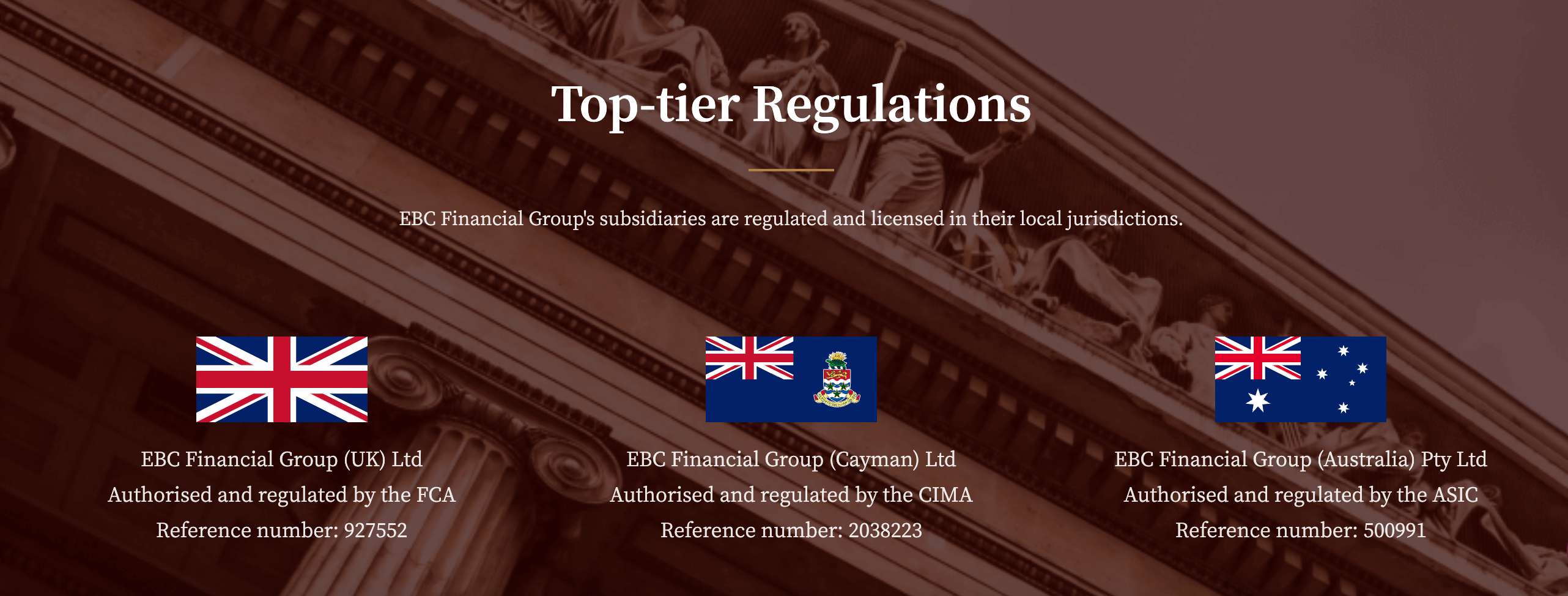
1. Strong regulation footprint
EBC Financial Group operates through multiple regulated entities, including FCA (UK), ASIC (Australia), CIMA (Cayman Islands), and FSCA (South Africa).
Stock CFDs enable traders to gain price exposure to 50 major US stocks, including Apple (AAPL), Tesla (TSLA), Microsoft (MSFT), and Amazon (AMZN), without owning the actual shares. A CFD (Contract for Difference) is a contract that mirrors the price movements of an underlying asset.
CFDs support long and short positioning, with leverage up to 5x on eligible instruments. This suits active trading and hedging, but requires strict risk control.
EBC Financial Group focuses on liquidity aggregation and market depth, helping traders minimize slippage and avoid liquidity problems during volatile periods.
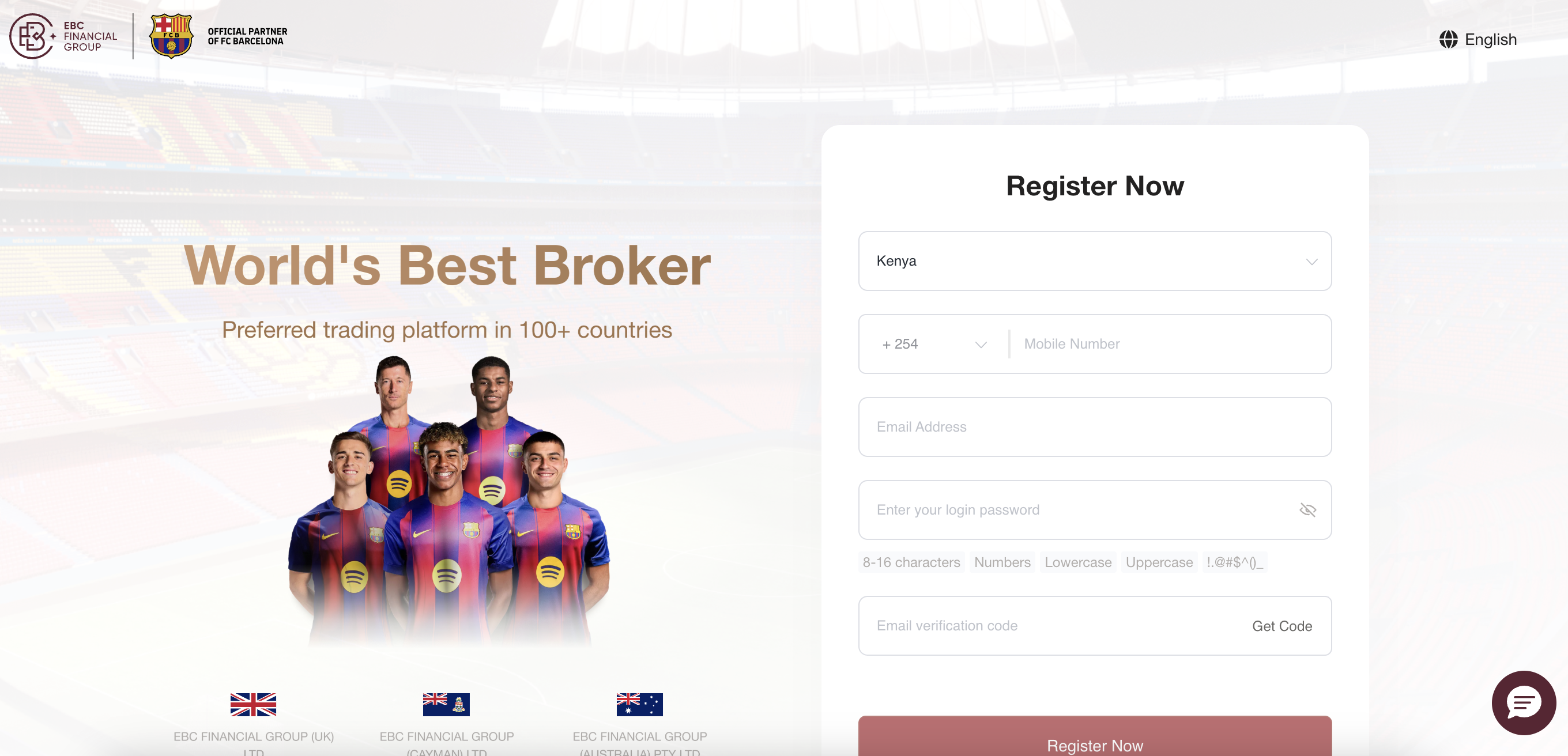
Visit the EBC account website and select the type of account you want to register under.
Register an account with basic details, then complete identity and address verification.
Fund the account with a minimum deposit of $50 using the available deposit rails shown in the client portal.
Access stocks for selected US names.
Establish position size, stop-loss levels, and maximum daily loss limits prior to initiating trades. Leverage amplifies both potential gains and losses.
Trade only when liquidity is sufficient, typically around the US core session, and treat earnings and macro releases as scheduled volatility events.
Risk note: Stocks are complex financial instruments. Leverage can result in losses that exceed initial expectations, especially during periods of heightened volatility such as earnings announcements and macroeconomic releases.
| NYSE window | Eastern Time (ET) | Kenya time (EAT) during US Daylight Time (EDT) | Kenya time (EAT) during US Standard Time (EST) | Remarks |
|---|---|---|---|---|
| Pre-market (selected venues) | 4:00 a.m. to 9:30 a.m. | 11:00 a.m. to 4:30 p.m. | 12:00 p.m. to 5:30 p.m. | Lower liquidity, wider spreads. More price gaps. Prefer limit orders. |
| Core session (NYSE) | 9:30 a.m. to 4:00 p.m. | 4:30 p.m. to 11:00 p.m. | 5:30 p.m. to 12:00 a.m. (next day) | Highest liquidity and tightest spreads, especially near the open and close. |
| Opening auction | ~9:30 a.m. | ~4:30 p.m. | ~5:30 p.m. | High volume burst. Volatility can spike in the first minutes. |
| Closing auction | ~4:00 p.m. | ~11:00 p.m. | ~12:00 a.m. (next day) | Another liquidity peak. Many institutions rebalance here. |
| After-hours (selected venues) | 4:00 p.m. to 8:00 p.m. | 11:00 p.m. to 3:00 a.m. (next day) | 12:00 a.m. to 4:00 a.m. (next day) | Thin liquidity, wider spreads, headline-driven moves. Stop gaps are more likely. |
Best execution windows: the first 30 to 60 minutes after the NYSE open and the last 30 to 60 minutes before the close, plus the opening and closing auctions.
The NYSE closing time may fall at 11:00 p.m. EAT (EDT) or 12:00 a.m. EAT (EST), which can increase overnight management risk.
Extended trading hours, including pre-market and after-hours sessions, often exhibit lower liquidity and greater price volatility, leading to wider spreads and increased slippage.
Yes. International brokers and CFD platforms onboard non-US residents with standard KYC and global payment options. US residency is not needed.
Buying a share is direct ownership. A CFD is a contract tied to a stock’s price, not ownership. CFDs enable short selling and leverage, but they also introduce risks and potential financing charges.
Yes. Non-US residents can use international brokers or US stock CFDs, depending on the objective. EBC Financial Group enables access to US stocks without a US account.
EBC Financial Group provides access to US equity exposure through stock CFDs on selected US-listed companies. This suits active trading and hedging strategies that do not require share ownership or a US brokerage relationship.
The NYSE core session is 9:30 a.m. to 4:00 p.m. Eastern Time. Kenya stays on UTC+3 year-round, while Eastern Time shifts with daylight saving, so Kenya time opens and closes by one hour across the year.
Accessing US stocks from Kenya primarily involves selecting the appropriate investment structure. The fundamental decision is between ownership and exposure. Direct securities accounts are optimal for long-term investing, custody, and straightforward economic exposure.
EBC Financial Group serves active traders by offering US stocks, enabling liquid, flexible access to US market price movements without the need for a US bank account or share ownership. This approach facilitates market participation, provided that leverage is managed as a risk factor rather than a standard feature.
Disclaimer: This material is for general information purposes only and is not intended as (and should not be considered to be) financial, investment, or other advice on which reliance should be placed. No opinion given in the material constitutes a recommendation by EBC or the author that any particular investment, security, transaction, or investment strategy is suitable for any specific person.