Published on: 2026-01-07
Updated on: 2026-01-07
Interest rate cuts shift global capital flows, change yield advantages, and quickly impact currency values. Few policy decisions in foreign exchange markets have greater or more immediate effects.
Currency reactions to rate cuts are rarely straightforward. While easing usually reduces yield support, price movements can range from weakness to stability or even strength, depending on market expectations, policy credibility, and global conditions.
Forex markets do not react to policy actions in isolation; they respond to what those actions imply about growth, inflation, and future direction.
The foreign exchange market reflects the relative economic strength of countries. A rate cut changes this balance by lowering expected returns, shifting risk appetite, and redirecting cross-border capital flows.
Its impact is not transmitted through a single mechanism, but through several overlapping forces that can either amplify or offset one another.
What drives currency outcomes is not the absolute level of interest rates, but how a policy decision alters a country’s position relative to its peers, and whether investors interpret that move as a sign of confidence in economic stability or a response to mounting pressure.
Interest rates determine the return investors earn on assets denominated in a currency. These returns include yields on government bonds, short-term debt, bank deposits, and cash instruments. When rates fall, those returns decline.

For global investors, lower returns reduce the incentive to hold assets in that currency unless other factors like strong growth or low inflation offset the decline. Over time, this affects demand for the currency itself.
This relationship explains why interest rates sit at the center of currency valuation. However, currencies do not move simply because rates change. They move because expectations and comparisons change.
Rate cuts influence currencies across different time horizons.
In the hours following a decision, currencies react to:
The size of the cut
Voting patterns or dissent
The tone of official communication
These moves can be sharp but often fade quickly as positions are reassessed and adjusted.
Over time, currencies respond to how rate cuts affect:
Economic growth
Inflation outcomes
Trade balances
Capital flows
Sustained currency trends develop as data confirms whether the policy decision achieved its intended goals.
In the near term, rate cuts often lead to rapid adjustments in currency prices. These moves emerge through a set of closely interconnected channels that operate simultaneously.
Lower interest rates reduce the compensation investors receive for holding assets in that currency. Global capital, especially short-term and yield-sensitive flows, tends to migrate toward higher-yielding alternatives.
As capital moves out of the economy, demand for the domestic currency weakens, placing depreciation pressure on its exchange rate relative to currencies with higher expected returns.
Foreign exchange markets are inherently forward-looking. In many cases, the most significant currency movement occurs ahead of a rate cut, as markets price in the expected policy shift.
When a cut is fully anticipated, the announcement itself may produce only limited movement, or even a temporary rally, if prior expectations about its impact on currency prices prove too pessimistic.
The communication surrounding a rate decision can be as influential as the cut itself. Guidance on future easing, inflation dynamics, and perceived economic risks plays a central role in shaping medium-term currency trends.
Modern forex markets react within milliseconds. Rate cuts trigger automated trading systems that immediately adjust positions based on yield spreads, volatility thresholds, and macroeconomic triggers. This explains the sharp spikes often seen in currency pairs immediately after policy announcements.
While the conventional wisdom holds that rate cuts weaken currencies, reality is more nuanced. Several conditions can alter or even reverse this relationship.

If a rate cut is perceived as proactive, designed to sustain growth rather than respond to a crisis, it may improve confidence in the economy. In such cases, the currency can stabilize or even strengthen after an initial dip.
Markets constantly weigh whether a rate cut signals strength or vulnerability.
When several central banks cut rates at the same time, relative differentials may remain unchanged. In these scenarios, currency moves are often modest, with broader risk sentiment playing a larger role than policy alone.
Currencies perceived as financially stable can appreciate even after rate cuts when global risk aversion increases. In such environments, investors often prioritize capital preservation over yield, altering traditional relationships between interest rates and currency performance.
U.S. Dollar (USD): Sensitive to shifts in yield differentials and global risk sentiment. Often weakens after rate cuts in stable conditions, but can strengthen during periods of global stress due to liquidity demand.
Euro (EUR): Typically pressured by rate cuts because of already low yields and limited carry appeal, especially against higher-yielding peers.
Japanese Yen (JPY): Less responsive to domestic rate cuts and more driven by global risk appetite, often strengthening when carry trades unwind.
British Pound (GBP): Reacts strongly to rate cuts when policy credibility or inflation risks are in question, leading to elevated volatility.
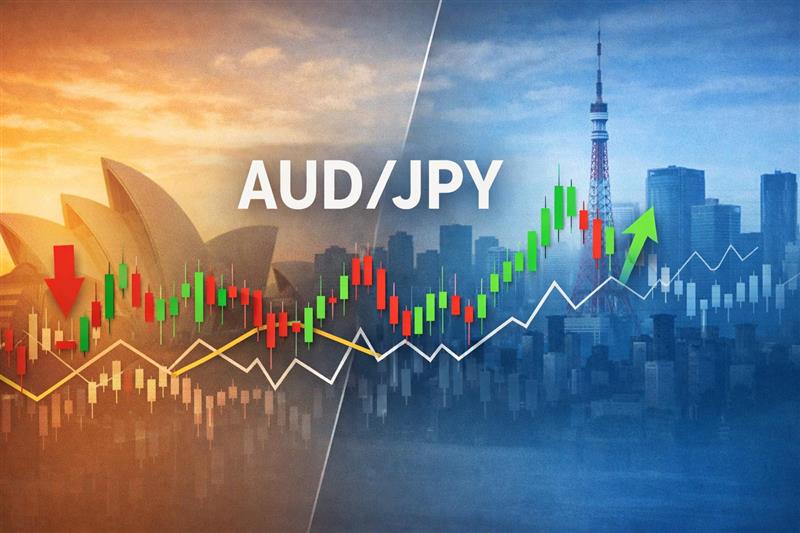
Australian Dollar (AUD): Often weakens after domestic rate cuts as yield support erodes, particularly against funding currencies like JPY or CHF.
New Zealand Dollar (NZD): Highly sensitive to rate differentials; rate cuts frequently trigger sharp repricing.
Canadian Dollar (CAD): Moves in response to both rate policy and commodity price dynamics, with easing typically weighing on the currency when oil prices are stable or falling.
Swiss Franc (CHF): Can appreciate even after rate cuts during periods of heightened global risk aversion, reflecting its role as a safe-haven currency focused on capital preservation rather than yield.
Japanese Yen (JPY): Common funding currency; tends to appreciate when global rates fall and carry trades unwind.
Mexican Peso (MXN): Often vulnerable to domestic rate cuts due to reliance on yield-driven inflows.
Brazilian Real (BRL): Sensitive to easing cycles, especially when inflation risks remain elevated.
Turkish Lira (TRY): Prone to sharp depreciation following rate cuts if policy credibility is questioned.
This demonstrates the impact of rate cuts on forex markets and currency prices depend not only on the policy action itself but also on yield differentials, capital mobility, investor confidence, and the global macro environment.
One of the most powerful channels linking rate cuts to currency prices is the carry trade.
In a carry trade, investors borrow in low-yielding currencies and invest in higher-yielding ones, profiting from the interest rate differential as long as exchange rates remain stable.
In funding currencies, rate cuts can strengthen carry activity by making borrowing cheaper.
In target currencies, rate cuts reduce the attractiveness of holding positions, often triggering rapid unwinds.
When carry trades unwind, currency movements can be violent. High-yielding currencies may fall as quickly as investors rush to exit positions, while funding currencies can surge as capital flows reverse.
Rate cuts rarely occur in isolation and are closely linked to inflation dynamics. Foreign exchange markets continually assess whether monetary easing will stabilize prices or increase inflation risks.
Rate cuts made during periods of easing inflation usually put only moderate downward pressure on currencies.
Rate cuts during periods of high inflation risk can prompt sharper currency depreciation, as concerns about future purchasing power increase.
Expectations for real interest rates, which are nominal rates adjusted for inflation, are therefore an important driver of currency valuation in forex markets.
Professional market participants approach rate cuts strategically, not reactively.
FX traders focus on relative rate paths rather than single decisions.
Institutional investors hedge currency exposure during easing cycles.
Corporations adjust pricing, sourcing, and hedging strategies to anticipate currency shifts.
Positioning data often shows that the largest moves occur when rate cuts force crowded trades to unwind.
No. Although rate cuts generally reduce yield support and place downward pressure on currencies, the actual outcome depends on market expectations, relative monetary policy across countries, and prevailing global risk conditions.
Currencies can rise if a rate cut is perceived as growth-supportive, less aggressive than anticipated, or effective in stabilizing economic conditions. In such cases, improved confidence can outweigh the negative impact of lower yields.
Higher-yielding currencies and many emerging market currencies often benefit when rate cuts in developed economies push investors toward assets offering greater returns.
Foreign exchange markets typically react immediately, often within seconds, as policy decisions are announced. However, the broader trend can unfold over weeks or months as expectations and capital flows adjust.
In the short term, rate decisions and guidance often dominate currency movements. Over longer horizons, economic data plays a critical role by shaping expectations around future policy and growth trajectories.
Rate cuts are among the most powerful catalysts in foreign exchange markets because they directly alter the incentives that govern global capital flows. By changing yield differentials, shaping expectations, and signaling economic priorities, central banks influence currency prices with remarkable speed and scale.
Understanding how rate cuts move forex markets and currency prices requires more than reacting to policy headlines. It requires a structured view of interest rate dynamics, central bank credibility, and investor behavior across both short- and long-term horizons.
Disclaimer: This material is for general information purposes only and is not intended as (and should not be considered to be) financial, investment, or other advice on which reliance should be placed. No opinion given in the material constitutes a recommendation by EBC or the author that any particular investment, security, transaction, or investment strategy is suitable for any specific person.