Published on: 2026-01-20
Access to US stocks is no longer restricted to individuals with American bank accounts or residency. Indian investors can participate in the US stock market through regulated international trading structures that remove the need for a US-based brokerage account.
This development is driven by evolving regulatory policies and changing investor priorities. Analyzing the factors behind expanded access to US stocks for Indian investors provides context for the new investment opportunities now available.
Indian residents can legally trade US stocks without a US account.
Access is via global brokers or Indian partner institutions.
There are differences in currency conversion, tax rules, and settlement compared to trading Indian stocks.
Modern platforms offer research, risk tools, and multi-asset access.
A comprehensive understanding of these mechanisms is essential to make the most of available access routes. Before examining the regulatory framework, it is important to assess both the advantages and challenges, including associated costs and compliance requirements.
 The Regulatory Framework That Makes It Possible
Indian residents are permitted to invest overseas under the Liberalised Remittance Scheme. This framework allows individuals to remit funds abroad within prescribed limits for investments, including foreign equities.
When considering practical steps, compliance and regulatory alignment are of primary importance. Modern platforms facilitate remittance and currency conversion, enabling Indian investors to participate without a US account.
Many global brokers provide platforms for non-US residents. These accounts allow trading in US stocks and ETFs, as well as holding funds in multiple currencies. Settlement occurs through international custodians rather than US banks.
Certain platforms, including EBC Financial Group, offer exposure through contracts or fractional ownership rather than direct share ownership. Although this approach lowers capital barriers, it introduces counterparty and pricing considerations that must be carefully evaluated before trading.
Advanced trading services provide Indian investors with access to US stocks, forex, commodities, and indices through a single account. These platforms emphasize strong execution, risk management, and robust infrastructure, extending beyond basic retail convenience.
Trading US stocks from India involves costs beyond standard commissions. Currency conversion, remittance, platform, and overnight financing fees can all impact overall returns.
The US Dollar exchange rate has a significant impact on investment returns. A stronger dollar increases returns in Indian Rupees, while a weaker dollar may reduce equity gains. Currency exposure consistently affects US stock outcomes for Indian investors.
US stock investments are taxed in India according to the holding period and the type of gain. Short-term and long-term gains are subject to different tax rates. Dividend income is subject to taxation under Indian law.
US withholding tax is deducted from dividends, but it can often be offset under applicable tax treaties. Compliance requires maintaining proper documentation and making annual disclosures.
US markets differ from Indian equities in terms of volatility, trading hours, and underlying economic drivers. Federal Reserve policy and global sentiment may influence US stocks independently of domestic conditions in India.
| Session | US Market Time (ET) | India Time (IST) | Notes |
|---|---|---|---|
| Pre-Market | 4:00 AM – 9:30 AM | 2:30 PM – 8:00 PM | Limited liquidity, higher volatility |
| Regular Market | 9:30 AM – 4:00 PM | 8:00 PM – 2:30 AM | Main trading session, highest liquidity |
| After-Hours | 4:00 PM – 8:00 PM | 2:30 AM – 6:30 AM | Lower volume, wider spreads |
When the US observes daylight saving time (typically from March to November), all sessions in India start 1 hour earlier. For example, the regular market opens at 7:30 PM IST instead of 8:00 PM IST.
Liquidity in US markets is generally robust. However, earnings announcements and sector shifts can increase short-term risk. Insufficient discipline in position sizing and risk limits may negatively impact a domestic portfolio.
Indian investors can manage risk by combining disciplined position sizing, sector diversification, and awareness of US Dollar exposure. Currency risk can be mitigated by avoiding overconcentration, aligning trades with macro trends, and using platforms like EBC Financial Group that offer real-time risk controls, transparent execution, and multi-asset portfolio management under a single framework.
Institutional-grade brokers such as EBC Financial Group distinguish themselves by offering execution transparency, advanced charting, integrated macro research, and comprehensive risk management tools.

EBC operates under a multi-jurisdictional regulatory framework that includes CIMA, FCA, ASIC, and FSCA. In one line: these regulators enforce strict standards on capital adequacy, client fund segregation, operational transparency, and conduct oversight, ensuring brokers operate securely, fairly, and with full regulatory accountability across regions.
This regulatory clarity is supported by EBC’s integrated global custody and single-account structure. Collectively, these elements streamline multi-asset access, reduce operational friction, and enable Indian investors to participate in US and global markets through regulated intermediaries with institutional safeguards, rather than through fragmented or opaque arrangements.
Trade major US-listed stocks and indices such as Apple, Microsoft, S&P 500, and Nasdaq through a single trading account, with the flexibility to take both directional and hedged positions using CFDs.
Access equities alongside forex pairs like EUR/USD, commodities such as gold and crude oil, and global indices under one unified risk and margin framework, enabling cross-market strategies and portfolio diversification.
Utilise institutional-style platforms featuring advanced charting, multiple order types, real-time execution, and built-in risk management tools designed for active traders operating across global markets.
These solutions are especially valuable when considering regulatory requirements and risk factors. For sophisticated investors, platform quality and operational clarity are essential.
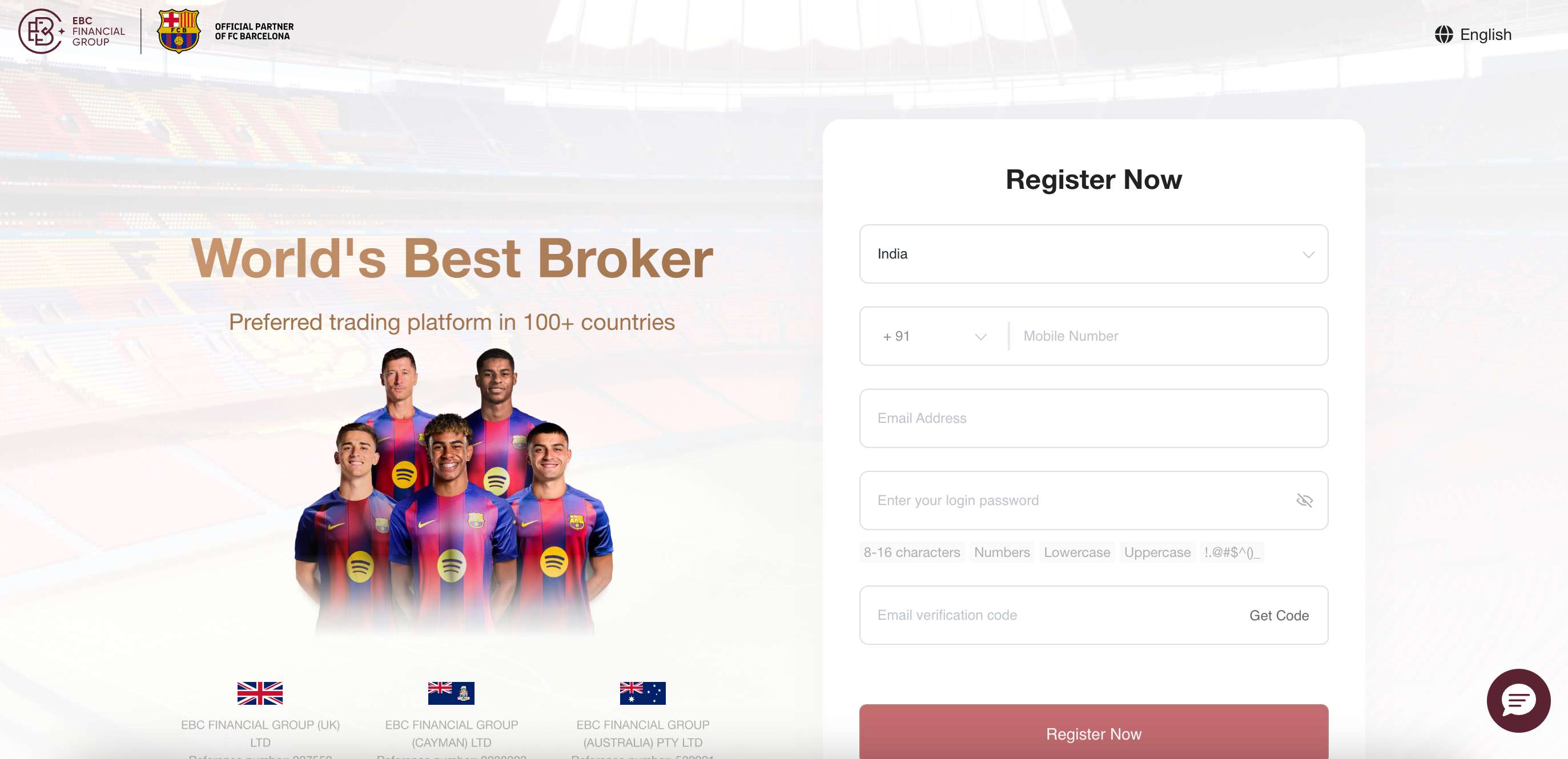 Step 1: Open an Online Trading Account
Begin by submitting a digital account application with EBC Financial Group. The process includes standard KYC verification, such as proof of identity and residency, in line with international regulatory requirements.
Submitted documents are reviewed to ensure regulatory alignment. Verification timelines depend on document accuracy and jurisdictional checks, but are designed to be efficient and transparent.
Upon approval, funds can be deposited (minimum $50) using authorized international remittance methods. Currency conversion is managed within the trading infrastructure, enabling access to US and global markets without a US bank account.
After funding, trading access is activated. Clients can trade US stocks and other global instruments on a professional-grade platform with real-time pricing, execution tools, and integrated risk management.
Profits and available balances may be withdrawn through the same authorized remittance channels. Withdrawals are subject to standard compliance checks and processed in accordance with regulatory and banking timelines, ensuring transparency and fund security.
US stocks offer significant opportunities for investors seeking diversification, access to sectors not available locally, or participation in global growth trends. However, successful outcomes require a thorough understanding of market structure, associated costs, and currency dynamics, rather than pursuing foreign equities without adequate due diligence.
Access to US equities should complement a well-structured domestic portfolio. The most effective investment strategies integrate global exposure with disciplined risk management and clearly defined objectives.
Yes. Indian residents can trade US stocks legally under India’s overseas investment framework, provided funds are remitted through approved channels, and trades are executed via compliant international platforms that handle custody, settlement, and reporting correctly.
EBC Financial Group provides regulated global market access, allowing Indian traders to participate in US equities through professional trading platforms, integrated risk tools, and transparent execution structures without requiring a US bank or brokerage account.
EBC Financial Group offers access to US stocks and indices, multi-asset trading across forex and commodities, and professional-grade platforms designed for active traders seeking global exposure under a single, regulated account structure.
Currency risk is material. Returns are influenced by both stock performance and movements in the U.S. dollar against the Indian Rupee. Effective strategies account for this dual exposure through position sizing, diversification, and awareness of macroeconomic trends.
Trading US stocks from India without a US account has transitioned from a niche capability to a structural feature of global investing, driven by technological advancements, regulatory changes, and investor demand. While the opportunity is substantial, it is accompanied by considerable complexities.
Investors who approach US markets with professional tools, regulatory awareness, and a disciplined strategy are best positioned to benefit. In global markets, access is only the initial step; execution quality and risk control ultimately determine outcomes.
Disclaimer: This material is for general information purposes only and is not intended as (and should not be considered to be) financial, investment, or other advice on which reliance should be placed. No opinion given in the material constitutes a recommendation by EBC or the author that any particular investment, security, transaction, or investment strategy is suitable for any specific person.