Published on: 2026-01-23
Updated on: 2026-01-23
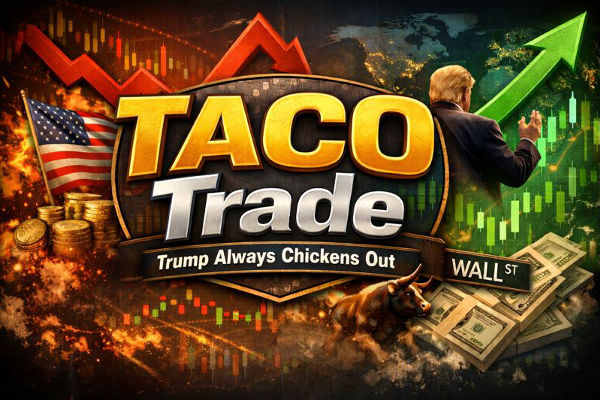
The "TACO trade" is a piece of market slang that has moved from trading desks to mainstream headlines because it captures a repeating pattern in risk assets.
The concept gained popularity again in January 2026 following a recent instance of tariff brinkmanship that was quickly reversed, leading to a significant increase in equities in just one trading session.
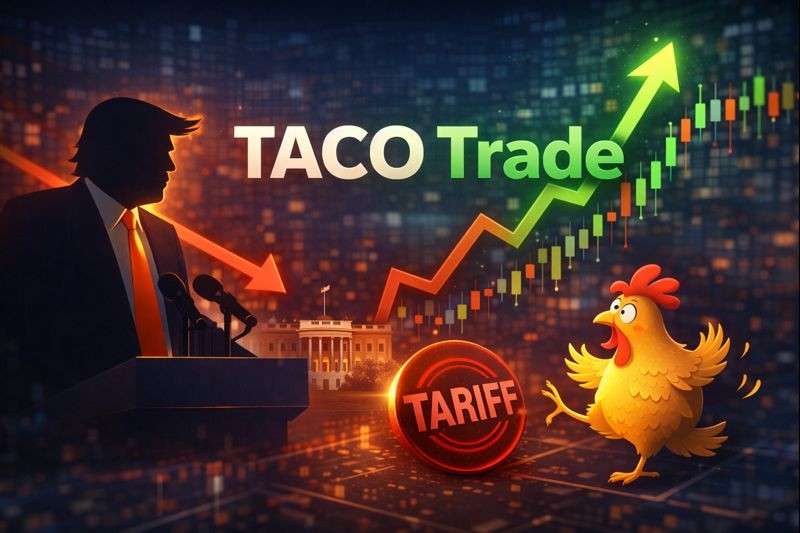
The acronym "TACO," which stands for "Trump Always Chickens Out," describes a strategy in which investors purchase equities after a sell-off triggered by a policy threat. They anticipate that the threat will be softened, postponed, or negotiated away, resulting in a rebound in stock prices.
In this context, "buy the dip" is more than a slogan; it represents a probabilistic response to volatility spikes driven by headlines, which markets increasingly anticipate will revert to normal.
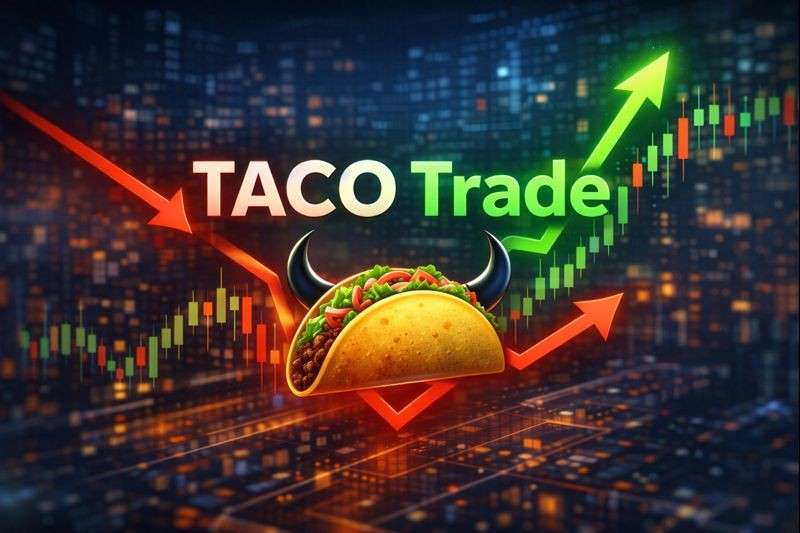
The TACO trade is a tactical "shock and rebound" playbook:
Step 1: A tariff threat, policy headline, or negotiation posture hits the tape, and risk assets sell off quickly.
Step 2: Dip buyers step in, partly because they expect the threat to be revised or delayed.
Step 3: If the threat is softened or walked back, the rebound accelerates as shorts cover and systematic strategies rebalance.
The term is widely associated with Financial Times commentary that framed the market's reaction as a recognizable cycle, and it spread after the phrase became part of broader reporting on tariff reversals and market volatility.
The TACO trade is not "buy every dip forever." It is "buy the dip when the dip is driven by a headline that the market believes will not fully translate into lasting policy." That belief is the entire edge, and it can change.
The acronym entered mainstream financial coverage in 2025 and is now broadly used to describe how investors price repeated tariff brinkmanship and subsequent reversals.
| Phase | What happens | What happens | What traders watch most |
|---|---|---|---|
| 1. Threat | Tariffs, sanctions, or other punitive measures are announced or hinted. | Equities gap lower, cyclicals underperform, volatility bids. | Implied move, VIX sensitivity, credit spreads. |
| 2. Liquidation | Investors de-risk, systematic sellers respond to higher realized volatility. | Correlations rise, intraday ranges expand, dealers hedge defensively. | Dealer gamma regime, ETF outflows, breadth. |
| 3. Walkback | Language softens, deadlines slip, exemptions appear, negotiations restart. | Volatility compresses, risk rebounds sharply. | Official statements, timetable changes, cross-asset confirmation. |
| 4. Relief rally | The premium collapses, positioning flips, dip-buyers gain control. | Indices recover quickly, leadership returns to growth and cyclicals. | Buyback windows, options expiration dynamics, momentum re-acceleration. |
In January 2026, markets received a clean example of the loop when tariff threats toward European nations were reversed, triggering a swift rebound in major U.S. indices on the day.
Headlines can move markets in seconds, but the market's second move often depends on positioning, liquidity, and the rules-based flows that now dominate index pricing.
Here is why the dip often gets bought quickly in the current regime.
| Driver | What it does during a selloff | Why it supports "buy the dip" |
|---|---|---|
| Policy reversal expectations | Reduces fear of lasting economic damage | A selloff is treated as temporary if threats are seen as negotiable. |
| Fed policy backdrop | Limits the risk of a rising discount rate | The fed funds target range is 3.50% to 3.75% after the December 2025 cut. |
| Corporate buybacks | Adds ongoing demand for equities | S&P 500 buybacks were $249.0 billion in Q3 2025. |
| Passive index "plumbing" | Keeps allocations systematic | Indexed mutual funds and ETFs held $19.12 trillion in assets in November 2025. |
| Options dealer hedging | Can create mean reversion if dealers are long gamma | Long gamma hedging tends to buy dips and sell rallies. |
| 0DTE concentration | Compresses hedging flows into the same session |
0DTE share of S&P 500 options activity has been reported above 60% in peak months. |
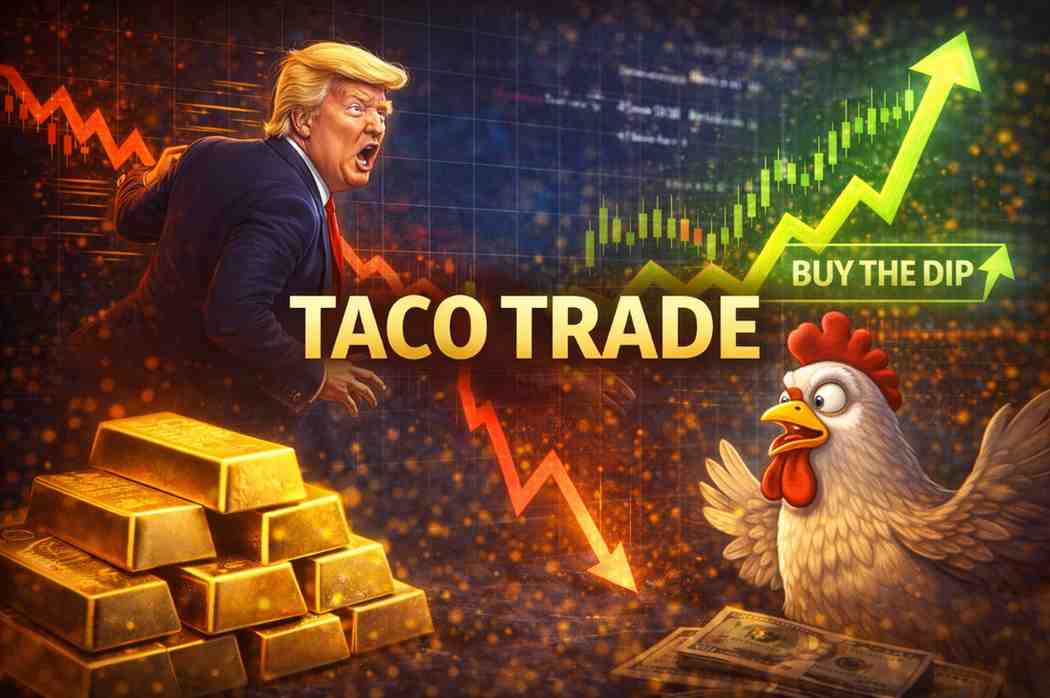
"Buying the dip" remains effective when a market sell-off is viewed as a risk premium adjustment rather than a fundamental earnings reset.
In the TACO framework, the initial drawdown is the market buying protection against a worst-case policy path. When that path is deemed unlikely, the premium becomes unstable, and mean reversion becomes the default.
| Market support factor | Why it supports dip-buying |
|---|---|
| S&P 500 share repurchases | Repurchases provide a persistent, valuation-driven bid during volatility spikes. |
| Index options intensity | Options hedging flows can dampen follow-through and accelerate rebounds. |
| SPX options dominance | Concentrated liquidity in SPX can transmit hedging flows directly into index levels. |
| 0DTE share of SPX activity | Very short-dated hedging increases intraday reflexivity around key strikes. |
| Balance sheet runoff | Less structural liquidity drain can reduce tail-risk sensitivity in equities. |
Dip-buying is not a personality trait. It is a regime call. Here is a trader-friendly checklist for when it is more likely to work.
The sell-off is triggered by a reversible headline (tariff threat, negotiation stance, timeline shift).
The bond market is not pricing a fresh inflation shock, and the Fed is not signaling renewed tightening.
Volatility is elevated, but not disorderly, and risk markets remain functional.
Buybacks and passive flows are not meaningfully constrained.
Options hedging conditions are supportive of mean reversion rather than momentum.
A TACO-style dip often has these features:
A fast drop in headlines, followed by intraday stabilization.
A rebound that accelerates when the headline is clarified or softened.
A market that recovers "too quickly," which is often a sign that positioning was leaning bearish and needed to unwind.
The TACO trade works until it does not, and the failure mode is usually obvious in hindsight.
If tariffs are widely implemented and persist, the "negotiation premium" will vanish. The market will cease to view dips as opportunities and will begin to see them as the initial phase of price adjustment.
Markets frequently serve as a feedback mechanism for policy decisions, but this function is not always assured. If policymakers become less sensitive to market drawdowns, the TACO loop weakens.
Dip-buying becomes more fragile if the market begins to price a higher terminal rate again.
The Fed's December 2025 statement emphasized data dependence even after cutting to 3.50% to 3.75%, which means inflation surprises can still matter.
When dealers are net short gamma, hedging can reinforce the move, leading to sell-offs that feed on themselves rather than stabilizing. This is one reason "buy the dip" can feel easy for months, then suddenly feel impossible for several weeks.
Buybacks are not constant. They can slow around earnings windows, and they can be reduced if corporate confidence weakens. When a headline shock hits during a buyback lull, rebounds can be less reliable.
| Signal | Healthier dip | More dangerous dip |
|---|---|---|
| Headline path | Clarification or softening within 24 to 72 hours | Escalation, deadlines, or implementation language |
| Volatility proxy | Volatility rises but stabilizes | Volatility rises and keeps rising |
| Market structure | Rebounds show breadth | Rebounds are narrow and fade quickly |
| Macro | Rates expectations stay stable | Rates expectations shift hawkish |
| Flow support | Buybacks and passive support appear |
Buyback windows close and flows weaken |
A disciplined TACO approach is less about bravado and more about process.
Define the headline type: Is it a negotiation threat, a policy draft, or a signed decision? The market prices those differently.
Wait for confirmation: Focus on finding stabilization rather than pinpointing the exact bottom.
Use levels, not feelings: If the market breaks key support and fails to reclaim it, see this as information rather than betrayal.
Respect volatility: If volatility is rising sharply, position sizing matters more than entry precision. A volatility spike often turns a "dip" into a "trend day."
The TACO Trade is shorthand for "Trump Always Chickens Out," a phrase used to describe a pattern in which tariff threats pressure markets and subsequent delays or reversals trigger quick rebounds.
The TACO Trade is a specific version of "buy the dip" that is tied to policy-threat headlines and expected walkbacks. "Buying the dip" refers to a broader strategy that can apply to earnings shocks, interest rate surprises, or technical drawdowns, which may not recover as quickly.
Mainstream reporting attributes the popularization of the "TACO" framing to the Financial Times in 2025, leading to its rapid dissemination across market coverage as investors associated it with reversals of tariff threats and equity rebounds.
It can, but the effectiveness depends on liquidity and sensitivity to U.S. policy headlines.
In conclusion, the TACO Trade exemplifies how markets react to ongoing policy threats. It is not a guarantee that equities rise, and it is not proof that fundamentals are irrelevant.
It is evidence that in a market dominated by repurchases, short-dated options, and systematic risk budgets, the first move is often an overreaction and the second move is often a squeeze back toward equilibrium.
In 2026, the discipline is not learning the acronym. The discipline is knowing the invalidation point before the headline hits.
Disclaimer: This material is for general information purposes only and is not intended as (and should not be considered to be) financial, investment or other advice on which reliance should be placed. No opinion given in the material constitutes a recommendation by EBC or the author that any particular investment, security, transaction or investment strategy is suitable for any specific person.