Published on: 2026-01-21
Updated on: 2026-01-21
Currently, markets are not just reacting to inflation data; they are responding to confidence.

In the past 48 hours, investors have been hit by renewed tariff headlines and fresh questions about global trade rules. US shares fell hard, long-dated Treasury yields jumped, and safe-haven demand pushed gold to fresh records.
That is why today's US PCE report matters so much. If inflation looks sticky, it can keep yields high and support the US dollar. If inflation decreases faster than expected, it could rekindle hopes for rate cuts and improve financial conditions, which typically benefit risk assets.
| Location | Local release time |
|---|---|
| New York (ET) | 10:00 a.m., Thursday, January 22 |
| London (GMT) | 3:00 p.m., Thursday, January 22 |
The Bureau of Economic Analysis will publish the Personal Income and Outlays report, which includes the PCE price index and the core PCE price index, at 10:00 a.m. Eastern Time on Thursday, January 22, 2026.
This timing reflects the revised post-shutdown schedule and differs from the usual 8:30 a.m. Eastern Time release window that markets often associate with primary US data.
The Bureau of Economic Analysis will publish two months of statistics in a single release because the October and November 2025 reports were combined due to shutdown-related delays and missing CPI source inputs.
This structure can produce a "double repricing" dynamic in markets, where the first month's details move prices, and the second month either confirms or reverses them.
| PCE measure | Consensus forecast | Why it matters |
|---|---|---|
| Core PCE (MoM) | 0.2% | This is the cleanest near-term signal of momentum and policy risk. |
| Headline PCE (YoY) | 2.8% | This frames progress toward the 2 percent target and shapes Fed communication risk. |
| Core PCE (YoY) | 2.8% | This is the Fed’s key yardstick for underlying inflation persistence. |
Current consensus expectations imply a steady print that keeps core inflation in the high-2 percent range and preserves the base case of gradual disinflation rather than a renewed acceleration.
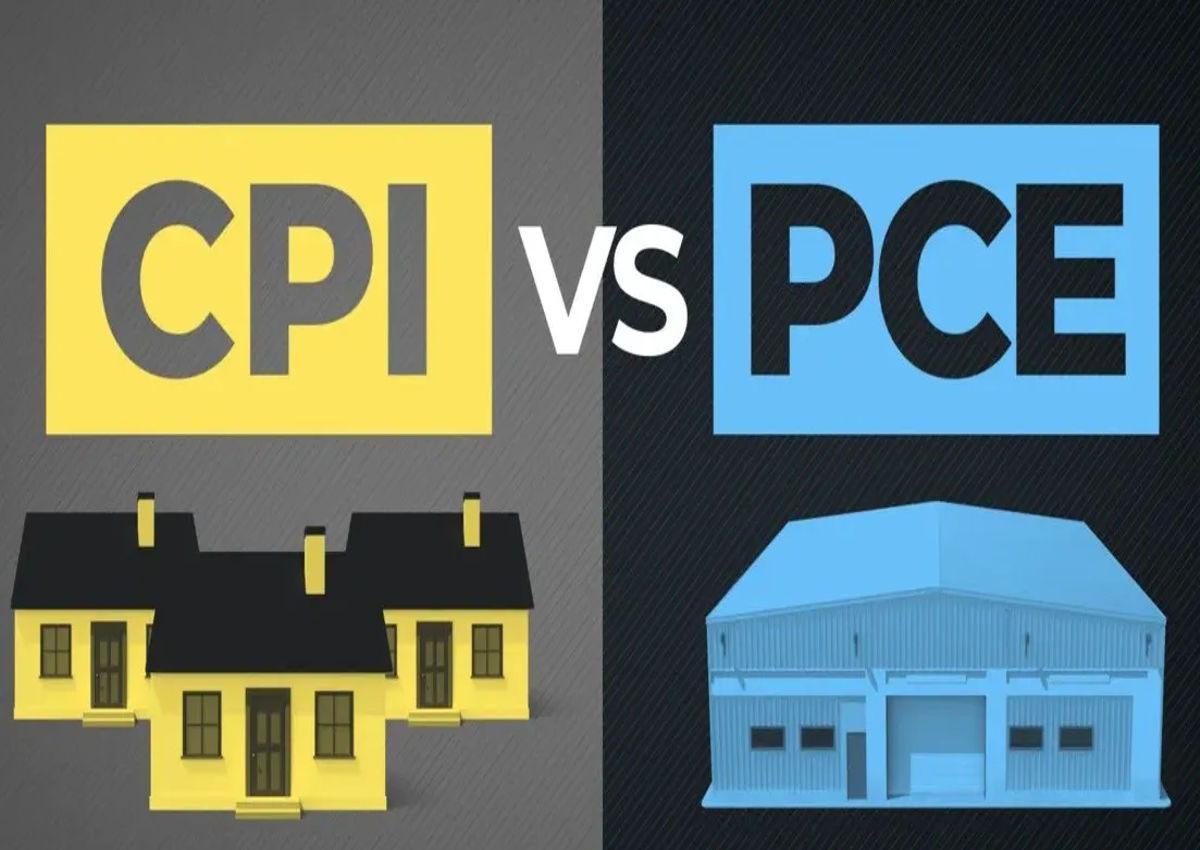
The Federal Reserve aims for a 2% inflation rate, measured by PCE rather than CPI.
PCE often moves market pricing because it can shift expectations for:
The Fed's next rate move.
The peak level of rates.
How long will rates stay restrictive?
This one release bundles several market-moving pieces in one set of tables:
PCE inflation (headline) and core PCE inflation (ex food and energy).
Personal income.
Personal spending (consumer demand).
BEA publishes PCE inflation inside the Personal Income and Outlays report.
The Fed's meeting calendar matters because inflation data close to a meeting can shape guidance and market pricing.
Rate expectations are also watched through tools such as CME FedWatch, which summarizes probabilities implied by fed funds futures.
These are practical levels traders tend to anchor to because they mark recent turning points, round numbers, or recent ranges.
| Market | Support zone | Resistance zone | Why it matters |
|---|---|---|---|
| EUR/USD | 1.1600–1.1620 | 1.1740–1.1750 | The pair has traded near these January extremes. |
| USD/JPY | 157.45–157.50 | 159.15–159.35 | The pair has moved inside this recent week range. |
| Level | Why traders care |
|---|---|
| 4.30% | This zone matches the recent spike that accompanied the bond selloff. |
| 4.10% | This is a common "mean reversion" zone after sharp selloffs, and it is watched for calmer |
| Level | Why traders care |
|---|---|
| 6,800 | The index closed near this level after a sharp drop, so it is a natural pivot. |
| 6,700 | This is the next big psychological handle if selling resumes. |
| 6,900 | This is a rebound target if yields fall and risk stabilises. |
| Level | Why traders care |
|---|---|
| $4,800 | A major round-number milestone around fresh record headlines. |
| $4,700 | A sensible pullback zone if the dollar firms and yields rise again. |
A hotter core print usually pushes yields higher and lifts the US Dollar because traders price a more restrictive Fed path.
That mix often pressures equities, and it can stall gold even when geopolitical risk is supportive, because higher real yields tend to dominate in the first reaction window.
A cooler core print usually lowers yields and weakens the US Dollar because traders price a faster pace of policy normalization.
That environment tends to support equities and can extend gold's upside if yields fall enough to improve real-rate conditions.
The Bureau of Economic Analysis will release the Personal Income and Outlays report at 10:00 a.m. Eastern Time on Thursday, January 22, 2026.
Consensus expectations point to a 0.2% month-over-month increase in core PCE. Markets also look to the year-over-year core PCE rate, with consensus tracking around 2.8%, which remains above the Fed's 2 percent target.
Headline PCE encompasses all categories, including food and energy, which can fluctuate significantly from month to month. Core PCE excludes food and energy to give a clearer view of underlying inflation trends, which is why it is often treated as the better guide for policy.
Treasury yields often move first, followed by USD pairs such as USD/JPY, then gold, and finally equity index futures. Reactions can be larger when markets are already risk-sensitive, as they are this week.
In conclusion, the US PCE report is set to be released at 10:00 ET on January 22, 2026. The timing is unusual due to the BEA's updated release schedule.
Consensus expectations indicate core PCE at 0.2% MoM and 2.7% YoY, suggesting a gradual cooling.
Key levels to keep on your screen include EUR/USD at 1.1600 and 1.1750, USD/JPY at 157.50 and 159.30, S&P at 6,800, and gold at $4,800.
Disclaimer: This material is for general information purposes only and is not intended as (and should not be considered to be) financial, investment or other advice on which reliance should be placed. No opinion given in the material constitutes a recommendation by EBC or the author that any particular investment, security, transaction or investment strategy is suitable for any specific person.